EndDaysPreface
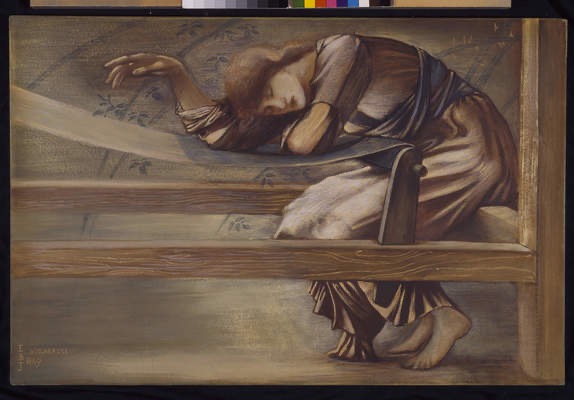
Sir Edward Coley Burne-Jones:
The Briar Rose Series
(1889)
"May your EndDays experience be enhanced by the foolhardiness I have laid down on the following pages."
A Preface should properly prepare a reader for whatever comes next, but I suspect that in this instance, it should at least attempt to accomplish something else, for should this Preface succeed in properly preparing you for whatever comes next, it might erase any need you might now possess to read the damned thing. As the author, I’d much rather you retain your interest at least until you can learn for yourself whether or not you should agree to finish reading this. This means you’ll have to start reading in order to achieve this end, but then that’s my objective. What’s yours?
What moved you to pick up this book?
Weekly Writing Summary For The Week Ending 06/18/2026

Sir Edward Coley Burne-Jones:
Frieze of Eight Women Gathering Apples
(1876)
This final week’s EndDays dispatches arrived from the road — from Condon, Oregon, where I was born on a kitchen table nearly seventy-five years ago, through a pioneer cemetery in Linn County where great-great-grandparents waited to be visited, and finally to the Oregon Coast, where The Muse and I drove to the edge of our experience and found the series’ so-called ending. The writing ranged from the weaponized justice of ImaginaryCivility to my Rimrock Country origins of Buttermilk, from the pioneer cemetery revelation of SumOfMyPast to the necessary pruning of Friendlies, from the historical perspective of Silliness to the final installment, LongTail, written at dawn on the Oregon Coast near the first day of summer. The EndDays series has concluded. The rumors of its demise were, as always, preliminary.
Thank you for following along!
LongTail
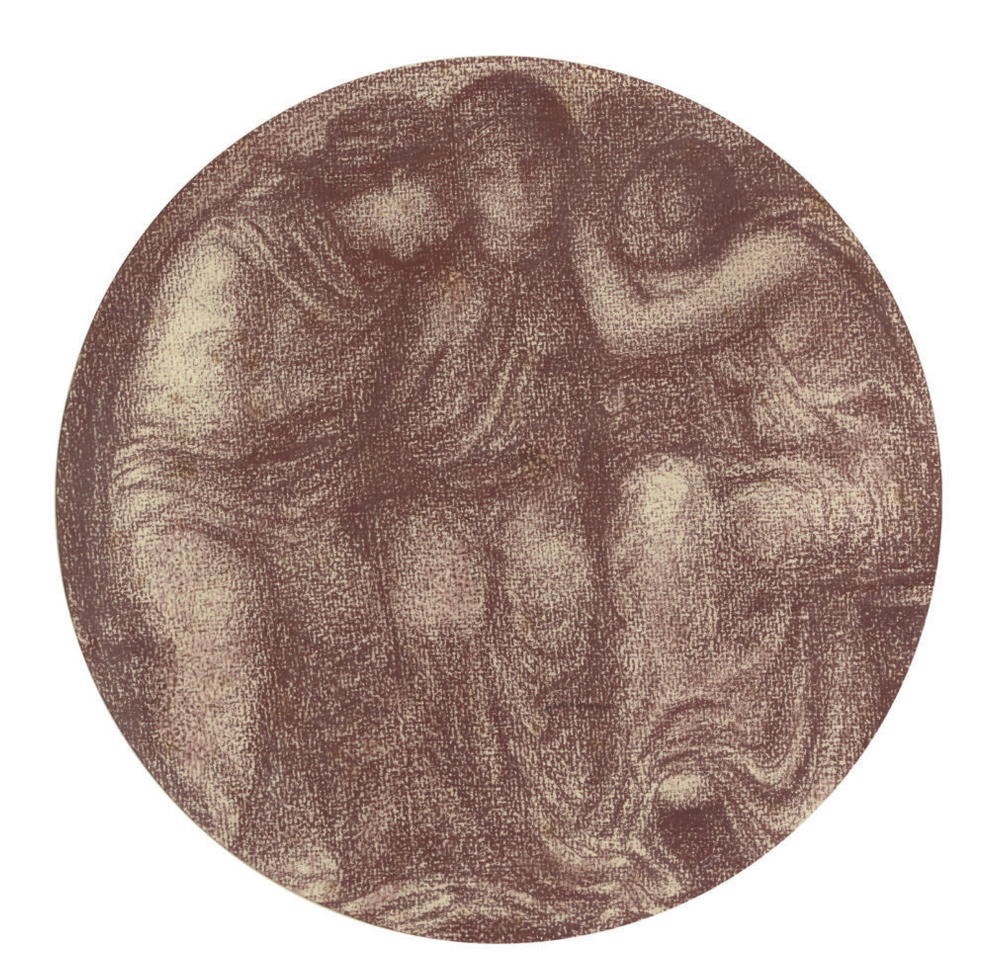
Sir Edward Coley Burne-Jones:
The Three Fates
(1865)
"…I would have never bothered to create them in the first place."
As the EndDays drew closer to their end day, The Muse and I drove to the edge of our experience, the Oregon Coast. Neither of us had ever held any desire to go out on the salt. I learned that while The Muse has always been unfazed by height, depths terrify her. I do not know if I’m prone to seasickness, but I have never felt terribly moved to discover whether I might be. We cling to the edge, me finding a beach read, though the town we chose no longer holds a single bookstore, new or used. The world we’d known had been throwing off hints that it was disappearing. This missing bookstore experience seemed like just another bit of evidence. We were not precisely helpless, but more acknowledging that we were increasingly floatsom, no longer the center of anyone’s attention; hardly even our own anymore.
Anyone seeking to witness an ending pursues one of the greater paradoxes, for this world was never contained in such definitive boxes.
Silliness

Sir Edward Coley Burne-Jones:
The Madness of Sir Tristram
(1862)
"…maybe we can't help but become terminally distracted."
It must be our blessing or our curse that what we experience as tragedy, our grandchildren will consider simple Silliness. For my grandfather, who enlisted during WWI to “fight the Hun,” that conflict seemed like serious business because it was, to his experience. The event leading up to it, though, the assassination of an obscure crown prince in an even more obscure Eastern European capital, seems trivial when compared to the eventual slaughter of twenty million otherwise innocent people. Any catastrophe of sufficient magnitude seems indistinguishable from a parody of tragedy. Such scales pale in any reasonable comparison. It becomes unimaginable and therefore essentially fictional, as if it couldn’t have possibly happened simply because it seems beyond reason, just as if reason could serve as any sort of reasonable arbiter of even itself.
Our current drama certainly seems more like soap opera.
Friendlies
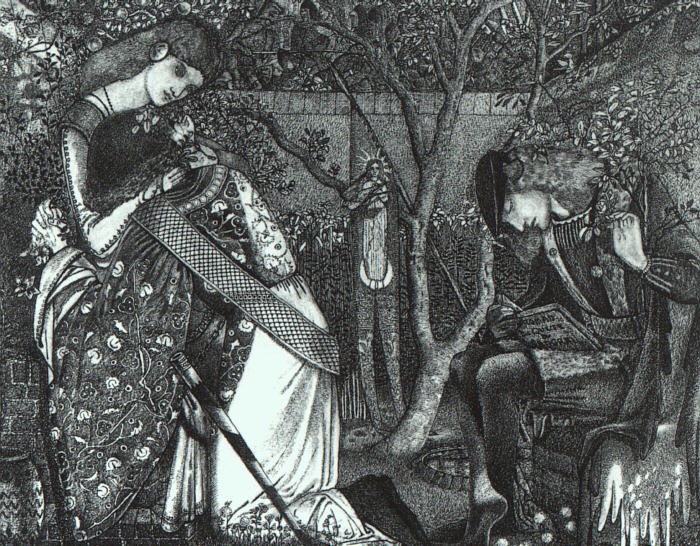
Sir Edward Coley Burne-Jones:
The Knight's Farewell
(1858)
"My relief far exceeds whatever guilt I feel."
I maintain a select few followers on my social media accounts. The numbers have changed little over the decades, with newbies roughly equalling retirees, regardless of my recruitment efforts. Some content producers seem to effortlessly attract tens of thousands of followers. I have attracted low hundreds of them, though I remind myself that they are the right few hundred people. Others might produce for volume, while some focus exclusively on other qualities like … quality … or perhaps authenticity. I remind myself that not everyone prefers authenticity in their breakfast every morning, and that my content might be seen as rather rarified material unsuitable for any mass market. It probably uses too many adjectives for injestion among more polite company. Consequently, I have traditionally been possessive about retaining my Friendlies. Hesitant about shrinking my audience numbers, I have been forgiving when I’ve noticed transgressions. I have prided myself on my tolerance and even faked some ignorance in my time. I find that I’m less tolerant now that our idiotic incumbent has publicly demonstrated the price of tolerating an ever- lowering bar.
I suddenly feel the strong need to stand up and actually be counted.
SumOfMyPast
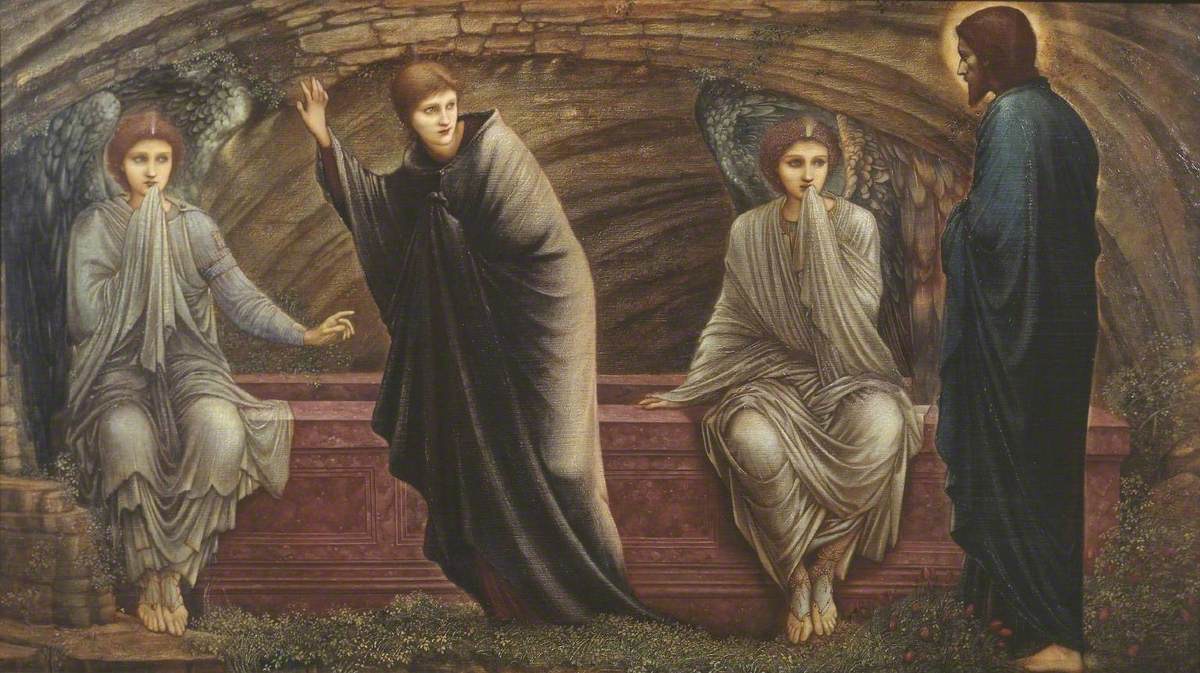
Sir Edward Coley Burne-Jones:
The Morning of the Resurrection
(1886)
"I might even be the sum of all things, just like you."
I am more than merely the SumOfMyPast, for I might also include the sum of all my potential futures and more. That said, I am most certainly the SumOfMyPast, but that just starts the inquiry into my identity. That said, I remain most certainly the SumOfMyPast, but not merely my own personal past. I sense that I also must include at least the partial sums of many others’ pasts, my forebears at least. Who knows who else?
When The Muse and I travel, as we are now traveling, leaving home and heading anywhere else, we often chase ancestors along the way.
Buttermilk
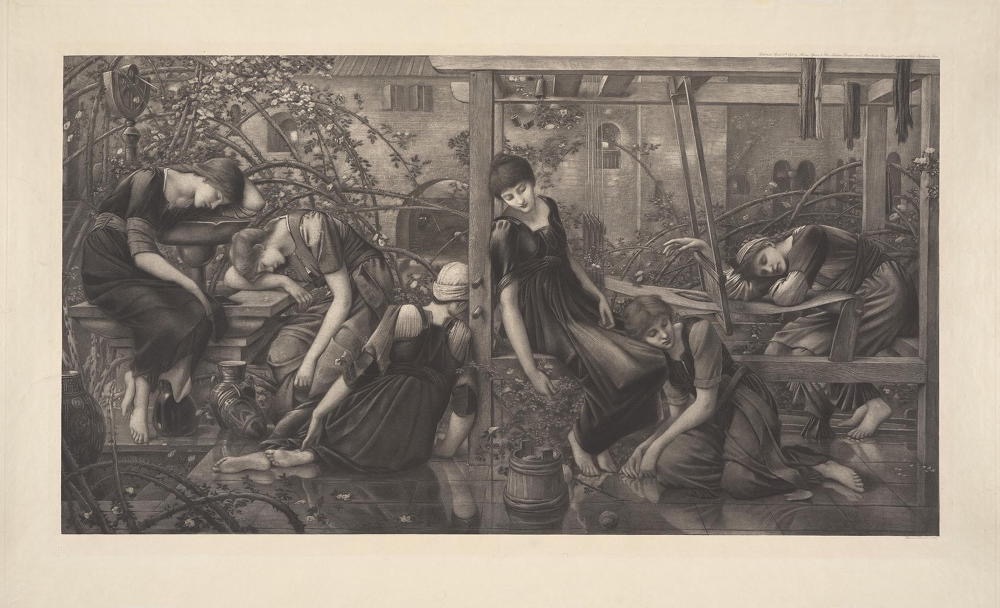
Sir Edward Coley Burne-Jones:
The Garden Court
(1892)
"The rumors of EndDays might have been preliminary."
The Muse and I had been at each other’s throats forever, probably because it seemed to us that The World had been slavering at our throats for even longer. Eventually, too much turns into too much, and something must give. The usual give-and-take that enables any relationship sometimes falls out of balance. This situation isn’t usually anybody’s direct fault; it’s just one of those things that tend to happen regardless. Perhaps we become a little too much of this world rather than simply within it. I lose patience and seek escape. The data center controversy had gotten the better of me before it seemed to get The Muse. She was deliberately making herself into a public target, daring to say what few would have had the temerity or ability to voice. I couldn’t keep my big yap shut, either, at least not in the face of taunting social media. My center-of-the-universe place, where gravity reliably worked right, felt threatened. Neither of us had been sleeping that well.
The Muse had a Port Commissioner conference on the Oregon Coast.
ImaginaryCivility
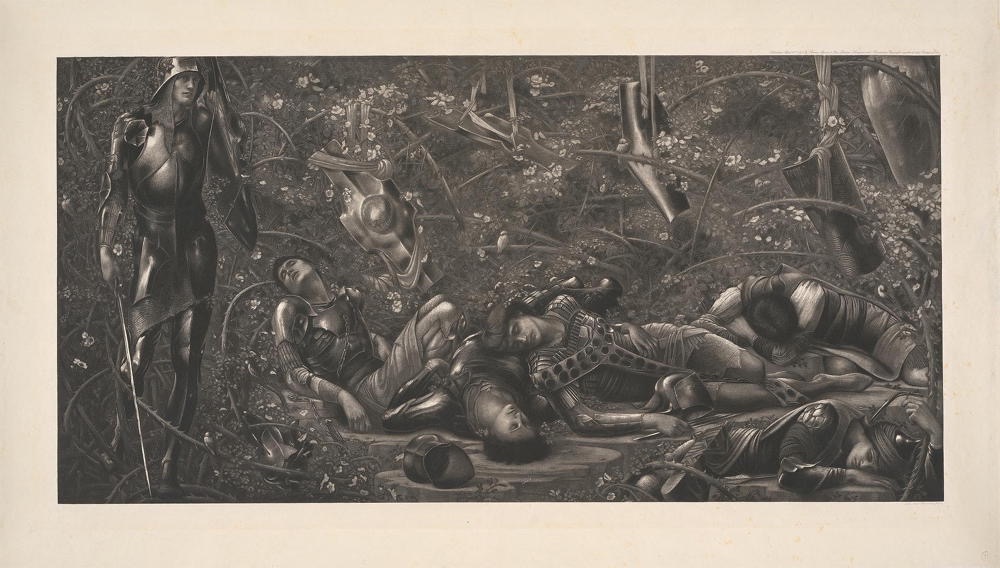
Sir Edward Coley Burne-Jones:
The Briar Wood
(1892)
"Dictators only ever come in hapless colors."
Our imbecilic incumbent remodeled our Justice Department first thing. He fired those he feared were not loyalists, replacing them with lapdog equivalents, many of whom held high positions without any benefit of anything even remotely resembling a legal education. They brought conviction with them into office, the conviction that the world had largely wronged their benefactor as only a paper billionaire can ever hope to be wronged, and that it would be their duty under their interpretation of the law they didn’t understand to, in their words, “unweaponize” our governance. Of course, our governance had never actually been weaponized against anyone, other than in the noticeably addled imaginations of those opposing partisans. True to usual fashion for fascists, they set about actually weaponizing a government that had never actually been weaponized before. That was the beginning of what we might understand to be ImaginaryCivility, where the laws of this land would get rudely interpreted so as to deliberately place the administration’s heavily weighted thumb on Justice’s traditionally impartial scales.
The pattern had existed since the earliest mentions of our idiot incumbent’s so-called MAGA Movement, his self-proclaimed attempt to, and I begrudgingly quote him here, “Make America Great Again,” with special emphasis on the “again” part of that proclamation.
Weekly Writing Summary For The Week Ending 06/11/2026
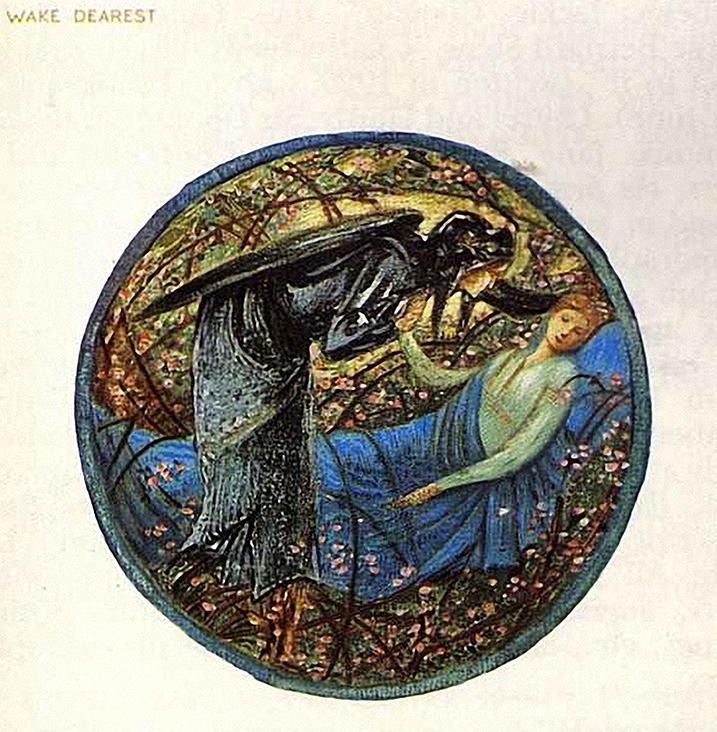
Sir Edward Coley Burne-Jones:
"Wake Dearest" a reproduction of a watercolor published posthumously (1905) by his wife
in "The Book of Flowers" one of 38 images in the book.
(1905)
This week’s EndDays dispatches arrived in the company of a deep tiredness, RattleFatigue, named outright by week’s end. The writing ranged from the Tibetan Buddhist speculation of InBardo to the frozen-in-place sardonicism of InLimbo, from the Scopes Trial parallel of MonkeyTrials to the contagious cynicism of Beleafing, from The Muse’s standing-room presentation in Opting to the rattly jalopy of RattleFatigue itself. The Muse presented “Why I Voted For The Data Center” to a packed Democratic Central Committee meeting and received thundering applause for calling out the ad hominem attacks she’s endured. The Villa Vatta Schmaltz will sit empty for a few days. We're heading to Newport (Oregon, of course), then home to mow lawn and freeze cherries, then Spokane for a Washington State Democratic Convention. The series will continue regardless of backdrop.
Thank you for following along!
RattleFatigue
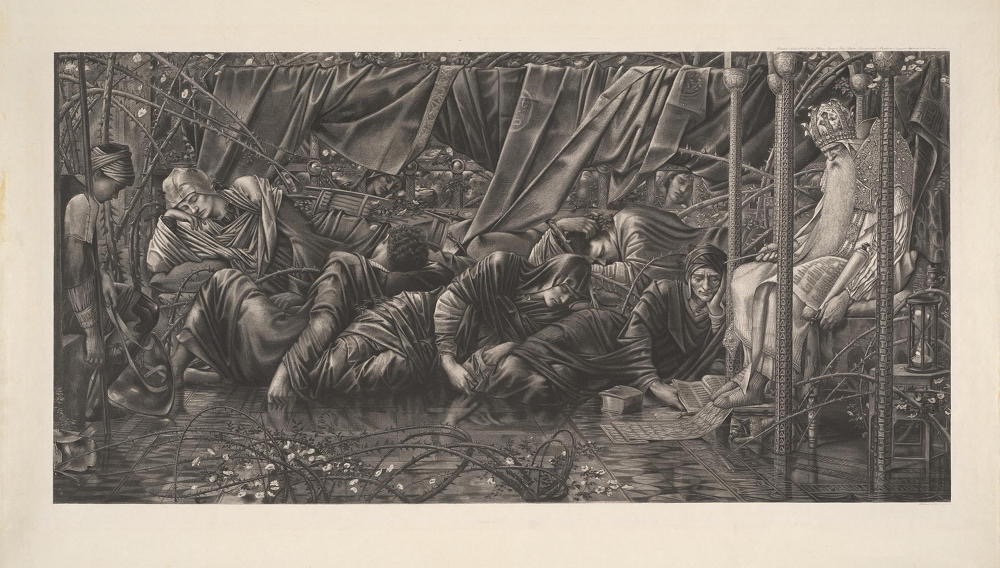
Sir Edward Coley Burne-Jones:
The Council Chamber
(1892)
"…wake me up, please, however exhausted I might seem."
I have often felt as though I was riding in a rattly old jalopy through these EndDays. So much annoying noise. Windows dusty and obscuring. Engine, largely unmuffled. Seats, supremely uncomfortable. The irrelevance alone rendered the drive disquieting, even though I have learned plenty about myself during the journey. I can’t honestly claim that my time has been in any way wasted, just because I found my time spent exhausting. I feel as though I might have been forever deafened and, perhaps, even rendered somewhat more stupid for the experience. I gained hopefully useless-for-reuse skills. With good fortune, or just only slightly more than positive fortune coming, I might never need to resort to the sorts of learning I was forced to absorb, if only by the sorry context. Our orange one will be gone, and whatever follows his dog act of a performance couldn’t possibly be worse. Even if the next conveyance comes without windows or doors, it won’t be able to help but serve as a giant step up. I find myself suffering from RattleFatigue.
What I wouldn’t give for a single serious press conference.
Opting
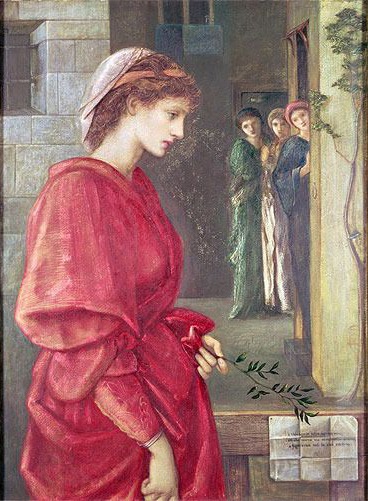
Sir Edward Coley Burne-Jones:
Beatrice: Io vidi donne co' la donna mia
(1870)
"We can't help but own our deliberate decision forever going forward."
The challenge for me comes from a continuing feeling that I can only observe, that a fool’s driving, and I have no control. If this feeling proves to be true, I’m left with few options. I can like it or lump it, and there’s absolutely nothing for me to like about those choices. Yes, a madman’s in charge, but I might usefully wonder what that madman might actually be in charge of. Yes, he formally controls our government, but he’s proven beyond even unreasonable doubts that he seems to be incapable of controlling himself, let alone anything as complicated as a government. So, essentially nobody’s in charge, other than a few uncoordinated, clueless actors. It’s as if randomness has taken over, with entropy playing the part of our guiding light. Corruption seems to have become the common denominator, that, and cruelty, the two horsemen of an inevitably most inept form of governance. Yes, they’re collectively stupid. Yes, some of their more short-sighted interventions do trickle down and into my shoes, but mostly their actions resolve into nothing more than just so many distant machinations, distractions, and odd attempts that resolve into nothingness.
Besides, I have options. I firmly believe, by which I mean, without the benefit of definitive proof, that I always have options. I might be utterly incapable of influencing the madman who fancies himself driving, but I can always influence my response to the madness. I can, for the most part, choose who I engage with, and where, and on what terms. I can largely still choose my adversaries and my friends. I retain the power to refuse to engage when I find the offered terms unworkable, though I feel continually goaded into argument and confrontation. Both the loyal and disloyal opposition hold some influence over my decisions, but I largely get to choose when, where, and whether I rise to their invitations. I remain capable of feeling offended, even enraged, but usually retain the ability to decline losing invitations. I said “usually” because, though I know I should be able to choose otherwise, I sometimes feel compelled. I can always (eventually) tell when I’ve felt compelled because I then forfeit most of my options. I rush in as fools have always rushed, and usually leave further humbled.
Last night, a data center opponent asked me where I’d parked my Corvette. I knew what he meant. He can’t seem to believe that The Muse and I didn’t take bribes for The Muse to vote, in her public role as a Port Commissioner, in favor of selling property to Amazon to build a data center on. The opponents have been increasingly vocal as the project moves into permitting and eventual approval. Last night, The Muse convened a presentation titled “Why I Voted For The Data Center” as part of the local Democratic Central Committee meeting. The room was almost standing-room-only, with many dialing in online. In a half hour, she laid out the reasoning behind her decision. Her logic seemed inescapable: a county economy slowly fading after peak wine, with alarming declines in jobs and tax revenues. A data center proposal from a reputable operator, one responsible for a third of the world’s data centers rather than a fly-by-night speculator looking to flip. An enviable environmental record across multiple similar projects, with independently verifiable results. I don’t believe she convinced anyone who attended already convinced the data center was a terrible idea, but her presentation represented a disarmingly honest appraisal of the personal process she followed to reach her public decision.
On Friday night, opponents of our data center will assemble to further organize their actions and recruit new followers. The Muse plans to attend, since it has been advertised as an open and public meeting. She informed the organizer that she planned to be there. I will feel compelled to accompany her. The Muse is playing the wide-open, honest card. She has invited every opponent she’s met to sit down and have a conversation about her decision, about her reasoning, which she’s convinced has been beyond reproach. Not that it hasn’t received more than its share of reproach, though the complaints seem unlikely to disrupt the well-defined, regulated process by which such industrial developments are approved in our state. No one’s permitted, for instance, to disrupt the permitting process without citing a reason with cause. Bad feelings about the developer won’t pass muster as cause. Opponents’ most common response has been, “I don’t believe that,” when The Muse provides some disquieting statement of verifiable fact. The absence of trust in the process might not seem like a choice so much as an imperative from an opponent who knows they hold no substantive complaint.
It seems certain that the data center will be approved. It will be decades before some of The Muse’s assertions about it will be verifiable. She assumes technology will continually improve, enabling Amazon to ultimately achieve its net-zero water-use goal. They’ve been making steady progress on other projects. The economic benefits will predictably trickle in before becoming inexorable, since it will require a decade just to build out the damned thing. By the time it comes fully online, The Muse and I will have become footnotes in the history of this valley. The projected economic salvation will either happen or it won’t. I pray that the social fraying will, over time, start healing itself, though it might not. We stand (or cower) along a leading edge, uncertain of our influence on anybody’s future, including our own. The Muse is Opting to stay open and reveal the details of her reasoning, believing it might help accelerate the healing. She might have rendered herself unelectable by Opting to attempt to make our economy less fragile and more sustainable. Her choice. Only the future will tell whether she succeeded, just as all futures and presents do. Those who can’t imagine us not taking bribes will forever wonder where we parked our utterly imaginary Corvettes. We encountered a fork in the road and took it together, actively Opting rather than becoming victims of a madman’s aimlessness. We can’t help but own our deliberate decision forever going forward.
©2026 by David A. Schmaltz - all rights reserved
Beleafing

Sir Edward Coley Burne-Jones:
"White Garden" a reproduction of a watercolor by Edward Burne-Jones (d. 1898) published posthumously (1905) by his wife in "The Book of Flowers" one of 38 images in the book.
(1905)
"Forgive me, for I seem to have intruded to satisfy myself and failed."
Cynicism must be one of the most contagious infections. Once present, it rapidly spreads, affecting even those strongly opposed to its presence. One cynic in a crowd can quickly poison several others before an exponential explosion of cynicism occurs. Then, suddenly, what once seemed fairly well-defined edges begin resonating with a self-same vibration. Those who were strongly opposed start vibrating with precisely the same tone they once found so put-offish. Then, the whole population descends into self-inflicted limitations. Possibilities smother beneath blankets of what I can only describe as disbelief, a tenacious and largely unnoticed mass inability to actually believe anymore. They want, they insist that they need truth beyond even the most otherwise reasonable doubt. They suddenly require evidence of purity that no test could ever even imagine delivering. What was once plenty good enough starts reliably falling short, and people start mumbling about how things used to be back before somebody screwed everything up, unaware that they, themselves, were the cynical ones who screwed everything up for themselves.
Cynicism seems to be the favored response of the wounded optimist.
MonkeyTrials
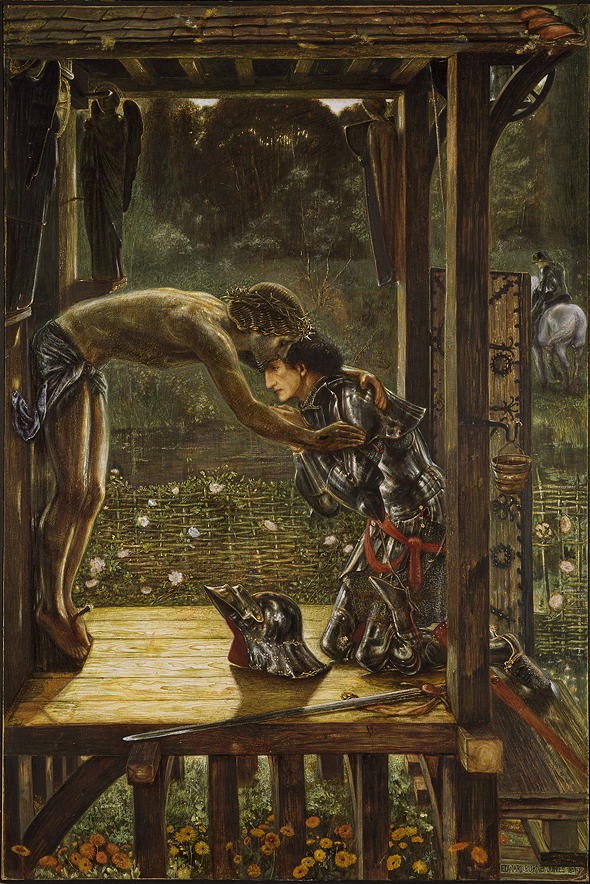
Sir Edward Coley Burne-Jones:
The Merciful Knight
(1863)
"I am surrounded by legions of church ladies pursing their lips at modernity and reason."
One of the more reliable indicators that we’re experiencing EndDays comes from the seemingly sudden presence of MonkeyTrials. I’ll coin this term, referring back to that famous trial a hundred years ago, in which the State of Tennessee charged a schoolteacher with violating their Butler Act, which forbade teaching about human evolution in public schools. The resulting trial brought together two of the most famous lawyers of the time, Clarence Darrow, who appeared for the defense, sponsored by the American Civil Liberties Union, and William Jennings Bryan, a three-time populist Presidential candidate, arguing for both the church and the state. The trial became a classic fundamentalist-modernist controversy. It attracted plenty of attention both locally and in the national press. The courtroom was packed with people who appeared solely to demonstrate their support for the Bible, believing that teaching human evolution was somehow unholy. Most of the observers of the trial would have been perfectly satisfied if the judge had found old Scopes guilty at the outset, since few seemed to believe that any defense could render him innocent. He’d admitted his guilt so he could become the show defendant at trial. He did not disappoint.
Today, our justice department, under our present incumbent, has taken to acting as if it were presenting before Kangaroo Courts.
InLimbo
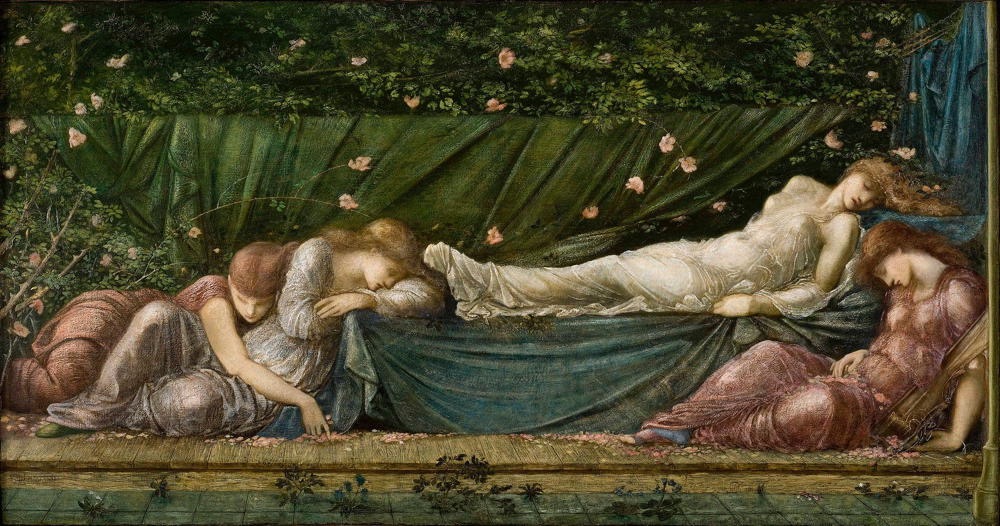
Sir Edward Coley Burne-Jones:
The Sleeping Beauty from the small Briar Rose series
(circa 1872 )
"…just imagine what will happen after the midterms render them lame geese."
One other end state for our present administration that has gratefully seemed absent without leave since being installed, occurs to me, one that probably works as effectively as any actual ending. A stymied administration that was always incapable of administering anyway, probably accomplishes nothing destined to survive its tenure. Our incumbent seems contorted, as if attempting to wriggle his way beneath a very narrow, flimsy barricade. He’s very likely too fat to succeed. His ill-crafted policies sit InLimbo, neutralized by courts, trading partners, and what he might label fickle public opinion. His policies, such as they were, which he apparently borrowed from seriously unserious people with little notion of how governance actually works outside of the Old Testament, have universally failed. Each advertised transformation has gone bust in turn, leaving divots rather than the promised holes-in-ones. He cheats himself at golf, too. With midterms expected to further humiliate ‘his magesty’, he’s seemingly frozen in place, as useful as he could ever possibly be.
He still continually foments chaos, though even this seems to have an increasingly lessening effect.
InBardo
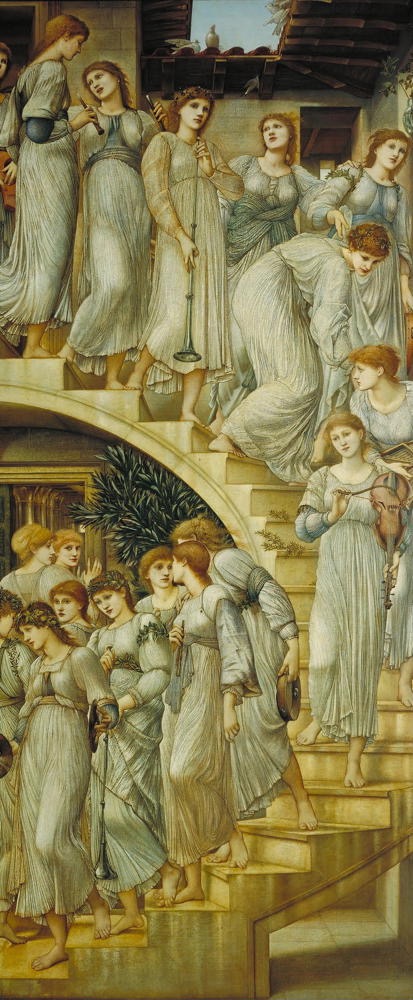
Sir Edward Coley Burne-Jones:
The Golden Stairs
(1880)
"…greater respect than his soul's former vessel ever once managed to."
Today’s thought experiment takes us into a netherworld, one that some believe exists between states, during periods of transition. Tibetan Buddhist belief labels this no-place Bardo. It holds that Bardos exists between death and rebirth and also between birth and death, that both life and death themselves amount to periods of transition. Existence might be transitions all the way down. A Bardo offers opportunities to experience insight and achieve enlightenment. One might perceive perspectives there that they never before imagined. The naturally self-reflective might experience a satisfying lightness there, while the normally reactive, more superficial actors might experience great distress and discomfort, to the point of believing they’ve landed themselves in Hell. The shock that must occur when a malignant narcissist first experiences what it had been like for everyone else who had ever found themselves in his presence should properly shock any cockiness right out of the least of us.
I have been considering the various scenarios under which our malignant narcissist might leave office, but I would be remiss if I missed considering the transitions, both for himself and his minions, for his disappearance will throw the MAGA Movement into a social Bardo all its own.
Weekly Writing Summary For The Week Ending 06/04/2026
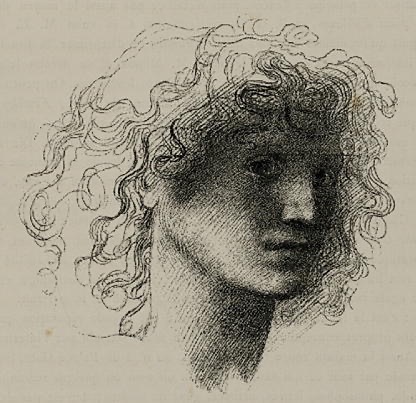
Sir Edward Coley Burne-Jones:
Tête d'étude
(1870)
This week’s EndDays dispatches arrived as the series rounded a philosophical corner it had been approaching for seventy installments. Truth preceded justice and justice preceded reconciliation, and the week traced all three: from the TRC model of Truth& to the paradox of &Retribution, from the structural inadequacy of Impeachable to the bicycle that won’t float in TheMidasPoint, from the bleak arithmetic of Retirement to the quiet accumulation of limits in Resigning. The series found its destination this week; then, suddenly, it was, in the best possible sense, already Thursday again.
Thank you for following along!
— — —
Weekly Writing Summary
Truth&
“Let the rest of us seek reconciliation and forgiveness.”
This EndDays Story turns the series’ corner toward what comes after EndDays, beginning with Truth as the necessary precondition for anything resembling justice or reconciliation.
In this EndDays Story, I considered what form our necessary reconciliation for the crimes committed by this administration might take. South Africa’s Truth and Reconciliation Commission, convened after apartheid’s end, sought something akin to the opposite of Nuremberg’s retributive justice: to acknowledge the wrongs and seek forgiveness. This high-minded effort fell short of its aims, yet still serves as a model for seeking alternative justice beyond the individual and into the social. As much as I might feel attracted to the concept of a bloodletting impeachment, I acknowledge we might need more realignment than retribution. Nobody could ever live long enough to atone for these sins. We must reclaim our identity if we are to continue as the nation we believe we deserve. Free speech does not even imply any right to engage in loose talk. Reconciliation demands not just Truth, but the courage to honestly seek it, and, perhaps, the foolhardiness to stand up and declare it. Let the rest of us seek reconciliation and forgiveness.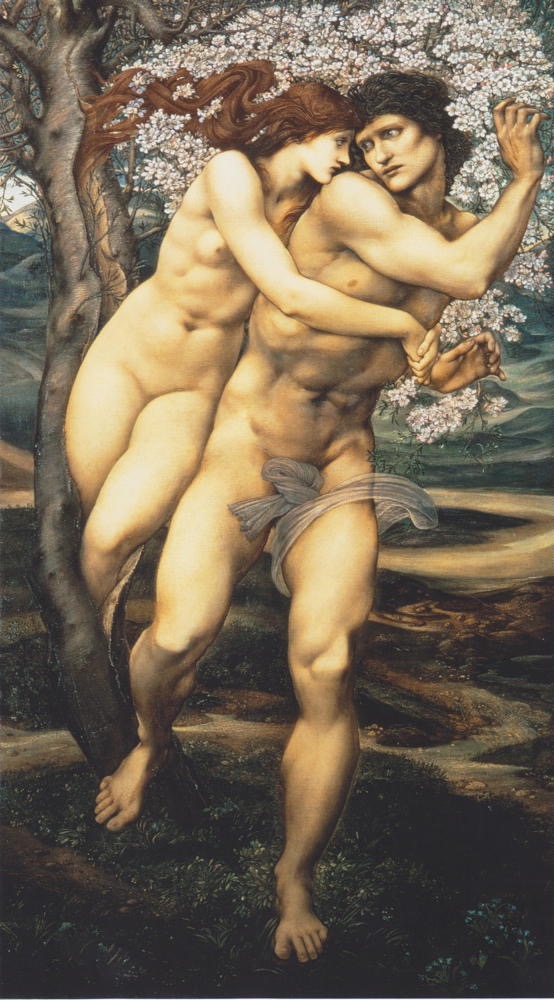
Sir Edward Coley Burne-Jones: The tree of forgiveness (1881-1882)
——
&Retribution
“Let us, in our future, not go quite so blindly into any upcoming darkness or sunrise.”
This EndDays Story finds me examining the limitations of retributive justice — and wondering if justice itself might be a sophisticated form of denial.
In this EndDays Story, I confessed to my own revenge fantasies, which proved enormously satisfying right up until they produced revulsion — right up until they insisted I commit a legal murder to settle the score. The process of retribution seemed at best paradoxical, requiring that the judge, jury, and executioner engage in what would otherwise be criminal behavior. The Columbia Gorge’s ragged burn scar, reduced to ashes and stumps by a thoughtless teenager playing with fireworks, reminded me that nothing any court might find will ever restore that pristine woodland. The worse the crime, the more inherently toothless the punishment. At Nuremberg, leading Nazis ultimately received anticlimactic deaths. Perhaps justice is just a sophisticated form of denial, a studied refusal to accept that we cannot fix any past. May we learn from their vengeance that vengeance might not have been the solution we historically held it to be. Let us, in our future, not go quite so blindly into any upcoming darkness or sunrise.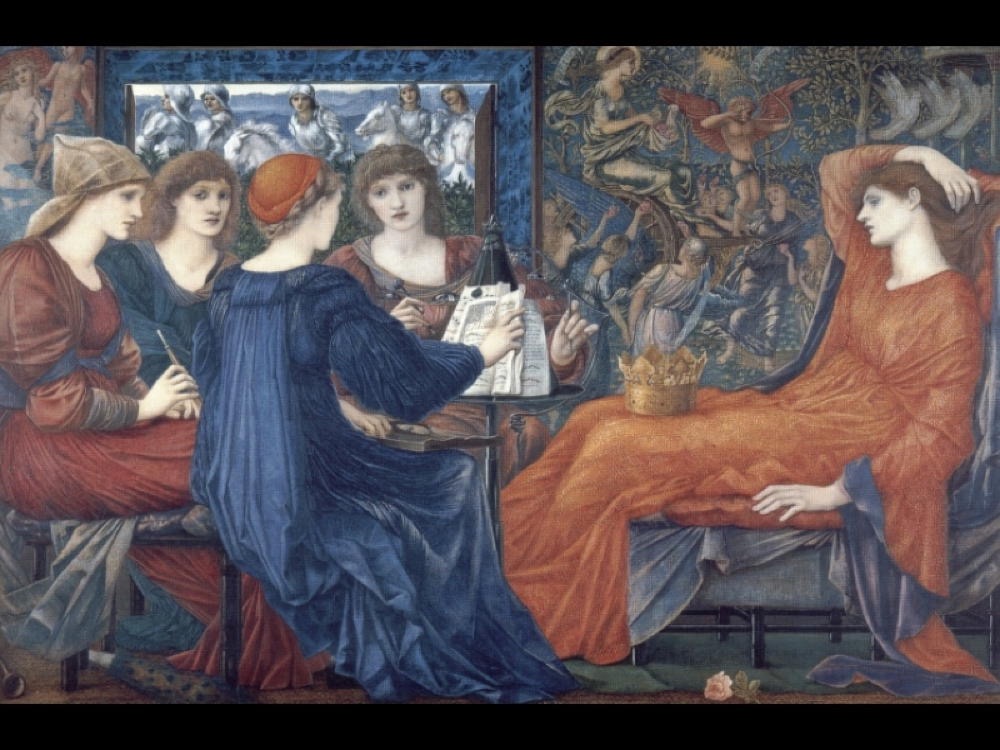
Sir Edward Coley Burne-Jones: Laus Veneris (1873 - 1878)
——
Impeachable
“Perhaps the founders intended this.”
This EndDays Story examines the Constitutional impeachment process and concludes that it amounts to little more than Constitutionally-sanctioned politics — inherently, inescapably corruptible.
In this EndDays Story, I traced the history of presidential impeachment: Andrew Johnson impeached for cause and acquitted by a cowardly Senate; Bill Clinton brought up on trivial charges and gratefully acquitted; Trump committing treason twice and acquitted both times by an equally guilty and complicit Senate. It takes much more than committing a crime to be considered Impeachable — even committing unspeakable crimes daily doesn’t rise to any Impeachable level if the incumbent’s party holds the legislature. This regrettable reality feeds an Invulnerability Myth, encouraging precisely the behavior the impeachment process was originally intended to address. I predict strategic chaos to emerge as the primary defense — troops deployed to sanctuary cities, phony US Attorneys arresting witnesses called by the prosecution. Impeachment seems nothing more or less than Constitutionally-sanctioned politics, and because of this, it seems inherently, inescapably corruptible. Our incumbent seems unlikely to live that long, anyway. Sigh! Perhaps the founders intended this.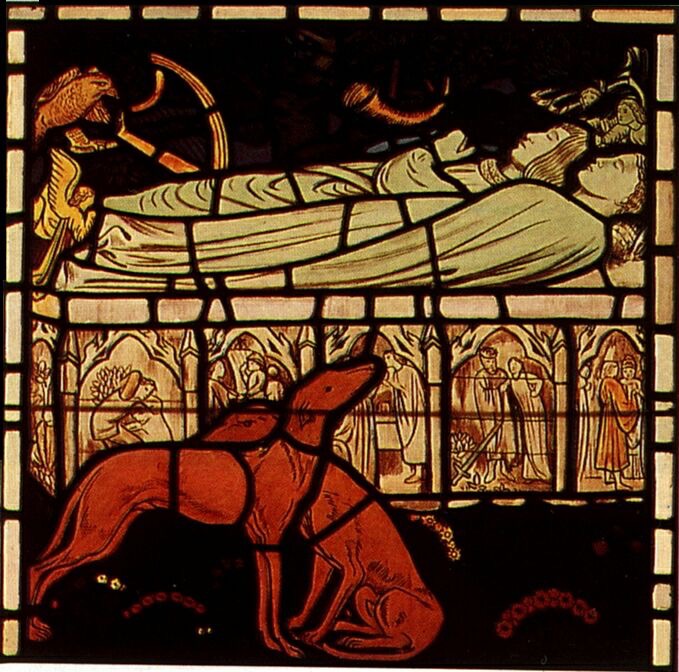
Sir Edward Coley Burne-Jones: The tomb of Tristram and Isoude (1862)
——
TheMidasPoint
“…awaiting somebody capable of riding a goddamned bicycle to take over.”
This EndDays Story finds our incumbent having arrived at TheMidasPoint — that place where commandments fail to elicit the expected response and checks and balances hem in the would-be authoritarian.
In this EndDays Story, I proposed that in a similar way that a bicycle is not a boat, our Democracy was explicitly designed not to be a kingdom, monarchy, or authoritarian state. Any odd President might mistake one for the other, but the context will quickly and reliably betray him. Our Founders had seen the troubles that too much latitude could foster, so they prescribed a more rigorous administration featuring strict roles and even stricter limits on any individual's power. Damned nearly everything required a fucking act of Congress to proceed, which meant any individual incumbent would feel like an admiral on a bicycle, toothlessly proclaiming "Damn the torpedoes, full speed ahead" to absolutely no effect. Our incumbent has reached TheMidasPoint: that place where commandments fail to elicit the expected response. The system was specifically designed to chew up and spit out such pretenders. The underlying Democracy stands essentially intact, awaiting somebody capable of riding a goddamned bicycle to take over.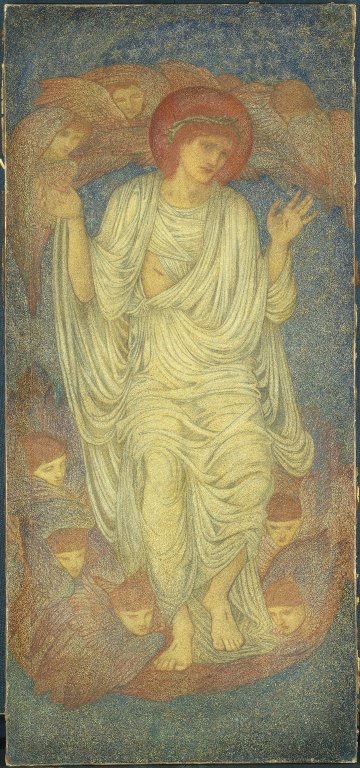
Sir Edward Coley Burne-Jones: Christ in Glory (Salvator Mundi) (circa 1874)
——
Retirement
“Good riddance to bad dictators.”
This EndDays Story surveys the widely varying Retirement options available depending upon whether one is a regular person, a democratically elected President, or a despot.
In this EndDays Story, I surveyed the retirement landscape: those who hold ten dollars in cash and no debt belong to the wealthiest portion of the population, yet few employer pensions remain since Reagan-era delusions replaced them with stock market speculation. About 78% of currently retired Americans rely on Social Security to pay necessary expenses, with the median senior living on less than $2,000 per month. Retirement features no dental insurance, no vision insurance, and Repuglican Congresses have, for years, cut the remaining meager benefits available to regular people. Despots, meanwhile, might retire with vast fortunes, though they face much greater uncertainty about whether they’ll live to see their Retirement. As for our current incumbent: denial serves as his 401(k). He over-contributes daily. Few expect him to live long enough to cash in his Social Security, though he probably wouldn’t need it anyway. He richly deserves poverty. Good riddance to bad dictators.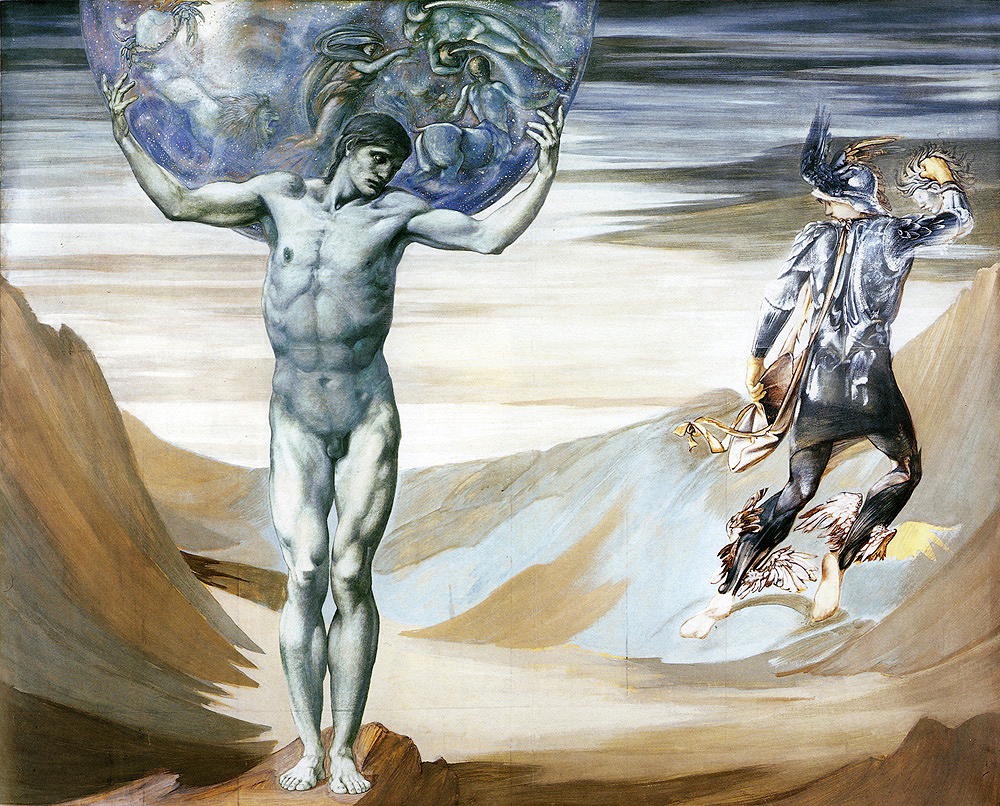
Sir Edward Coley Burne-Jones: The Perseus Series: Atlas Turned to Stone (1878)
——
Resigning
“…regrowing our backbones that render him powerless to do much more than resign in response.”
This EndDays Story considers the least likely but increasingly plausible conclusion to this administration — that our incumbent simply resigns, not from principle but from the reactive exhaustion of a man who has finally run out of room.
In this EndDays Story, I saved what I long considered the least likely EndDays scenario for last: Resigning. Even a Truth & Reconciliation Commission seemed more likely than anything resembling acceptance from our resident malignant narcissist. Yet recent events have suggested other possibilities. As his difficulties have exploded, his options have more than merely stilted. The courts have finally issued injunctions that have slowed what had seemed like inexorable downward momentum. He has recently become practiced at feigning indifference as he shuffles away from each fresh purely Pyrrhic victory. He governs like a drunken sailor dances, practiced at compensating for wave action but still stumbling his way around the dance floor. Our country was founded by a band of resisters, and we're never better than when we have something to passionately protest about. Against this growing force, we might not have found the greatness again that he overconfidently predicted, but we certainly seem to be regaining our backbone, rendering him powerless to do much more than resign in response.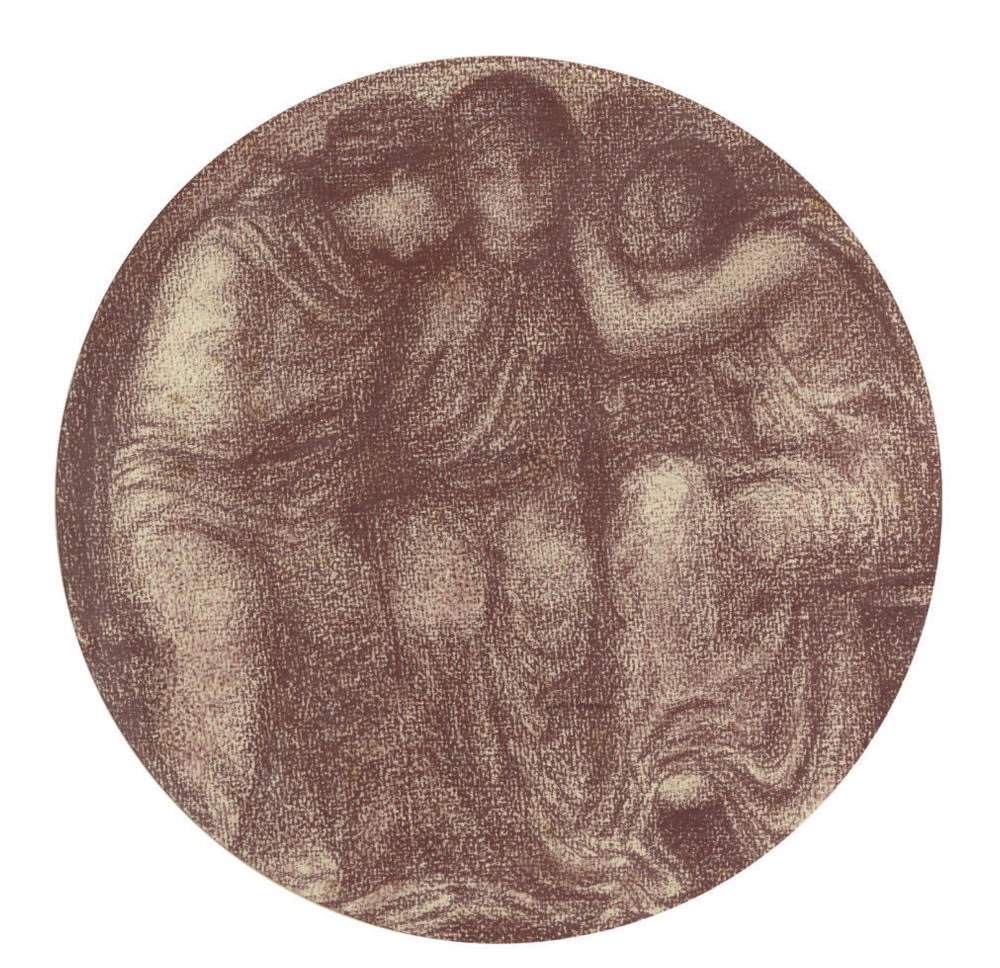
Sir Edward Coley Burne-Jones: The Three Fates, gesso rosso (circa 1868)
——
They Delighted Their Author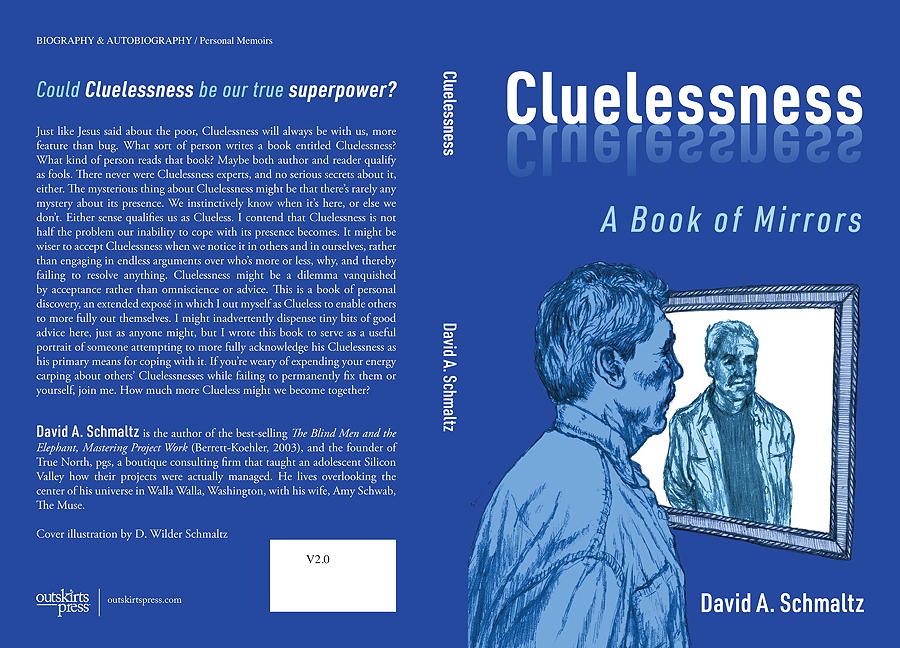
Not every performance manages to manifest as the best ever. Those arrive one at a time, and without precedent, so preparation proves impossible. I have practiced my writing, for instance, virtually every day for decades, but I remain less skilled than I imagine an actual master must be. Still, occasionally, even I experience the extraordinary. I might finally be experienced enough to understand that I very likely won't discover some previously hidden magic pattern that I might access to manifest this sensation more often. Such experiences don't seem nearly volitional enough to qualify as a skill. They can't be possessed. They seem more like visitations, the result, perhaps, of some alignment of invisible celestial bodies. Appreciated, sure, but essentially irreproducible.
It's just as well. Would such phenomena be explainable, I might be tempted to design a process or even (shudder!) muster a workshop where I could impart my wisdom as if mine came in anyone else's hat size. My wisdom seems indistinguishable from Cluelessness, most days, and I honestly only rarely ever aspire to anything different, as if there could be better. I figure the struggle I experience every damned morning might distill into an essential element of what I might mistake for my creative ability. It does not seem all that special to me. I swear it shouldn't seem all that special to anybody else, either.
But this week, the ideas and their conveying words just seemed to appear on the page. I'd fuss for an hour or two, trying to identify a worthy title or topic, then sit down and begin. The daily ritual varies little, except for the volume of procrastination I start with and the image I choose to inspire me before I begin. Maybe the images in this EndDays series carry some of the magic I've been experiencing, for I've used artwork for each installment created by Sir Edward Coley Burne-Jones, mostly in the second half of the nineteenth century. His subject matters and styles fascinate me, for they seem to combine familiar reality with the deepest fantasy, Sleeping Beauty as portrayed by the girl next door. Heroes with familiar faces; demons equally familiar.
I claim to have authored this week's stories, though I deep down doubt the veracity of that statement. Perhaps I channeled their creation. I found them revelatory, anyway. They leave me feeling like an Old Testament prophet, whether or not any of them actually manage to prophesy. I see how I might project a reality plenty and enough capable of sustaining me, even though it might be 99 and 99/100% fantasy, an Ivory soap of imagination. I feel as though I spent the week foretelling a future, even if none of what I disclosed ever comes to pass. The stories themselves, their structure and logic, delighted me for a few minutes, and lifted me up and out of a wearying and increasingly terrifying place. The fact that this MAGA crap is crap does not necessarily render it a joke.
I've reached another Thursday, grateful for my practice, the one that spawned my Cluelessness book, which might not ever become a bestseller, whatever that entails, but still inspires me to continue creating even though, or perhaps because, I still have little idea how to accomplish whatever it is I set out to achieve when I set my fingers to keys each morning. I encourage anyone who might happen upon this note to take a few precious minutes and attempt to waste them on this week's stories. I hope they delight you at least half as much as they delighted their author!
Thank you for following along!
You can order Cluelessness from Bookshop.org, Powell’s Books, or Amazon. It's now more widely available, just as the publisher predicted. I still haven't discovered the e-Book location for ordering the book, other than this Kindle link. (I didn't know that KIndle was still a thing, if it ever was.) I saw a .pdf link somewhere, but lost the location and couldn't find it again. My publisher is enamoured with their flashy portal that I keep getting lost in. See if you can do any better: Link To Publisher's Website Here
I employed Claude.ai, a commercial AI-powered text editor, using it to perform repetitive copy/pasting work and to create the above story summaries, prompting with: “Please briefly summarize this story in the first person while retaining the original voice.” I manually copy-edited each result.
©2026 by David A. Schmaltz - all rights reserved
Resigning
Sir Edward Coley Burne-Jones:
The Three Fates, gesso rosso
(circa 1868)
"…regrowing our backbones that render him powerless to do much more than resign in response."
I have saved what I have long considered the least likely EndDays scenario for this story, positioning it after presenting what I considered to be the more probable outcomes. Even a Truth & Reconciliation Commission seemed more likely to happen than anything resembling acceptance and contrition, because even the more mildly malignant narcissists rarely, if ever, come to anything resembling the acceptance necessary to engage in what I might recognize as Resigning behavior. That outcome seemed too far out of character to be plausible, if this incumbent can be said to exhibit any semblance of character. Resigning might constitute a strategic play, and this guy doesn’t exhibit much in the way of strategy, even on his few and far between better days. He seems to prefer reckless behavior over even self-preservation, perhaps because he had finally seen himself as being as powerful as he previously so often merely imagined he was. He certainly engaged as if no rules applied to him or his frail attempts at administration. He made bulls in china shops appear circumspect in comparison.
Recent events have suggested other possibilities.
Retirement
Sir Edward Coley Burne-Jones:
The Perseus Series: Atlas Turned to Stone
(1878)
"Good riddance to bad dictators."
Retirement plans vary considerably from employer to employer. Few offer pensions anymore, for they were replaced with a Reagan-era delusion that every man and woman should be able to earn ample Retirement income by speculating in the rich people’s stock market. That hasn’t worked nearly as well as expected. Medicare remains essential, if not always available, for those too aged to be covered by an employer’s insurance, though only about 60% of people under 65 have employer-sponsored insurance as of March 2025. Worker-specific numbers seem more nuanced. About 75% of workers are eligible for job-based coverage, down slightly from 2023. Access has always been deeply uneven. Employer-sponsored insurance covered only about 20% of people with incomes below 200%, compared to more than 80% of those with incomes above 400%, of poverty. Fewer than three-quarters of firms with 10 or more employees offer health benefits at all, with large employers (200+ employees) offering coverage at a nearly 100% rate compared to less than 60% of smaller firms. Cost-sharing seems significant, too, with covered workers contributing an average of 16% of premiums for single coverage and 26% for family coverage in 2025, with average family premiums reaching over $26,000 annually. Many retirees rely entirely on Social Security to provide a barely subsistence-level Retirement income.
Retirement features no dental insurance.
TheMidasPoint
Sir Edward Coley Burne-Jones:
Christ in Glory (Salvator Mundi)
(circa 1874)
"…awaiting somebody capable of riding a goddamned bicycle to take over."
In a similar way that a bicycle is not a boat, our Democracy was explicitly designed not to be a kingdom, a monarchy, or an authoritarian state. Those latter forms of government, while proven viable in some contexts, just don’t float here, in precisely the same way that a bicycle fails to float. Any odd President might mistake one for the other, but the context under which he might attempt to rule will quickly and reliably betray him and his intentions. He might, by simple delusion, convince himself of his successes, but few of even his most fervent followers will manage to follow along as his bicycle eventually strays ever further from land. Each form of governance requires certain contextual realities. Ours centers around laws, which might never qualify as inviolate but still fail to behave in ways similar to commandments, just as intended. One might command until they’re quite literally blue in the face to little effect. One might convince themself that they have The Midas Touch up until the reckoning comes due and Congress refuses to extend the purse. Curse as he might then, the incumbent has reached TheMidasPoint, that place where commandments fail to elicit the expected response and where checks and balances hem in the would-be authoritarian.
I’ve been speaking of options for removing an incumbent President, but have overlooked until now the possibility, indeed the inevitability, of disqualification, resignation, or simple self-negation.
Impeachable
Sir Edward Coley Burne-Jones:
The tomb of Tristram and Isoude
(1862)
"Perhaps the founders intended this."
The impeachment of a President takes separation of powers to dizzying levels. The indictment, brought by the House of Representatives, requires only a simple majority to be advanced to the Senate, where the Chief Justice of the Supreme Court presides in a trial. A supermajority of sixty-seven Senators must vote to convict there, and thereby remove the accused from office. The Senate may also optionally choose to bar the convict from ever again holding Federal office. Think of this process as a trial complicated by partisan politics played at their most frenetic by the terrified. Andrew Johnson and Bill Clinton were impeached and then acquitted in the Senate. Donald Trump was impeached twice, then acquitted in the Senate twice. Few equate this impeachment process with justice. Andrew Johnson was impeached for cause, only for a cowardly Senate to refuse to impose well-deserved justice. Bill Clinton was brought up on what history would recognize as trivial, if not trumped-up charges, only to be gratefully acquitted by a thankfully sane Senate. Trump committed treason twice and was acquitted both times by an equally guilty and complicit Senate.
It takes much more than committing a crime to be considered Impeachable.
&Retribution
Sir Edward Coley Burne-Jones:
Laus Veneris
(1873 - 1878)
"Let us, in our future, not go quite so blindly into any upcoming darkness or sunrise."
Who hasn’t spent some days, since this administration that hasn’t quite gotten around to administering anything, assumed office, engaging in revenge fantasies? Mine have, at times, been quite satisfying, as I imagined myself the just judge, wise jury, and even the enthusiastic executioner. I figured that the bastards had at least that coming, probably worse, and, rather than merely curse my fate, I might just as well serve some good old-fashioned just desserts. The judging came easily. The wisdom, a little harder. The enthusiasm surrounding the actual execution, though, undermined my earlier ardor. The prospect of getting blood on my hands, and probably down my shirt front, too, left me questioning the underlying wisdom actual retribution entails. It seems to require that the judge, jury, and executioner agree to engage in what would otherwise be easily seen as criminal behavior in order to properly dispense justice. This process seemed at best paradoxical.
But those were merely revenge fantasies.
Truth&
Sir Edward Coley Burne-Jones:
The tree of forgiveness
(1881-1882)
"Let the rest of us seek reconciliation and forgiveness."
After the end of apartheid in South Africa, Nelson Mandela authorized the convening of a court-like restorative justice body to both hear testimony from witnesses identified as apartheid’s victims and perpetrators seeking amnesty from apartheid-era civil and criminal prosecution. This body was called the Truth and Reconciliation Commission (TRC) and was intended to achieve something similar to what the Nuremberg trials after WWII had not. The Nuremberg Trials represented retributive justice, seeking to attribute guilt and impose punishment. The TRC sought something similar to the opposite, to acknowledge the wrongs and to seek forgiveness. This high-minded effort fell short of its aims, yet left a deep impression on both South Africa and the world. It still serves as a model for seeking alternative justice for widespread criminal behavior, beyond the individual and into the social. Canada mustered one as part of its Indian Residential Schools Settlement Agreement to document the systemic harms and history of Canada’s residential school system. Guatemala, Peru, and East Timor also pursued similar reconciliation strategies following self-inflicted human rights tragedies.
As these EndDays stories near the end of their series, my thoughts have increasingly turned toward What’s Next, though I already posted my WhatNext Series back in the autumn of 2020.
Weekly Writing Summary For The Week Ending 05/28/2026
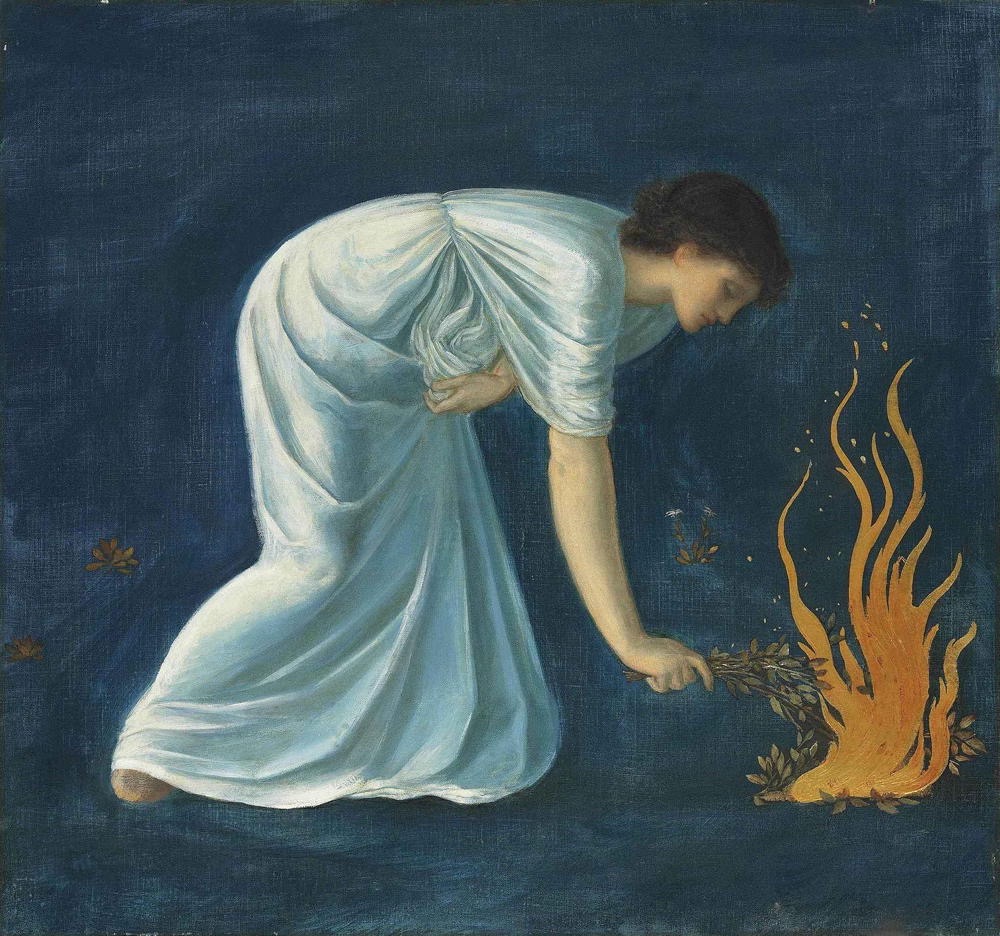
Sir Edward Coley Burne-Jones:
Hero lighting the Beacon for Leander
(1885)
This week’s EndDays dispatches arrived in the aftermath of standing up in a room full of local leaders and saying the thing that needed saying. The writing ranged from the patient fury of Tolerance to the slow slide of Erosion, from the epistemological trap of ReceivedKnowledge to the paradox of ExperTease, from the systematic cruelty of Capriciousity to the civic illiteracy of Gumment. The week also brought a sophisticated publishing fraud using a real editor’s name and a nearly correct domain — and BookBub, which appears to be the genuine article. The series found its full voice this week. Then it was already Thursday again.
Thank you for following along!
Gumment
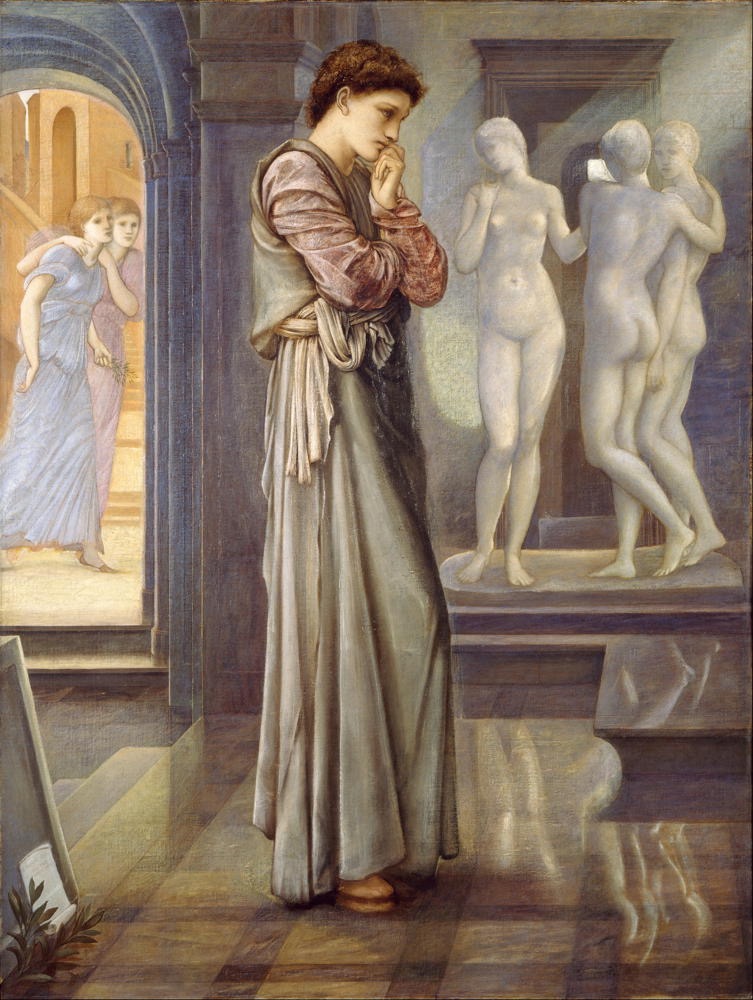
Sir Edward Coley Burne-Jones:
Pygmalion and the Image - The Heart Desires
(1878)
"Nobody will ever properly govern for us; we’re required to be more than merely emotionally involved: of, BY, and for."
I suspect I know much less about how our government works than I suspect. I suppose that I’m not in anything like a unique position concerning this issue. I doubt that it was ever any different, though nostalgia might have affected my remembering. I would prefer to believe that we citizens, those of us for whom our government was originally constituted, the much-vaunted “We, the people,” were well-versed in the workings of our governing institutions, but I fear that we’ve never mastered much more than a Pidgin proficiency in either our government or our history. This condition makes us easy targets for unscrupulous operators who might feel little compunction about materially misrepresenting to us our rights and obligations under the law. Certainly, this current administration, which has never been rightfully accused of properly administering anything, has proven no exception to this caution, for it seems to operate as an exception to every actual rule constituted under our laws.
We haven’t responded with anything like the vehemence these violations have warranted.
Capriciousity
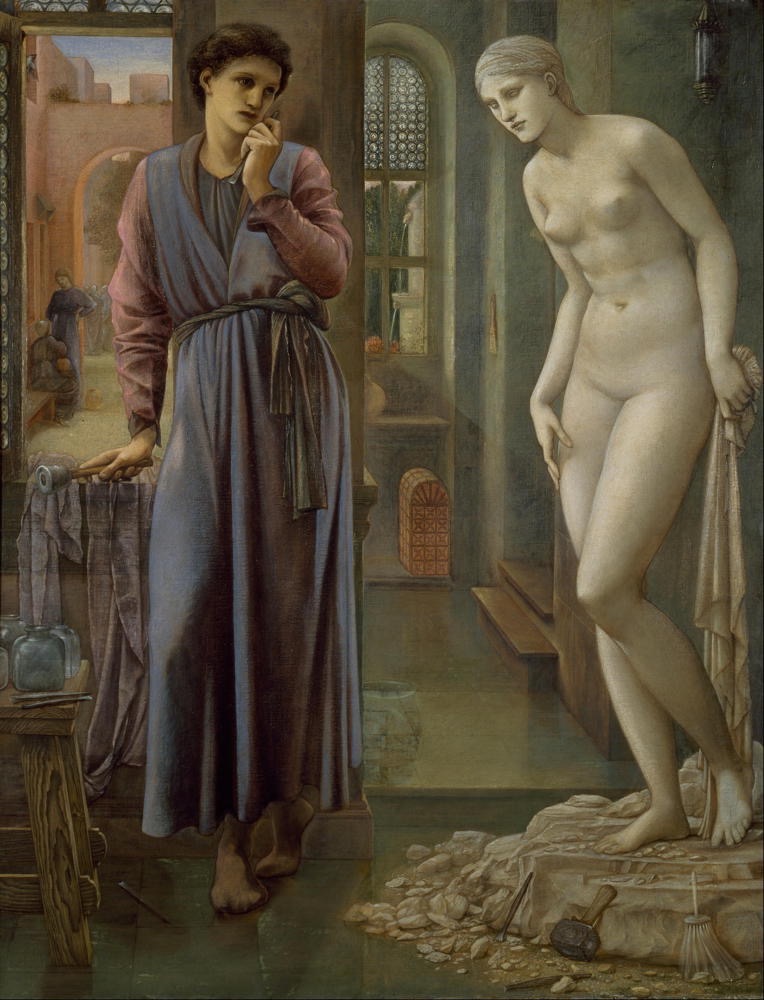
Sir Edward Coley Burne-Jones:
Pygmalion and the Image - The Hand Refrains
(1878)
"Then, perhaps, equal justice under the law might start making sense to even them, though I doubt it."
Equal protection under the law serves as the bedrock principle under which these United States have operated at least since the 14th Amendment was enacted after the Civil War. If enforcement has been anything but consistent, Congress’s intent in proposing it and the majority of the States’ intent in ratifying it seal its presence as something other than inadvertent. This administration still struggling to comprehend the concept of administration, which has been seemingly deliberately failing to abide by this fundamental underlying principle, as it has been consistently inconsistent in how it enforces laws. Clearly, race and national origin, as exhibited most profoundly in their vicious prosecution of so-called illegal aliens, have appeared with obvious intent to overtly violate this most fundamental legal principle. Declaring an alien illegal merely due to their due process being delayed by an overwhelmed judiciary does not render them illegal in any actual legal sense. If anything, they might find themselves temporarily suspended between legal statuses. Pending might better describe their formal status, and, under the principle that no one can be fairly characterized as guilty until found so by a jury of their peers, it cannot be treated as even a preliminary form of guilt. These “illegals” are clearly still innocent, until.
Those who arrive here illegally are also guaranteed due process, for that right is not reserved only for citizens but for any person present in this country, as our Constitution insists.
ExperTease

Sir Edward Coley Burne-Jones:
Green Summer
(1864)
"…adequately stunning to render any controversy about their quality moot."
The one with the most information does not necessarily win any competition, for their competitor cannot compete on the same playing field, and might well default before an actual game can even begin. One might try to more perfectly pair levels of actual ExperTease, lest an encounter dissolve in jest or worse. A contest worth watching tends to be well-balanced, with each contestant nearly equally skilled, lest their play turn into a rout. Routs are notoriously awful to witness. Whomever one roots for tends to lose. When success turns into a foregone conclusion, who should even be bothered to watch? Likewise, no one except a player’s family enjoys a game between two teams without at least some expertise in the game. It’s a tenuous balance.
For The Muse, the potential that a data center presented needed to be carefully calculated.
ReceivedKnowledge
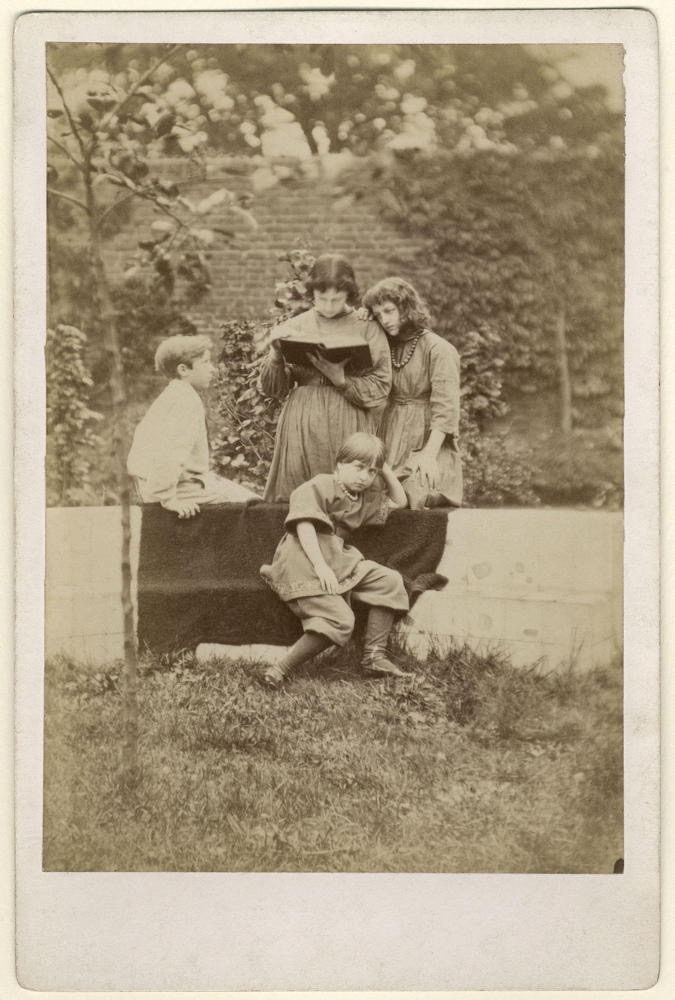
Frederick Hollyer:
The children of Sir Edward Coley Burne-Jones, 1st Bt and William Morris
(1865)
"...as if I had become the genius I should have remembered I never was."
I was reading ‘my’ New Yorker over breakfast, when I encountered another especially glaring example of ReceivedWisdom. I found this instance particularly upsetting because the New Yorker has always been renowned for its scrupulous editing and fact-checking, yet here it passed off a popular prejudice as if it were a commonly understood fact. The article, Fools Rush In, was a lighthearted report from California’s new gold rush. With the price of gold hitting five thousand dollars, many had abandoned whatever their prior profession might have been, or after that profession had abandoned them, to work old abandoned placer mines in the Sierra Nevada. The author, Jennifer Wilson, was presenting a brief history of California’s State legislature’s attempt to regulate certain sorts of mining that dredges up long-buried mercury deposits that poison rivers and fish. She claims, “I wanted to dismiss that posture [miner protests against these regulations] as science denialism tinged with macho bravado. But then I imagined how I’d feel living near Silicon Valley, whose billionaire class shows up clean-shaven and well rested at Davos to pitch toxic, water-draining A.I. data centers.” I executed a full stop!
In the popular literature, A.I. data centers are almost always characterized as toxic and water-draining, as if these were undeniably uniform attributes of all data centers, when they are most certainly not.
Erosion
Sir Edward Coley Burne-Jones:
The Falls from the Narrow Neck near the Eastern Headland of the Outlet
(1865)
We cannot maintain anything like a society of, by, or even for the people, if those people, We The People, are not absolutely committed to pursuing truth together.
EndDays prominently feature Erosion. Whether Erosion causes EndDays or EndDays encourages erosion, I can’t say. Both contribute. This snake eats its own tail. It seems certain that once EndDays appear, Erosion increases, just as if some critical mass had been exceeded and gravity simply proceeded doing what she’d always done, only ever so much more so. Truth might have been the first stalwart to go, for it had always been essential and irreplaceable. Once truth starts slipping, a long, inexorable slide appears. There was never any way back from there. Then the end does more than just seem to be growing nearer.
Cynicism might be the concerted lack of belief in truth’s beneficience.
Tolerance

Sir Edward Coley Burne-Jones:
Study of a Head
(1879)
"There comes a point in the history of a nation when continued Tolerance no longer cuts it."
My fellow Americans and I must be the most tolerant people in history. We’ve been tolerating the ignominy of a capricious incumbent and his equally insulting Cabinet. We’ve tolerated unprecedented abuses of our public and private decency. On any odd Tuesday, the current incumbent outdoes the insults King George III inflicted upon our forebears. Our forebears flinched and fought back, even though it appeared at first that they had no chance of vanquishing their persecutors. They were that furious. I feel curious as to what offense might flip our stoic forbearance and force us to take up something resembling arms in defense against the continuing humiliation. This is still our nation, after all, and a self-destructive renter has been absolutely trashing our old home place.
Any contest between couthness and uncouthness seems foregone from its outset.
Weekly Writing Summary For The Week Ending 05/21/2026
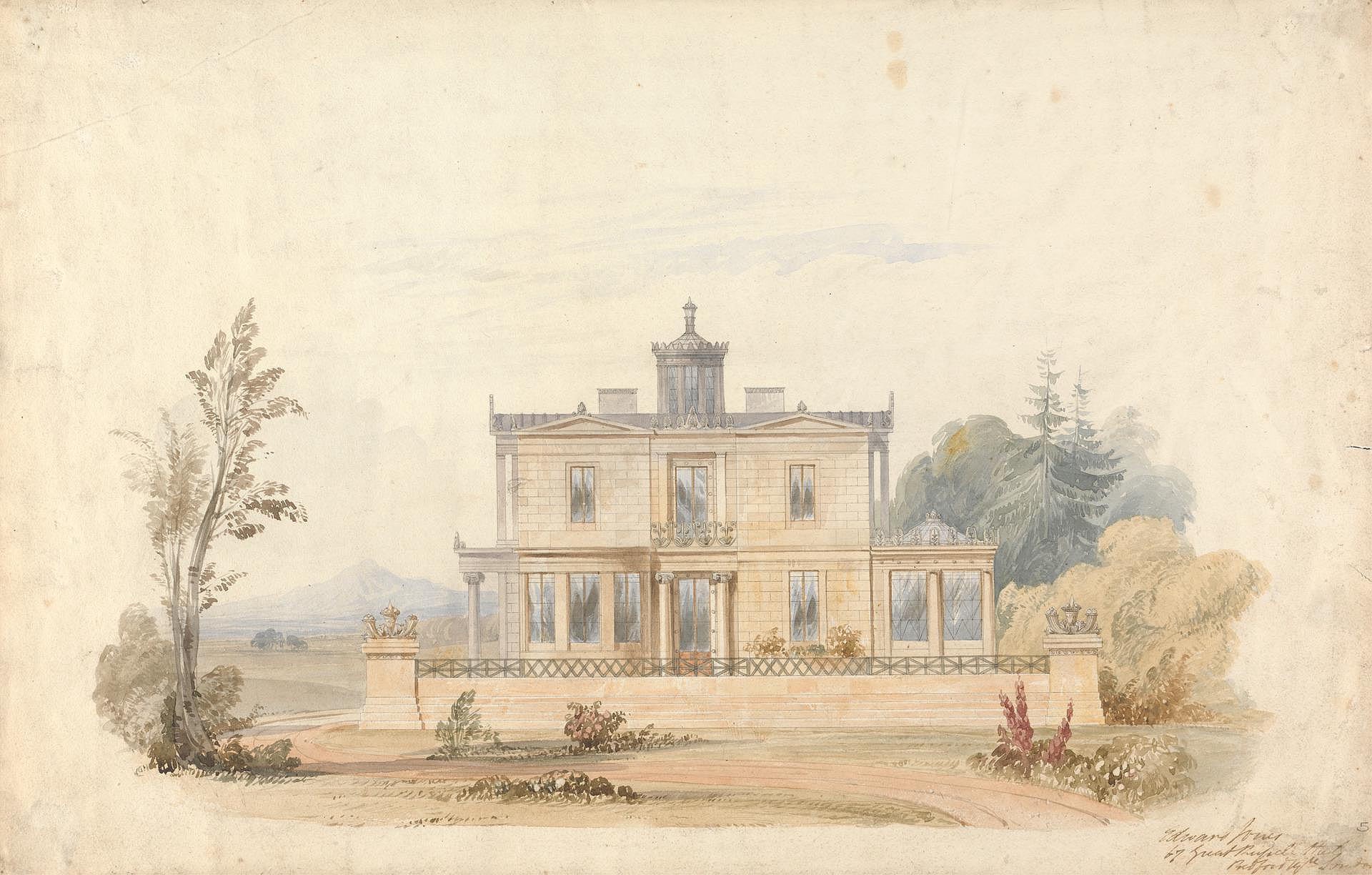
Sir Edward Coley Burne-Jones:
Design for an Athenian Villa
(unknown)
This week’s EndDays dispatches arrived while I was partly in alien territory, writing from the lobby of Skamania Lodge as The Muse attended a Washington State Port Commissioners gathering. The Columbia River predawn fog held steady outside while the week’s writing ranged from the physics of Backwards progress to the theology of Religionism, from the terror of public acknowledgment to the discomfiting blindness of PipeDreaming. I stood up in a room full of local leaders and said the thing that needed saying out loud. I felt, for the first time in a long while, unmistakably like a writer. It was just Thursday.
Thank you for following along!
PipeDreaming
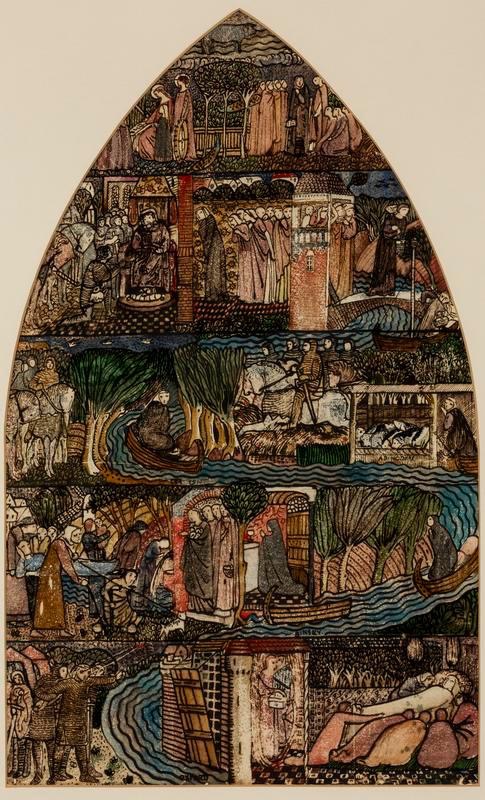
Sir Edward Coley Burne-Jones:
St Frideswide - Design for Stained Glass Window, Christchurch Oxford
(1859)
"I didn't see him again for the rest of that evening."
I might best characterize EndDays as those in which PipeDreaming subsumes otherwise ordinary planning and processing. The Old Status Quo’s natural force seems to defend against acknowledging any more current state of affairs, and those charged with foreseeing expend their increasingly limited energy looking backward, basking in beliefs and perspectives already rendered moot. They do not see the easily foreseeable upcoming, but continue insisting that everything remains essentially fine. Sure, some minor concern might seem prudent, but Our President would not lead us into anything like overwhelming temptation. To them, we seem to be in no real danger, other than the usual business cycle. Sure, they insist, prices might have risen a bit, but the market seems wise enough to compensate before anything crashes. If everything isn’t precisely fine, it sure seems to be trending positive.
The campaign promises were received by some as iron-clad prognostications, learnéd predictions about future performance.
Backwards
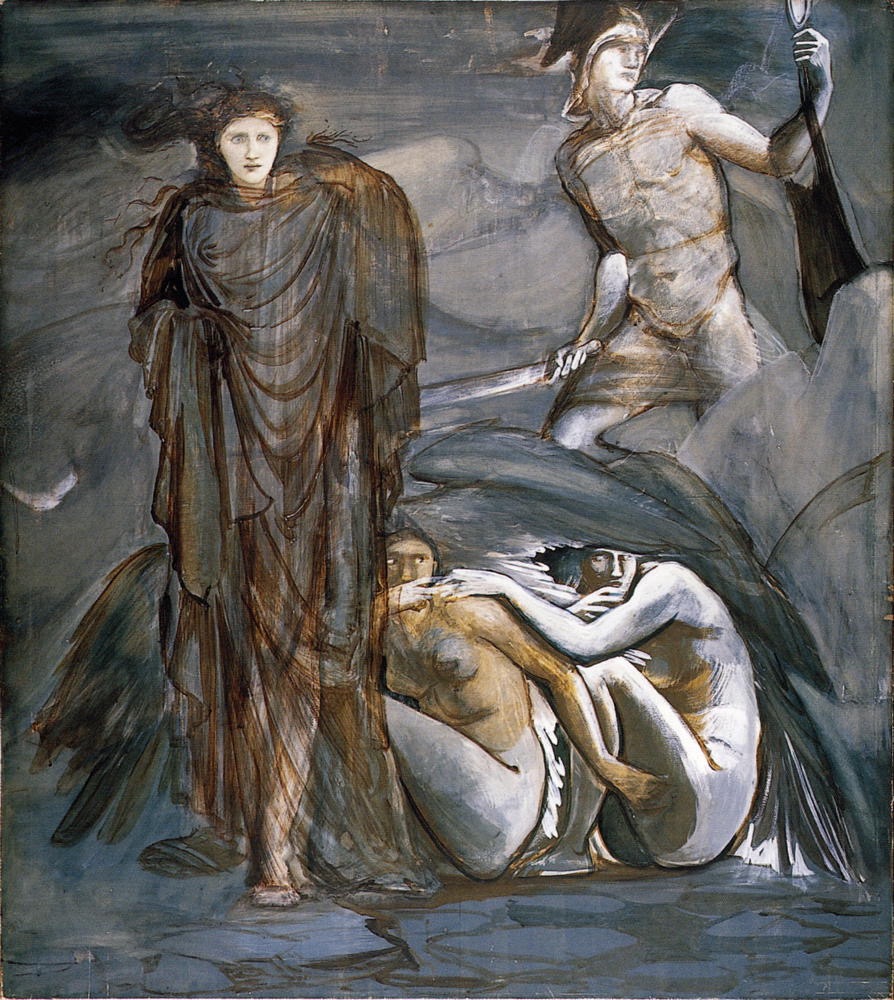
Sir Edward Coley Burne-Jones:
The Perseus Series: The Finding of Medusa
(1882)
"…going Backwards inevitably proves impossible and ultimately self-defeating."
Electing a corrupted individual into a public office sets the whole enterprise reeling Backwards. Whatever formerly passed for human progress abruptly ceases. Utter irrelevances replace significances, and the purpose of the resulting administration, besides their utter inability to actually administer anything, becomes corruption. We should have long ago passed a law, a prominent amendment to our revered Constitution, declaring that no convicted felon could be qualified to hold the highest office. It had never happened before, though this first time clearly shows the wisdom of just such a provision. Now, the corruption extends to pretty nearly everyone still left in this administration incapable of administration, and not only because only the most incompetent remain; all of the honest ones were successfully chased off by their refusal, steadfast and quick, to compromise their ethical standards. Those remaining apparently never had such compunctions. Many gleefully agreed to assist in engineering a delusional Backwards shift.
Generations of actual progress toward creating a genuinely more perfect union were discarded in an initial blizzard of misrepresentations.
Terrorized
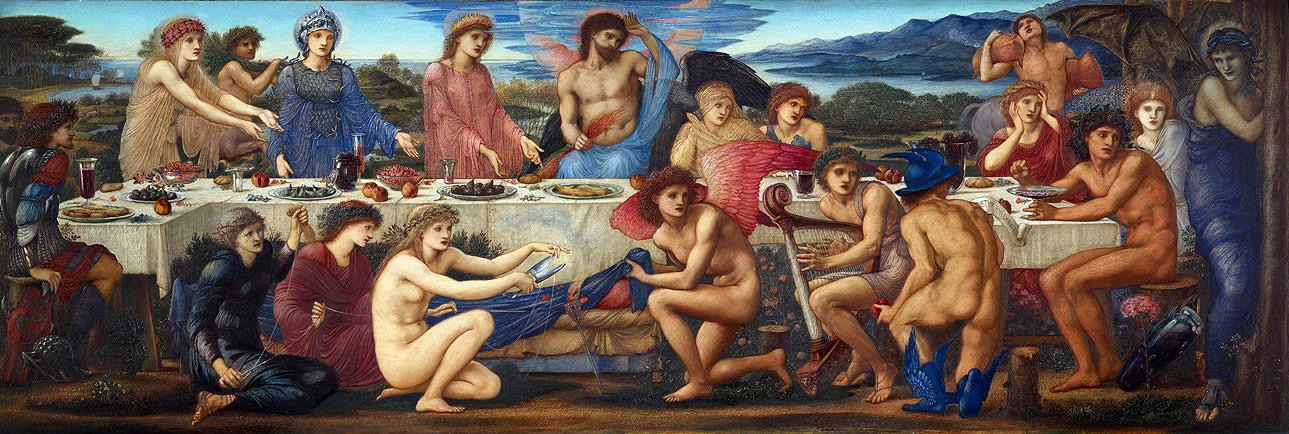
Sir Edward Coley Burne-Jones:
The Feast of Peleus
(between 1872 and 1881)
"Such small incremental improvements, even if only in acknowledgements, often produce great differences."
The Muse and I were invited earlier this Spring to participate in a group focused on trying to compensate for the terrorism our incumbent had been inflicting upon innocent immigrants. This effort would have been unnecessary, just as it had been under every previous administration, but this administration, which never really dedicated itself to competently administering anything, had taken a different tack. It had decided to attempt to send brown people back to what the administration undedicated to actually administering anything imagined might be their family’s country of origin, or, in lieu of that, even some country the brown person had maybe never even heard of before. Their policy had been to rid the country of immigrants, whether or not their legal status suggested they had a legal right to be here. Oh, this administration that couldn’t quite imagine itself administering anything denied those immigrants the due process guaranteed to everyone, even non-citizens, by our foundational Constitution.
Such was the context within which that first meeting, and three subsequent ones since, had taken place, yet that context had never been explicitly mentioned.
Religionism
Sir Edward Coley Burne-Jones:
The Baleful Head
(1890)
"Why, in all that's actually holy, would we ever decide
to downgrade ourselves into being merely a Christian nation?"
One sure and certain sign of EndDays arriving lies in sustained religious zealotry. Any time might spark a temporary blip in religious fervor, but a sense that EndDays are upon us curses many with a sincere sense that they might be in desperate need of immediate salvation. People will agree to the strangest things when they believe their eternity looms. Charlatans proliferate then, as preachers and politicians, each purporting to hold special dispensations, as if they’d previously died and even gone on to heaven, only to return to council any late arrivers. Scripture starts being used for the strangest purposes. A prince of peace might be introduced as some latter-day god of war. Soldiers might be exhorted to behave like Christians, that kind of Christian who acted more like a Roman soldier. The lyrics, “Onward Christian Soldiers, marching as to war,” lose their allegorical nature in favor of a more literal interpretation. The Ten Commandments get amended to allow a few of the usually more egregious infractions into the lexicon as exceptions, like the prohibition that used to insist Thou Shalt Not Kill no longer applying to upstanding Christian personnel.
The very concept of godly gets turned on its ear, and one wonders where we think we’re going, other than nowhere or Hell.
ChangingWorlds
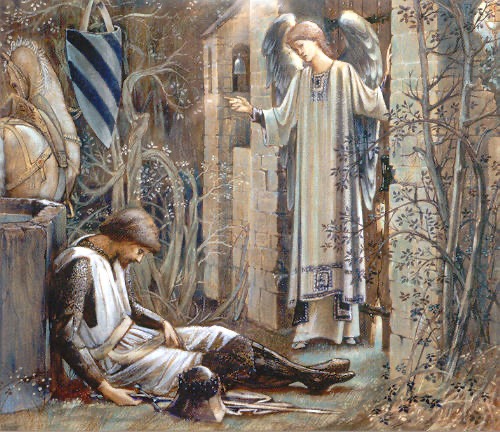
Sir Edward Coley Burne-Jones:
The Earthly Paradise (Sir Lancelot at the Chapel of the Holy Grail)
(1890)
"I once feared and felt cowed by their delusions. No more."
EndDays seem decidedly different than most of the days that came before. They seem crueler and less rewarding. We have a performative idiot spouting unsettling koans we cannot understand any more than we seem capable of ignoring, even though they most likely signify nothing. I feel astounded at how easily I surrendered my sacred serenity, seemingly setting my own hair on fire in defiance. We see ever clearer evidence that this era might signify nothing more than the vanity of a few of the wealthier fools, nothing this world hasn’t seen plenty of times before. I’ve felt especially cursed when I might have been little more than perfectly normally cursed instead. Nothing particularly special. Oh, I wear my hair shirt and suffer right along and right next to everyone else, but I suppose EndDays might be supposed to seem that way. Are they really? Must they necessarily seem that way?
I realized this week that our incumbent has already passed the threshold beyond which no former president ever accomplished anything new.
Gravlity
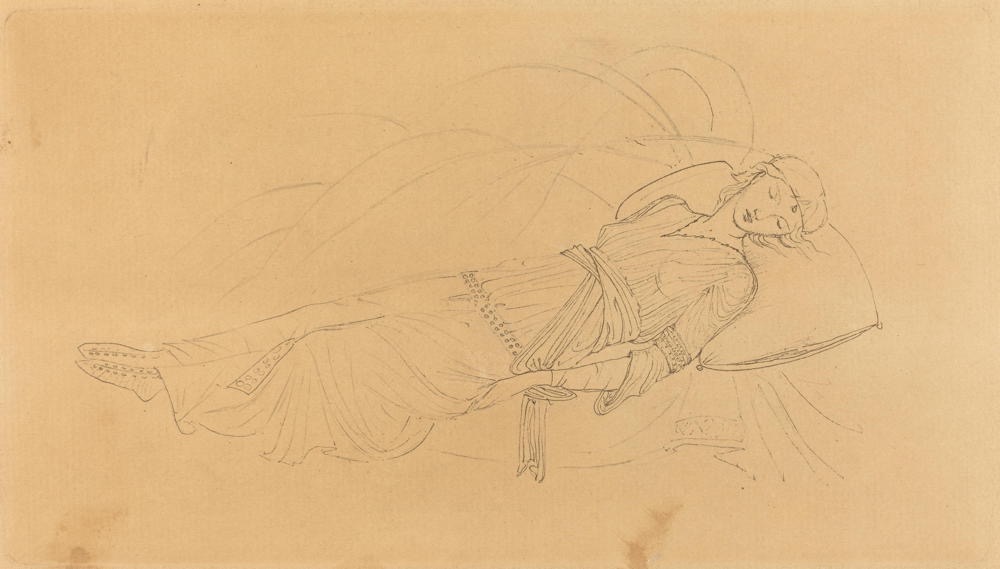
Sir Edward Coley Burne-Jones:
La Belle au bois dormant-[Sleeping Beauty]
(1890)
"…the physics of making this country great again
seem to reliably result in rendering it worse."
Aristotle posited that two forces governed the positioning of the four fundamental elements: Earth, Water, Fire, and Air. Gravity ruled over Earth and Water by encouraging them to sink to what he referred to as “their proper level,” which sat beneath air and fire. An opposite force, he labeled levity, ruled Air and Fire’s behavior, which, according to their nature, levitated above both Earth and Water. Though his notions would later be shown to be incorrect, they successfully explained the observed behavior of these fundamental elements for two millennia. Earth does indeed tend to sink below the water, and bubbles rise through the water, occupying the space above. Fire produces smoke that naturally rises through air, though the elevating force Aristotle insisted upon calling levity turned out not to exist as he’d envisioned. Still, he described what we might easily accept as our a priori world, the one we all inhabit until actual scientific knowledge supplants our original innocence.
My intuition still expects my universe to sort itself out on Aristotelian terms, and I feel deeply disoriented whenever it doesn’t.
Weekly Writing Summary For The Week Ending 05/14/2026
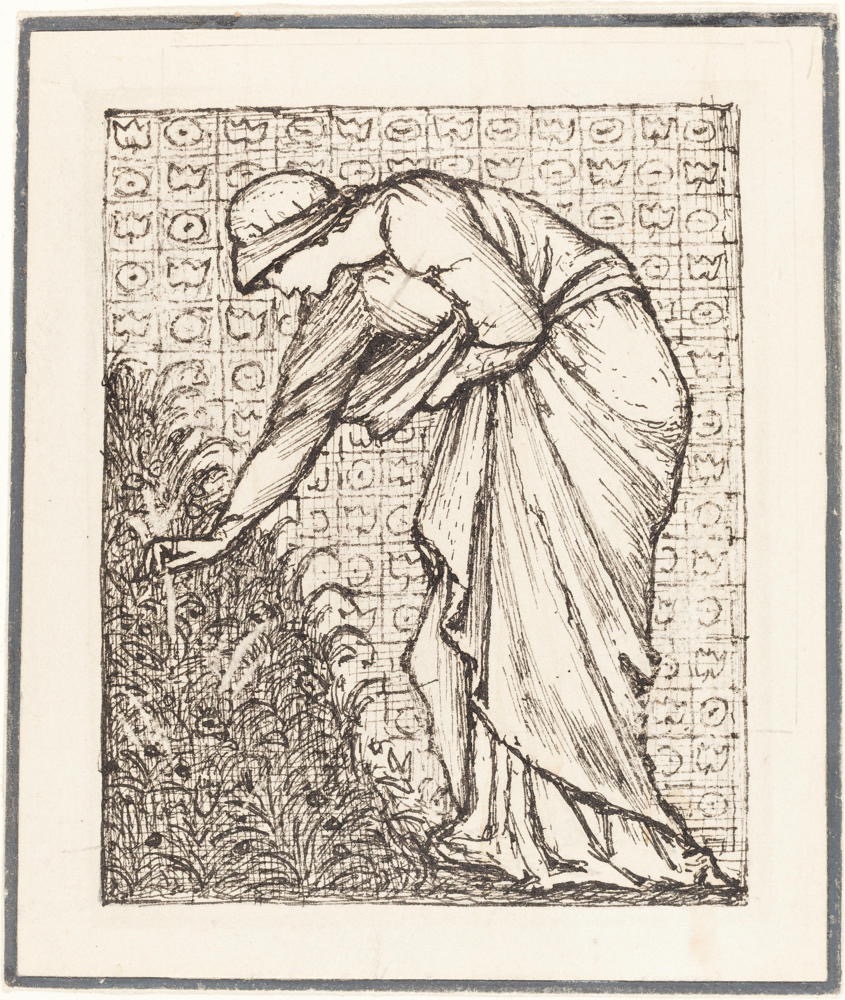
Sir Edward Coley Burne-Jones:
Lady Picking Flowers
(1890)
This week’s EndDays dispatches moved between the political and the personal with unusual ease. A presidential DeathWatch stretched into another exhausting anticipatory week. The King’sHorses of our incumbent’s second administration proved no more capable of saving him from himself than the nursery rhyme predicted. I turned from political catalogues to ask myself the only question that matters — WhatDidYouDo? — and answered it honestly, if not flatteringly. A Madman held court. Commerce frustrated me into near total abstention. And a parade of publishing AgentScenes reminded me that my aspirations for Cluelessness remain cheerfully unimaginable to those who profit from the Published Author Myths. A good week’s work, all things considered.
Thank you for following along!
AgentScenes
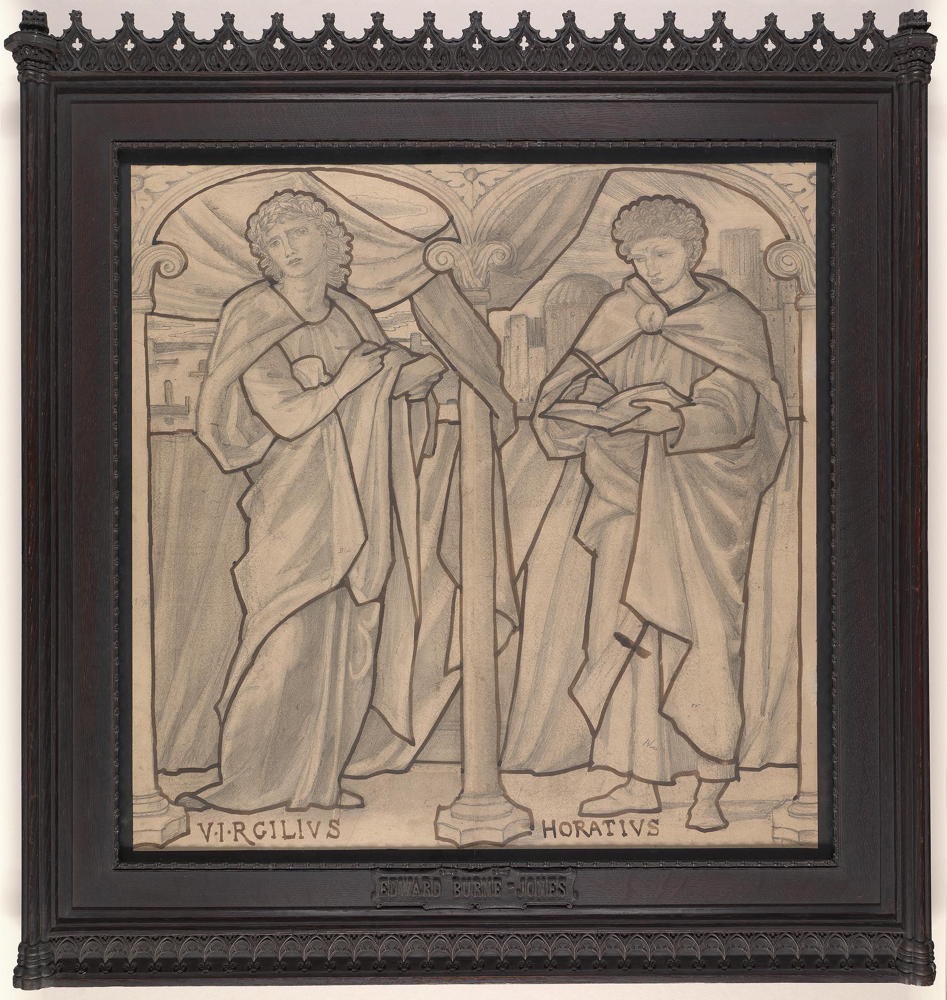
Sir Edward Coley Burne-Jones:
Preparatory Design for a Stained Glass Window, Virgil and Horace
(Undated)
"If I emphatically whisper, I believe the right readers will hear."
Since I published my book, Cluelessness, three weeks ago, I have received several calls from various “agents” seeking to assist me in turning the book into the bestseller they presume I intend it to become. Each has a scheme that they claim could transform my work from an unassuming self-published into something notorious. One dealt with connecting authors with agents who purchase subsidiary rights, such as audiobook production, foreign-language, and serialization rights. She had assembled a list of “over 600” active purchasers of such rights. She offered to sell access to this email list for three thousand dollars and to throw in some free advice on the “come-on letter” that should accompany each cold-call contact. I sat through an hour-long self-promotional video in which I was introduced to someone with superhuman self-regard and invited to “invest” in my book. She was not interested in investing in my book, though she seemed more than willing, downright anxious, to profit off it nonetheless. I declined her invitation.
There might not be any end to those who feel moved to offer me some scheme to further invest in my dream, though my dream for the book doesn’t quite match the dream they aspire for me to have for the work.
Commerce
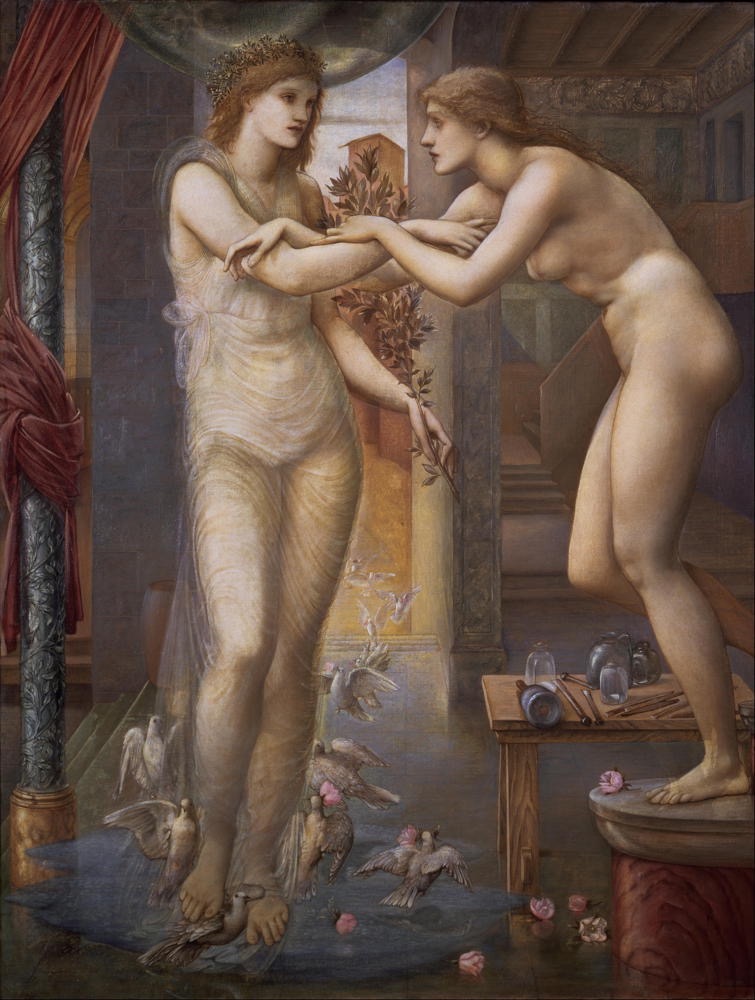
Sir Edward Coley Burne-Jones:
Pygmalion and the Image - The Godhead Fires
(1878)
"…Commerce there will likely be no better."
It has never been more difficult for me to simply buy something. I blame convenience for the terrible state of Commerce; few things remain accessible except online. More than anyone could ever desire remains available online, though the price of purchasing anything there might convince a shopper that it’s not really worth the accompanying hassle. Convenience brings hassles all its own, completely different than the more familiar yesteryear in-person shopping hassles. Finding a product has been simplified to the point that it’s essentially impossible to find a single instance of any item. Trying to find something invariably yields an overwhelming variety of that product, leaving the shopper confronted with the Paradox of Choice. Comparing two ot three alternatives can seem fairly easy for most, but winnowing down two or three dozen choices produces less a choice than a dilemma, one that seems to damn this shopper whatever I choose. I often decide that I didn’t sufficiently want that item when faced with this dilemma, so I quietly delete it from my shopping list, lest my choice somehow damn me. I tend to be better for whatever I never chose to purchase. That’s the essence of EndDays Commerce.
On those rare occasions where I decide to choose something, unseen externalities conspire to gang up on me.
Madman
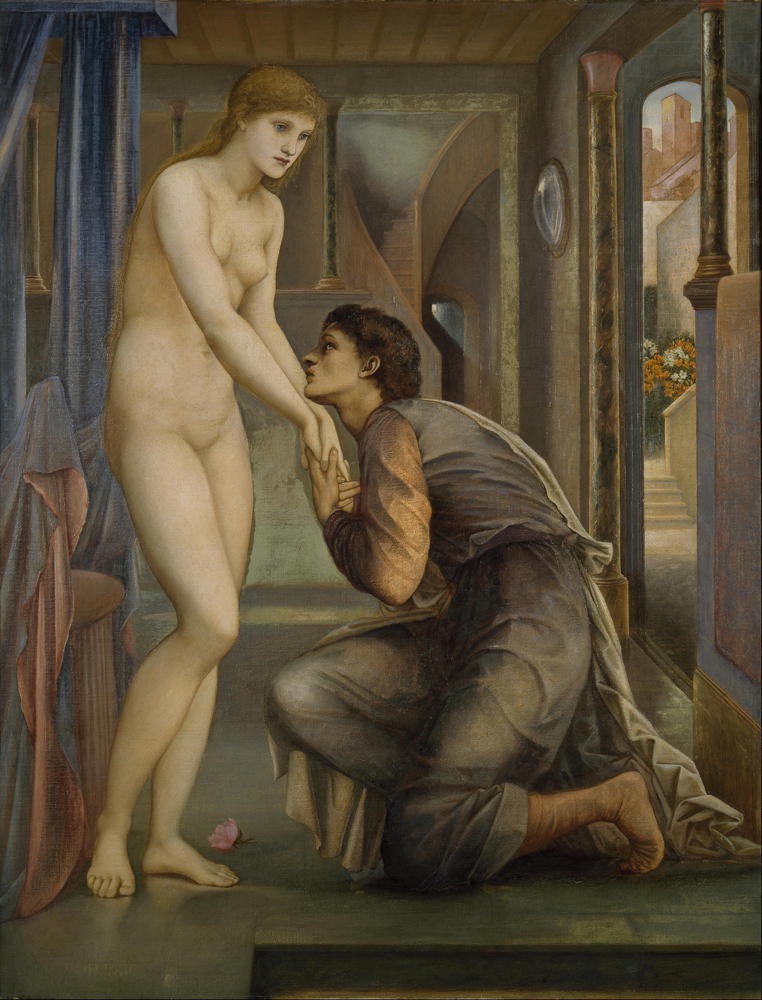
Sir Edward Coley Burne-Jones:
Pygmalion and the Image - The Soul Attains
(1878)
"Pray for the retinue."
He rambles when he speaks, just as if he cannot help himself. He doesn’t seem capable of sticking to any topic, though he does tend to swerve back to some chief irrelevance, depending upon what he might be obsessing about at that particular moment that week. Very little of whatever he says seems terribly focused. He calls a press conference as if only to berate the dutifully assembled press, sometimes insisting that all reporters leave the room before he begins, to punish them for some imagined infraction, I guess. He often appears to doze, though, admittedly, that might just be some sort of negotiating ploy, if only he had been negotiating anything in those instances. He wasn’t. He moves like a drunk through the world, coming very close to bouncing off things he passes, bullshit wending through a china shop. He pretends a lot, though it might be that he believes everything he says. If so, he’s a Madman. Of this, little doubt remains.
He will not be talked out of his irrational convictions.
WhatDidYouDo?
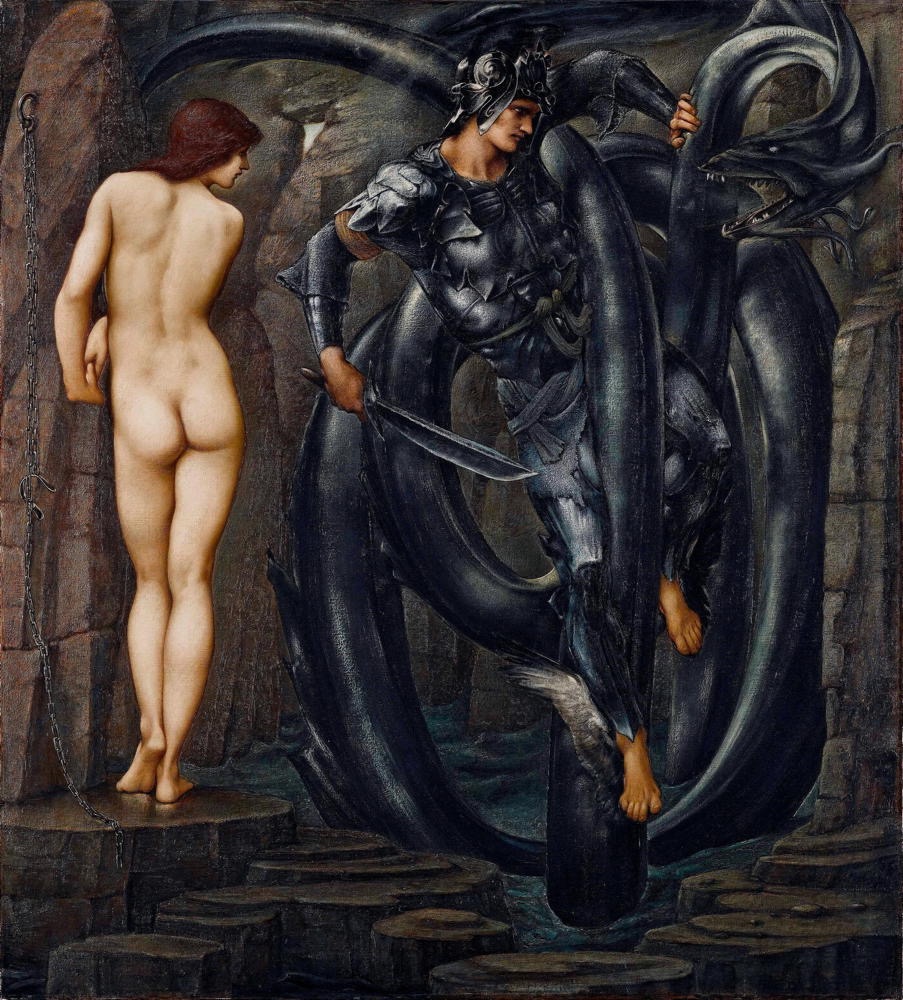
Sir Edward Coley Burne-Jones:
Perseus Cycle 7: The Doom Fulfilled
(1882 )
“…it matters how we answer when we ask ourselves this one absolutely essential question…”
WhatDidYouDo when the world was going to Hell? Did you doomscroll in resignation or defiantly curse your obviously undeserved fate? Did you take to the streets to protest the unfair outcome? Did you write a haughty letter to the editor insisting upon what should have been done, what still might be done to avoid the worst-case scenario? Did you just tend your garden as if tending garden might be the best anyone could contribute, given the unfortunate circumstances, nurturing a few more hours in heaven before finally submitting to the apparently inevitable? Did you encourage the fall, believing in the transformative potential of some well-deserved time spent, even if it’s spent in God’s penalty box? Did you rail against the unfairness or quietly submit? Did you purchase an AR-15 class weapon to defend your Second Amendment rights? Did you hoard or sacrifice? Were you generous or stingy under the pressure? Did you cheer the political cowardice that led us all there or demonstrate genuine political courage, whatever that might entail?
This world has been headed for Hell since before it was born, depending upon whose stories one depends upon.
King'sHorses
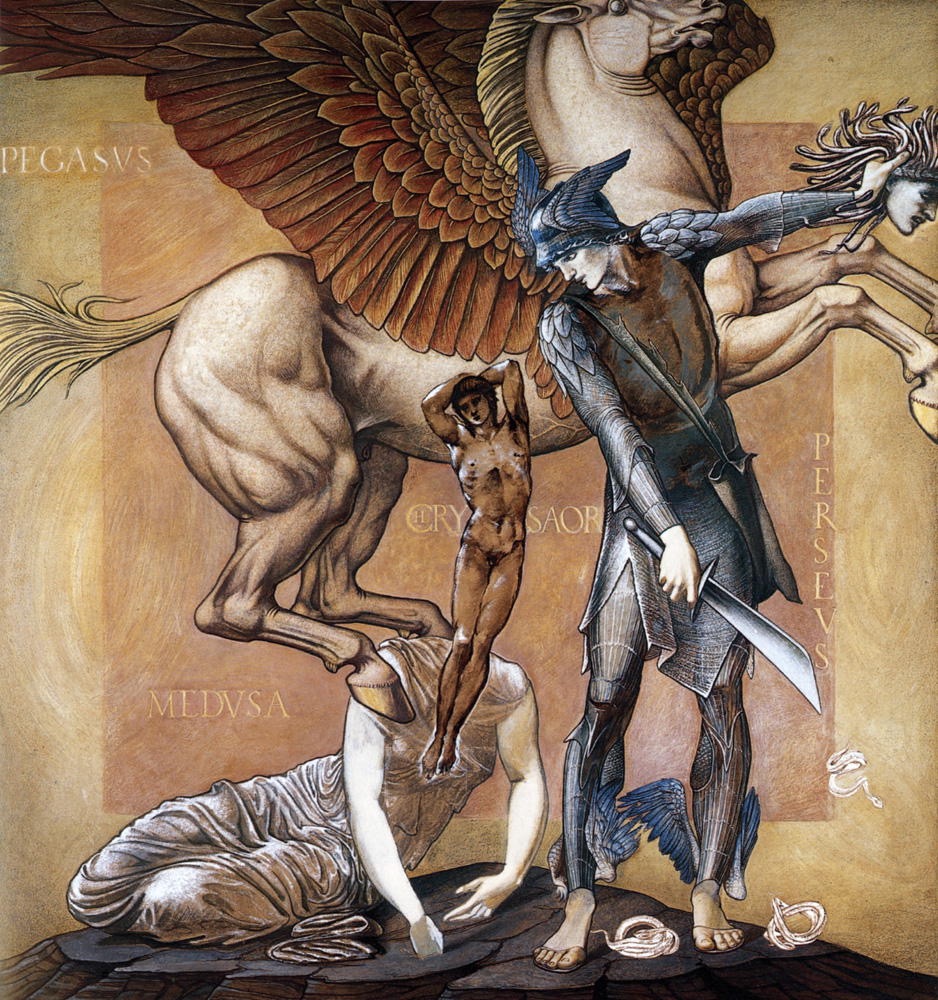
Sir Edward Coley Burne-Jones:
The Perseus Series: The Death of Medusa I
(1882 )
“All the King’sHorses and all the King’s men seem unlikely to save our incumbent from himself again. Thank Heavens!”
The administrators and cabinet heads in our incumbent’s first administration were fringe characters, but several seemed to retain enough of their native senses that they eventually acted to prevent a few of his more disgusting abuses of power. These interventions ultimately frustrated and angered our malignant narcissist, and he leveraged these experiences to ensure that no sane person would get a chance to serve in his second administration, the one he clearly intended to remain steadfastly indifferent to administering very much of anything, especially our federal government. And so it came to pass that he nominated not merely the bottom of the barrel, public servant-wise, but generally, creatures who had never quite managed to matriculate to inhabiting the inside of any barrel, but those who hailed from somewhere beneath one. Carefully coached and in collusion with some of the worst legislators in the history of legislating, most of those horrible nominees managed to gain approval. These became what are generally referred to as The King’sMen, even though a significant number of them purported to be women, though none of them in any way traditional or as DEI hires, except, of course, in the caricature, cartoonish way.
Anyway, we ended up with an epic crew.
DeathWatch
Sir Edward Coley Burne-Jones:
Laus Veneris
(Between 1873 and 1878)
"…once the sour spoilage this incumbent leaves behind as legacy, finally fully decomposes, thank Heavens."
Rarely has an anticipation received such an enthusiastic public reception. News of the impending event has become an obligatory element of every edition of every paper and news program across the spectrum, from amateur podcasts to stately professionally-produced broadcasts: video, audio, and print. Each morning first carries news of astonishment that our beleaguered and clearly ailing incumbent has somehow managed to survive another night intact, though he reportedly gleefully appears worse than when last reported. More makeup has invariably been ineptly smeared over some fresh rotting part of his body, typically the other hand. His ankles continue to swell, defying geometry as well as gravity. He’s clearly cognitively not quite what he used to be yesterday, and certainly worse than he was the day before. His demise always seems inexorable.
He enjoys an unusually asymptotic relationship with his demise, though people often depart by way of seemingly infinite increments.
Weekly Writing Summary For The Week Ending 05/07/2026
Sir Edward Coley Burne-Jones:
Studies of an Arm and Hands
(Not Dated)
This week’s EndDays dispatches arrived in the same week as Cluelessness itself — the physical copies of the long-awaited book finally landing on the porch in their plain brown box. The week held that particular tension between the personal and the political that EndDays has been delivering simultaneously. I read myself whole for the first time. I chased phantom typos through predawn light. I watched our incumbent’s Craziness spread through Congress like a communicable disease while his MakeUp spread across his face like a communicable disease. MakingBelieve turned out to describe both a despotism’s operating model and the condition of anyone credulous enough to volunteer to inhabit one. Apparently, Vacuity got elected president again. I came out the other side of this week feeling remarkably different for having read that thing I wrote.
MakeUp
Sir Edward Coley Burne-Jones:
The Council Chamber
(1892)
"Thank the Lord or somebody for such small blessings."
Scripture predicted that many strange things would appear during EndDays, but if these are, indeed, EndDays, even stranger things have manifested. I suspect that no self-respecting prophet could or would have unashamedly predicted what we see emanating from our Administration Still Remarkably Uninterested In Administering Anything. That label alone would have challenged even an experienced Ezekiel to announce. “And, verily, The EndDays will bring an Administration Still Remarkably Uninterested In Administering Anything.” Even the more devout and penitent would welcome such news with a heartfelt, “Pull the other one, it’s got bells on.” Our actual experience, given that these might be those long-anticipated EndDays, surprises us all, however Nostradamus-hardened we had become. This life, as usual, wouldn’t really qualify to be believable fiction. That’s probably the primary way we can determine for certain that these times are not, in fact, fictional. We’re not delusional, merely present and attentive. Nobody could credibly MakeUp this stuff.
Perhaps at the top of what would have previously qualified as unbelievable stands the now common practice, broadly engaged in by self-proclaimed conservatives, of males wearing MakeUp.
SelfReference
Sir Edward Coley Burne-Jones:
The Mirror of Venus
(1875)
"…I lay down for a well-earned nap I might never quite wake up from."
Who does he think he’s writing to? For? Who did he intend to enlist to perform in the role of his reader? The book seems to have more premise than plot. He titled it Cluelessness, then cast himself as the protagonist, as almost the only focus. Should he be classified as a Narcissist? A Maschochist? If I weren’t the author, I wouldn’t be able to answer. Even as the author, I question whether I could be capable of coherently responding. As the author, my answers might be even more troubling than those posed by any reader. I cannot be certain. I suddenly can’t be certain about anything. I might be experiencing SelfReference poisoning. Have I disclosed too much? Have I revealed fundamental shortcomings? Have I gone and spoken what no one should ever say out loud? Does this publication mark the start or end of whatever might have been left of my reputation?
In the first sentence, I explain that the book is a work of philosophy, autobiography, history, and fiction, simultaneously, all at the same time.
Craziness
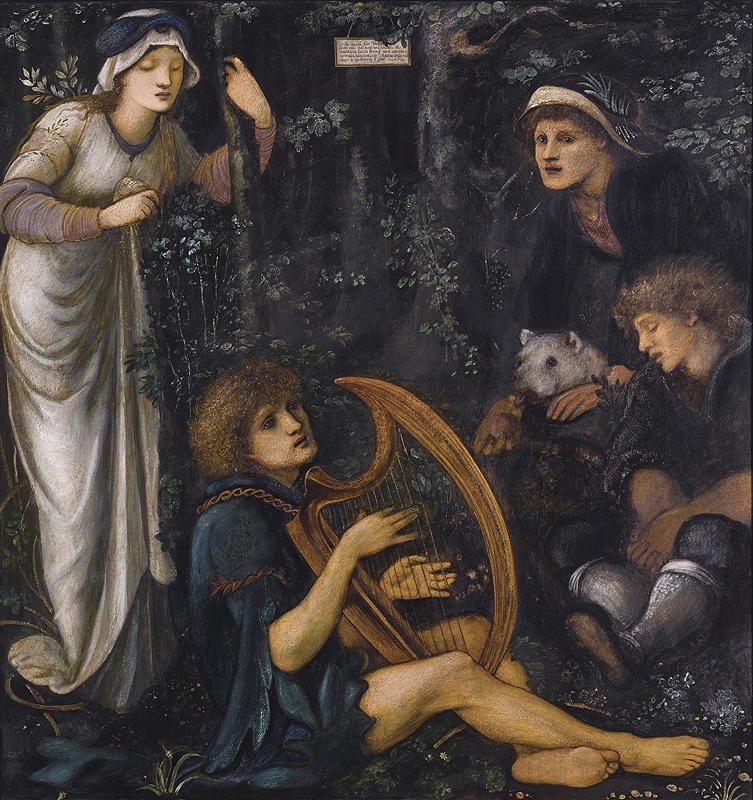
Sir Edward Coley Burne-Jones:
The Madness of Sir Tristram
(1892)
"I feel reasonably confident that there's no pill for that."
Modern governments have struggled to respond to their leader’s incapacity. When King George III went mad the first time, Parliament moved to reassign his authority to his son, the Prince of Wales, but the king recovered before the vote was taken. Later, when he went mad again, his authority was formally reassigned to his son, though George retained his title until his death ten years later. Here, repeated calls for our current incumbent to be removed from his office under the Twenty-fifth Amendment have resulted in no action from either Congress or the Cabinet, the only two bodies holding authority to act. As his madness progresses, it seems unlikely that anybody will act. This seems to be a feature of madness and power. Everyone might agree that someone should act, but nobody seems to see themselves cast in that role. The political cost of admitting to any madness in one’s party seems too goddamn onerous for anyone to act, so they descend into the same madness they witness in sympathetic response.
We pride ourselves on being a country of laws, though our laws seem to be divided into two broad classes: Laws we intend to enforce and those we don’t.
Erring
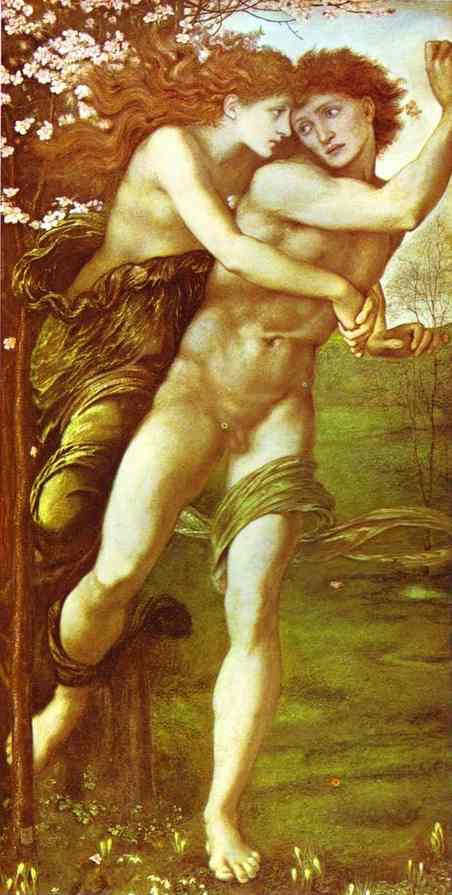
Sir Edward Coley Burne-Jones:
Phyllis and Demophoon
(1870)
"Was any of his ever any different?"
The first copies of my newly published book, Cluelessness, arrived yesterday. I opened the box to find five fresh copies, covers still sticky with whatever they use to cover new paperbacks at the factory. This qualified as an out-of-body experience, akin to witnessing the birth of a child, though significantly less messy. It was emotionally complicated, for such moments reintroduce the age-old tussle between me and my imposter syndrome, for in most ways, I remain a pretend author. I write in the very early mornings when no witnesses can catch me. I publish to a fairly select list, not tens of thousands of social media fans. Heck, I don’t even earn anything other than experience for my efforts. If I were a real writer, my bestseller would have rendered me rich and famous. If I were the real McCoy, publishers would be storming my door seeking additional material. As it is, I write for my own edification, mostly, and for a small and extraordinarily generous community around The Muse and me.
My life immediately went on hold.
Vacuity
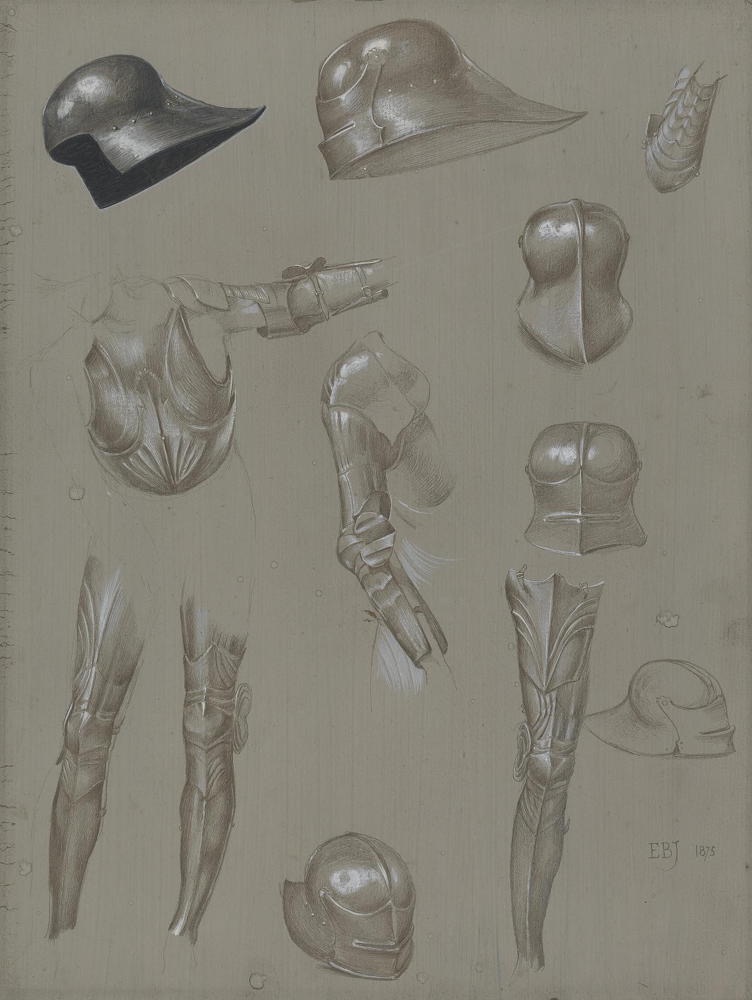
Sir Edward Coley Burne-Jones:
Studies of a Suit of Armor
(1875)
"…that's what always happens when Vacuity LLC,
gets himself elected President of a country."
If every particle possesses an opposite, then, I suppose, every polity must also carry an opposing polarity. During our own American Revolution, fewer than half of the colonists supported the patriots’ position: 40–45% were Patriots, 15–20% were Loyalists, and roughly 35–40% remained neutral or “fence-sitters”. (USHistory.org) Nearly as many were apparently indifferent to that world-changing opportunity, and many were opposed. Once won, the resulting freedoms were not universally embraced. Several of my forebears felt oppressed by the emerging Federals and fled into territory not yet governed by anybody but natives, preferring their own chances for liberty over those offered by any more newly-formed polity. Some were religious zealots who firmly believed that The Lord, in his infinite wisdom, had predetermined history so it couldn’t possibly make a lick of difference what anyone resolved to achieve, and that went at least double for any earthly government or slave.
Those anti-polity sentiments followed us through the two and a half centuries since independence.
MakingBelieve
Sir Edward Coley Burne-Jones:
The Adoration of the Magi
(1904)
"That age-old truth never once stops stalking."
Despotisms utterly depend on fictions. No reality can properly sustain them. They begin with a lie, then inevitably end with some age-old truth piercing whatever’s left of their heart. In between a despotism’s birth and its inevitable death lies a world at least circumscribed by lies, fervently held. Its tenure becomes an extended game of MakingBelieve, with peek-a-boo pieces to retain the true believers’ beliefs, which, in one of the cruelest twists of fate ever to befall them, base their existence on lies. If this seems like a tenuous basis upon which to root any existence, political or otherwise, you probably haven’t yet succumbed to the continually reinforcing messaging intended to reassure and secure your unquestioning support. Those who are not constantly MakingBelieve cannot comprehend what believers gain from engaging in such fictions.
It might be that everybody eventually becomes practiced at MakingBelieve, for accepting reality seems to require plenty of accepting a fair number of unresolvable mysteries.
Weekly Writing Summary For The Week Ending 04/30/2026
Sir Edward Coley Burne-Jones:
A woman with a lyre
(circa 1880)
This week’s EndDays dispatches moved from the surreal to the civic, from the undead persistence of a failed presidency to the tentative arrival of genuine prosperity on my valley’s western edge. The week held its familiar tensions — political exhaustion, garden disruption, the launch of a new book into an indifferent marketplace — while finding fresh angles on each. A new coinage appeared, Flacts, to name what we’d all noticed but couldn’t quite label. The series passed its fortieth installment, and sod arrived at the Villa Vatta Schmaltz just in time for the end of this Writing Week.
Thank you for following along!
Prospering
Sir Edward Coley Burne-Jones:
The Wine of Circe
(1900)
"…I'm hopeful we might finally escape the scarce resources allocation quicksand."
Our economics foretell our fate. Those who arrived late lose to those who came earlier, before we were discovered and became a destination. Then, our economics devolved into focusing on allocating seemingly ever-scarcer resources rather than sharing communal plenty. Some jealously guarded their plenty lest someone less deserving try to wrest it away from their grasp. We became most masterful here at pinching pennies, at somehow pretending to make odd ends meet, at cinching up the old belt yet another notch, at essentially starving ourselves for our own imagined good. We regretted the uneven distribution of our common largess and hoarded the best against possible future turndowns, justifying our penury as evidence of an underlying righteousness. The cynical defense insists that in the long run, we’ll all be dead anyway, so nothing really matters.
Prospering demands a different perspective.
Neediness
Sir Edward Coley Burne-Jones:
The Calling of Perseus
(between 1877 and 1898)
"Never be needier than the country you were elected to lead."
Perhaps the first principle of project management, which I used to teach and practice professionally, must be: “Never be needier than your project.” This principle was not supposed to be interpreted as an invitation to strive to be selfless in service, or in servitude, to your effort, but to more properly focus the professional’s attention. If one intends to provide some service, it doesn’t do for that service provider to be needier than their client. The client’s needs remain paramount in that context, and while it still matters that the service provider’s needs are attended to, the purpose of the engagement cannot degrade solely into ensuring the caregiver’s satisfaction. I do not intend to ignore the service provider’s legitimate needs, just to reinforce the notion that those needs should not be the primary focus of a service relationship. This principle requires some maturity from the professional, some ability to at least defer their needs in favor of somebody else’s, at least for the duration of the engagement, or, lacking that, how about during office hours?
This principle might, in practice, prove to be pure fiction, for in fact, the service provider’s needs must remain a significant part of every service provider’s personal equation.
Flacts
Sir Edward Coley Burne-Jones:
A Sea-Nymph
(1879 )
"…this world remains wise enough to usually deny us such privileges."
One EndDays feature involves taking information out of context. Facts can natively seem confusing enough, but taken out of context, they cruelly turn false, rendering their champions foolish, though rarely in their own eyes. I suspect we all engage in this business, largely innocently, though others, especially those we characterize as opponents, might try, without success, to clue us in. We suspicion more deeply then, and might even wonder when an old reliable turned toward some newly-imagined dark side. We rail on about emerging divisions while staunchly defending whichever side we somehow find ourselves on.
A seeming raft of issues has been subsumed with Flacts, facts innocently or more malevolently taken out of context.
StageCrappery
Sir Edward Coley Burne-Jones:
The Golden Stairs
(1879 )
"All the world’s a stage,
And all the men and women merely players;"
William Shakespeare, As You Like It, Act II, Scene VII
"I tire of these endless, meaningless performances…"
Contrary to popular misconception, all this world was never a stage, and human existence never once very closely resembled mere players. Shakespeare’s assertion, delivered via character Jaques, seems like a cynical approximation, perhaps an apt analogy, but falling far short of anything resembling definitive. Though in our time, one might be forgiven for believing that everyone’s more or less acting their way through life. So much of our experience gets represented on the same small screen on which we’ve seen actual performances, with actual actors: merely players. It seems important, though, to draw at least one fundamental distinction between acting and living. What might such a distinction entail?
Authenticity seems utterly different for a player and a person.
Unsettled

Alphonse Legros:
Sir Edward Coley Burne-Jones (1833–1898)
(1879 )
"…I'm wishing that I'd just stayed home, where my heart already was."
As the grand planned in-ground irrigation system installation spills into its fourth day, my usual composure slips away from me. I sit uneasily, unable to watch the unavoidable desecration happening out in my sacred yard. This has long been my place, almost a secret garden, reserved almost exclusively for The Muse and me. We only very rarely ever invite anybody else into this lair. We are both particularly particular about where we place plants, how we water, and how we mow. We would never even think of hiring an alien to weed or mow. We wouldn’t expect them to understand. Indeed, we would be certain that they couldn’t understand, and not just because we wouldn’t prove capable of explaining, though it’s doubtful we could adequately explain the boundaries of acceptable behavior there to any alien other.
This place isn’t merely special, it’s our special.
Undead
Sir Edward Coley Burne-Jones:
Orpheus and Eurydice
(Between 1898)
Hasn't he already lingered longer than absolutely necessary?
During Saturday Night Live’s first two seasons, its original News Update anchor Chevy Chase ran a continuing joke, each week proclaiming, “Francisco Franco is still dead.” The joke played off the news media’s apparent obsession with Franco’s recent demise. These days, we have what seems to me to be an analogous situation in that our incumbent has reportedly been continually on his last legs since before the start of his second term. Doubtless, he has been feckless and hugely ineffective at accomplishing anything lasting, though he has attempted and perhaps succeeded in undermining a previously stable world order. That accomplishment’s not nothing, but it seems unlikely to persist. Salvation seems ever-impending, simply awaiting his demise, which has been reported as imminent for four-hundred and sixty-one days as of this morning. That qualifies whatever ails him as a long-running illness by anyone’s measure. I’m starting to doubt that he’s actually teetering on death’s door. Perhaps it would be better if we just considered declaring him Undead instead.
Donald J. Trump is still undead.
Weekly Writing Summary For The Week Ending 04/23/2026
Sir Edward Coley Burne-Jones:
Helen's Tears'
(Between 1882 and 1898)
This week's EndDays dispatches moved from disorientation to defiance, from the poisoned noise of deliberate falseness to the quiet dignity of pea-shelling, from the billionaire class's ravenous absence of Enoughness to a small-town civic supper where a librarian earned a blown-glass heart on an engraved stand. The week asked what sustains a serious person when the signals arriving from the world can no longer be trusted at face value, and found its answers not in grand political resolution but in dirt, in preparation, in recognition, and in the stubborn practice of generous interpretation.
Thank you for following along!
ReceivingWisdom
Sir Edward Coley Burne-Jones:
The Beguiling of Merlin
(1874)
"Maybe we find our underlying connections beyond disconcerting."
Who knows how wisdom visits? Who knows what even constitutes wisdom in these EndDays featuring so damned many false idols? We each seem to imprint on our own trusted sources. Who knows how we discern which ones to trust? Our neighbors seem to rely upon other sources that do not seem nearly as wise to us as they do to them. We cite our sources until long after we begin to turn blue in the face, without convincing anyone not dependent on the same experts we depend on. We each hold Received Wisdom without often considering how it was that we set about ReceivingWisdom in the first place. Does knowing with such certainty even qualify as wisdom, anyway, or does wisdom somehow sort of transcend knowing to more agilely hold controversies unresolved?
The Muse returned from a public meeting having bailed.
Recognizing

Sir Edward Coley Burne-Jones:
Cinderella
(1863)
"If only we could remember this inescapable fact and more frequently act upon it."
No week passes without The Muse, in her Port Commissioner role, being invited to some ceremonial supper or solemn civic society gathering. Her presence is expected as a part of her charter to represent the citizens of the county and, especially, of her district. She only sometimes expects me to string along in what I explain amounts to fulfilling the underappreciated role of Arm Candy. We arrive, with her remembering names from last time, and constituents somewhat pleased at her appearance. The majority don’t know her from Eve, and even fewer know the first thing about me. We’ve registered online beforehand and dutifully purchase our raffle and 50/50 Split tickets, the latter of which awards half the evening’s raffle and drinks takings to one fortunate attendee, which amounted to $61.50 that evening.
These gatherings are typically small towny.
Impreparation

Sir Edward Coley Burne-Jones:
The Garden of the Hesperides
(Circa 1880)
"Amen, again, with real damned purpose this time!"
EndDays time seems short, as if a clock was winding down or the universe itself was wearing itself out. When did improvisation replace careful, studied preparation, and most things start happening haphazardly, as if everyone had conspired to just start making up shit as they went along? Seemingly gone are the more careful crafts, replaced with the more relatively careless ones. Reflection, too, might have been overwhelmed by a plethora of knee-jerk reactions. Yes, EndDays seem simply reactive rather than reflective, as if thinking, considering beforehand, had become crimes committed by the cowardly. Goaded on by our chief executive as an extremely public and seemingly ever-present example, we often reject planning as something belonging to an alien culture, as if we were smarter because we didn’t feel compelled to peek ahead. EndDays collapses the long term within which we’re all said to be dead into a presence composed of some combination of unwarranted certainty and dread. In this short term, we live as if we were essentially undead.
I recognize this difference because this week I’ve had an actual future event that I needed to prepare for.
Dirt

Sir Edward Coley Burne-Jones:
Study for 'The Sleeping Knights'
(About 1870)
"I'm Just Visiting here."
I engage hesitantly, reverently. I never take this work lightly, for it contains consequences. I am less a homeowner than a steward of soil, the house and fences, gazebo and garage, mere backdrops for the real engagement. I know every square inch of the soil surrounding this house. I have crawled across it more than once or twice, though I never counted the number of my interventions, for that would surely have violated some deeper, if unspoken purpose. One stewards soil invisibly, dedicatedly. I cannot seem to leave alone what others might believe was already well enough alone. I seek no less than perfection, knowing full well that shortcomings will always enter into my equation. I know my base soils. I can feel the difference between that powder-fine NW corner of the front yard that’s never had an ounce of amendment and the NE corner, which has absorbed its original weight and volume in perlite, peat, and attention.
I was inspired by exposure to the original Victory Garden PBS series, the one hosted by its founder, James Underwood Crockett, a charming Down-Easter, a master gardener.
Enoughness
Sir Edward Coley Burne-Jones:
Tile Design - Theseus and the Minotaur in the Labyrinth
(c. 1861)
"There might not be a large enough 'enough' to ever regain that once lost balance."
The last forty years have witnessed a steady erosion of what we might acknowledge were decent values. Their replacements have travelled under a multitude of euphemisms, each of which seemed to have been chosen for their ability to elicit a felt sense of whatever they were eroding. Family Values seemed most popular for a time, though when I delved beneath its glossy exterior, it seemed to insist upon a narrow, exclusive definition of family that most couldn’t possibly relate to from personal experience. Other, often Christian-themed replacements, flooded the meme market over this time, each distilling into some fresh mammon unworthy of broad appreciation, though they gained broad appreciation, anyway. One could be excused for concluding that these terms served as Trojan Horses, intended to draw attention from the wholesale burglaries the billionaire classes were committing against the least of us. Income distribution skewed upward while the costs of living soared, utterly undermining what had previously passed for a middle class.
I remain amazed that the You, Ess of ‘A’ hasn’t yet suffered from a popular insurrection.
TangledWeb
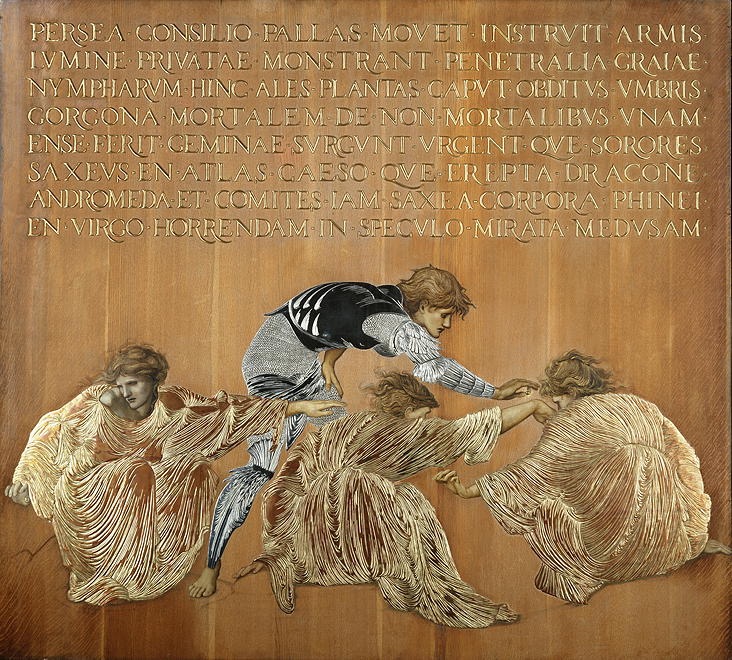
Sir Edward Coley Burne-Jones:
Perseus and the Graiae
(c. 1877)
"Oh, what a tangled web we weave, / When first we practice to deceive" Sir Walter Scott, Marmion
"They're sunk."
I navigate my way through these EndDays not quite blindly, but nearly. My depth perception seems intact. Same story for distance, yet I’m growing to distrust my senses since something I’ve long relied upon seems to be missing. Even as I began to grasp that I might reliably presume the cues coming to me are false, I struggled to reverse first impressions fast enough to maintain my balance. I feel forever cattywompus, suddenly slightly sideways to the world, seriously disoriented. Perhaps that’s the underlying intent, the purpose of what I’m growing to expect to reliably prove to always be deliberately false. I more often seem well served by presuming the opposite of whatever story they serve, though it remains cumbersome to find, let alone to translate, the signal received into one I can believe I actually comprehend.
I remain a simple man, prone to accepting most signals more or less as face value received.
Weekly Writing Summary For The Week Ending 04/16/2026
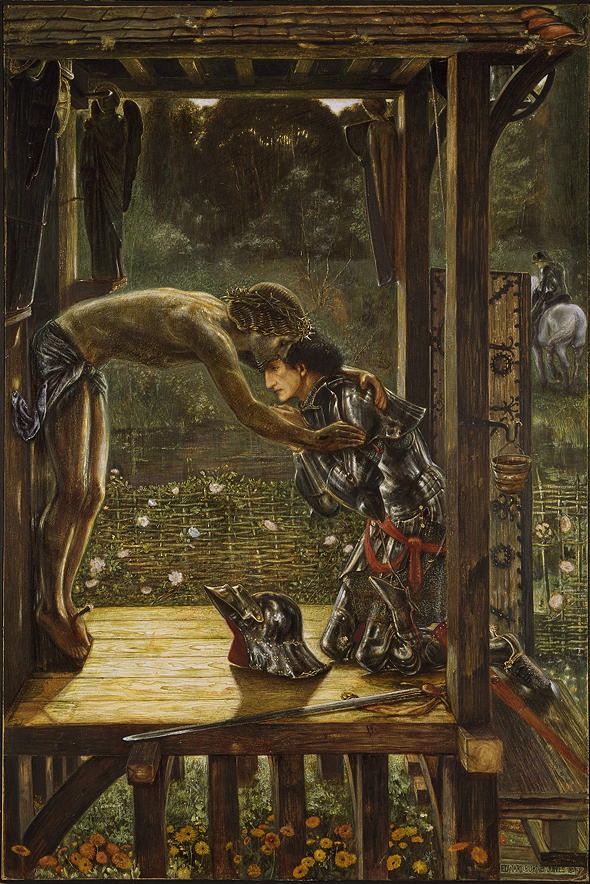
Sir Edward Coley Burne-Jones:
The Merciful Knight
(c. 1863)
This week's EndDays dispatches traced the arc of a chronicler straining under the weight of his own dedication. The series moved from outrage through exhaustion, from the streets of Budapest to a pile of fresh fava beans, from the spectacle of a collapsing administration to the quiet renewal of a Spring kitchen. The week asked how any serious person sustains witness through an ending that refuses to end on schedule, and found its answer not in resolution but in rhythm — the diastolic pause embedded in every heartbeat, the sanity found inside a pea pod, the glimpse of a future already arriving somewhere else in the world.
Thank you for following along!
DiastolicRelief
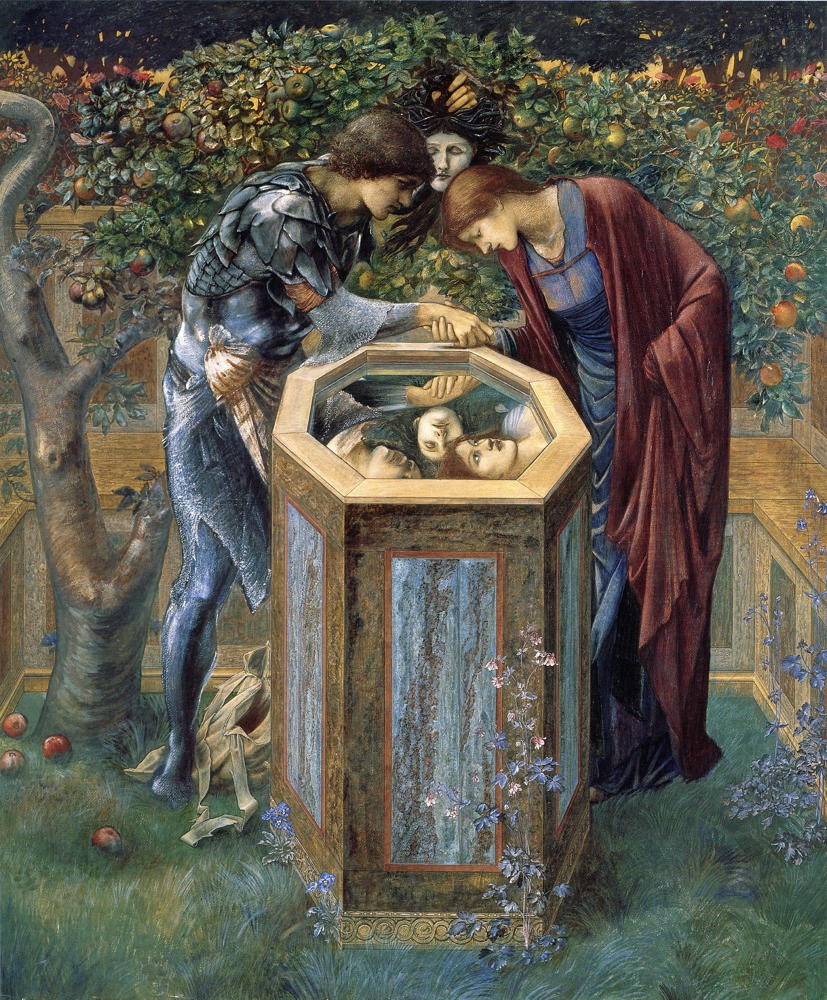
Sir Edward Coley Burne-Jones:
The Baleful Head
(c. 1885)
"…confident that these EndDays remain well on their way toward ending."
Endings sometimes seem to take forever to arrive. What might have begun seeming as certain as any fait accompli turns sluggish in process. Progress comes begrudgingly, if at all, and what seemed like a sprint or a routine walk in the park becomes a trudge. Progress might only be imaginary after all, after all initial evidence to the contrary. This campaign will also demand more patience than anticipated. Faith never flags, though energy does. It’s genuinely wearying to require a fresh reason to keep on keeping on every morning, when yesterday’s brilliant reason proved itself inadequate as leftovers. This series necessarily needs ninety good and decent reasons to continue believing that the evil intruding will ultimately have only been temporary, when each fresh intolerable second already seems to have lasted an eternity. What will end this seemingly never-ending ending?
My strategic plan called for engaging to maintain my attention.
BananaRepuglicans
Sir Edward Coley Burne-Jones:
The fight: St George kills the dragon VI
(c. 1866)
"…defending our democracy from such villainy going forward forever."
Despots must, seemingly by their nature, continually challenge the boundaries normally placed around any leader. Enough can never adequately serve as enough for them. More must be continually commanded. This means that every Despot’s rule must become inherently unstable, fragile, and ultimately temporary. When a Despot declares themself Ruler For Life, they’re essentially predicting a radically shortened lifespan, if not for their physical life, then most certainly for their political one. It has seemed much the same for our BananaRepuglicans, our present infestation of despotism. [Thanks to Jamie Raskin (D-MD) for apparently coining this term back before the 2024 election.] They have been actively colluding to undermine many of our proudest traditions, a seemingly cursed mission from its earliest actions, but they moved quickly this time, intent only upon breaking things, and in that modest intention, they have proven wildly successful, though with glaring caveats. Virtually everything they’ve attempted has later proved either ineffective, self-destructive, or both. Their blows to our country’s spirit seemed to have angered and awakened it.
It always proves dicey to accurately pinpoint the moment when enough became more than enough, a parody of its originating intentions.
Indulgences

Sir Edward Coley Burne-Jones:
Love Among the Ruins
(c. 1894)
“Better to extend a few mollifying indulgences than mimic the sinner’s self-destruction.”
Trump’s re-election represented the American Brexit. When Britain decided to economically divorce itself from neighboring economies, those economies responded with considerable frustration, as if responding to a toddler’s immature act of independence. The toddler didn’t necessarily register that their neighbor was demonstrating tough love in their response, essentially giving those Tories precisely what they asked for: bureaucratic tangles, logistical nightmares, and a deepening dependence rather than their dreamed-for self-reliance. These complications have helped normalize relations, with Britain somewhat chastened and the Europeans relatively strengthened. The EEU extended Indulgences to Britain for its obvious sins. Rather than seeking vengeance, which might have been fully justified, they insisted upon justice instead and became a different, relatively unexpected ally in the process.
It might have been a testament to our stockpile of goodwill that our trading partners didn’t immediately respond to Trump’s adolescent tariffs with extreme protectionism.
Glimpsing

Sir Edward Coley Burne-Jones:
Hero lighting the Beacon for Leander
(c. 1892)
"…tall enough to maybe even catch a Glimpse of ourselves standing proud once again."
The news from our beloved Budapest this morning buoys my spirit. I feel as though I’m Glimpsing one of the most alluring futures we might also be facing. The electoral defeat of a corrupt, entrenched, extreme right-wing oligarchy that has served as the lead sled dog in the worldwide effort to unseat liberal democracy. Victor Orbán was the figure inspiring every wanna be dictator in the world, including ours. Our incumbent praised his presence and supported his efforts to hobble the European Economic Union while serving his Kremlin overlords. He even sent our vice president to campaign for him, though initial voting results strongly insist that it made little difference, and might have even further encouraged his opponents. The winner was once an Orbán insider, but left when he found himself unable to stomach the overwhelming levels of corruption dominating Orbán’s rule.
The streets of Budapest were overflowing with cheering young people, a presence that has been disturbingly absent from our domestic protest rallies.
TalkinInto
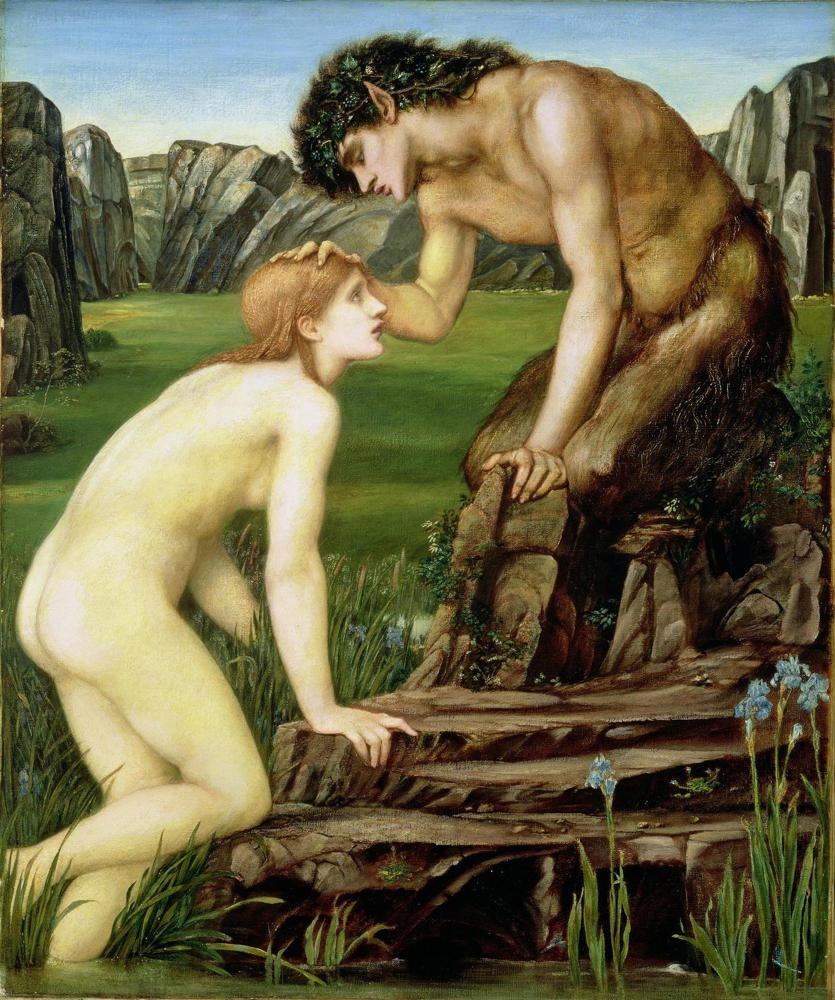
Sir Edward Coley Burne-Jones:
Pan and Psyche
(c. 1892)
“Now that it’s here, I fear it might not go away.”
I feel a sudden overwhelming need to talk myself into engaging during these EndDays. I remember a kind of naturally flowing into and back out of engagements in before times, but now I seem to need to sit myself down and talk myself into beginning or, once engaged, sit myself down to talk myself out of continuing. Whichever, I feel a missing flow, as if I sense or perhaps know I will be further endangered if I proceed. I say ‘further endangered’ because I feel surrounded by danger, threatened, imperiled. This sense lends a certain uncertainty to my proceedings, and it might successfully amplify my sense of presence, but the resulting wariness drains spontaneity from my performances. I no longer lightheartedly float through my days. I slink through them instead, more likely some days to negotiate myself out of doing very much of anything if I feel I can get away with it. I do not always feel moved to contribute.
I accept full ownership of this state.
Parody
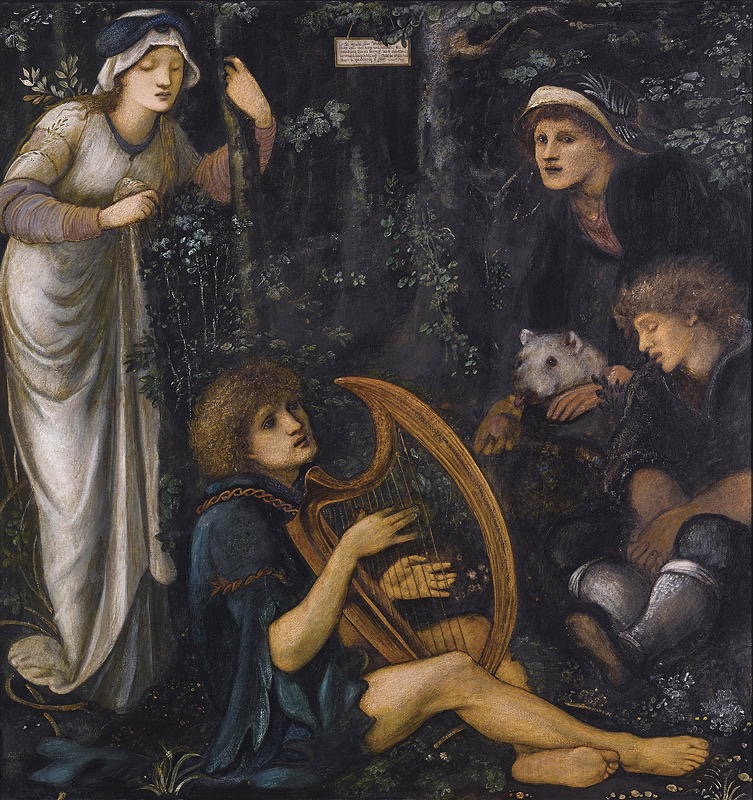
Sir Edward Coley Burne-Jones:
The Madness of Sir Tristram
(c. 1892)
“…Make America Meaningful Again, please!”
I think of myself as a serious person. Neither particularly pious nor frivolous, I try not to take myself too awfully seriously, but still seriously. I am not trying to fritter away my life. I think of myself as someone who supports worthy causes. I maintain a high moral standard without being prudish. I can be crude, but prefer decorous. I never mind a little pomp if not necessarily very much embellished with circumstance. I read, but not to the point where I consider myself especially well-read. I prefer a well-written novel to pretty much any other form of entertainment. I do not very much like movies, for I find them to be too theatrical and often simply too long for me to bear sitting through. I prefer audio over video because audio reproduces color better. I maintain a low tolerance for unserious performance, the sort our present incumbent seems to prefer and exclusively engage in. I find it offensive, anything but entertaining or informative. It seems a Parody of something real rather than being something real itself.
It irks me to be surrounded by such unserious business, as if it might infect me.
Weekly Writing Summary For The Week Ending 04/09/2026
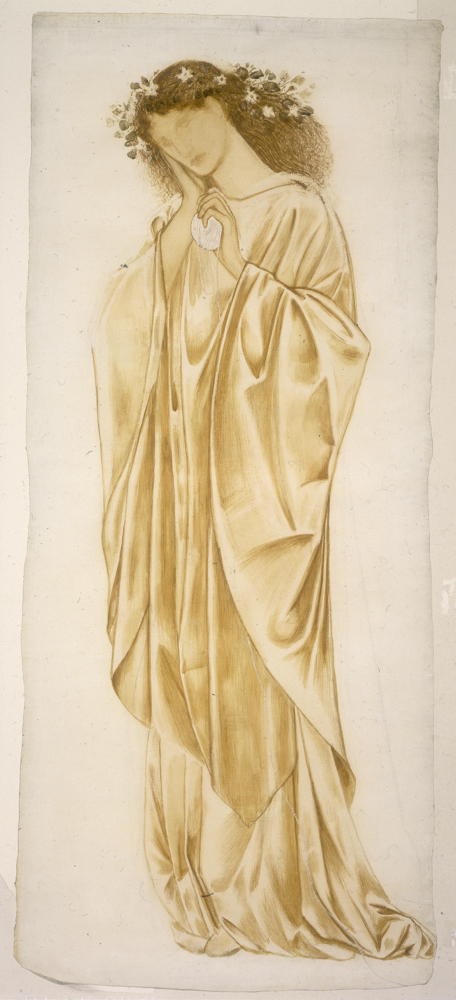
Sir Edward Coley Burne-Jones:
Ariadne
(1863/1864)
This week’s writing carried me deeper into the lived texture of EndDays — not the grand mythological architecture of the first week, nor the disorienting loss of landmarks from the second, but something more personal and more unsettling: the daily work of continuing to exist with dignity inside a world that seems determined to make dignity impossible. The week opened in HardTimes, where I found myself having to choose between accumulating reasons not to act and finding even one dog-eared reason to proceed. It moved through Restsurrection, a quietly subversive Easter spent on my knees in the garden rather than in any pew. NewlyNormalizing brought the recognition that we may never snap back, and that the disorientation itself has become our permanent condition. PlayingChicken named the incumbent’s chief governing strategy for what it is: a child’s game played by someone holding civilization’s steering wheel. EndingAWorld mapped the despot’s oldest trick — declaring victory over an apocalypse he himself manufactured — and Esteem closed the week by tracing the low self-esteem at the root of the whole sorry spectacle, from the incumbent’s throne to the society he’s poisoned. I did not expect to find this week’s theme until I reached the end of it. Thank you for following along.
Esteem

Sir Edward Coley Burne-Jones:
Philip Comyns Carr
(1882)
"…the overwhelming stench of somebody chasing greatness."
Esteem must be one of the more curious human properties. Who even knows from whence it comes? We seem to more easily bestow it upon others we admire more readily than we ever consider bestowing it upon ourselves, yet bestowing it upon ourselves seems both necessary and essential. Those without self-Esteem seem to suffer a self-inflicted fate, as if they should have somehow obviously understood the absolute necessity of fulfilling this one fundamental obligation to themselves. Nobody knows better just how much their own shit stinks than the one mounting that ignoble throne each morning. What from one’s own perspective might ever lead them to hold themself in anything even approaching high Esteem?
I wager that ways exist to responsibly discover reasons to hold myself in considerable Esteem.
EndingAWorld
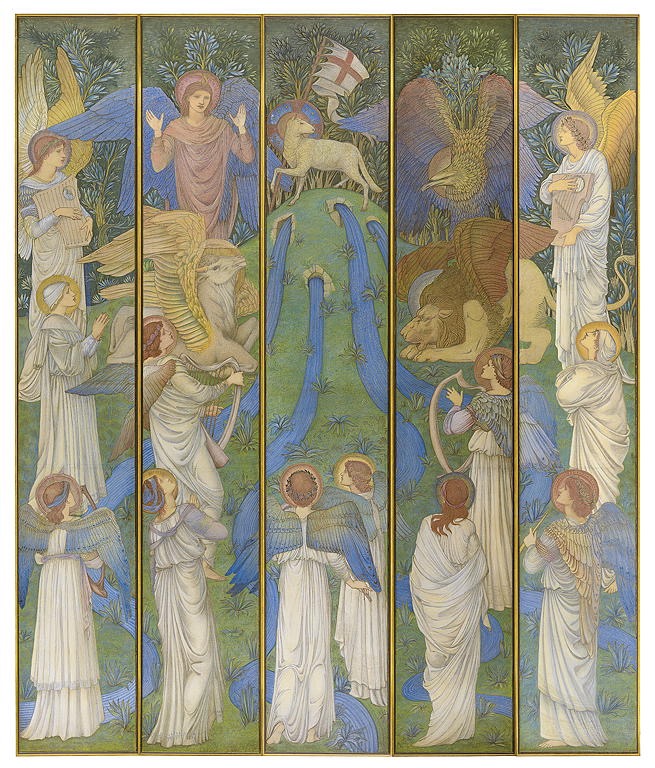
Sir Edward Coley Burne-Jones:
Paradise, with the Worship of the Holy Lamb
(c. 1875-80)
"…expect to witness him ending worlds."
Eventually, every despot in the history of this world so far has encountered the absolute necessity of EndingAWorld. Despots rely on promises of apocalyptic transformation, something exponentially worse than any actual threat warrants. Such threats encourage a sense of powerfulness like no other stance ever does. If one can end a world, it also demonstrates that essential cavilier nature everyone expects from a despot, seemingly capable of EndingAWorld with all the sangfroid usually reserved for dispatching a gnat. Nothing screams absolute power like such indifference does, a whisper vanquishing a hurricane, a shrug demolishing some ancient civilization.
Worlds end every day, as easily and as often as worlds are born.
PlayingChicken
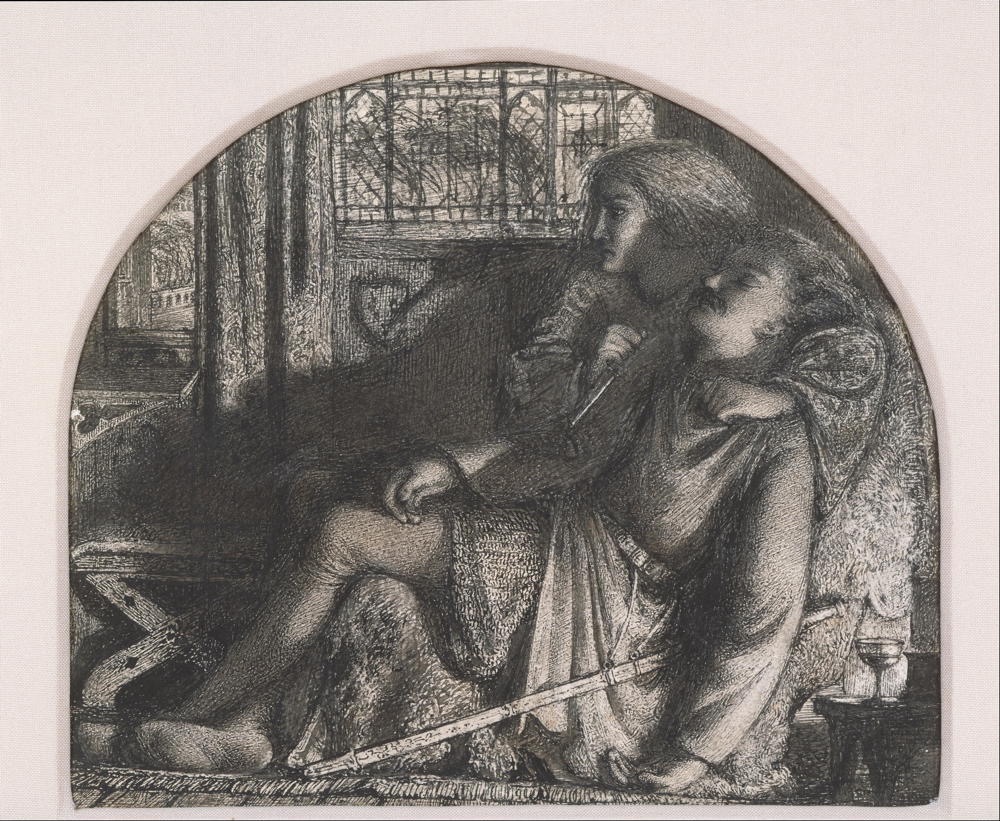
Sir Edward Coley Burne-Jones:
"I rose up in the silent night; I made my dagger sharp and bright"
(c. 1859-60)
"Their approach reliably produces little else but chicken shit."
I believe that I can successfully judge the relative maturity of someone by identifying the kinds of games they choose to play. The field of Transactional Analysis proposes that all humans engage in game-playing behavior, though not always deliberately. The inadvertent games might disclose even more about a person than any consciously chosen one, though. As outlined in the best-selling Games People Play by Eric Berne (Grove Press, 1964, ISBN 0-345-41003-3), a book criticized by many professional psychologists, identifying these games can provide both entertainment and discernment, giving a label and therefore a meaning to otherwise confusing behaviors. Who hasn’t found insight in finally interpreting an interaction as merely a Mind Game? In my hierarchy, the more childish games often seem to be favored by the less mature.
Among the least strategic possible games stands PlayingChicken.
NewlyNormalizing
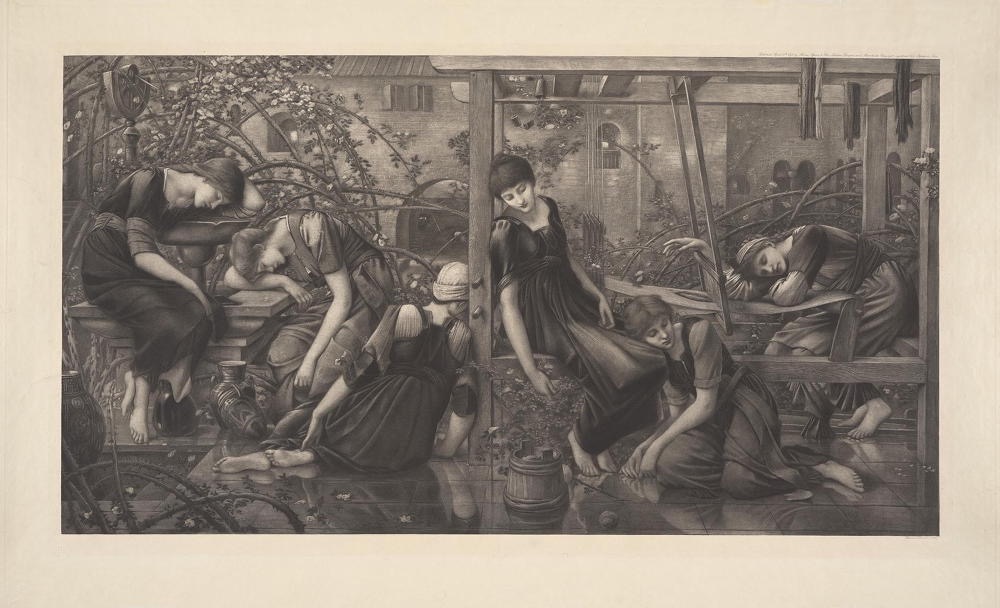
Sir Edward Coley Burne-Jones:
The Garden Court, photogravure print
(1892)
"…Heaven help us since we can't seem to help ourselves."
It might be that we’re each cursed to die in some foreign land, far away from familiar territory, especially if we stay close to home ground. Changes brought on by travel or relocation hold nothing compared to those that visit me uninvited. I might have expected to hold some of my old life static as I entered the traumatic final stages of my existence, but if so, I seem destined to experience ever more deepening disappointment. My old world was not even inherently that unstable. It seemed capable of continuing to nearly ad infinitum while entropy went right ahead and had her ways with me. But we grew impatient, I guess, or discontented with the balances that have managed to protect us for the better part of three generations. We opted to seek greatness, though we struggled to agree on what achieving that might achieve. We became the product of our discontent rather than delivering ourselves from any ultimately questionable evil.
I live and grieve like I once merely lived and breathed.
Restsurrection
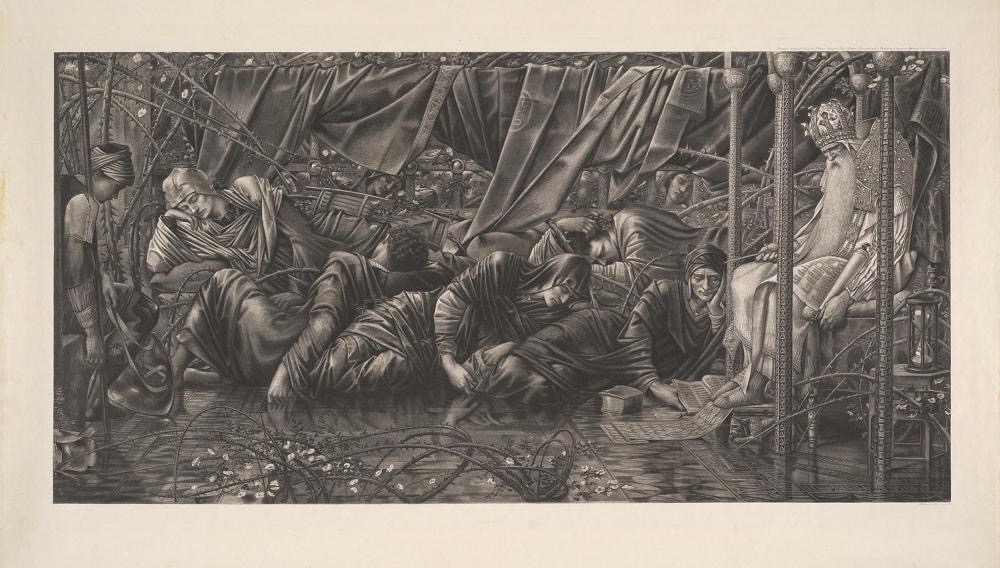
Sir Edward Coley Burne-Jones:
The Council Chamber, photogravure print
(1892)
"…resurrected again until sometime after next Christmas."
I realized again this week that I can no longer claim to be a Christian. I’m uncertain if I could ever declare myself such with conviction, even after full immersion baptism, I felt more conscript than convert. I had bowed to the peer pressure. Everyone else in my Sunday School class had enrolled in the special studying and showed up on that Sunday wearing white shirt and pants while carrying a change of clothes. We’d all stood waist-deep in the baptismal font with the pastor while the little window slid open to reveal the entire congregation watching. We’d each in turn accepted that folded handkerchief over our noses and allowed ourselves to be submerged, ruining our hairstyles for Jesus. We’d also slopped off to a changing room to towel off and change wardrobe, supposed to have been forever changed. I suspect that most of us feigned results as I had.
I still observe the Christian calendar, though.
HardTimes
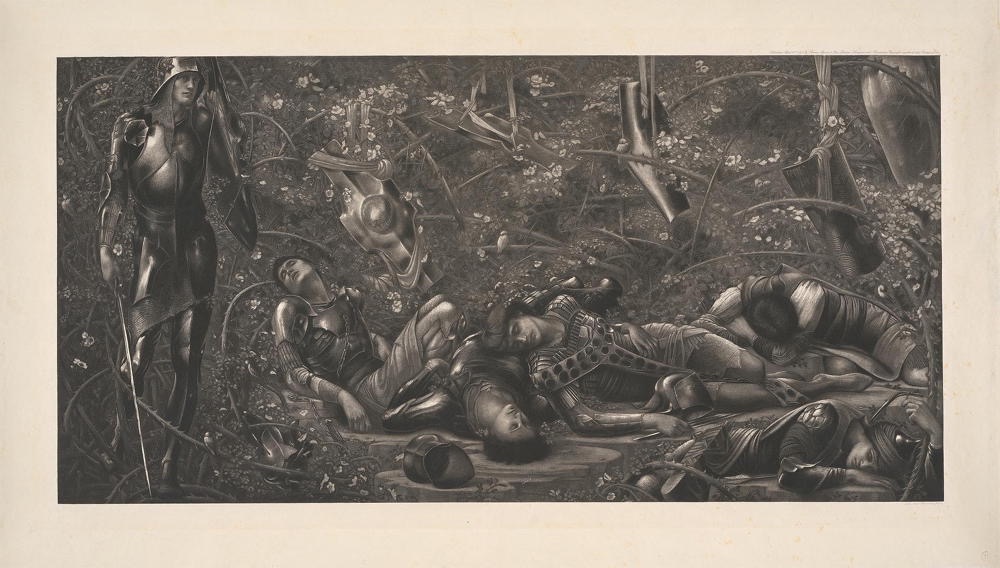
Sir Edward Coley Burne-Jones:The Briar Wood, photogravure print
(1892)
"Waiting for perfection only perfects waiting."
This story serves as a soliloquy by me for me, an encouraging little sermon to bolster my forward momentum. Yesterday, I finally completed all the hurdles for approving my Cluelessness book for publication. The gauntlet qualified as an absurdist’s rendering of bureaucratic inefficiency, but I made my way through it. It seemed like the least effective process possible, but I still managed to make progress and succeed. I felt like simply giving up several times, but I persisted. Cluelessness will launch into another war, into a distraction machine that worsens anything The Blind Men, my first book, faced. HardTimes are not necessarily EndTimes, just EndDays with trepidations. …
—
EndDays inevitably seem like HardTimes.
Weekly Writing Summary For The Week Ending 04/02/2026
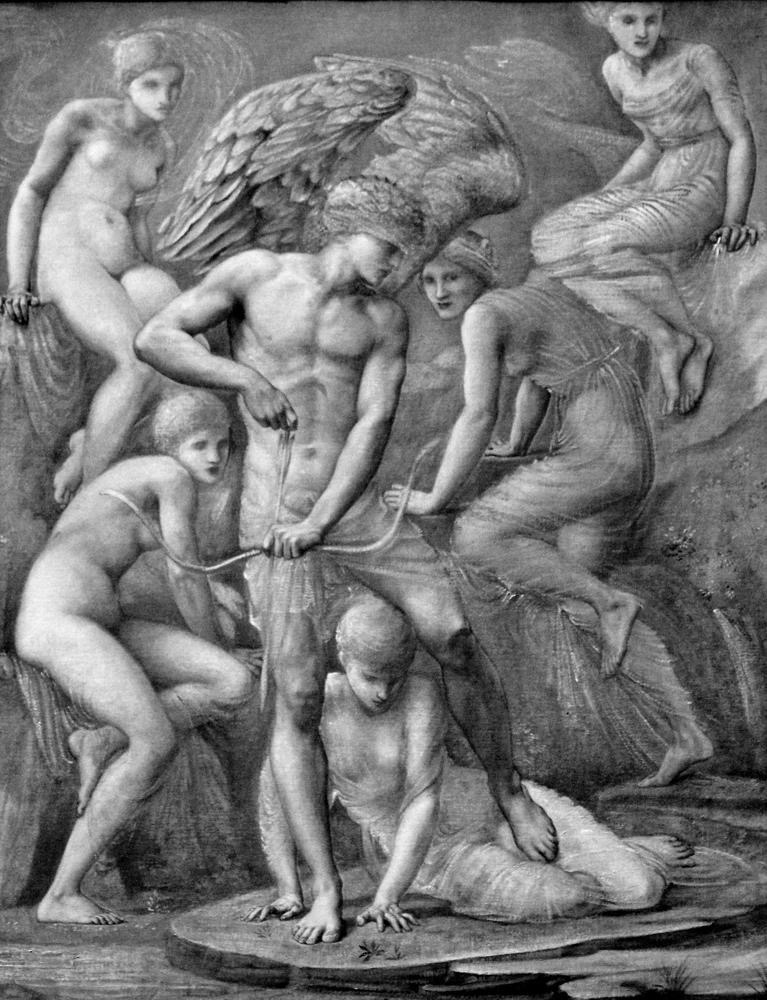
Sir Edward Coley Burne-Jones:
Cupid's Hunting Fields
(circa 1880)
This week’s writing carried me into the second week of EndDays, moving beyond the creation myth that anchored the first week and into the territory that creation inhabits. I found myself exploring what it actually feels like to live inside EndDays — the lowered sky, the dimming light, the missing landmarks, the unimaginable actions undertaken without my permission in my once-good name that have somehow become routine. The week opened with a DayOfRest that turned out to be anything but idle, then darkened into the spreading dimness of LetThereBe (Light) before finding its footing through TheLimit, Ungrounding, Negavation, and TheFourOppressions. I ended the writing week with a secular sermon I didn’t know I had in me, contrasting Roosevelt’s Four Freedoms against the MAGA movement’s four grim replacement oppressions. This week’s flow surprised me. The territory I traversed surprised me more. Thank you for following along!
TheFourOppressions
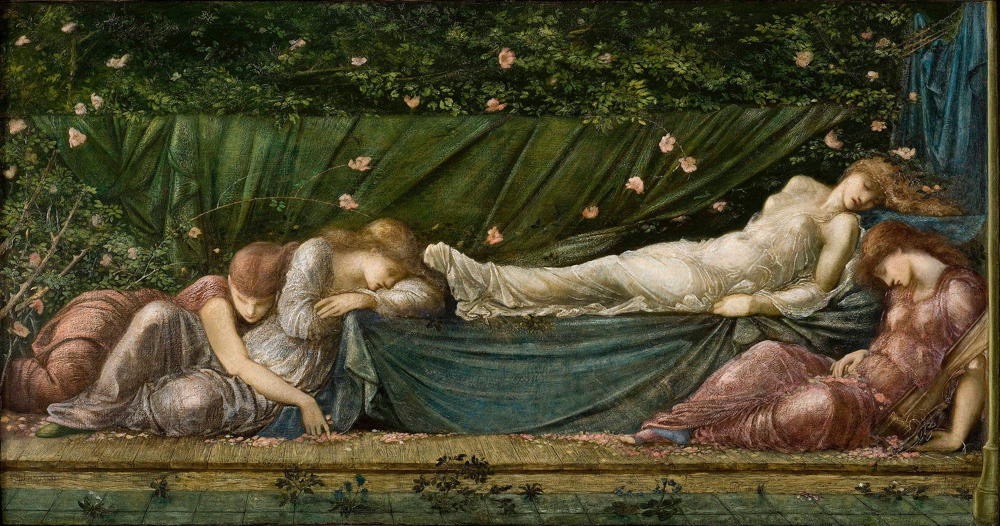
Sir Edward Coley Burne-Jones:
The Sleeping Beauty from the small Briar Rose series
(circa 1890)
"I vote for four simple freedoms again. Amen!"
In the months leading up to the United States entering the already raging World War, President Franklin Roosevelt articulated what he labeled The Four Freedoms in his January 1941 State of the Union Address. He intended these points to inspire a vision of a post-war world, where freedom would once again rule. These points were aspirational then, embodying what he hoped could be the hopes and dreams of those whose faith in freedom might well be severely challenged, even discouraged, over the upcoming period. This speech came nearly a year before Pearl Harbor, when we were still squabbling over whether to lend our support to Britain. Roosevelt decided to try to settle the questions about what we thought we might be fighting for, signaling an end to our period of isolationism.
He enumerated four “essential” human freedoms: Freedom of speech and expression, Freedom of every person to worship God in their own way, Freedom from want, meaning economic understandings that secure a healthy peacetime life for all, and Freedom from fear, specifically a worldwide reduction of armaments to prevent physical aggression.
Negavation
Sir Edward Coley Burne-Jones: Ruins at Chiaravalle near Ancona, Italy
(1818)
“…it might not ever snap back to the way it was…”
Familiar reconnoitering points have disappeared. Long-relied-upon way points have turned unreliable, and travel has turned into repeated bouts of disorientation, degrading into despair. Where did the old reliables disappear? I know why they fled, but I cannot know to where or if they will ever return. (I suspect they won’t.) After months of denial, a begrudging acceptance starts settling in, then an emotion almost resembling pride. I cannot successfully hide my grief over losing reliable trails, but I realize that I am no longer precisely lost. I can still anticipate, if not traditionally navigate. I accept that I will face detours and that my original estimates won’t be worth shit, as if they ever were. A different game seems to be afoot now, and I am more-or-less successfully adapting. Do I wish I had not lost the benefit of all my former experience? That’s a definite yes! Am I nonetheless pleased that I still seem capable of discovering viable alternatives? That yields a more hesitant acceptance, though it still distills into a definite yea.
I still register shock when encountering another difference.
Ungrounding
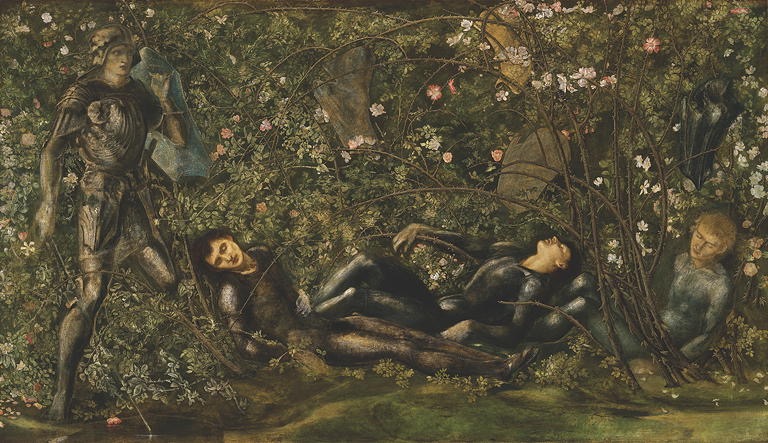
Sir Edward Coley Burne-Jones: The Prince entering the Briar Wood
(1869)
"Sic semper tyrannis!"
Just like too many EndDays Stories, this one properly begins with the fateful phrase, “If anyone had told me just two years ago…”, before going on from there. Today, I routinely engage in previously unimaginable actions, formerly genuinely unthinkable ones. Some, in defense, hoping to ward off an indistinct yet ever-present sense of impending evil, and others in preparatory offense, as if for an anticipated assault. I’m mostly making my actions up as I go along. I engage in rituals every bit as effective as those my forebears invoked to prevent The Evil Eye from getting them, rubbing salve on imaginary future wounds. For the first time in my pacifist life, I’ve begun to understand the urge my Second Amendment friends must feel when they fondle their assault rifles. I feel protective of my past, which has most certainly already passed now, and I feel genuinely insulted by what seems too likely to become our future.
The Muse and I were invited to join a conversation convened by a local executive.
TheLimit
Edward Burne-Jones: The Land of Beulah (1881)
"…when there are perfectly satisfying wishes lurking much closer and more convenient to home…"
In EndDays, apparent limits shift. What might once have been measured in ‘sky’ seems not nearly as impressive or high. More modest boundaries apply. I might ascribe this narrower sense to the usual limits imposed by age and experience. I’ve learned to moderate my possibility senses in anticipation of not being able to fully satisfy them. This might seem like a dandy adaptation to prevent discouragement or depression, but it also materially affects my sense of possibility. If I give up on myself without much in the way of challenging, it seems I must be prelimiting my influence. Those who cannot imagine might struggle to manifest. Back when the sky served as TheLimit, I felt much less restrained than I do entering my waiting dotage, where I hold the benefit of so much more experience manifesting even impossibilities. I feel forced to admit that I’ve been limiting myself.
I remember consulting with a group in a company that had just been acquired in a buyout.
LetThereBe

Edward Burne-Jones: Flamma Vestalis (1884 - 1890)
Gallery Notes:
Burne-Jones’s daughter Margaret modeled for this painting. The Latin title refers to the Vestal Virgins of Rome, who tended the perpetual fire on the altar of the goddess Vesta. Begun before Margaret’s marriage in 1888, the painting aligns her with these chaste women, suggesting her innocence and purity.
— —
"Let there be light" is an English translation of the Hebrew phrase יְהִי אוֹר (yehi 'or) found in Genesis 1:3 of the Torah, the first part of the Hebrew Bible. In Old Testament translations of the phrase, translations include the Greek phrase γενηθήτω φῶς (genēthḗtō phôs) and the Latin phrases fiat lux and lux sit. It is part of the Genesis creation narrative. Wikipedia
I had grown to take light in all of its variety for granted.
DayOfRest
Edward Burne-Jones: Night (1870)
"I'm planting those flowers this morning."
The Muse and I have several flats of plants sitting beneath our sacred apricot tree. We bought them over the past two weeks in fits of the usual enthusiasm, as Spring started emerging, imagining that they’d somehow just plant themselves, I guess. It’s been more than a week now, and there they sit, still not planted. We love to plant. It’s been our shared ritual since that first Spring we spent together back in that little apartment overlooking The Willamette, just downwind from where my prior relationship played out its EndDays. We planted flowers to thumb our noses at what had so recently seemed like the end. They represented our new beginning, and planting them then seemed like the opposite of work. It was renewing and rewarding, and reassured us that we still inhabited a welcoming world, regardless of the EndDays still trailing their toxicity along just behind us. Planting day always feels like a DayOfRest to us, yet I’d still been resisting engaging.
I spent time earlier this morning, warmly anticipating planting those flowers today.
Weekly Writing Summary For The Week Ending 03/26/2026
Edward Coley Burne-Jones: The Days of Creation (1876)
This was the most remarkable writing week I've experienced since I began writing this series of series 35 quarters ago. The flow quickly and easily established itself, and I found myself following two patterns I'd barely imagined before becoming entranced by them. I was pursuing deeper understanding of the EndDays sensations that almost everyone I'd spoken with lately had been remarking upon. It sure seems like something's coming to an end: civility, democracy, sanity, the rule of law, common sense. I sensed that EndDays belong to that class of sensations that cannot be wholly validated, or, indeed, really experienced until they're over, since there's no way to determine between actual and mere sensation until the EndDays end. Counterbalancing those sensations, I stumbled upon the remarkable Days of Creation hexaptych by Pre-Raphaelite painter and designer Sir Edward Coley Burne-Jones — a single work composed of six panels. These six panels functioned both independently and as a unified whole, which was precisely how I employed them this writing week. Each panel stands alone as the image for its corresponding EndDays installment, while the complete sequence forms a single, coherent creation narrative underlying the entire series.
In effect, each installment this writing week introduced a part of the universe the bulk of this series will inhabit.
TheBeast
Edward Burne-Jones: The Days of Creation: The Sixth Day
(1870-1876)
"On the Seventh Day, The People rested."
However unsettling the election results had seemed, TheBeast that emerged from that victory was much, much worse. It became clear even to those who had not before figured out the scam that they had been had, and not by any particular master. They had been fooled by a fool, which only amplified their sense of betrayal. The sacred promises he swore all along the campaign trail fell one by one into a gutter soon overflowing with treachery. His inauguration came off as more like a funeral, with fewer attending than at any such gathering in modern history. That first day in office set a fresh record for perfidy as each presidential proclamation seemed to amplify a sense that he was abandoning reason to pursue who knew what? A deep sense of dread and stunned recognition echoed out from the quickly despoiled Oval Office. We were being screwed.
The resistance responded immediately.
Fictos
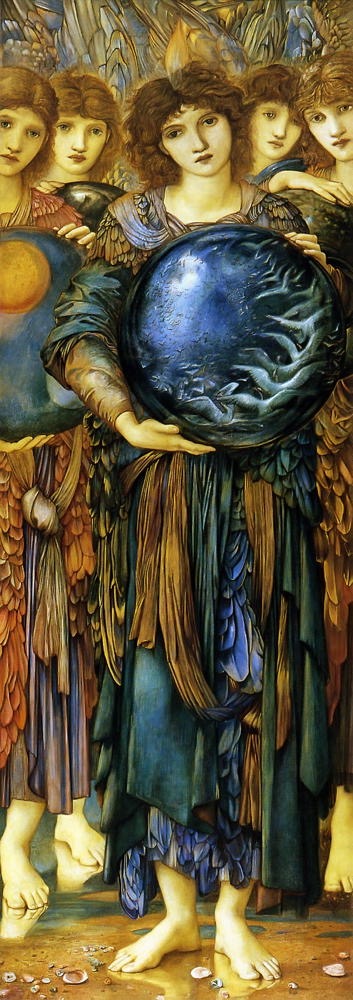
Edward Burne-Jones: The Days of Creation: The Fifth Day
(1870-1876)
"…if, indeed, our politics even survives this latest unbridled EndDays assault."
Few human activities can seem more boring than the practice of good governance. It definitely does not ordinarily qualify as anything resembling any actual spectator sport, except sometimes it engages in activities of such monumental importance that it manages to attract quite the audience. This quality of only occasionally qualifying for full attention encourages politicians to engage in some studied myth-making. They speak of such things as Masters of the Senate, a label that at best describes some especially skillful bureaucrat. They occasionally engage in brinksmanship, seeming to leave society teetering on some cliff-edge, but much of that amounts to performative statecraft. The actual deals get struck far away from the House and Senate floors, though the office of the President carries by far the greatest volume of mythos, if only because the presidency’s responsibilities definitely border on the mythical.
Chief administrator of every department of government, Commander-in-Chief of the military, perennial plenipotentiary of seemingly damned near everything in our political universe, our president more than borders on the edge of a mythical being.
MassDeception

Edward Burne-Jones: The Days of Creation: The Fourth Day
(1870-1876)
"His results can't and don't validate anything."
The future of each despotism was written before it began, back when its founding deception barely qualified as a foundling. When the lie, wrapped in swaddling clothes, still seemed charming in comparison with many competing distractions. There will always be evil in this world, but some evils have always been worse than others. Those who merely color or circumscribe seem somewhat better than those who exemplify somebody’s essence. When their very presence depends upon some founding deception, the resulting story was already headed in an inexorable direction at inception, for there can be no redemption if the basis upon which one exists is, at root, a deception. Peel away the misrepresentations to produce perhaps much worse than a founding lie: an abiding, all-consuming hollowness inside.
Despotism harbors nothingness in its core.
Collapsing
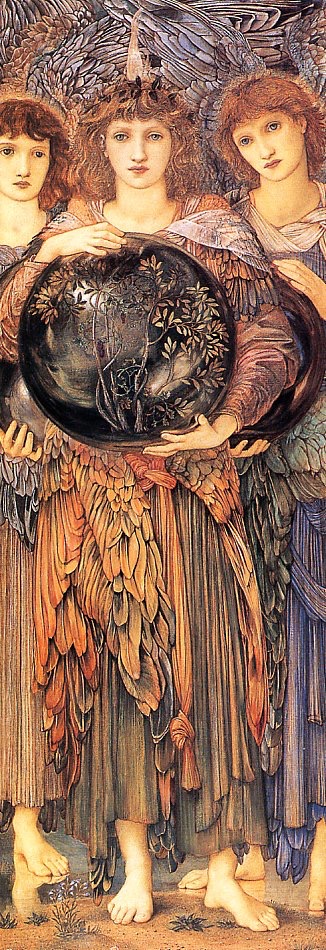
Edward Burne-Jones: The Days of Creation: The Third Day
(1870-1876)
"…these thoughts haunt and terrify me every day."
Collapsing cannot be properly characterized as a state, for it cannot be validated until after it completes, and much naturally prevents that end from ever appearing. Certainly, the peril might always exist, but distinguishing between growing pains, for instance, and Collapsing patterns should properly prove frustrating. Societies thrive on experiments. They can also die due to them. There can be no sure or certain recipe for avoiding Collapsing, and even the Ancient Greeks understood the principle that one tends to produce whatever they vehemently attempt to avoid. Fifteen months ago, the United States’ economy was widely acknowledged as the envy of the world. It now seems to be leading the world into an economic depression the likes of which we haven’t experienced in almost a century. Leading indicators seem grim, though still not yet completely certain.
Our incumbent seems to embody the very ills he visits upon our society.
Goodness

Edward Burne-Jones: The Days of Creation: The Second Day
(1870-1876)
"…a Goodness we will certainly have earned when it finally arrives."
The definition of Goodness changes during EndDays. What was bad before becomes a deeper sign of impending collapse, and so it becomes a harbinger of sorely needed change. In most ways, things have gotten worse each day as our self-saboteur incumbent reliably raises his already unwinnable stakes. It’s as if he’s trying to prove he can do even worse if he simply applies himself, and, increasingly, astonishingly, he repeatedly succeeds at appearing increasingly simple. However low he already showed he could go, he goes even lower. However indictable he had already seemed, he becomes convictable. However survivable his previous perilous state might have appeared, he seems just that much more like a gonner this time. While each infraction fully qualifies as truly terrible, not mere misdemeanors, the accumulating undermining effect arrives as curiously reassuring. Each insult brings him closer to total collapse. This might be the only beauty in self-sabotage.
I find many once-sturdy isms undermined like this.
EndDaysIntro

Edward Burne-Jones: The Days of Creation: The First Day (1870-1876)
"I intend this series to serve as a ring-side seat for witnessing the upcoming EndDays."
Another new beginning, if that image isn’t too redundant to hold its intended meaning, or even if it might be. Even EndDays need a decent beginning. Not even they can survive on nothing but endings. I begin this series, my thirty-sixth by my count, since I began writing series on June 21, 2017. I sought a new beginning then, after months of professional discouragement. My courage at a historical low, I mustered my foolhardiness and committed to a practice I’ve continued since. I declared myself a writer that morning, though I insisted that I produce clear, unambiguous evidence. I proposed that acceptable evidence might appear in the form of writing, a story every morning, because writers write. If I were insistent upon being so outrageous as to declare myself a writer, I would henceforth hold myself to actually writing rather than merely thinking or talking about it. I would just need to do what I intended.
And so I have continued through thirty-five, ninety-some installment series, each began on the first day of a calendar quarter, and each ended on the eve of the following solstice or equinox.
Good For A Goose

Comeuppance (33)
Decency (90)
Decency Unscrolling (1)
EndDays (92)
Exiled (90)
Fambly (93)
FollowingChapters (93)
Grace (92)
Humor (2)
iAlogue (1)
Letters to the Editor (1)
NextWorld (91)
Personal (18)
Prosperity (94)
Steam Festival (4)
Unscrolling (89)
Vaporized (6)
Work (16)
September 2026
August 2026
July 2026
June 2026
May 2026
April 2026
March 2026
February 2026
January 2026
December 2025
November 2025
October 2025
September 2025
August 2025
July 2025
June 2025
May 2025
April 2025
March 2025
February 2025
January 2025
December 2024
November 2024
October 2024
September 2024
August 2024
July 2024
June 2024
May 2024
April 2024
March 2024
November 2006
October 2006
September 2006
August 2006
July 2006
June 2006
May 2006
April 2006
March 2006
February 2006
January 2006




_-_Sir_Edward_Coley_Burne-Jones_-_overall.jpg)
