Weekly Writing Summary For The Week Ending 04/30/2026
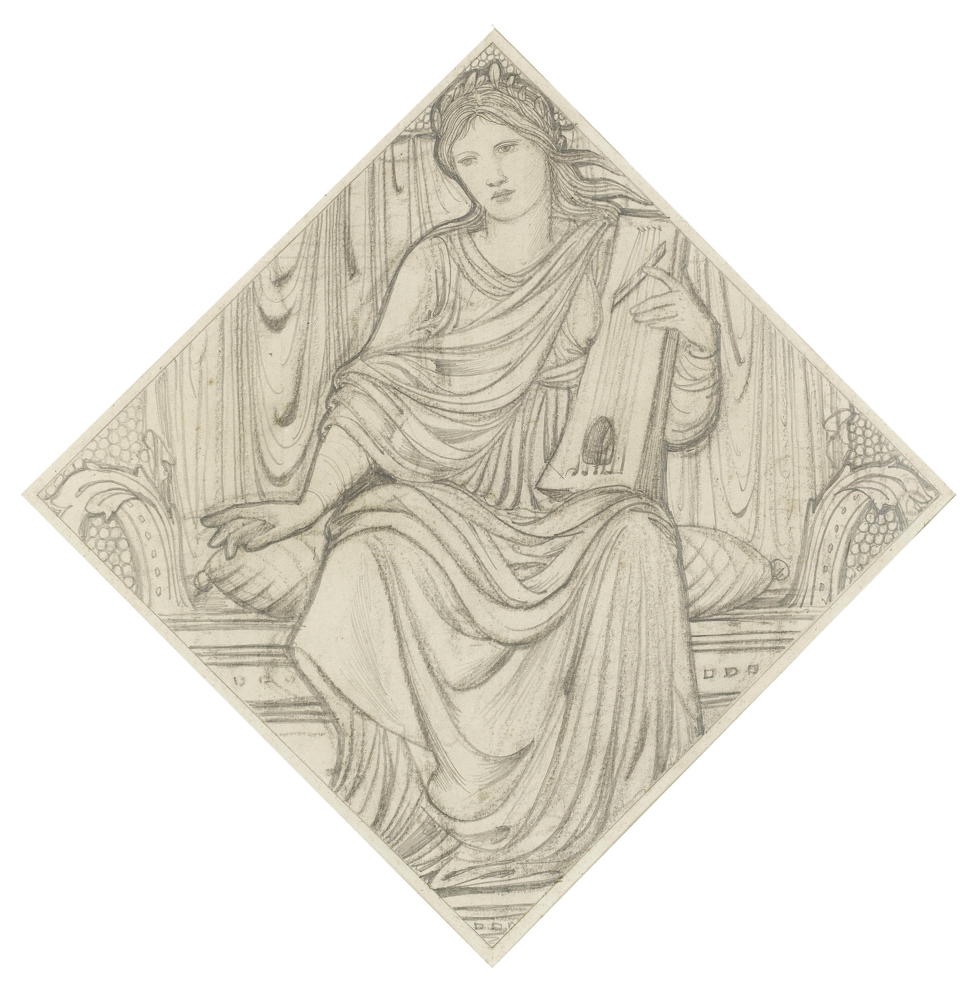
Sir Edward Coley Burne-Jones:
A woman with a lyre
(circa 1880)
This week’s EndDays dispatches moved from the surreal to the civic, from the undead persistence of a failed presidency to the tentative arrival of genuine prosperity on my valley’s western edge. The week held its familiar tensions — political exhaustion, garden disruption, the launch of a new book into an indifferent marketplace — while finding fresh angles on each. A new coinage appeared, Flacts, to name what we’d all noticed but couldn’t quite label. The series passed its fortieth installment, and sod arrived at the Villa Vatta Schmaltz just in time for the end of this Writing Week.
Thank you for following along!
— — —
Weekly Writing Summary
Undead
“Hasn’t he already lingered longer than absolutely necessary?”
During Saturday Night Live’s first two seasons, its original News Update anchor Chevy Chase ran a continuing joke, each week proclaiming, “Francisco Franco is still dead.”
In this EndDays Story, I borrowed Chevy Chase’s recurring SNL gag about Francisco Franco’s death watch to frame our own interminable vigil over a presidency that has reportedly been on its last legs since before it began. I characterized our incumbent as Undead — not dead, not alive in any meaningful sense, but operating without conscience, without conventional feelings, without the human capacity for tears or laughter that any credible grief requires. His Epstein connection was never more than a symptom of something deeper. He was always poor and always rich and always a terrified little boy. One day, probably not this morning and maybe not tomorrow either, I will roll out of bed to learn that Donald J. Trump is no longer considered Undead. Hasn’t he already lingered longer than absolutely necessary?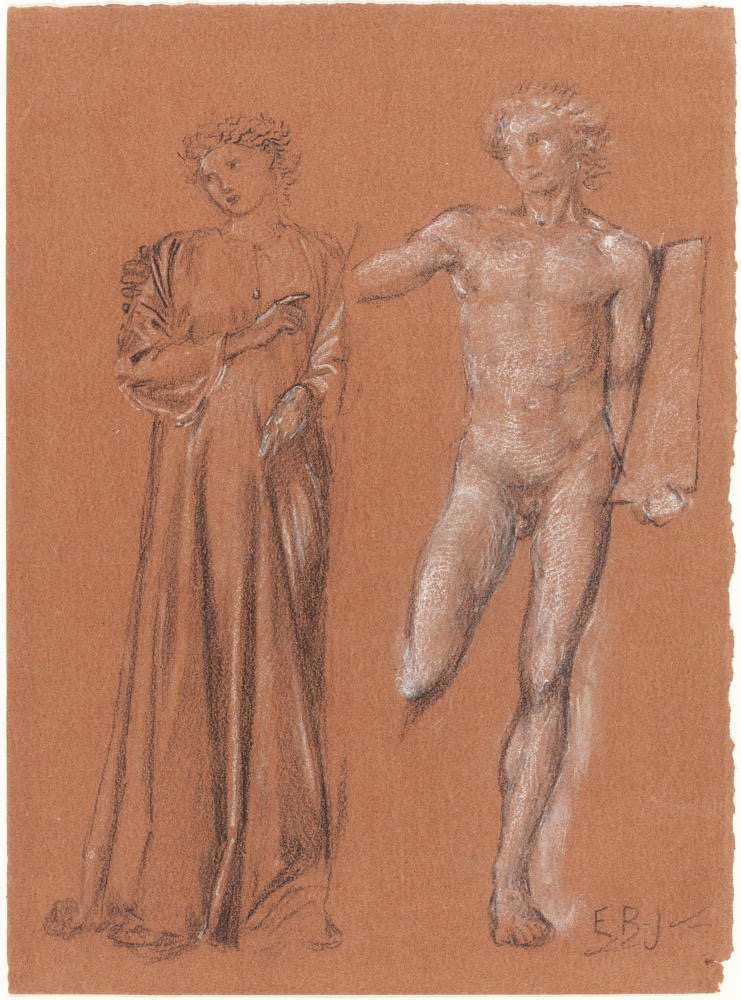
Sir Edward Coley Burne-Jones: Orpheus and Eurydice (Between 1898)
——
Unsettled
“…I’m wishing that I’d just stayed home, where my heart already was.”
As the grand planned in-ground irrigation system installation spills into its fourth day, my usual composure slips away from me.
In this EndDays Story, I described my deep Unsettledness at watching my sacred garden violated by the irrigation crew’s trenches and indifferent boots, while simultaneously fielding a predatory podcast offer targeting newly published authors, while half-heartedly beginning to promote my just-published Cluelessness. A crew scraped off my lawn, tromped through The Muse’s bleeding heart bed, and stripped paint I’d carefully applied. The podcast wanted nearly what I’d paid for copyediting in exchange for an audience composed primarily of other fleeced authors. Every forward transition involves more backward movement than anyone ever plans for. I’m at that part of the Hero’s Journey where I’m wishing that I’d just stayed home, where my heart already was.
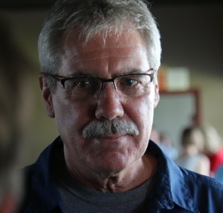
Alphonse Legros: Sir Edward Coley Burne-Jones (1833–1898) (1879)
—
StageCrappery
“I tire of these endless, meaningless performances…”
Contrary to popular misconception, all this world was never a stage, and human existence never once very closely resembled mere players.
In this EndDays Story, I pushed back against Shakespeare’s famous assertion before applying it to our present political moment. I distinguished between a player’s authenticity and a person’s, which tends toward the unexpected and unbelievable. The Muse’s Port Commission campaign offered a counterexample: she chose to show up as the midwestern farm girl she actually is, no costume, no performance, just herself. Our incumbent, by contrast, trades exclusively in StageCrappery — carefully set stages that he then immediately violates with speeches that contradict whatever backdrop he’s arranged. He’s either the most inept actor ever to take a stage, or an irrelevant genius mastering a craft with no plausible use in any universe. I tire of these endless, meaningless performances.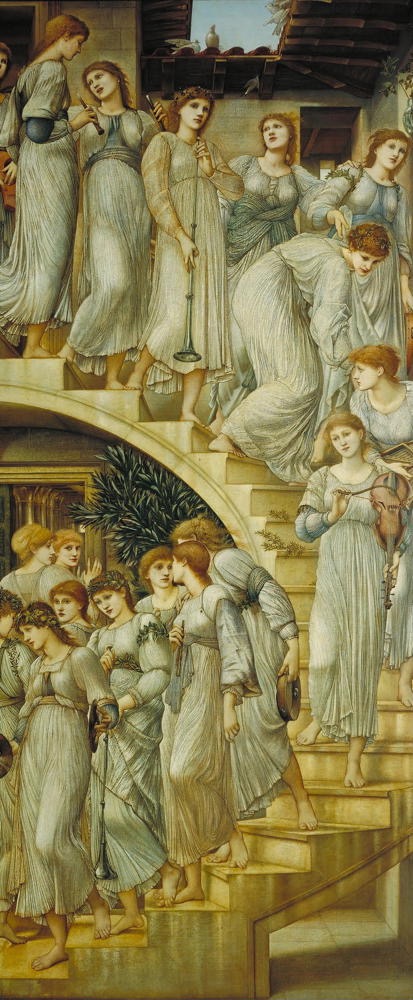
Sir Edward Coley Burne-Jones: The Golden Stairs (1879 )
——
Flacts
“Maybe we find our underlying connections beyond disconcerting.”
Who knows how wisdom visits?
In this EndDays Story, I coined a new term for one of our era’s defining afflictions: Flacts, facts innocently or more malevolently taken out of context, which function as falsehoods while maintaining the surface credibility of facts. I described how those who deal in Flacts take considerable pride in their resulting ignorance, insisting upon solving the gravity problem before allowing powered flight to proceed. The Muse’s approach as Port Commissioner offered the contrasting model — finishing her homework, admitting her own ignorance when it exists, inviting questioners into actual conversation. Wisdom insists there’s always something missing from every conclusion. We are more tenaciously interdependent than we could ever manage to be decisively independent. Maybe we find our underlying connections beyond disconcerting.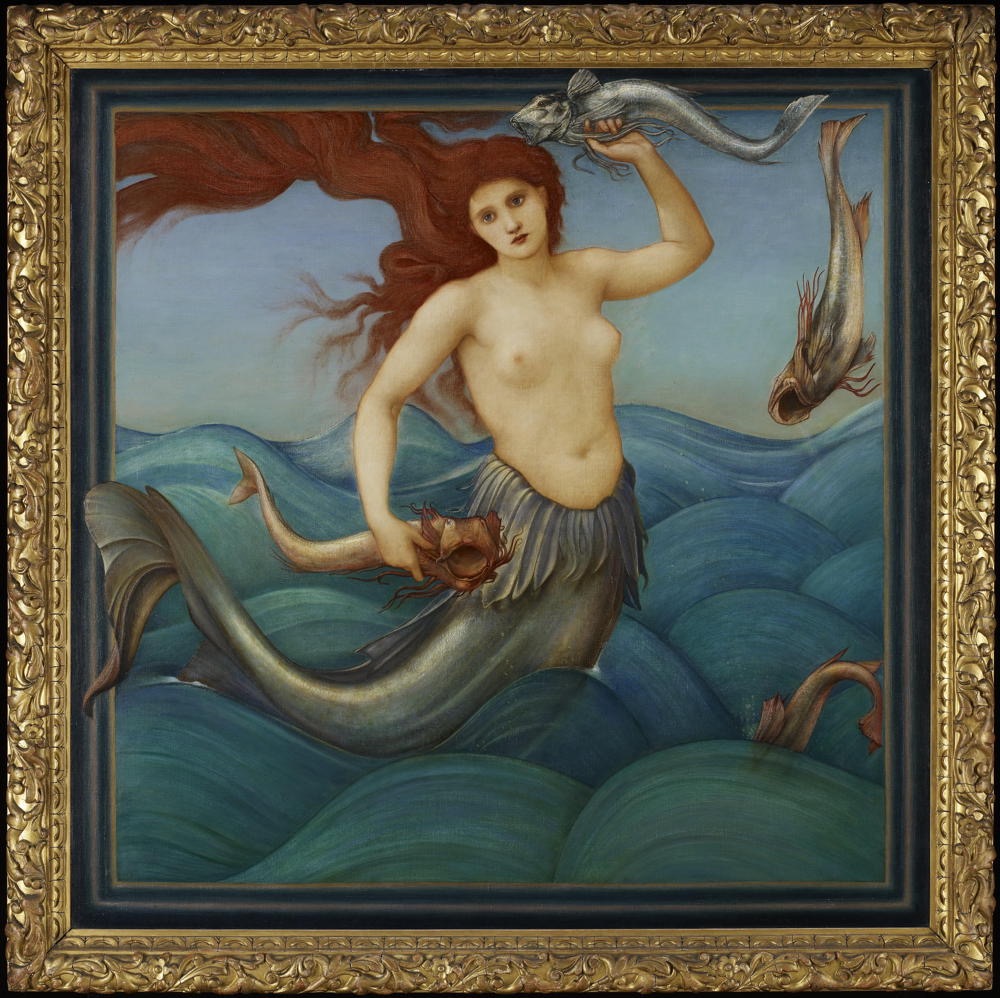
Sir Edward Coley Burne-Jones: A Sea-Nymph (1879 )
——
Neediness
“Never be needier than the country you were elected to lead.”
Perhaps the first principle of project management, which I used to teach and practice professionally, must be: “Never be needier than your project.”
In this EndDays Story, I applied the first principle of professional service — never be needier than your project — to the spectacle of our current presidency. A service provider whose own needs overwhelm their client’s needs has failed at the fundamental purpose of their engagement. Our poor little rich boy incumbent demonstrated his unsuitability for any executive role through seasons of his sleazy television series, where he performed as an emotional infant holding subordinates responsible for satisfying his capricious expectations. His unquenchable Neediness screams from every performance. Forty-Seven’s destined to eighty-six as a child, and we will very likely be suffering the consequences through the balance of the upcoming century. Never be needier than the country you were elected to lead.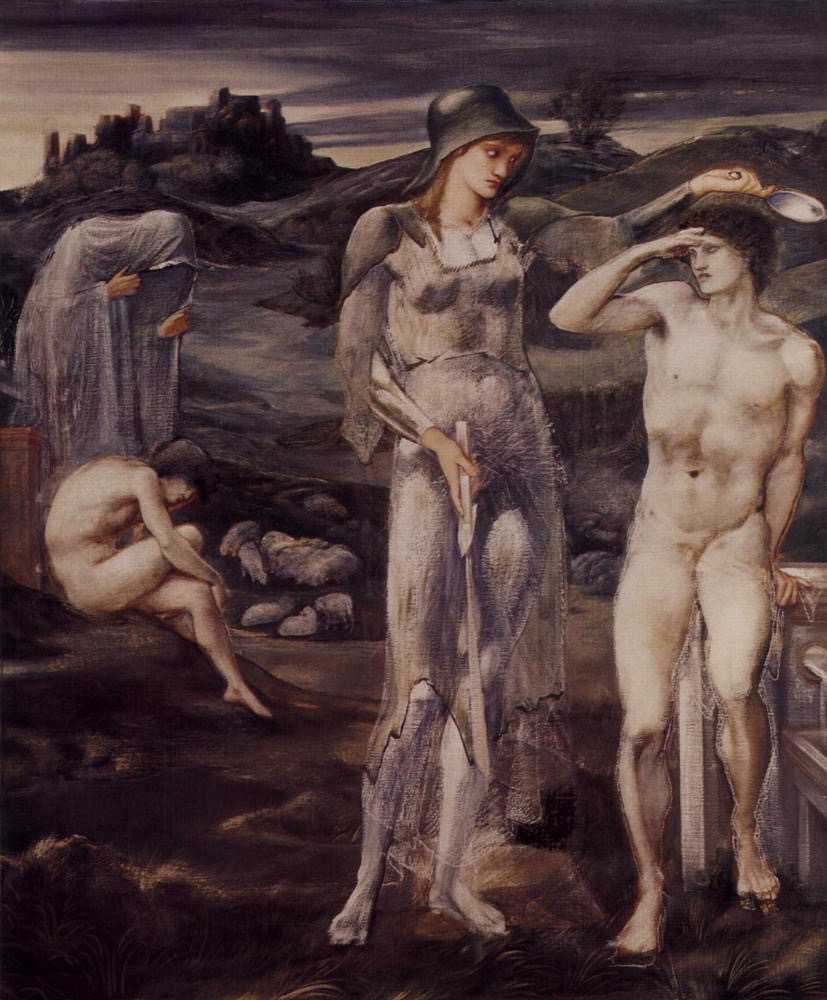
Sir Edward Coley Burne-Jones: The Calling of Perseus (between 1877 and 1898)
——
Prospering
“…I’m hopeful we might finally escape the scarce resources allocation quicksand.”
Our economics foretell our fate.
In this EndDays Story, I traced the long history of scarcity thinking in this valley — the gospel of penury that told natives to know their place while original settler families treated prosperity as their private property. Then I described attending a ribbon-cutting on the county’s industrial western edge, where a corporation with proprietary technology and enviable market share broke ground on a factory that will employ more than a hundred people at decent wages. They spoke convincingly of community. The catered lunch screamed impressive margins. They invited the United Way. Our orchards have peaked, our vineyards have begun their decline, and our wheatfields have been undermined by illegal tariffs. Our future may stand along that industrial western border, where prosperity historically seemed least likely to manifest. I’m no booster, but I’m hopeful we might finally escape the scarce resources allocation quicksand.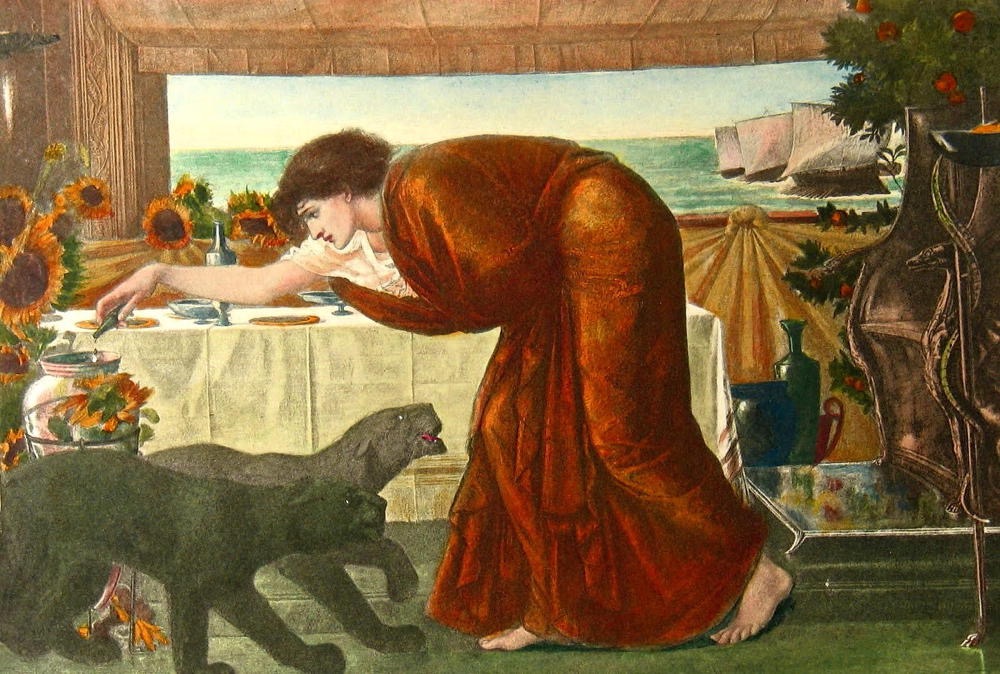
Sir Edward Coley Burne-Jones: The Wine of Circe (1900)
——
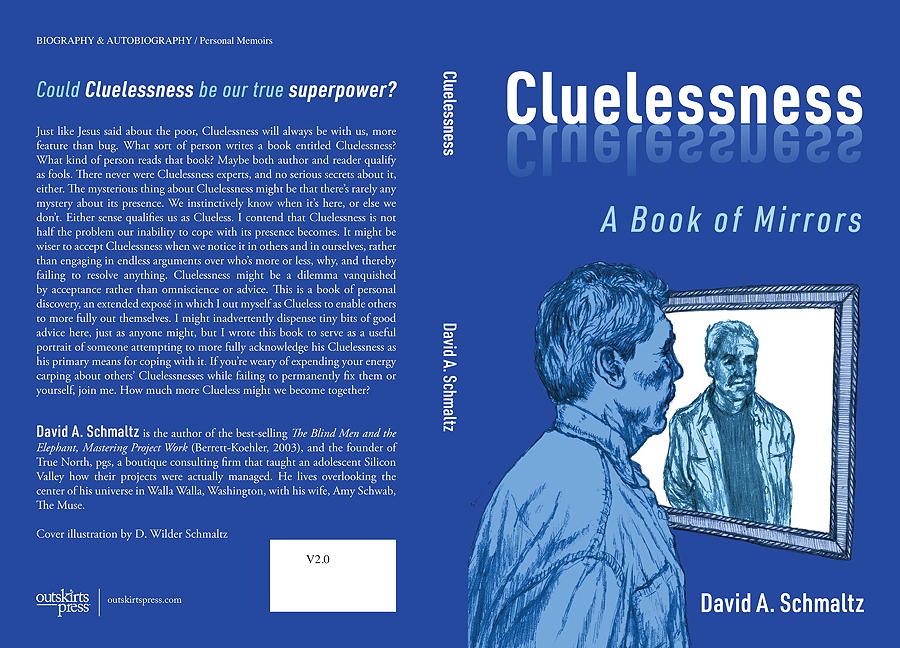
Buy my newest book and write a review!
You can now order it from Bookshop.org or from Amazon. Many more links are coming, or so I am reassured. I have not yet seen a hard copy of the book. I ordered a few copies from the publisher a week ago, but they’re still in transit. The Muse ordered a few more copies before she understood that I could order additional copies at a discounted price. Those haven’t arrived yet, either. I acknowledge that I couldn’t write a review of the work, either, unless I relied on the galley copy of the work as my source. I’m old-fashioned enough to believe that the only valid copy of a book comes on paper. Nobody can write a credible review of the work yet.
I’ve been wondering what I might offer my loyal readers in exchange for their writing a review on one of the innumerable social media book review sites. I know that many best-selling authors hire ghostly review writers, paying them to produce what will transform into clicks that seem to represent satisfied book buyers. Some of the biggest best sellers buy thousands of copies of their latest to push their ratings to best seller territory, and thereby justifying the expense. Their cost of salting their own mine gets lost in rounding. If an author’s not careful, they can fool themselves into believing they’re succeeding, whatever that entails. I have been receiving good-hearted offers for me to “invest” some of my treasure in what’s generally labelled “Book Marketing.” I believe that the only marketing worth its salt costs nothing and gets delivered by those who feel moved to spread the word, not because they’re receiving some payoff. That said, reviews do seem to be the currency of this realm. I know, I could write my own, but that smacks of a certain desperation I’d really rather not engage in.
I have been readying a press release announcing the publication, but I am holding it until the books are more broadly available. It takes a couple of weeks or more to complete this essential chore, so I’ve been honing my delivery and distracting myself. Overall, the launch feels more like a belly flop than a moon shot right now, but I have been reminding myself that I didn’t write this book for sales or notoriety. It must be the curious fate all writers share that they must depend upon readers appearing. Some of us work hard to stay visible, feeding our feeds and creating fresh material, all without much in the way of promise of any payback. I keep reminding myself that if I really wanted to get rich, I’d stand better odds buying lottery tickets than writing books. The payback in this sort of business comes when creating the product, and when receiving unsolicited appreciations that seem to come just from being. I received one of these this week when someone in my SubStack networks enthused that if Cluelessness was half as good as my Blind Men and the Elephant, it would be well worth the read. She hadn’t received her copy yet, either, though I will encourage her to share her experience with others.
Early in developing Cluelessness, I asked a few loyal readers if they would read the draft and just share their experience with me afterwards. I didn’t want them copyediting or reviewing, but providing me with perspective that no writer can ever access alone. I ruined my chance to experience my book by writing it, but others hadn’t. The most remarkable and reassuring stories followed.
I realise again that writing a book is not about selling it, not for me, it isn’t. It’s about sharing something too intimate to be shared in any other medium. Believe me, books might be the clunkiest medium ever devised. Cluelessness had a gestation period of eight years! That’s an impossibly long distance between investment and return. The economics might not work. It’s a very good thing that the economics of books have always been beside the point of them. I’m grateful for print-on-demand technology because it almost guarantees that books won’t be printed on spec and pulped when no buyers show up.
——
FOR IMMEDIATE RELEASE
Contact: David A. Schmaltz david@projectcommunity.com 503.805.9135
Walla Walla Author Publishes New Book on the Unexpected Virtues of Not Knowing
Cluelessness: A Book of Mirrors Arrives at a Moment When Certainty Has Never Seemed More Dangerous
WALLA WALLA, WA — David A. Schmaltz, a Walla Walla writer who has published a new essay every day since June 2017, has released his second book, Cluelessness: A Book of Mirrors (Outskirts Press, 2026, ISBN 978-1-9772-7965-1).
The book collects ninety short essays exploring what Schmaltz calls “the most under-appreciated feature of human existence” — our universal inability to know enough to avoid being Clueless. Rather than proposing a cure, Cluelessness argues that how we cope with our inevitable not-knowing matters far more than the Cluelessness itself.
“Perhaps Cluelessness was never the problem we convinced ourselves it was,” Schmaltz writes in the book’s opening pages.
The timing feels particularly apt. In an era defined by near absolute certainty on all sides, a book that finds wisdom in admitted ignorance offers readers something genuinely rare — permission to not know, and company in the not-knowing.
Cluelessness ranges across the full territory of daily life, from the self-deceptions that allow us to keep moving forward, to the studied ignorance that lets us ignore what we cannot afford to know, to the quiet dignity of maintaining convictions in a culture that rewards getting away with things. Each essay functions, as the subtitle suggests, as a mirror: angled just so, offering readers a glimpse of themselves going about their own daily Cluelessness.
Schmaltz brings an unusual credential to this subject. Since June 2017, he has published a new essay every single day on his blog at PureSchmaltz.com, accumulating nearly nine years of continuous daily writing across more than thirty book-length series. Cluelessness grew directly out of his Clueless Summer series, originally published in 2018.
His first book, The Blind Men and the Elephant: Mastering Project Work (Berrett-Koehler, 2003), became a bestseller and was translated into five languages including Taiwanese Chinese, Thai, Catalan Spanish, Portuguese, and Dutch.
Cluelessness: A Book of Mirrors is available now on Amazon and through major booksellers. For review copies or interview requests, contact David A. Schmaltz at the address above.
I employed Claude.ai, a commercial AI-powered text editor, using it to perform repetitive copy/pasting work and to create the above story summaries, prompting with: “Please briefly summarize this story in the first person while retaining the original voice.” I manually copy-edited each result.
Thank you, as always, for following along!
©2026 by David A. Schmaltz - all rights reserved
Good For A Goose

Comeuppance (19)
Decency (90)
Decency Unscrolling (1)
EndDays (92)
Exiled (90)
Fambly (93)
FollowingChapters (93)
Grace (92)
Humor (2)
iAlogue (1)
Letters to the Editor (1)
NextWorld (91)
Personal (18)
Prosperity (94)
Steam Festival (4)
Unscrolling (89)
Vaporized (6)
Work (16)
September 2026
August 2026
July 2026
June 2026
May 2026
April 2026
March 2026
February 2026
January 2026
December 2025
November 2025
October 2025
September 2025
August 2025
July 2025
June 2025
May 2025
April 2025
March 2025
February 2025
January 2025
December 2024
November 2024
October 2024
September 2024
August 2024
July 2024
June 2024
May 2024
April 2024
March 2024
November 2006
October 2006
September 2006
August 2006
July 2006
June 2006
May 2006
April 2006
March 2006
February 2006
January 2006


_-_Sir_Edward_Coley_Burne-Jones_(1833%E2%80%931898)_-_370-1880_-_Victoria_and_Albert_Museum.jpg)