ReadingBooks
The Belevskii-Zhukovskii Collection of manuscripts, photographs,
drawings, books and printed ephemera
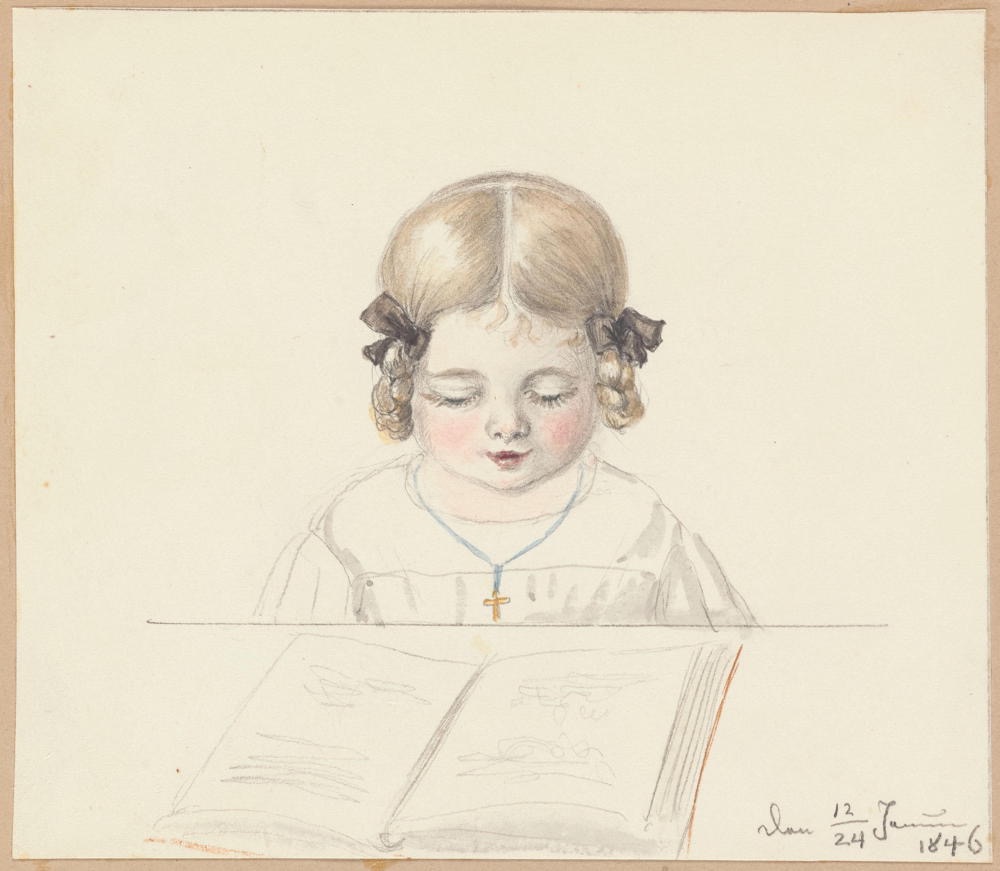
Vasilii Andreevich Zhukovskii family album:
Girl (Alexandra) reading a book (1846)
The Miriam and Ira D. Wallach Division of Art, Prints and Photographs: Art & Architecture Collection, The New York Public Library.
"Girl (Alexandra) reading a book" New York Public Library Digital Collections. Accessed January 31, 2026. (https://digitalcollections.nypl.org/items/0a3ba380-6a47-0135-7c5f-1dfb8ba095ee)
"I will revert to the literary for a change."
Unscrolling seems to demand alternative activities. If I’m dedicating myself to at least reducing my scrolling, to what might I reasonably assign the time I gain from the shift? Modern life has always insisted upon some attention being directed toward visual engagement. This might include anything from theater to ReadingBooks, but are either of those occupations really any different than scrolling? I mean, they can both serve as distractions and might well become problems if over-engaged in. Right? Television, in its infancy, was feared for its addictive trance-inducing qualities. Theater, too, might serve as an escape from rather than into anything useful. I contend that scrolling social media serves a unique and as a uniquely dangerous purpose, wholly unique from any of its analogue precursors. It’s different.
Social media scrolling seems to be an infinite activity.
Weekly Writing Summary For The Week Ending 01/29/2026
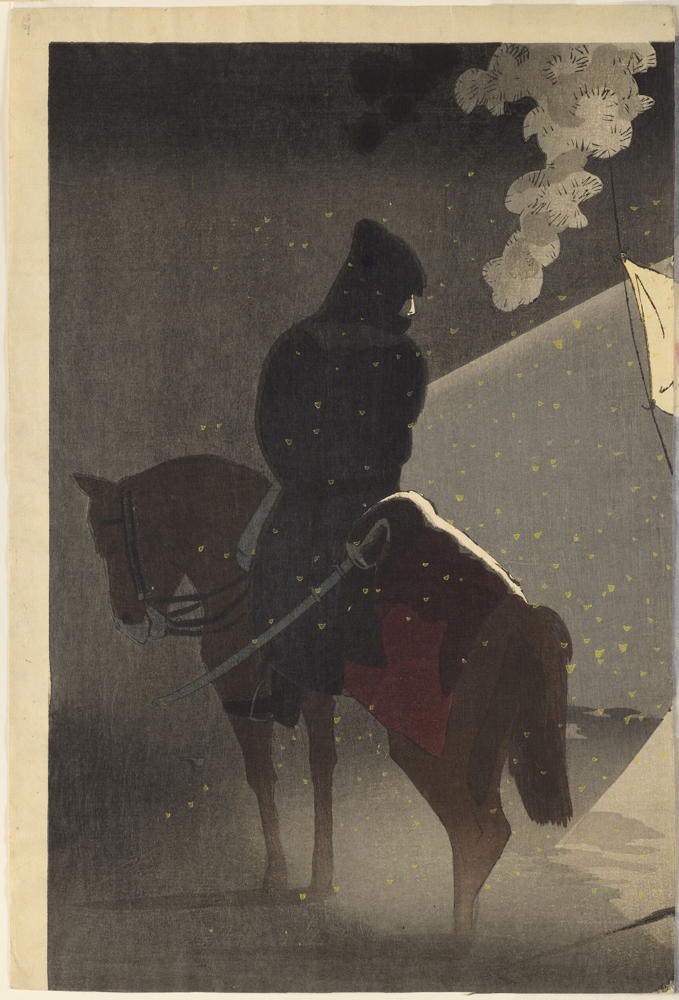
Kobayashi Kiyochika 小林清親: Braving the Bitter Cold,
Our Troops Set Up Camp at Yingkou (1895)
Published by Matsuki Heikichi 松木平吉 (1836 - 1891)
I wish every writing week would leave me feeling as though I’d discovered as much as I managed to stumble upon this writing week. I troll for insight, but I’m not always rewarded for my efforts. Writing this series feels very much like fishing. Some streams, some weeks, hold many fish, while others prove to be fallow. I’m not quite foolish enough to think of myself as a masterful fish attractor. I show up, mustering some hope for the best, and I feel genuinely blessed when my gumption’s rewarded. This week seemed a mother lode in comparison to most.
I sense my originating presumptions shifting, as any originating presumption should.
Civil-Liability
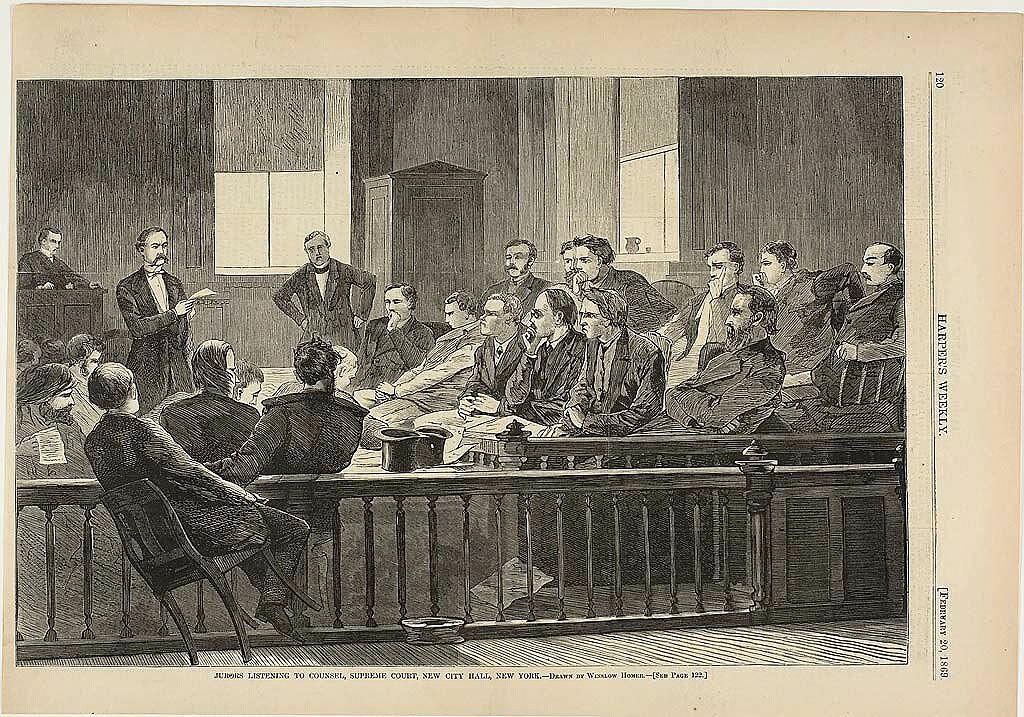
Winslow Homer: Jurors Listening to Counsel,
Supreme Court, New City Hall, New York (published February 20, 1869)
"Stay tuned. We all might end up on the payday side of some future class action."
This week, in January 2026, marks the start of what might prove to be a new era in the history of social media in the United States. A civil suit brought by a 20-year-old woman, identified as “K.G.M.”, who created a YouTube account at age 8, then joined Instagram at 9, Musical.ly, now TikTok, at 10, and Snapchat at 11, finally comes before a jury. Her lawsuit claims she became addicted to the social media sites as a child and experienced anxiety, depression, and body-image issues, including attempted suicide, as a result. TikTok and Snap, the parent company owning Snapchat, settled with the plaintiff before trial began. The remaining defendants will claim protection under a federal shield law, Section 230 of the Communications Decency Act of 1996, that has thus far protected them from liability for what their users post online.
K.G.M. seeks monetary damages and will reportedly present a case based upon similar arguments that resulted in huge settlements against Big Tobacco in the 1990s, when companies like Philip Morris and R.J. Reynolds were accused of hiding information about the harms of cigarettes.
Dooming
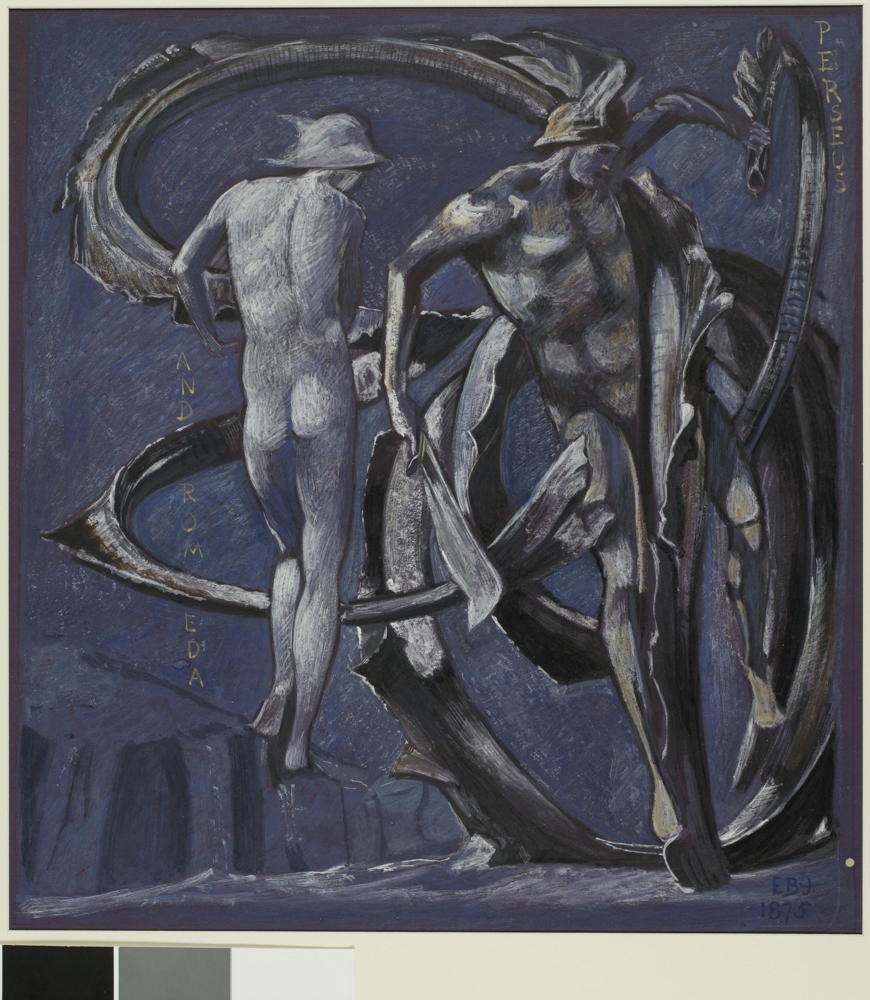
Sir Edward Burne-Jones:
Perseus and Andromeda, study for The Doom Fulfilled (1875)
"Dooming seems to inevitably become self-fulfilling."
As our economy slumps, one segment remains robust. The Doom Industry has been achieving new heights monthly, as each successive performance outstrips the previous. The market for handbaskets has likewise proven robust, with demand up and supplies reduced in each of the prior twelve months. Both the doomposting and doomscrolling segments of the industry have been thriving, thanks in no small part to our administration that continues to steadfastly—some suggest valiantly—refuse to properly administer even the smallest functions. No analyst needs to dig very deep to find reinforcing data. Every headline, as well as each obscure footnote, screams demise. If only we could tout such performance from the balance of our economies. Unfortunately, we cannot.
The Doom Industry grew in parallel with the internet.
OutCivility
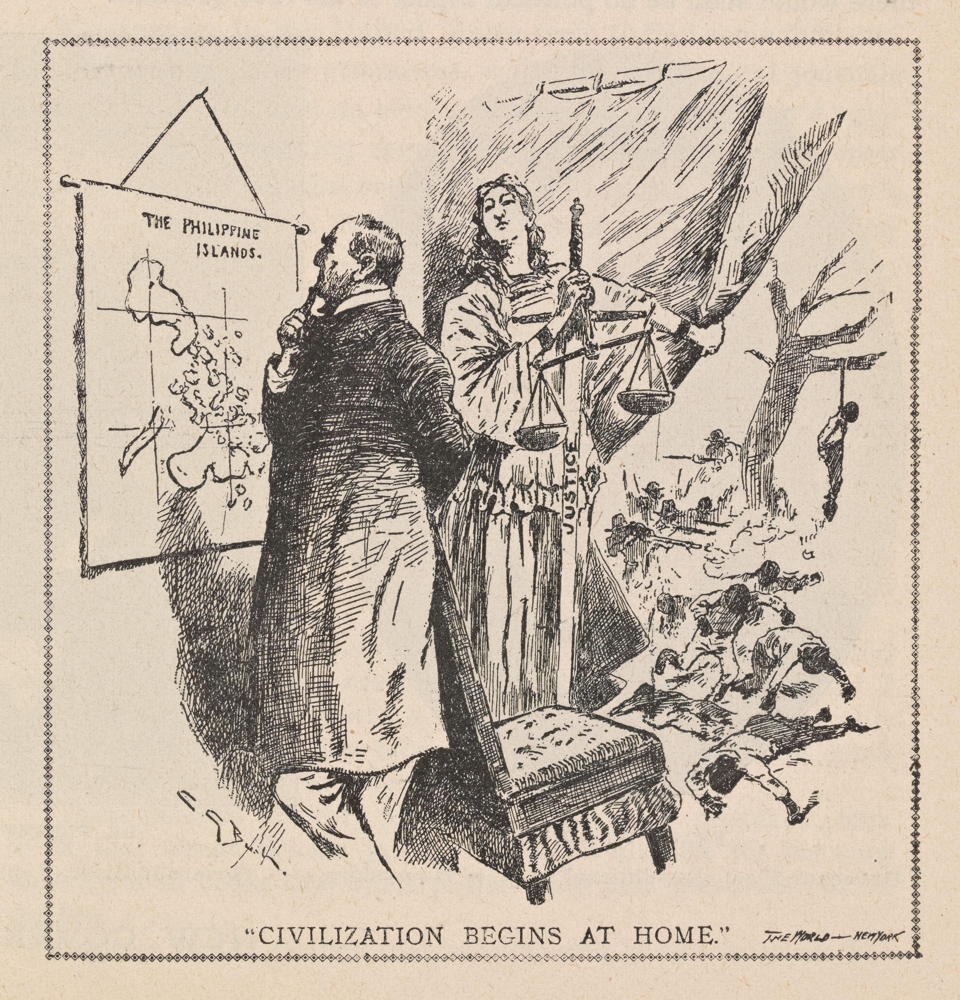
Charles Green Bush: "Civilization begins at home." (11-26-1898)
General Research Division, The New York Public Library. (1898 - 1938). "Civilization begins at home." Retrieved from (https://digitalcollections.nypl.org/items/baced180-c607-012f-777f-58d385a7bc34)
"Civility can only be meaningfully measured in eons.
It inescapably tries our patience."
Perhaps the major complaint I hear against social media in general and scrolling in particular harps about the incivility found there. People, freed of face-to-face constraints, speak altogether too freely, as if civility didn’t actually matter, as if the rules of engagement had suddenly been suspended. This complaint seems unquestionably true. We do do that to each other: sister to brother, neighbor to neighbor, stranger to stranger. Who hasn’t failed to catch themself before committing some public truth probably much better left unspoken? Who hasn’t had to crouch way down, failing to avoid some judgmental frown, or been the source of the same aimed toward some other sinner, as if they’d never failed in public themself. We seem to have known no shame when we shame, to alone stand innocent of anyone’s blame. The primary criticism of social media might be that it too effectively amplifies our hypocrisy.
Leaving Facebook won’t cure this because Facebook was never the cause.
TheCuriousCase...
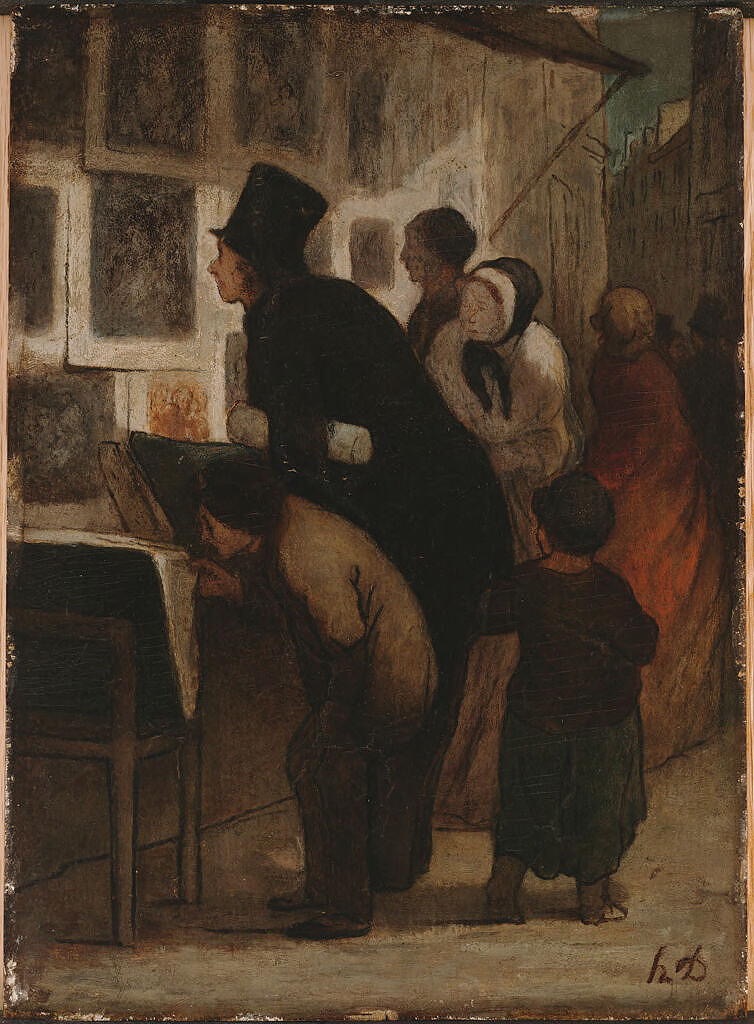
Honoré-Victorin Daumier: The Print Amateur
[L'Amateur de Gravures / Les Curieux à l'Etalage…]
Alternate Title: The Curious at the Display (c. 1855)
"A marriage created in purgatory."
During The Damned Pandemic, I discovered Heather Cox Richardson’s reassuring voice. In daily “letters,” which she posted to then-budding social media, she debunked the craziness espoused by the then-inhabitant of the Oval Office. I found her to be quietly reassuring and authoritative. She brought her deep understanding of history to the party, usually leaving me feeling better oriented as to how my situation fit into broader historical contexts. She became irreplaceable.
With that incumbent’s surprising return to elected office, her voice took on fresh vehemence, since said incumbent immediately set about trying to make America Stupid Again again.
InHere OutThere
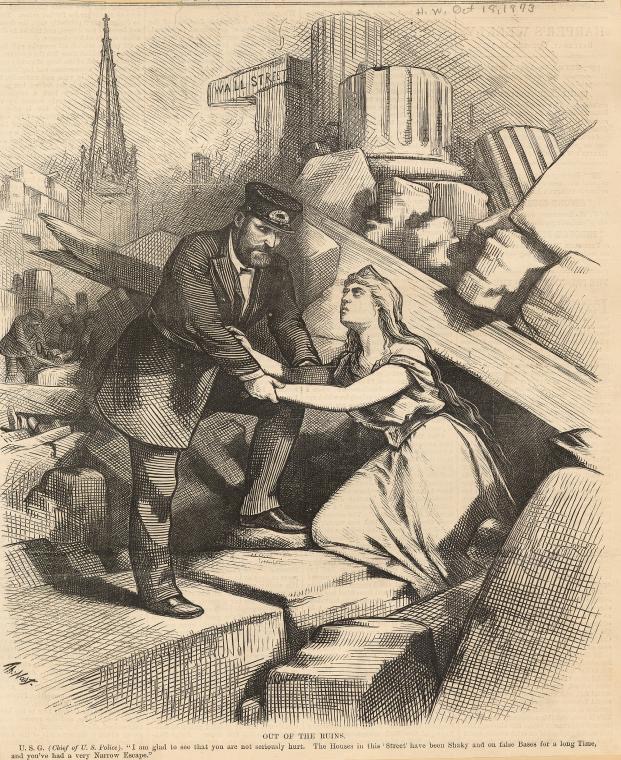
Thomas Nast: Out of the ruins... (10-18-1873)
"I seem satisfied to accomplish no more than to gape at shadows playing on some utterly imaginary wall."
Social media scrolling fiddles with the In Here/Out There boundary. Firmly focusing on the media via any device induces a convincing illusion of In-Hereness. It sure seems then as though the real world—by which I refer to the flesh and blood world—was Out There and the distantly disembodied virtual world was the more intimately personal one. This effect might amount to little more than a figure/ground misattribution if it weren’t for the broader and deeper ramifications stemming from this situation. I guess that video games can induce the same effect, where their user inhabits the projected world more confidently than they inhabit their own body. Normal activities of daily living might go begging in favor of feeding the non-sentient presence. Schools have begun confiscating students’ cell phones in acknowledgment of just this influence. For whatever reason, virtual existences seem to be terribly attractive in ways that can ultimately prove to be self-destructive.
The self in this face-off voluntarily surrenders to its virtual counterpart.
JungleTelegraph
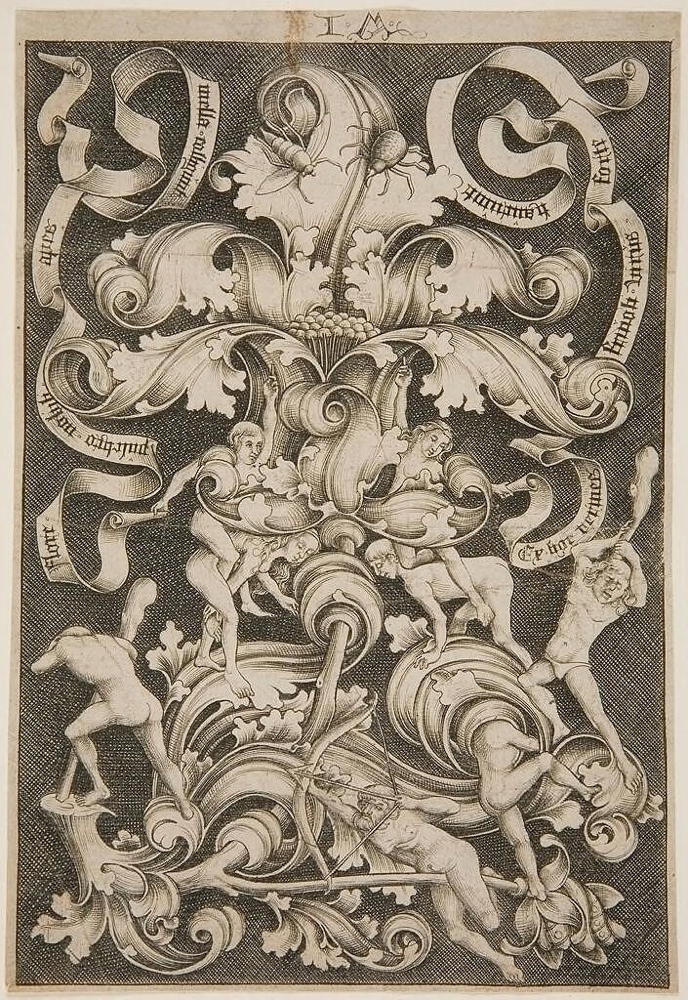
Israhel van Meckenem the Younger:
Wild Men Climbing to the Flower of Love (15th-16th century)
"What harm could it possibly do to learn that Tarzan's on the move again?"
Somewhere within every Tarzan movie ever made, some group would go on the move. Background jungle sounds would increase, but not so much that any non-native would notice. Every inhabitant seemed to get involved. Elephants would trumpet and monkeys chatter, lions would roar, and alligators splatter. The purpose of the commotion would be a form of primitive communication that seemed to transcend language, for every animal: human, hippo, and reptile, seemed perfectly capable of passing on the message, which would remain deeply encoded. Tarzan, of course, having been raised in the jungle, was perfectly conversant, so he could translate. He knew, for instance, when the bad guys began their inevitably failing pursuit because his animal allies would keep him informed. When he’d swing off on his conveniently separated vine highway, word would spread so his passage wouldn’t surprise anybody but the bad guys.
Our social media serves as our JungleTelegraph today.
Weekly Writing Summary For The Week Ending 01/22/2026
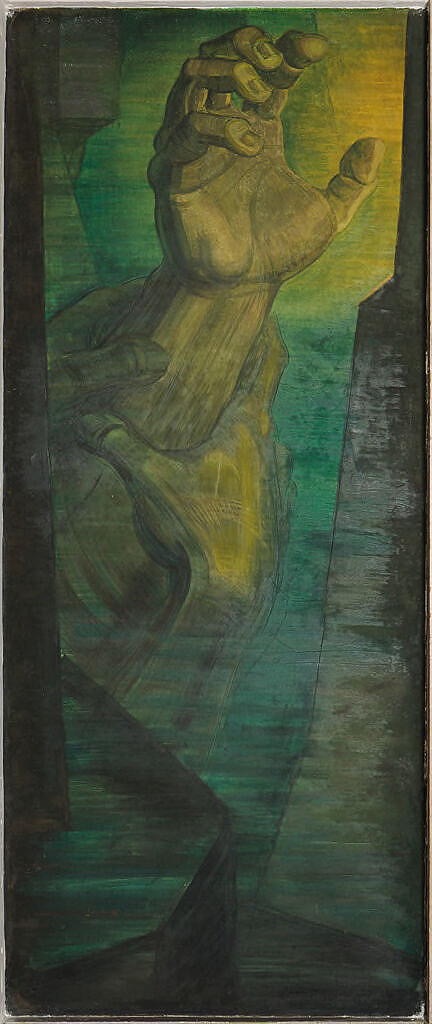
Lewis W. Rubenstein:
Scene from the Niebelungen Legend: Alberich's Hand (1935-1936)
This writing week found me even more fully engaging in the curious occupation of Unscrolling. I began the week KillingTime, an activity I characterized as sometimes necessary, perhaps essential. I next noted the Spurious Premises social media offers, though they sure don't seem all that spurious when I encounter them while scrolling. I noticed and reported on how scrolling seems perfectly suited as an activity for the Powerless, and that, perhaps, it's "just" a symptom rather than a problem. I then declared the enormous difference between simply ceasing and genuinely Desisting, insisting that desisting often proves impossible. I introduced the Witness/Participant balance, which seems currently out of balance to me. I ended this writing week insisting that scrolling social media amounts to spying on myself. Thank you for following along as I try to understand this obsession we seem to so vehemently rely upon.
Surveillance
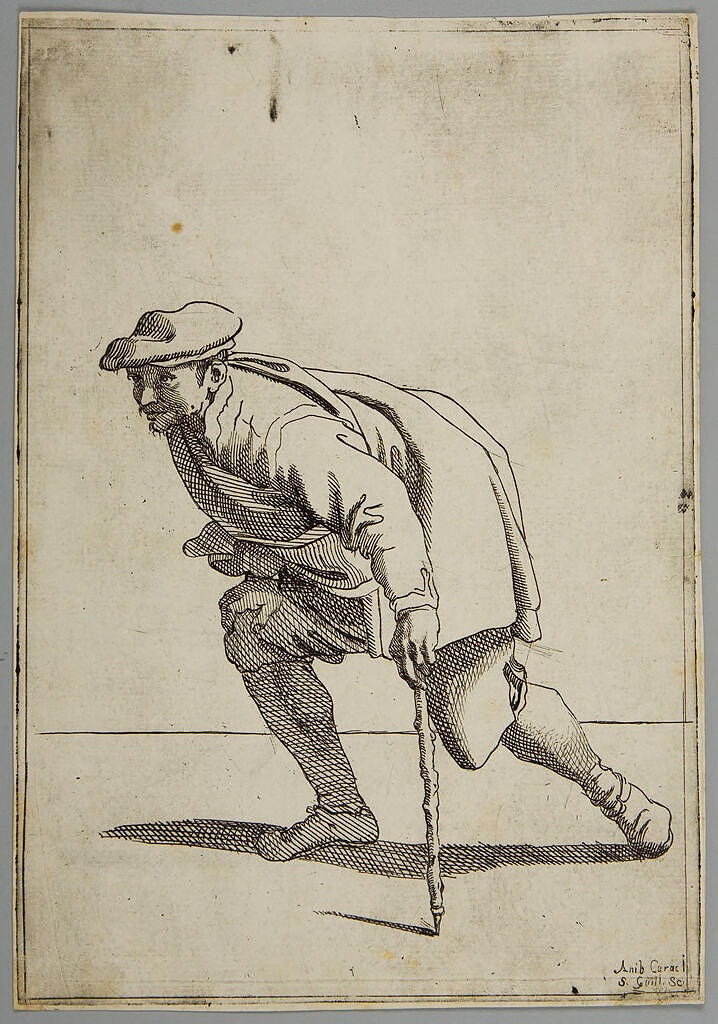
Simon Guillain: "A famous spy!," plate 77.
Series/Book Title: Cries of Bologna [Una spia famosa] (17th century)
"We probably deserve anything stemming from our sorry reasoning."
In late April 2024, President Biden signed the Protecting Americans from Foreign Adversary Controlled Applications Act, a bill passed by both houses of Congress in response to the abuses of TikTok’s Chinese parent company, ByteDance. The Act insisted that the company had systematically spied on American citizens, using TikTok as its medium of intrusion. The Act banned TikTok in the United States after January 20, 2025, the date of Trump’s second inauguration. The Trump administration refused to enforce the law as one of its first formal acts, later forcing ByteDance to sell TikTok in a transaction from which Trump was reported to have profited. Consequently, TikTok has gained even greater presence in our social media environment, without reassurances that it won’t continue its Surveillance on American citizens, and without an ounce of enforcement of the provisions of that act of Congress.
Perhaps the most disturbing aspect of our national scrolling habit might lie in this underlying, corrupting quality.
WitnessProtection
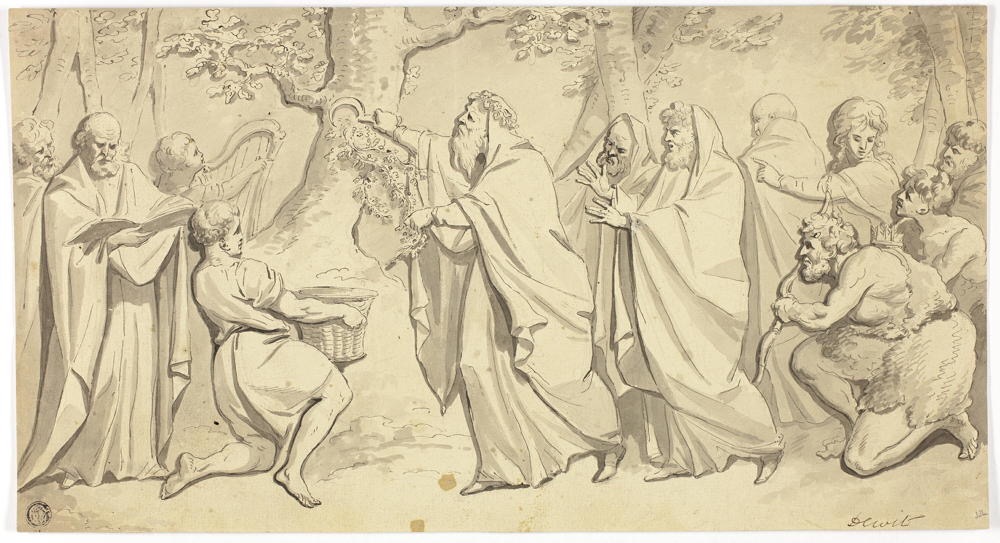
Attributed to Jacob de Wit: Druids Cutting Mistletoe
(Artist's working dates 1715–1754)
"…what once seemed fair enough and fairly well balanced now sure seems fairly poorly balanced."
I might be destined to play catch-up for the rest of my life with little hope of actually catching up to anything. I hold the sorry distinction of having imprinted on ways of existence that no longer exist, and very likely will never exist again. I, myself, am not yet obsolete, but many of my understandings and coping mechanisms have definitely gone the way of the goony bird. I remember, for instance, a certain balance between my role as witness to these proceedings and my role as a participant therein. In those days, I achieved balance through much more participation than through witnessing. Witnessing was more of a passing part of my existence. I was much more of a participant. Television, of course, steadily eroded the historical boundary between participant and observer, even more determinedly than had radio before it. I remember my elders warning me, much as I later warned my own progeny, that they were in danger if they spent too much of their potential participatory time decomposing, witnessing in front of the boob tube.
The phone in each of our pockets makes the old black-and-white boob tube look absolutely brilliant, and our early witnessing in front of it seems downright participatory in comparison.
Desisting

Jan Toorop:
Image Design for a Poster, Wagenaar’s Cantata ‘The Shipwreck’ (1899)
"Ceasing's relatively easy. Desisting's inevitably difficult and often impossible."
Unscrolling belongs to a rather unique class of objectives, the Negative Space ones. Each features the character of nonexistence as its premise. They never aspire to attain or acquire, but to rid themselves of something. What might precisely replace that unwanted element never gets mentioned in its title. These provide no hint, not the barest clue of what might do as a replacement for the unwanted element, just that its purpose extends no further than elimination of that space presently containing that unwanted item. In our case, through this series, I’ve labeled our negative space objective “Unscrolling.” Notice how it declares only what it doesn’t want. It wants to undo scrolling, whatever that might entail.
The most curious property of every negative space objective might be its apparent, even obvious simplicity.
Powerlessness
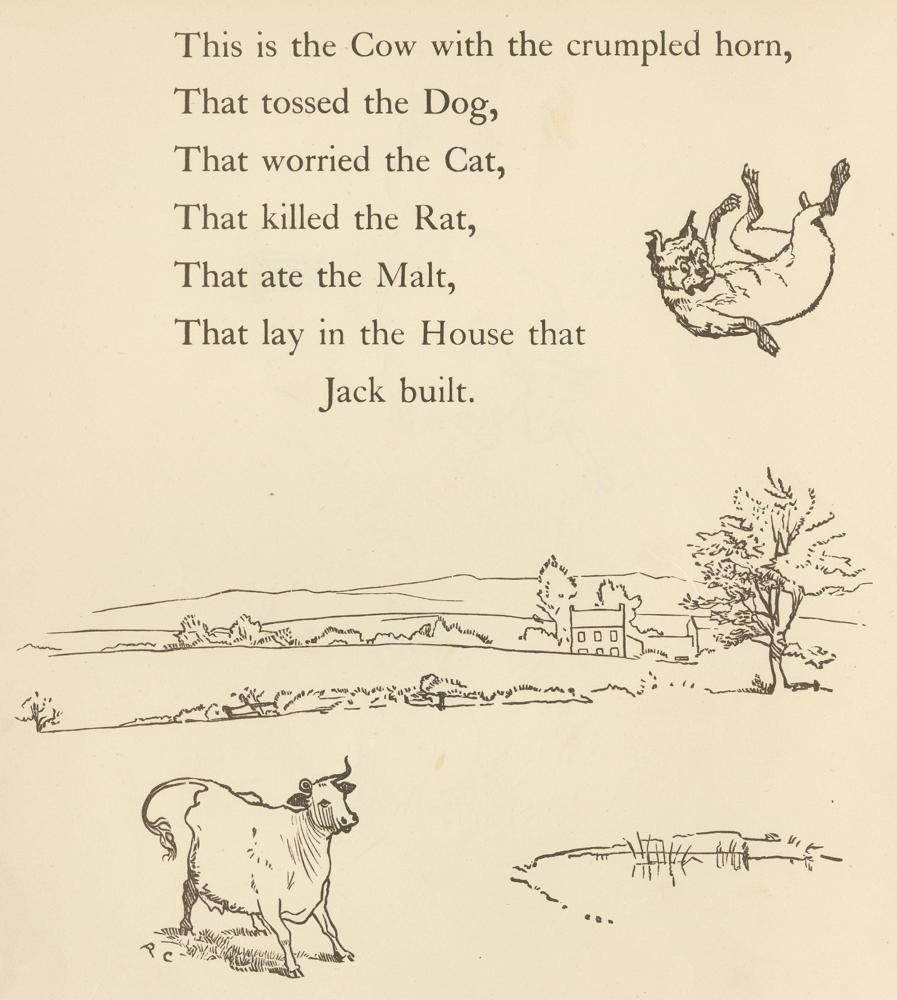
Randolph Caldecott:
"This is the cow with the crumpled horn, that tossed the dog."(≈1912)
The Miriam and Ira D. Wallach Division of Art, Prints and Photographs: Picture Collection, The New York Public Library. "This is the cow with the crumpled horn, that tossed the dog." New York Public Library Digital Collections. Accessed January 19, 2026. (https://digitalcollections.nypl.org/items/751bf0f0-c5bc-012f-99fe-58d385a7bc34)
"We engaged in passionate revolution and found that it rendered us Powerless…"
Social Media seems to be the perfect means for the Powerless to interact. It requires no physical presence. One can safely cower in their individual redoubt without exposing any vulnerable surfaces, yet still maintain a fairly convincing illusion that they’re communing. One might post radical ideas without fear of anyone reacting with much more than disembodied comments, easily discounted. It seems to out-virtualize virtual, a place to call in one’s presence and distantly engage. It provides a spare illusion of interaction, but in comparison to nothing, it proves convincing enough for our general intents and purposes. No need to stand at the podium to speak to power when one can more conveniently email in that criticism. Why look anyone square in the eye if you can anonymously spy on their personal life? Why make amends when you can just unfriend in response to disagreement?
Social Media makes for a perfect playing field for insurgents.
SpuriousPremises
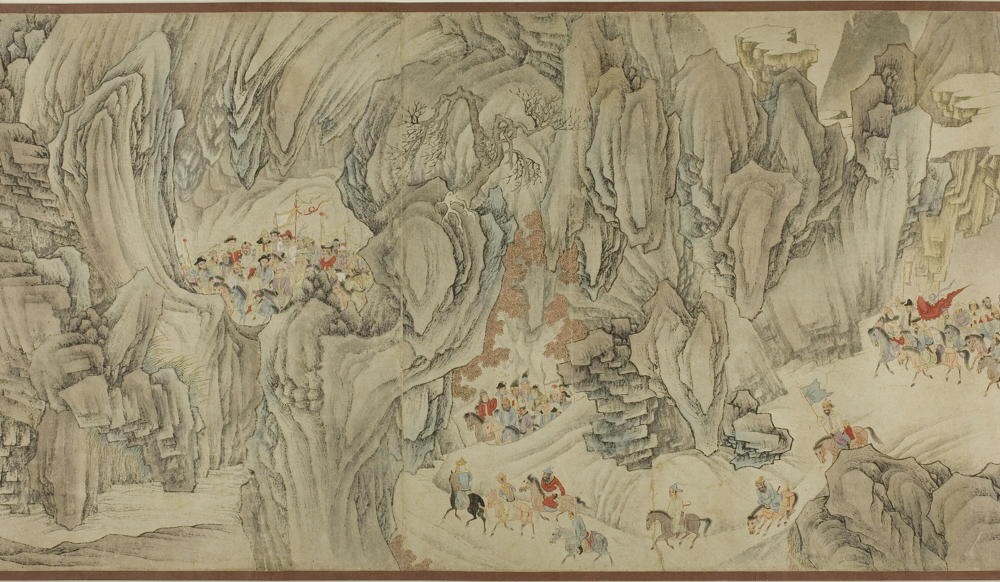
Artist unknown
[spurious signature of Zhao Mengfu (1254-1322), dated 1301]:
A Hunt in the Mountains of Heaven
(Late Ming /early Qing dynasty, 17th century)
"They wandered so far from truth that they cannot relate to it anymore, if they ever could."
The social media world’s content seems defined by an overwhelming presence of SpuriousPremises. It seems unabashedly not whatever it declares itself to be. Headlines routinely misrepresent content. Content often gets continued to pages containing only advertising, rarely the rest of even an enticing story. Pages one might care to revisit usually disappear without leaving even the hint of a trace of their permanent location. Advertising, haphazardly curated for maximum offense and irrelevance, usually interrupts any content threatening to be of real interest. Even the more trusted commentators seem to care more about commanding viewers to subscribe to their channels than they seem interested in imparting their touted important information. They almost always bury their ledes behind an indeterminate length of barely relevant and uniquely uninformative pre-ramble. I can count on the fingers of one hand, with fingers left over, social media posters who avoid such antics.
I like to think of myself as an exception to these apparently otherwise ironclad principles of social media engagement.
KillingTime
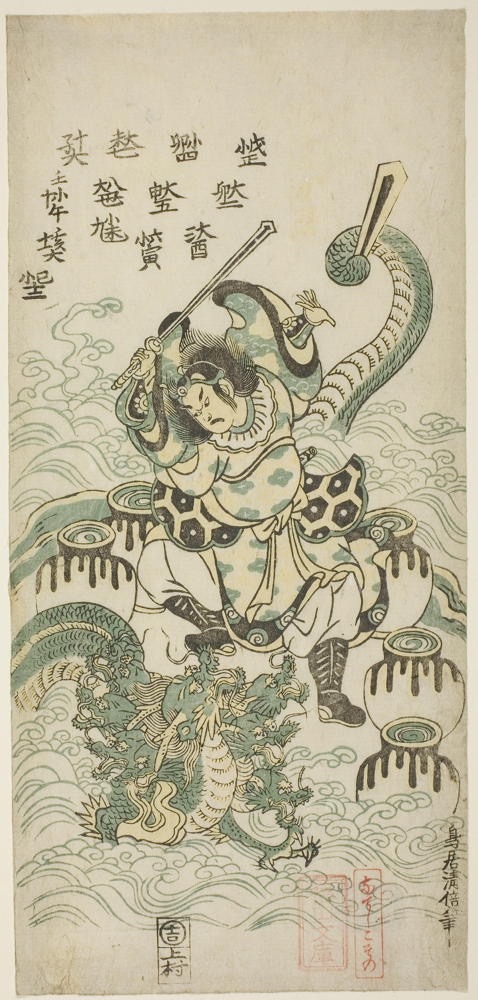
Torii Kiyomasu II:
Susano-o no Mikoto Killing the Eight-headed Dragon (1748)
"…ressurect something crutially important in me by Killing off some of my extra time."
I arrived at the venue an hour and a half early. The annual Chamber Music Festival had started the night before with a string quartet delivering Benjamin Britten, starting at six o’clock. I had presumed, without confirming, that the Friday evening performance at a different venue would start at the same time, but I was wrong. The festival organizer approached me, asking if I felt as though I’d arrived a little early, since nobody but the two of us and that night’s quintet were present, the quintet warming up with a little Mahler on the makeshift stage. He welcomed me to stay and listen to the sound check, but I ducked out the door instead, heading back to The Schooner, which I’d left in a remarkably great parking spot.
I had some time to kill.
Weekly Writing Summary For The Week Ending 01/15/2026
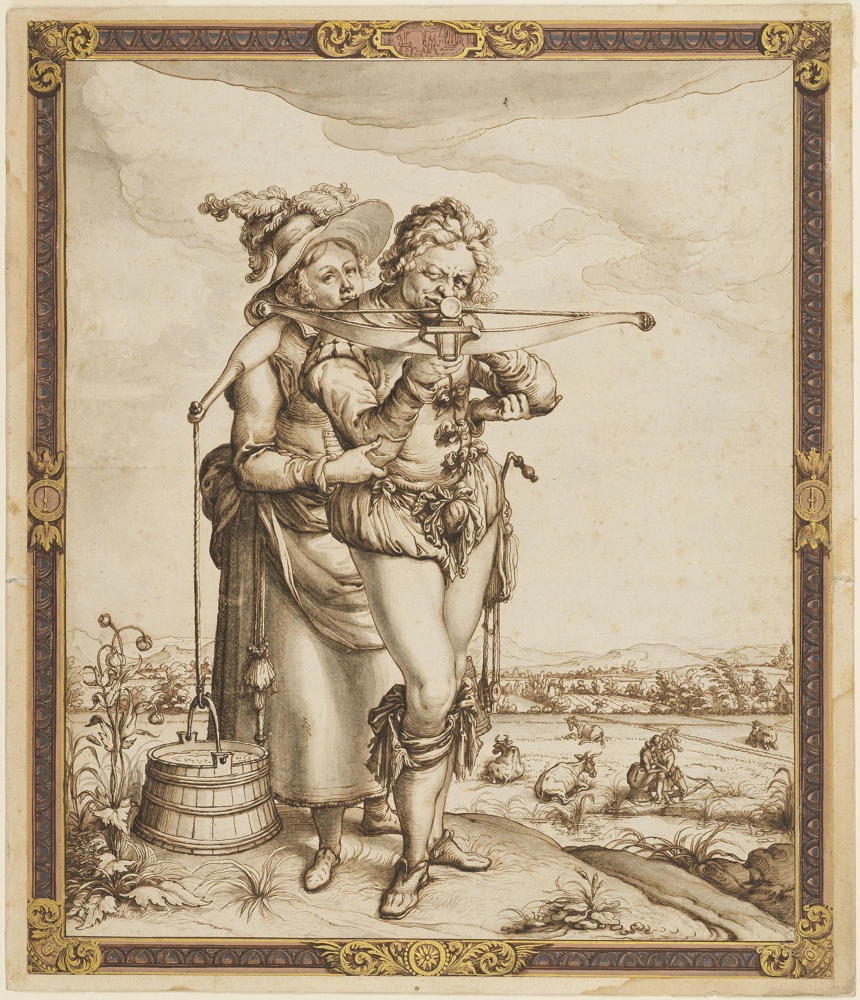
Jacques de Gheyn II: Crossbowman Assisted by a Milkmaid
(c. 1600-1610)
This writing week sure seemed as if I started making steady progress. Each story opened up a fresh realization about the nature and practice of Unscrolling. Doomscrolling was not what I had presumed it entailed. Unscrolling hasn’t been either. I began this writing week commenting on how ungrokable social media content seems to be for me in “Ungrokkability.” I then noticed that doomscrolling never qualified as my work. I reported that I had discovered a Distraction Hierarchy and that distractions don’t necessarily have to be negatives. I commented in passing on the sense of Immediacy I see in social media content and access. I noticed that some memes, perhaps most, carry a sense of Self-Evidence. They seem unquestionable and rarely encourage much in the way of questions. I ended this writing week reporting how Vulnerable I tend to feel just before I resort to doomscrolling. Thank you for following!
Vulnerable
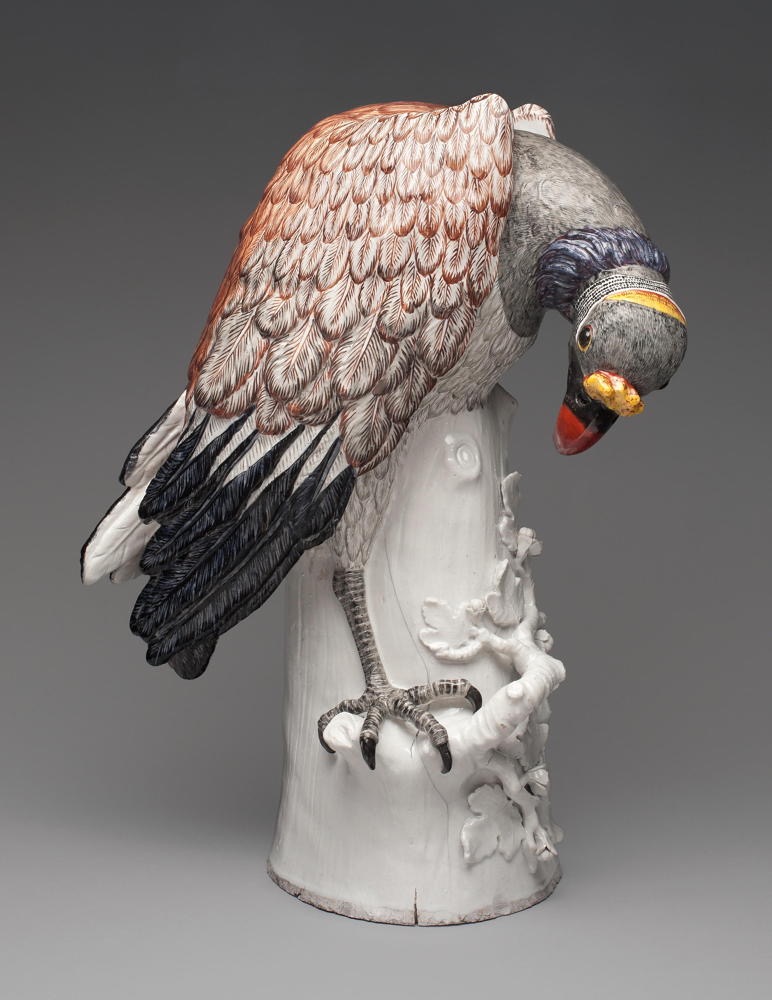
Modeled by Johann Joachim Kändler: King Vulture (1734)
Meissen Porcelain Manufactory (1710–present)
Meissen, Electorate of Saxony (now Germany)
ABOUT THIS ARTWORK
As elector of Saxony and king of Poland, Augustus II (r. 1694/97–1733) presided over the ambitious transformation of his capital, Dresden, through advances in architecture, the arts, science, and technology. Produced beginning in 1710 through royal sponsorship and funding, Meissen porcelain was an exclusive luxury good of its time. Around 1728 Augustus conceived of replicating the animal kingdom in porcelain for display in a Baroque palace that he was transforming into a showcase for his collections of Asian and Meissen ceramics. This porcelain zoo was intended for the long gallery on the main floor of the palace. By 1733, the year the king died, more than thirty different models of birds and almost forty animals had been made, many by the sculptor Johann Joachim Kändler, who worked at Meissen from 1731 to 1775. Kändler drew this vulture from life, which allowed him to animate his work with the creature’s quintessential spirit. Such porcelain animals remain the most vivid expression of Augustus’s wish, as elector and king, to possess and rule over the natural world.
"Every minute I'm not scrolling my social media,
I'm looking out for encroaching Federals."
Now that I’ve started reducing my social media scrolling, I’m noticing some things that were invisible before. Back when I was still more or less mindlessly engaging in scrolling, I’d failed to notice the feeling associated with initiating another scrolling session. Hell, I’d hardly noticed when I started scrolling again. I would usually notice I was scrolling after I had been scrolling for some indeterminate period of time, like awakening from fitful sleeping. Now that I’m more deliberately regulating my scrolling, I seem more capable of feeling and of noticing. The sense I get as I slip into another trance-like session feels like one of extreme vulnerability, bordering on desperation. I often feel stymied, and then, as if I’m incapable of independent action, I feel co-opted. When I experience this state, scrolling envelops me like a protective older sibling. I notice that I feel this way a lot lately.
Our incumbent seems as though he’s designed his whole administration to induce just this sensation on the general population
Self-Evidence
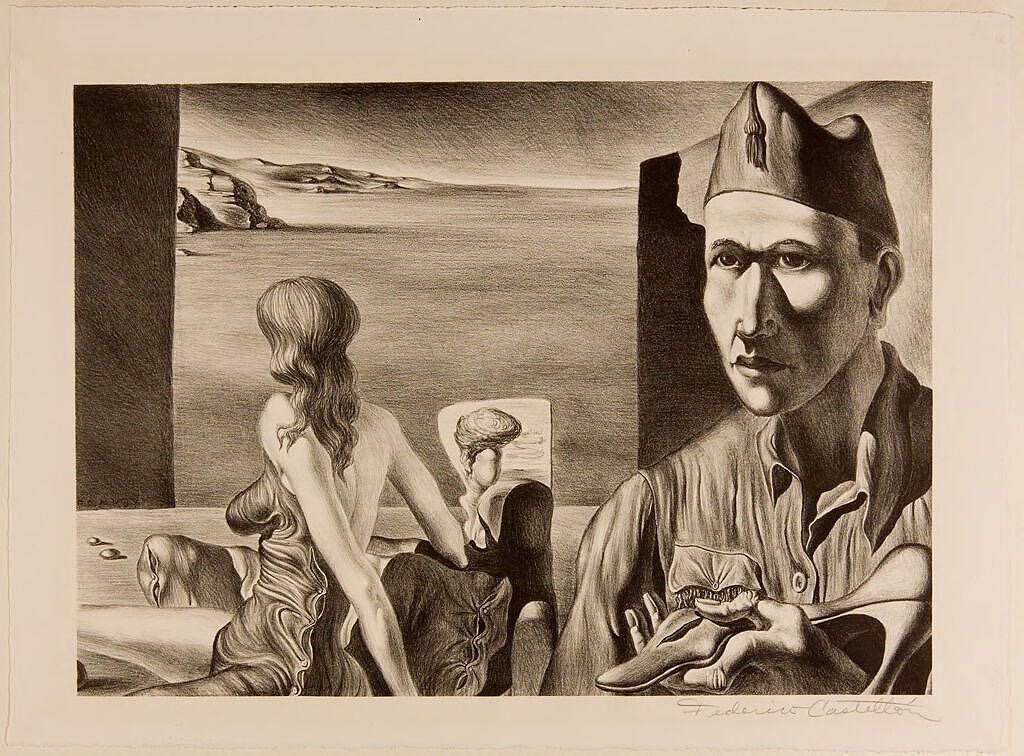
Federico Castellòn: Self-portrait (20th century)
"Disconnecting from the twenty-four/seven reinforcement machine has been helping me see what wasn't otherwise self-evident, and what, disturbingly, was."
The very impermanence of social media messaging fuels the need for almost constant repetition of certain themes. Depending upon what each user’s algorythm presumes, unique reinforcements of prominent messages continue virtually continuously: continually and virtually. This repetition results in certain concepts, “memes”, taking on a unique quality. They enter the realm of Self-Evidence. They require no proof. They inspire no questions. They become givens. For those not initiated in a particular strain or dialect of these babies, the result can seem completely disorienting. Messages seem to start somewhere in the middle, producing incoherence. For those inculcated, though, the memes hardly require repeating. They seem to be echoed more for the purposes of reinforcing than declaring, for their assertion, their very certainty, seems Self-Evidently correct. Nobody for whom they’re targeted finds any reason to question what they presume. They presume virtually everything.
Doom Scrolling serves as an essential element of this Self-Evidence.
Immediacy
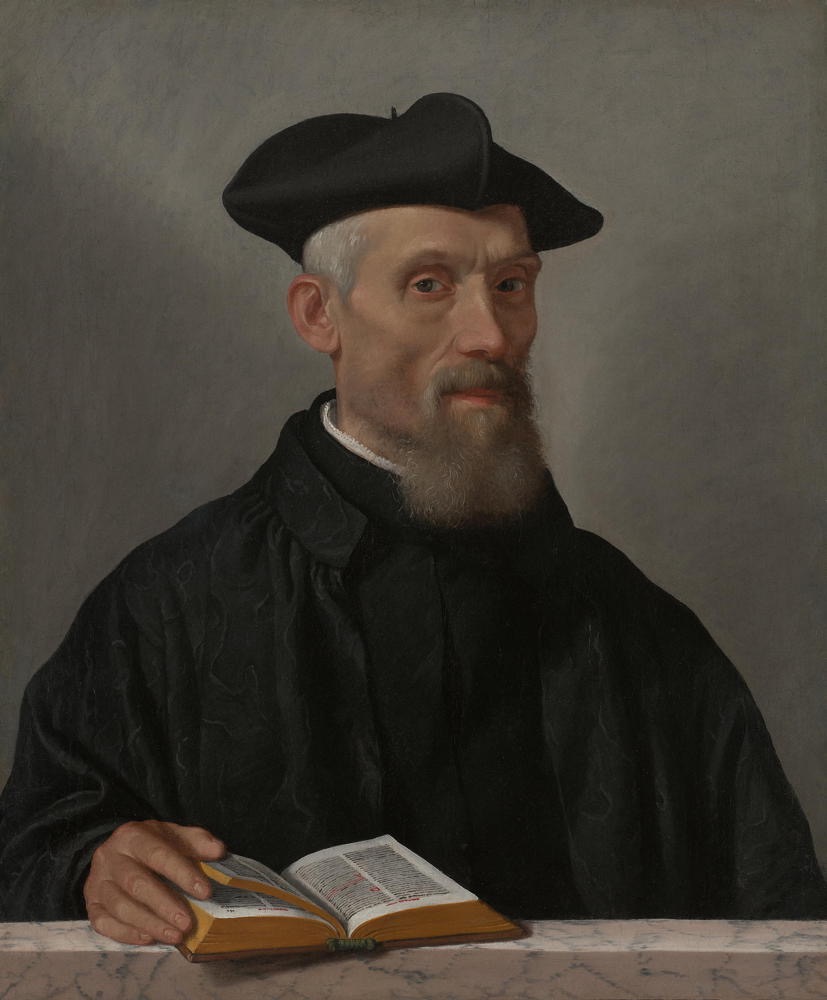
Giovanni Battista Moroni: Portrait of an Ecclesiastic (c. 1557)
"…the journey seems deliberately designed to lead us nowhere but to keep us endlessly coming back, a Modiüs Strip existence."
Social Media has managed to project a space where neither future nor history exists. It exhibits in a moment, for that moment. It produces no memory nor projects any gonna-be. It exists only for the instant encountered. Once experienced, it might just as well never have been. It takes living in the moment, one click less retentive. It’s outdated before you can finish a single serving, never to return. Because of this, it lacks apparent purpose, deeper or otherwise. It deals exclusively in the superficial. It seeks only attention: not recognition, certainly not retention. It counts its presence in clicks, that most ephemeral of all presences. It collects flashes of fleeting acknowledgement, disembodied, timeless, useless for other contexts.
Try to create a list, in ascending time sequence, of your own postings to your own private Facebook group.
DistractionHierarchy
Unknown Artist: Publisher's proof of the publications of L. Prang & Co.
: Trade card depicting a distracted waiter (1876 - 1890, Approximate)
"Both scrolling and unscrolling must be gold-plated…"
I have been guilty in this Unscrolling Series of implying that distractions are necessarily bad, when they’re most decidedly not necessarily so. This culture thrives on distractions. I dare say that our economy would be in much worse shape than it already is if we were to suddenly abandon our distractions. Shopping itself, a necessity for sustaining life, often serves as a distraction for many, a reliable treatment against encroaching boredom. It might even seem that our occupations serve more as distractions from our distractions than something we seek to merely distract ourselves from. I can see the possibility of describing distractions as the hierarchy they might be in our minds. I see some as beneficial and others as evil, though in total, they might appear roughly equal in their contribution to the quality of my experience. More than mere spacers between the more consequent components of existence, we might have evolved to the point where the various elements of our existence serve as distractions from each other: distractions spaced by distractions. As Ghandi never said, “It’s distractions all the way down.”
I might have unfairly singled out our social media scrolling as regrettable.
MyWork
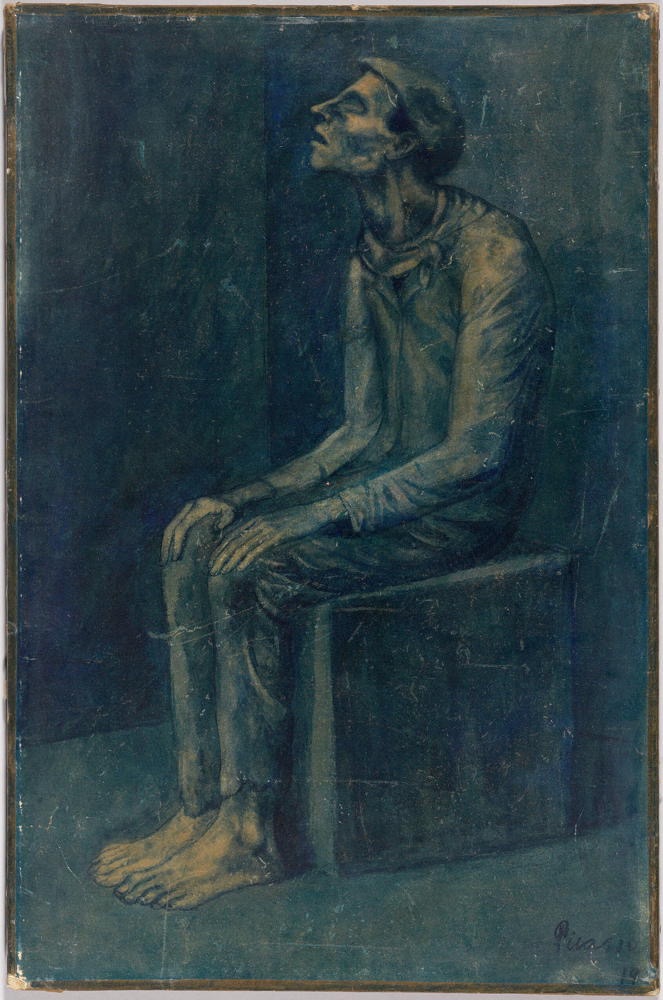
Pablo Ruiz Picasso: The Blind Man (1903)
Other Titles:
Original Language Title: Mendiant
Former Title: The Blind Beggar
Alternate Title: L'aveugle
© Estate of Pablo Picasso / Artists Rights Society (ARS), New York
The Harvard Art Museums encourage the use of images found on this website for personal, noncommercial use, including educational and scholarly purposes.
"I need to stumble upon it by myself…"
Scrolling was never MyWork, but a distraction from it. MyWork, however humble and modest, has always felt sacred to me, even if not to anybody else. I figure this is right and proper since nobody else can accomplish MyWork. MyWork seems at least as much a curse as a blessing in the same way that anyone might deep down revere and despise even their greatest gift. Nobody else ever gets to experience MyWork from my perspective, and it often seems lame from over here, however brilliant or not it might appear from over there. I will never experience MyWork from anyone else’s perspective, and nobody else will ever see it from mine.
The time I spend scrolling around my social media threads cannot be spent engaging in MyWork.
Ungrokability
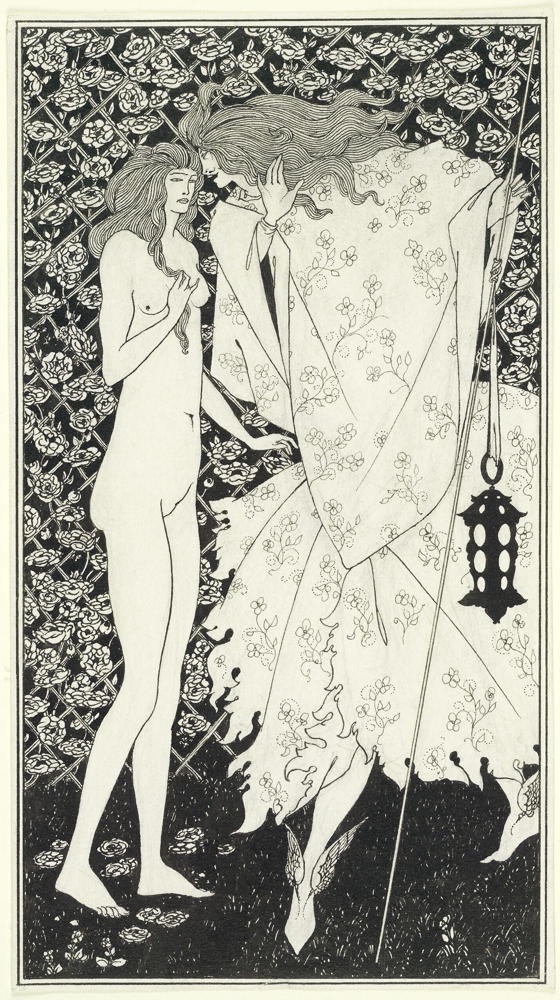
Aubrey Vincent Beardsley: The Mysterious Rose Garden (1894)
"I have no great need to resolve any of the greater or lesser mysteries in life."
My greatest humiliation I experienced when finally pursuing higher education occurred quite innocently, in a beginning Calculus class. Why the university imagined that anyone pursuing a business degree might need calculus was not for me to question, for I quite literally knew nothing about higher education. I was fortunate to have been deemed Not College Material by my high school guidance counsellor, so for seven years, I’d never questioned whether or not I should pursue a degree. That decision was thankfully made for me when that kindly counsellor convinced me that I was not suitable. I set about planning my life around that possibility until seven years after high school graduation, when my first career stalled out, and I grew weary of working casual labour jobs. I decided that I might prefer to wear a tie to work instead.
I just enrolled in the closest state university, which accepted me sight unseen.
Weekly Writing Summary For The Week Ending 01/08/2026
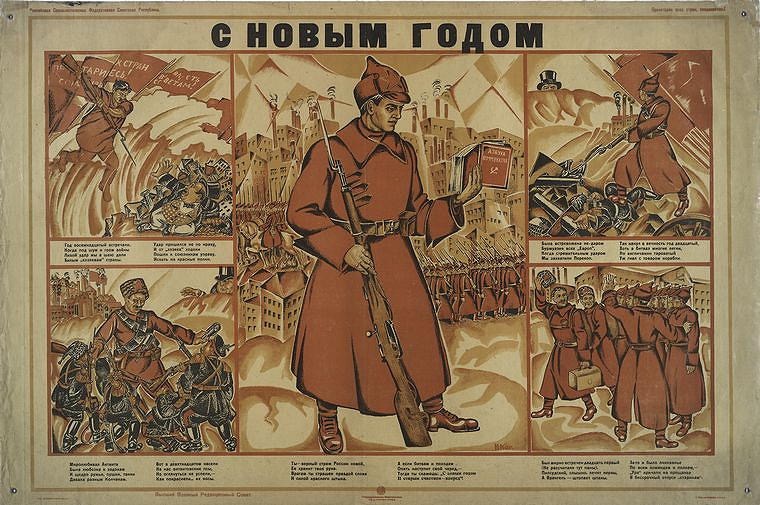
Kogout, N: Happy New Year (1918)
Publisher: Lit. Izd. Otdela Politupravleniia Revvoensoveta Respubliki
NYC Public Library Collection: Harold M. Fleming papers
Russian Revolutionary Era Propaganda Posters
This writing week began with the most innane act a government can ever engage in, the violation of a neighboring country's territorial integrity. Make no mistake, this was nothing other than a forcible rape of decency; however the perpetrators might argue their innocence. I figure the act will just render them that much easier to impeach when that time comes, and it's definitely coming. I was wrestling with saying "No!" and making it stick before acknowledging that Flurries of useful information fall in even the otherwise most innane social media scrolling. I noticed how what was once news has turned into Speculation, then realized that I scroll my social media searching for Validation. Why have I been searching so for validation? I concluded that I have been actively Procrastinating, if that concept isn't too contradictory. I set about unprocrastinating, by which I mean that I started doing something I'd been actively avoiding. That felt better. I ended this writing week marveling at how social media encourages people to Make rather than take Sides. Thank you for following along!
MakingSides
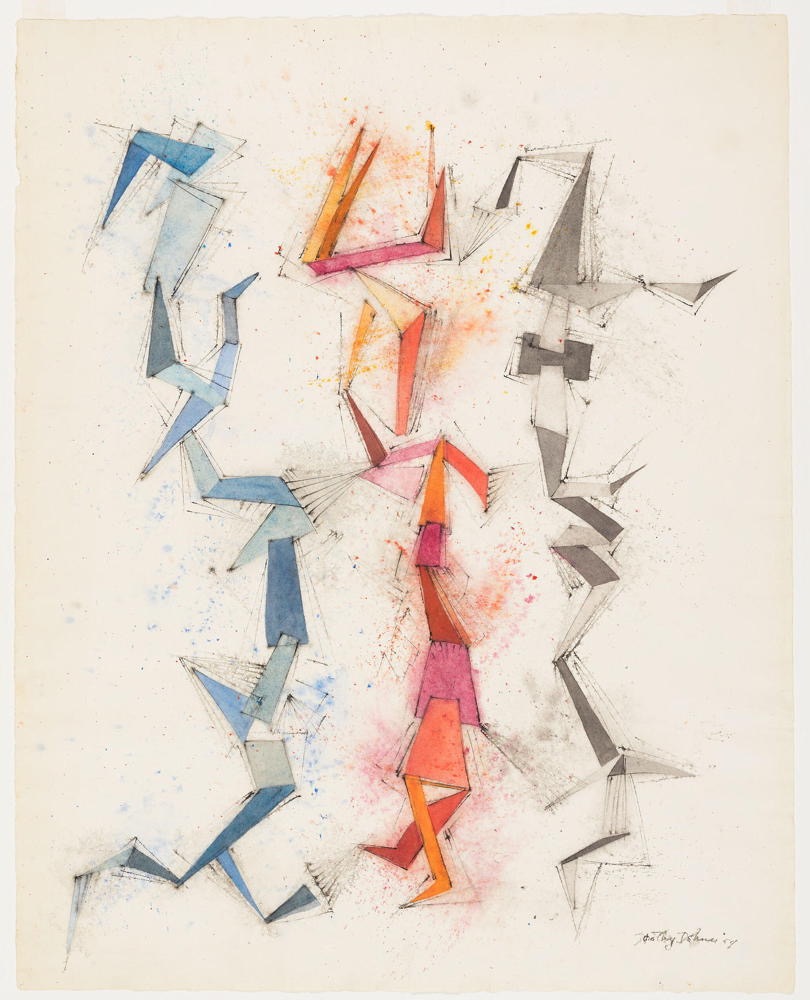
Dorothy Dehner: Family Group (1954)
© Dorothy Dehner Foundation for the Visual Arts
"…they create the losers they compete with…"
If it takes two to tango, it also takes two to tangle. Two opposing sides seem capable only of erecting impassable barriers. Of course, they’re also capable of creating cooperation, but our social media environment seems powered by opposition more than by cooperation. This situation seems tragic, since opposition often leaves little room for thriving. One struggles instead under a steady diet of squabbling and worse. Many take these conflicts seriously, as if they had more substance than any argument could ever properly contain. It might not matter who’s to blame for this continuing and even escalating situation, who’s wrong and who’s right. I’m more interested in understanding what’s left once we’ve divided ourselves by MakingSides.
We were not necessarily born with dichotomous brains.
Procrastinating
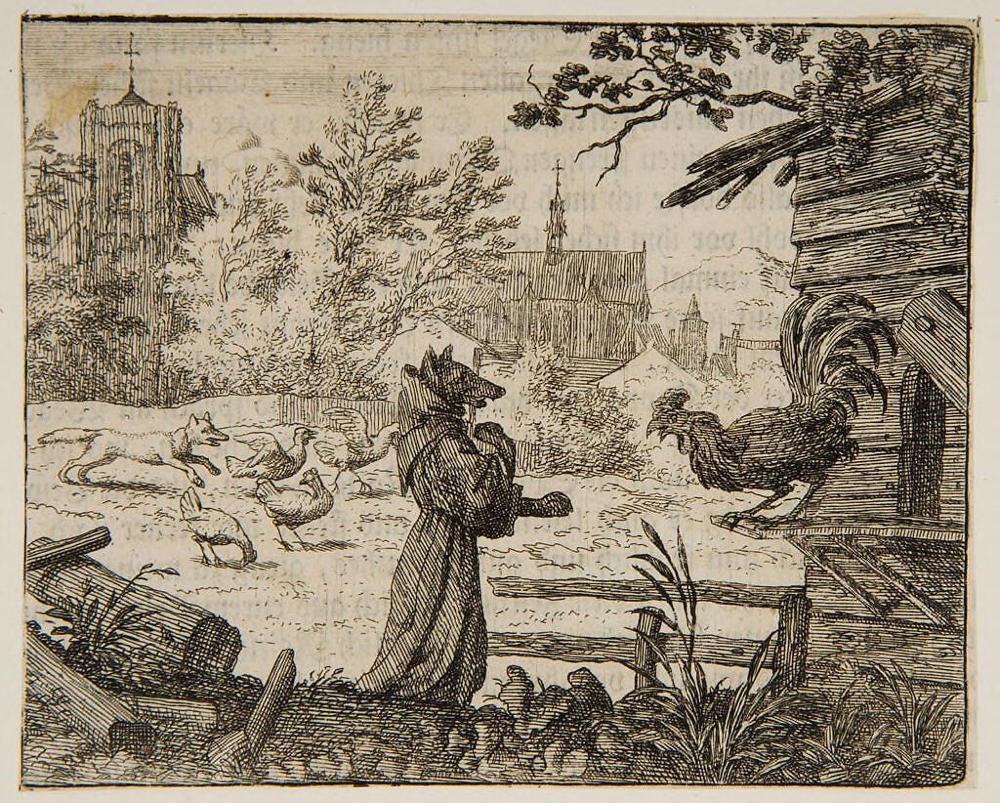
Allart van Everdingen: Reynard disguises as monk and distracts cock
Series/Book Title: Reynard the Fox [Reinecke Fuchs] (17th century)
"Progress is Procrastinating, finally turning outwards."
Once I admitted to having been seeking Validation when scrolling, I began wondering how it came to be that I needed to seek so much validation. Yes, the damned pandemic had robbed me of some sources of external validation, but it had not stranded me in the middle of some interaction desert. I had long employed social media for much, perhaps the bulk, of my interactions, since my work had taken me far from home and I hadn’t reported to an office in many years. I started working virtually before the internet, before I even acquired a cell phone; hell, before there were even cell phones for me to acquire, so I was well accustomed to being alone much of the time before that damned pandemic visited. What about that event left me suddenly so apparently needy that I sought so damned much social media-sourced validation? This seemed a perfect question until I eventually managed to track down a parallel thread to my story. Something else had emerged around about when that damned pandemic appeared. I had begun writing these series.
As those who have been following my stories already know, I hold myself responsible for writing and posting a fresh story each morning.
Validation
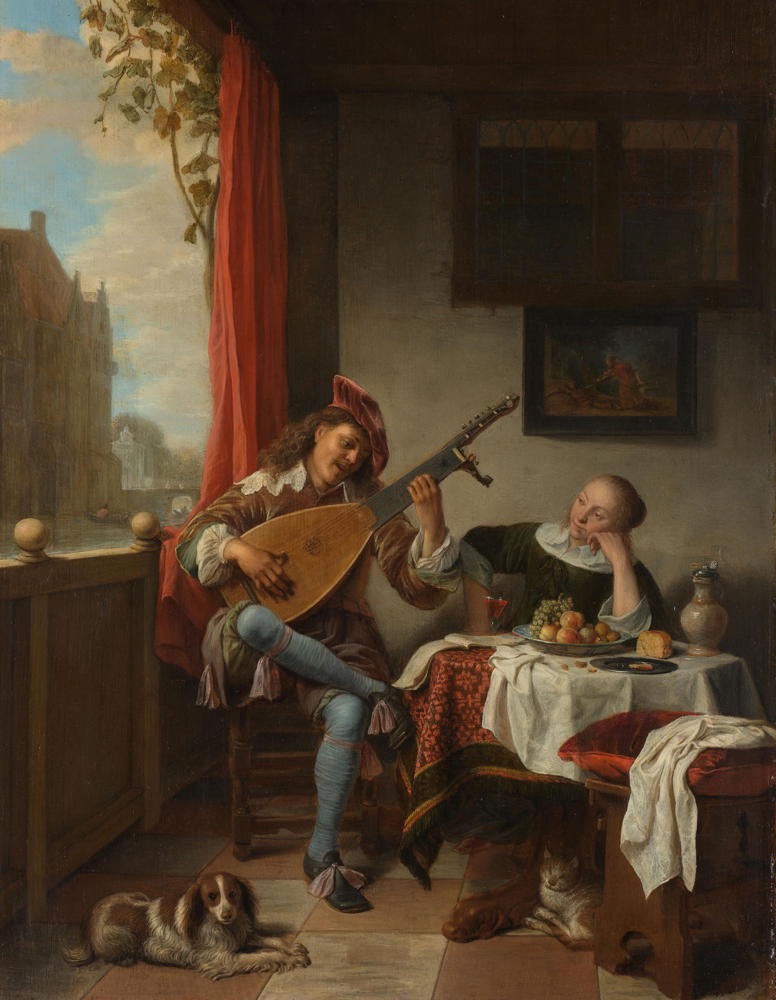
Hendrick Martensz. Sorgh: The Lutenist (1661)
A young man is singing and playing the lute on an open veranda. Where the woman’s thoughts have wandered is a mystery. The music and the theme of the paramours Pyramus and Thisbe in the painting in the background suggest that harmonious love is the subject. Yet the work may also be a warning against impulsive lust. Both interpretations are equally valid.
— — —
"I doubt that heaven awaits those who get saved from pursuing their purpose."
Before I conclude that scrolling through my social media feeds amounts to an unconditional waste of my time, I might be wise to consider my underlying purpose for being there in the first place. I did not end up there because I held a deep desire to waste my precious time. Nor was I necessarily an unwilling victim, or even a victim at all. I realize that I was pursuing something important there, and that I might have even found it, however overshadowed in foreboding or misgivings, by which that result might have been accompanied. Remember, this behavior pattern emerged during the darker and most isolated periods of my existence. I’d never, before that damned pandemic, spent so much time in agonizing isolation. I strongly prefer introversion, so pandemic isolation might have brought the best of times to my experience, but it didn’t. It brought existential dread instead, with no obvious outlet. I could still get out, but only if dressed like a bandit and maintaining strict distancing. I’d never seen the faces of more than half the people I interacted with every week. I felt terribly isolated!
I began convening my weekly Zoom Chat then, a practice I continue every Friday morning even unto these days.
Speculation
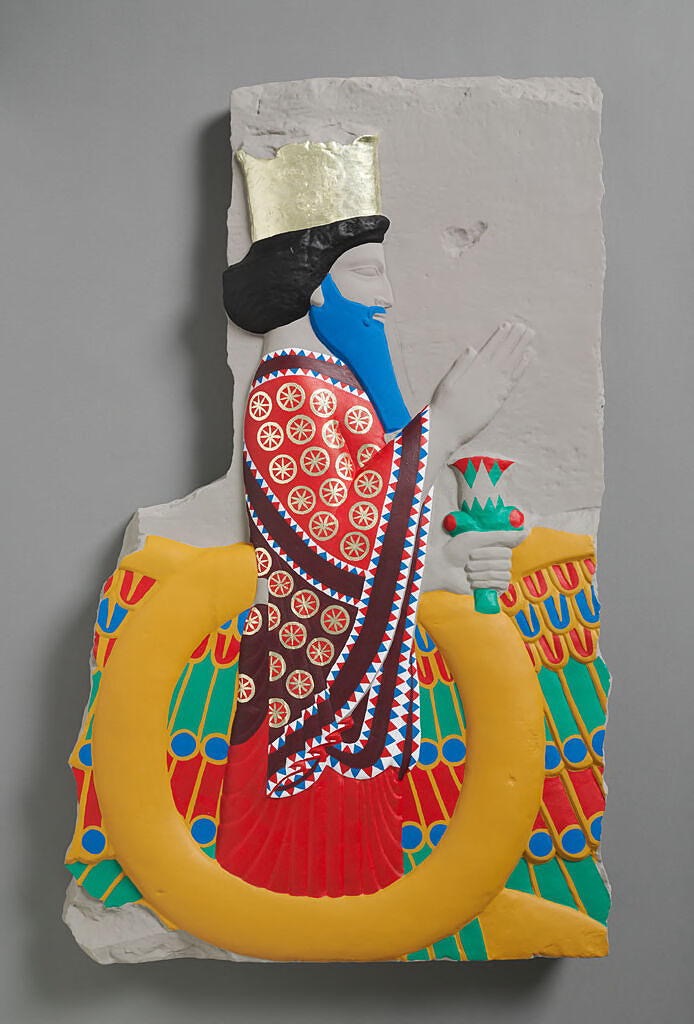
Unknown Artist: Color Reconstruction: Ahuramazda in the Winged Disk
21st century reconstruction of 5th century BCE original)
Gallery Text
Carved from brownish limestone, the Persepolis sculptures were painted and sometimes further enhanced with gold overlays as well as blue inlays imitating the semiprecious stone lapis lazuli. The color reconstruction you see here, made of plaster with acrylic paint, is based on close examination and scientific analysis of the original relief fragment (1943.1062) displayed immediately outside this gallery [in gallery 3460].
The incised star patterns are revealed by “raking” light, which illuminates the surface from a low angle. Traces of bright red cinnabar (mercury sulfide), green malachite a copper carbonate), and Egyptian Blue (the oldest synthetic pigment) are visible with the naked eye. Similar depictions, notably on glazed brick reliefs, provide further clues, but the reconstruction remains partial and speculative. As proposed, the coloration of the winged disk recalls inlaid gold jewelry. This may well have been the intended effect, heightening the splendor of what is most likely a representation of the god Ahuramazda.
Harvard Art Museums/Arthur M. Sackler Museum, Museum Collection
Object Number
1943.1062.X
— — —
"I work much harder now, trying to become informed."
The few decades between when broadcast television supplanted radio as this country’s primary news source and the proliferation of first cable, then social media-based outlets replacing broadcast TV, the content of what passed for news changed. More properly, the content of what passed for news transformed into what Walter Cronkite could not have claimed represented anything even remotely resembling “the way it is,” if, indeed, it ever had. I fear expectations failed to shift in unison with that change; however, so many people continue to believe that what passes itself off as news today resembles what used to pass muster as news. It doesn’t. A slow erosion of reportage was replaced with what I might most generously label Speculation. Explanations of what just happened were supplanted by descriptions of what might occur and what might have occurred: reportage became Speculation.
When Faux (Fox) News branded itself as “news”, new ground was broken.
Flurries

Claude Monet: Sandvika, Norway (1895)
ABOUT THIS ARTWORK
Claude Monet’s trip to Norway in 1895 was perhaps the most physically taxing of all his many painting campaigns. Touring the country with his stepson Jacques Hoschedé, who lived in Christiania (now Oslo), he was awestruck but initially frustrated in his search for good motifs amid the snow. Nevertheless, he painted 29 Norwegian scenes during a two-month stay. These included at least six views of Sandvika, a village near Christiania whose iron bridge may have reminded Monet of the Japanese bridge at his home in Giverny.
— — —
"Then I feel glad for my little social media addiction."
It’s not that scrolling only produces distraction. It also produces fantastic information, sometimes far superior to anything accessible before the unfortunate downfall of journalism and the rise of so many blogging platforms. Though blogs gained their initial popularity as a conduit for various nefarious conspiracy theorists, they have since attracted plenty of more credible contributors, some of whom the algorythm even allows me to access. Just when I’ve about convinced myself that scrolling cannot be justified, something actually happens out there in what still passes as the real world. Suddenly, all the foreground filled with idle speculation masquerading as news disappears, replaced by some actual reports from actual fields. For a change, and if only for a little while, mainstream breaking news matches the streaming contributors, and my scrolling manages to bring some events into actual focus. It was always tough to access adequate information surrounding any breaking news. In the old days, I’d frantically switch between the three available broadcast channels, trying to glean additional incremental bits of actual information. Now, of course, I just continue scrolling through what my algorythm serves.
The primary problem with any addictive substance lies in its beneficial qualities.
No-ing

Rembrandt van Rijn: Self-portrait ( c. 1628)
Gallery Notes: Even as an inexperienced young artist, Rembrandt did not shy away from experimenting. Here the light glances along his right cheek, while the rest of his face is veiled in shadow. It takes a while to realize that the artist is gazing intently out at us. Using the butt end of his brush, Rembrandt made scratches in the still wet paint to accentuate the curls of his tousled hair.
"…I'd take my marbles home while mumbling"Good riddance!" under my breath."
It might be that I scroll to try to identify shifting power. In times as volatile as these, advantage seems to be continually shifting. Any news cycle, any odd minute, might hold evidence of where power might be shifting next. Our incumbent, widely acknowledged idiot that he has proudly proven to be, shifts focus more frequently than he farts, so he creates much churn in the channels, and so sparks my near constant interest. Scrolling sometimes seems like reading a truly terrible novel I can’t bear to set down for a minute, completely beyond my volition. I might need permission to stop, though from whom such permission might come seems like another fundamentally unanswerable question. This brings an old understanding into suddenly sharper focus.
In my youth, I believed that power came from granted permission, that somebody powerful could bestow the authority for something to happen, and that it consequently did.
Weekly Writing Summary For The Week Ending 01/01/2026
Sebald Beham: Little Buffoon with Scroll (1542)
This writing week was the first full writing week of posting my new Unscrolling series. Over its course, I felt myself starting to grasp whatever might have moved me to choose to expound on this topic at this time. Long-time readers might remember that a year ago, I was starting my series on what I labeled NextWorld, the world likely to emerge from our incumbent taking the oath for an office he never intended to fulfill. I started that series ignorant of its purpose but found the experience eventually morphing into being suitably satisfying, nonetheless. Each series starts off like this, in near-total ignorance, before starting to trend toward a deeper understanding, usually in the first full week of the investigation.
I began this writing week acknowledging the garish colors that social media almost exclusively trades in, and what that means for credibility.
StockholmSyndrome
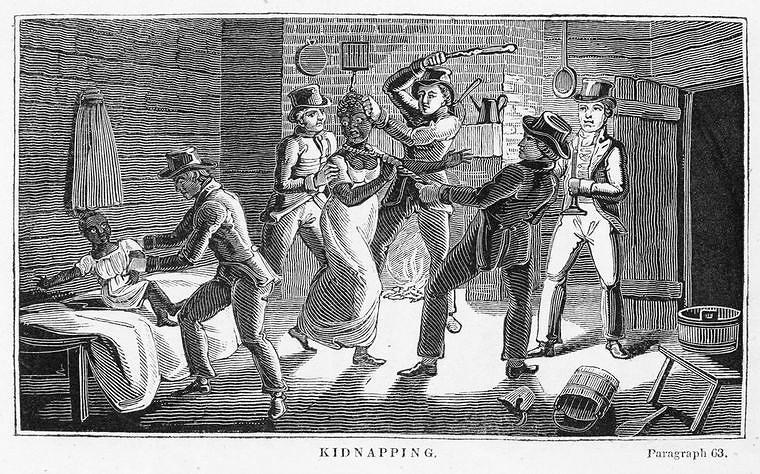
Jesse Torrey: Kidnapping,
American slave trade: or, An account of the manner in which the slave dealers
take free people from some of the United States of America, and carry them away
(1822) Reprinted by C. Clement and published by J. M. Cobbett
"We all seem to be coping near the edge of our native abilities now."
This being January 1st, New Year’s morning 2026, I am reminded that none of us inhabit our present or proceed into our future completely willingly. Each of us might have preferred to slow down the inexorable progression of time at times, if not halt it altogether. Especially during good times, which we learn from personal experience, always prove to be fleeting. No, time moves in only one direction, and it drags us along as if kidnapping us. We come to inhabit a once-upon-a-time future we wouldn’t have chosen, thereby challenging our always emerging, though never quite mature enough coping mechanisms, sometimes to our detriment. For my generation, the so-called Baby Boomers, the emergence of computing and its many associated industries has proven to be the most disconcerting. We realize, as I suppose only someone who remembers before times could, just how far from our imagined future our actual future has fallen. Computing didn’t turn out the way we’d dreamed it.
No future ever arrives as previously imagined, though, so my generation’s no different than any prior.
Good For A Goose

Comeuppance (33)
Decency (90)
Decency Unscrolling (1)
EndDays (92)
Exiled (90)
Fambly (93)
FollowingChapters (93)
Grace (92)
Humor (2)
iAlogue (1)
Letters to the Editor (1)
NextWorld (91)
Personal (18)
Prosperity (94)
Steam Festival (4)
Unscrolling (89)
Vaporized (6)
Work (16)
September 2026
August 2026
July 2026
June 2026
May 2026
April 2026
March 2026
February 2026
January 2026
December 2025
November 2025
October 2025
September 2025
August 2025
July 2025
June 2025
May 2025
April 2025
March 2025
February 2025
January 2025
December 2024
November 2024
October 2024
September 2024
August 2024
July 2024
June 2024
May 2024
April 2024
March 2024
November 2006
October 2006
September 2006
August 2006
July 2006
June 2006
May 2006
April 2006
March 2006
February 2006
January 2006