Weekly Writing Summary For The Week Ending 01/01/2026
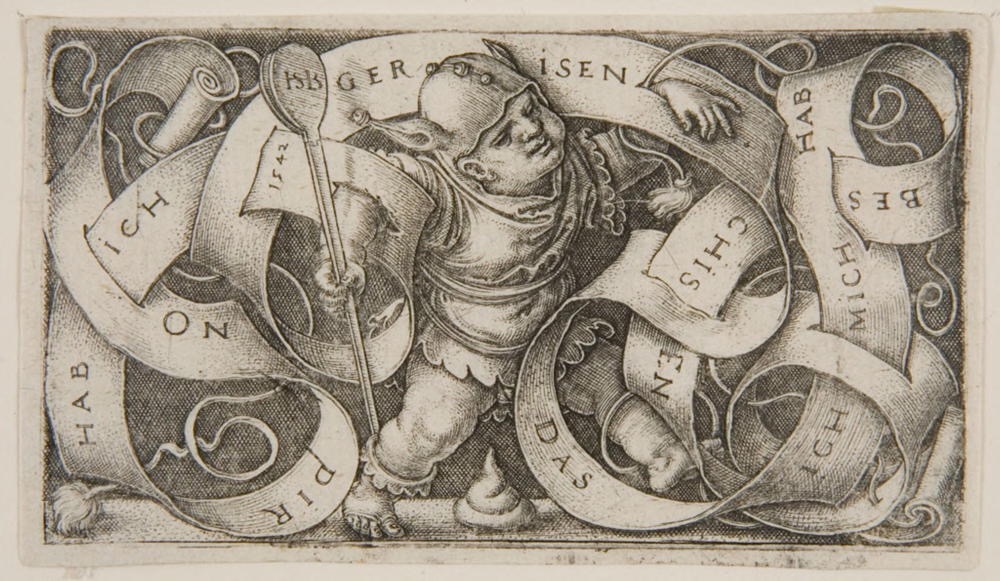
Sebald Beham: Little Buffoon with Scroll (1542)
This writing week was the first full writing week of posting my new Unscrolling series. Over its course, I felt myself starting to grasp whatever might have moved me to choose to expound on this topic at this time. Long-time readers might remember that a year ago, I was starting my series on what I labeled NextWorld, the world likely to emerge from our incumbent taking the oath for an office he never intended to fulfill. I started that series ignorant of its purpose but found the experience eventually morphing into being suitably satisfying, nonetheless. Each series starts off like this, in near-total ignorance, before starting to trend toward a deeper understanding, usually in the first full week of the investigation.
I began this writing week acknowledging the garish colors that social media almost exclusively trades in, and what that means for credibility. I switched my garish iPhone display for a greyscale version and found some respite from my scrolling obsession. I next considered likely antidotes to compulsive scrolling, concluding that there are none. I wondered if distractions might be countered or amplified by second-order distractions before railing on about the widely accursed algorithm. I ended this writing week surprisingly defending my favorite social media platforms, but blaming that defense on a bout of Stockholm Syndrome. Thank you for following along!
Weekly Writing Summary
Kodachrome
“I’m seeking it’s proper use and place by Unscrolling.”
This Unscrolling Story finds me disabling the Kodachrome user interface on my iPhone to make it less alluring.
I describe how a New York Times column about reducing compulsive smartphone use led me to switch my phone display from color to greyscale. This drained the device of much of its visual allure, making it feel subdued and less addictive, and I soon found myself less attached to their phone, even turning it off between uses.
I contrast my new phone experience with growing frustrations about modern mobile technology: unreliable ringing, cluttered features, overwhelming email, and opaque social media algorithms that obscure real engagement. I argue that the main remaining draw of smartphones must be their colorful, hypnotic interface, despite their poor keyboard and overall usability. Living in greyscale changes how I see photos, holidays, and work, nudging me back toward reading, writing, and using a real keyboard. In the end, I suggest that iPhones function more as status symbols than tools, and I describe my ongoing effort to “Unscroll” and find a more modest, intentional place for the damned phone in my life.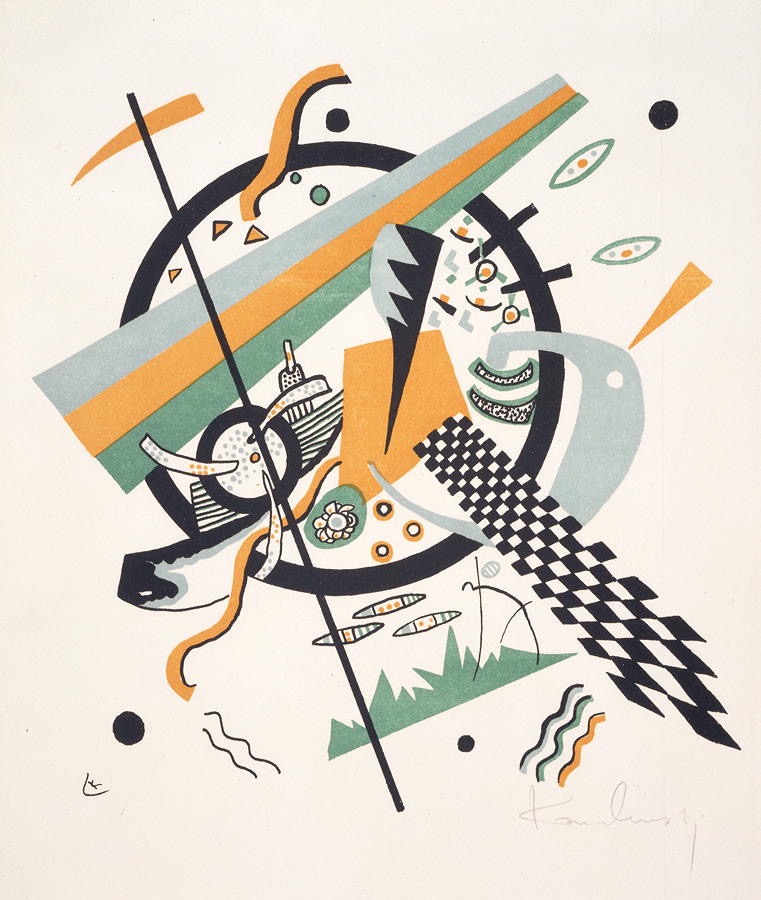
Vassily Kandinsky: Kleine Welten IV (1922)
——
Greyscale
“My life seems both harder and better when lived in Greyscale.”
In this Unscrolling Story, I make the distinction between primary and representative experience, suggesting that Greyscale better represents my primary experience than does either black and white or Kodachrome.
I contrast extreme black‑and‑white thinking and garish, hyper-colored media with a more nuanced “Greyscale” mode of perception. I argue that both stark dichotomies and dazzling color oversimplify and entertain rather than inform, hiding subtle details and ambiguity.
By switching my iPhone to greyscale, I feel the real world coming into sharper focus and become more aware of the differences between primary experience (direct, real-world perception) and representative experience (screens, videos, media). I worry that constant consumption of colorful, representative experiences leads to “amusing ourselves to death,” replacing genuine consciousness and lived experience with shallow stimulation.
Greyscale, in contrast, preserves imperfections, complexity, and ambiguity, forcing more deliberate interpretation and making manipulation harder. Though I remain tempted to return to color and feel the loss of easy distraction, I find life suddenly both more difficult and more authentic when lived in this Greyscale mode.
Lucian and Mary Brown: Untitled [baby on scale] (1955)
——
Antidotes
“Living inescapably involves getting used to noticing what’s missing in our lives.”
This Unscrolling Story investigates the likely Antidotes to obsession. There are none.
The piece argues that we wrongly expect complete cures for problems and addictions, when in reality, most can only be managed, not eliminated. Using heart disease, scrolling, and past cigarette addiction, I explain that “solutions” usually just control symptoms and require ongoing discipline. There is no final antidote to habits like obsessive scrolling; instead, a good life means accepting persistent urges, setting personal limits, and building routines that keep our obsessions less harmful.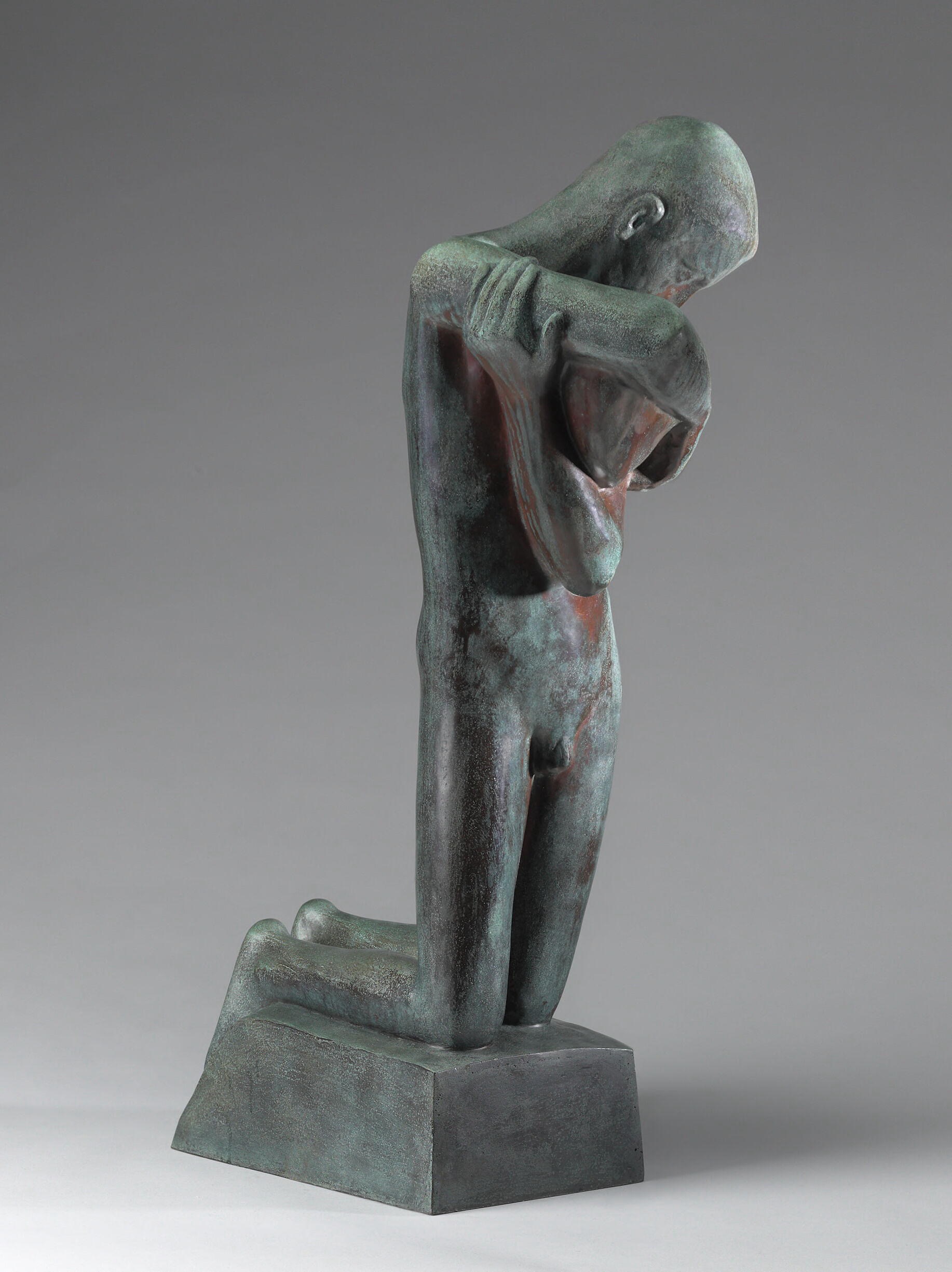
George Minne: Kneeling Youth with a Shell (1923)
——
2ndOrderDistractions
“What’s my 5% solution? What’s yours?”
This Unscrolling Story finds me attempting to distract myself from my distraction disorder, using 2nd Order Distractions.
I argue here that each political era sets an emotional tone, and that our current “distractor‑in‑chief” has helped normalize a culture of chronic distraction. Tech companies have amplified this effect by deliberately designing platforms to hook our attention, leading to a “second-order distraction” where we now distract ourselves without outside prompting.
Recognizing this, I look for “anti-distractions” that could turn the same mechanisms against distraction, even if imperfectly. Drawing on a study showing that masks reduced COVID spread by only 5% yet still saved many lives, I conclude that even small reductions in distraction—rather than total abstinence—can make a meaningful difference. We may not escape the noisy, manipulated world we’ve inherited, but we still have some agency to carve out our own modest but significant “5% solution.”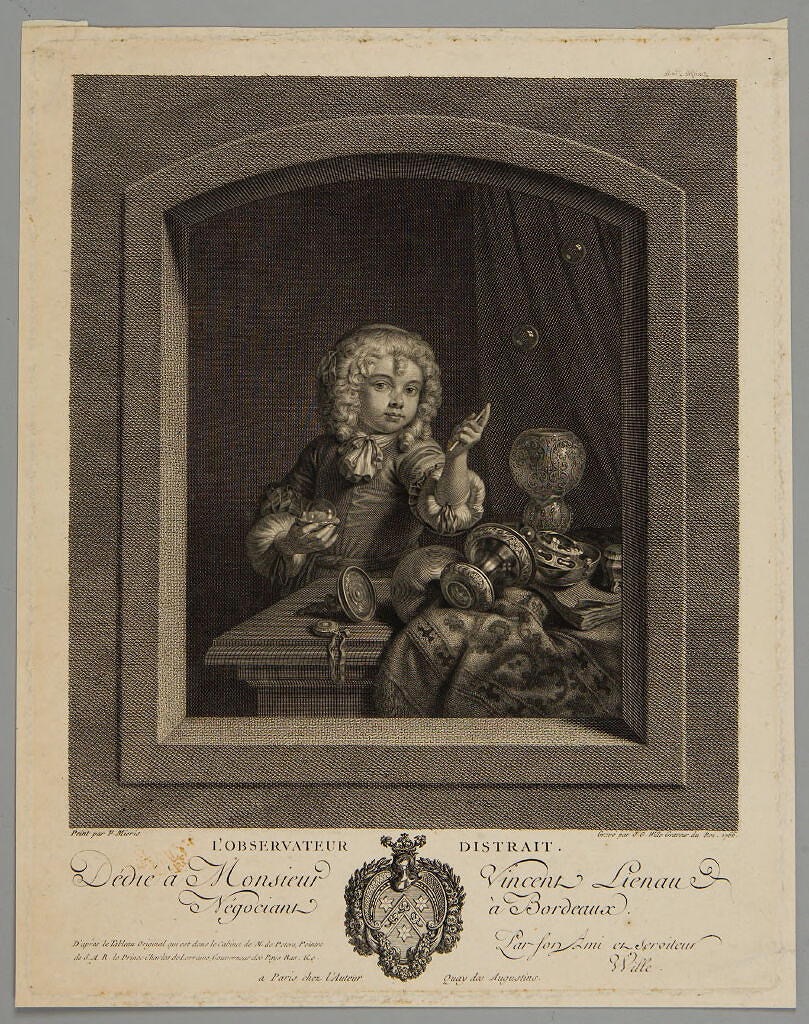
Johann Georg Wille: The Distracted Observer (1766)
——
TheAlgorythm
…cursing TheAlgorythm every inch of the way to nowhere again. And again.”
This Unscrolling Story considers the villainous presence governing what we see in our newsfeeds: TheAlgorythm.
This Unscrolling Story portrays “The Algorithm” as the shared villain behind our compulsive scrolling—a mysterious, opaque system that decides what shows up in our feeds. It sometimes feels eerily accurate and other times infuriatingly wrong, like an unpredictable oracle or Magic Eight Ball that is unreliable by design.
I argue that users are effectively lab rats or peons in a commercial machine run by tech titans like Zuckerberg and Musk, whose priority seems to be serving advertisers, not users. Despite being routinely frustrated, insulted, and interrupted by irrelevant ads and erratic content, people keep coming back, unable to fully explain the pull of this mutually assured distraction.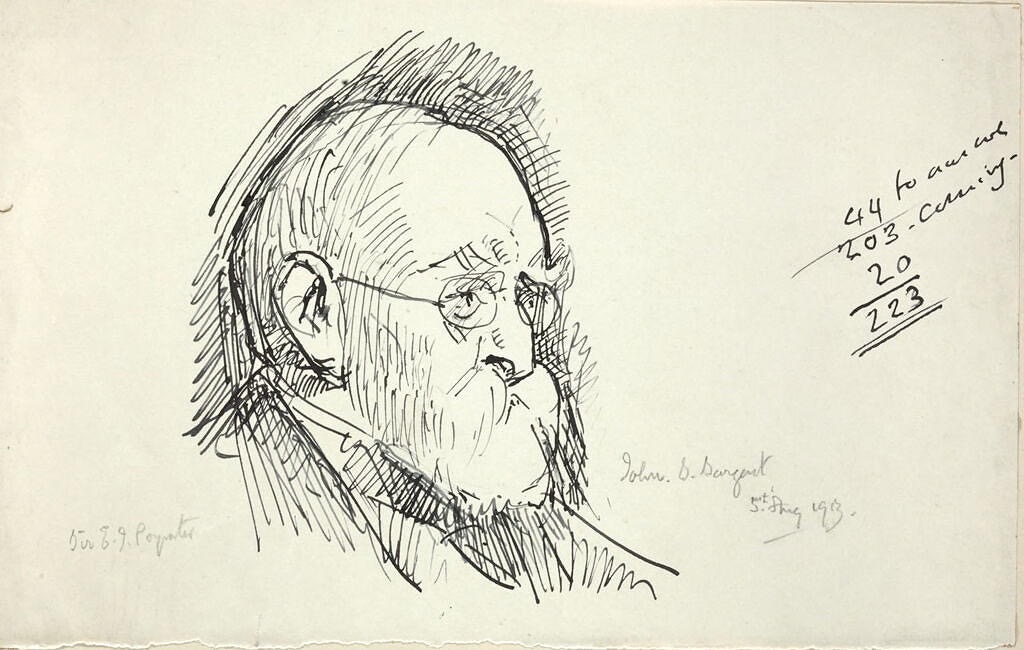
John Singer Sargent: Sketch of Sir Edward John Poynter (Aug 5, 1913)
——
StockholmSyndrome
“We all seem to be coping near the edge of our native abilities now.”
In this Unscrolling Story, I admit that I might be exhibiting symptoms of suffering from a social media-induced case of the Stockholm Syndrome.
In this Unscrolling Story, I reflect on New Year’s Day 2026, when we are all dragged into unwanted futures by time and technology, especially social media and computing, which did not fulfill their early utopian promises. For me, this digital world feels like a kind of kidnapping.
I liken my attachment to abusive platforms to Stockholm Syndrome: despite knowing that social media and tech systems are hostile, humiliating, and designed more for creators than users, I have still grown loyal to them and even define my identities through them. Password hassles, clumsy interfaces, and constant advertising are seen as everyday abuses we tolerate while still defending the very platforms that mistreat us.
I proudly avoid some platforms (like X and Snapchat) but remain deeply tied to others (especially Facebook), understanding this loyalty as complicity born from trauma rather than a psychological disorder. I extend the Stockholm Syndrome analogy to explain political cults such as MAGA, where followers support a publicly abusive leader. In a world where even basic communication depends on demeaning technologies, I see society collectively coping at the edge of its abilities, and worry that the next stage may just be another involuntary kidnapping into yet another unwanted future.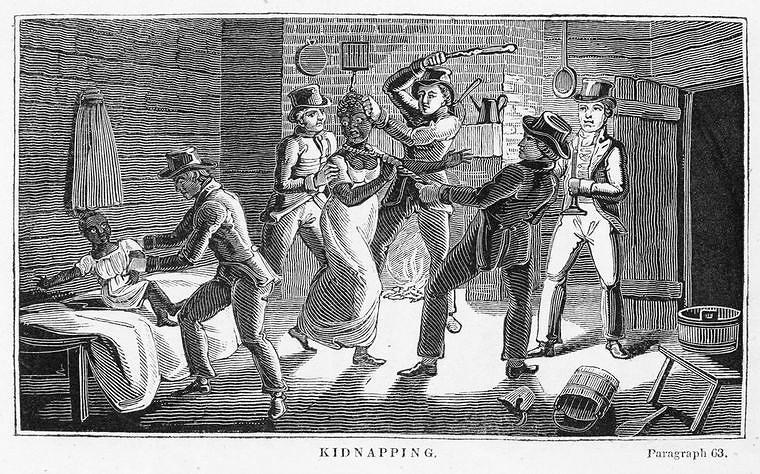
Jesse Torrey: Kidnapping, American slave trade: or, An account of the manner in which the slave dealers take free people from some of the United States of America, and carry them away. (1822) Reprinted by C. Clement and published by J. M. Cobbett
——
On The Upcoming Epiphany
Twice in the last two weeks, I’ve gone out in public shoeless, in my stocking feet. In the first instance, The Muse and I were visiting Boulder, Colorado. I’d taken a pair of infrequently worn boots with me, figuring they could work whether we encountered snow or not. I relearned why I’d so infrequently worn those boots through the years since I'd impulsively bought them. They proved to be more than merely uncomfortable, but punishing. After a day schlepping around visiting, I could barely walk. The next morning, there was no way I’d be able to even fit them on. One of my toes was noticably swollen and felt broken. I was crippled! Fortunately, an REI was located less than a mile from our hotel, so The Muse drove me over and I entered in stocking feet, shopping for some replacement. After failing to fit a few pairs on over my wounded toe, I finally choosing a pair of vinyl shower slippers. I wore those to the memorial service we’d come to attend, and back home, trudging through the Denver airport, trying to keep from sliding out of them with every step.
Then, on New Year’s Day, The Muse and I attended some friends’ annual soup feed. They live in a shoes-off house, so we shuffled around in stocking feet visiting with friends. When we were leaving, we started sorting through the considerable pile of shoes in the entry hall, but I couldn’t find mine. The Muse tucked into the pile and also came up empty-handed. I tried again without success. Our host loaned me a pair of thin carpet slippers to wear out through the freezing rain, though they felt no more substantial than the pair of socks I was wearing. That friend texted later, reporting that he'd found my shoes and would deliver them in the morning.
I’m the sort that always tries to find the deeper meaning hidden within every experience. It seemed to me that my back-to-back Emperor’s New Shoes experiences just had to mean something, especially since the last instance occurred on New Year’s Day, a day traditionally given to predicting. We’ll see. I am expecting some startling revelation to overtake me shortly, probably before or even on the upcoming Epiphany.
©2026 by David A. Schmaltz - all rights reserved
Good For A Goose

Comeuppance (19)
Decency (90)
Decency Unscrolling (1)
EndDays (92)
Exiled (90)
Fambly (93)
FollowingChapters (93)
Grace (92)
Humor (2)
iAlogue (1)
Letters to the Editor (1)
NextWorld (91)
Personal (18)
Prosperity (94)
Steam Festival (4)
Unscrolling (89)
Vaporized (6)
Work (16)
September 2026
August 2026
July 2026
June 2026
May 2026
April 2026
March 2026
February 2026
January 2026
December 2025
November 2025
October 2025
September 2025
August 2025
July 2025
June 2025
May 2025
April 2025
March 2025
February 2025
January 2025
December 2024
November 2024
October 2024
September 2024
August 2024
July 2024
June 2024
May 2024
April 2024
March 2024
November 2006
October 2006
September 2006
August 2006
July 2006
June 2006
May 2006
April 2006
March 2006
February 2006
January 2006