TheAlgorythm
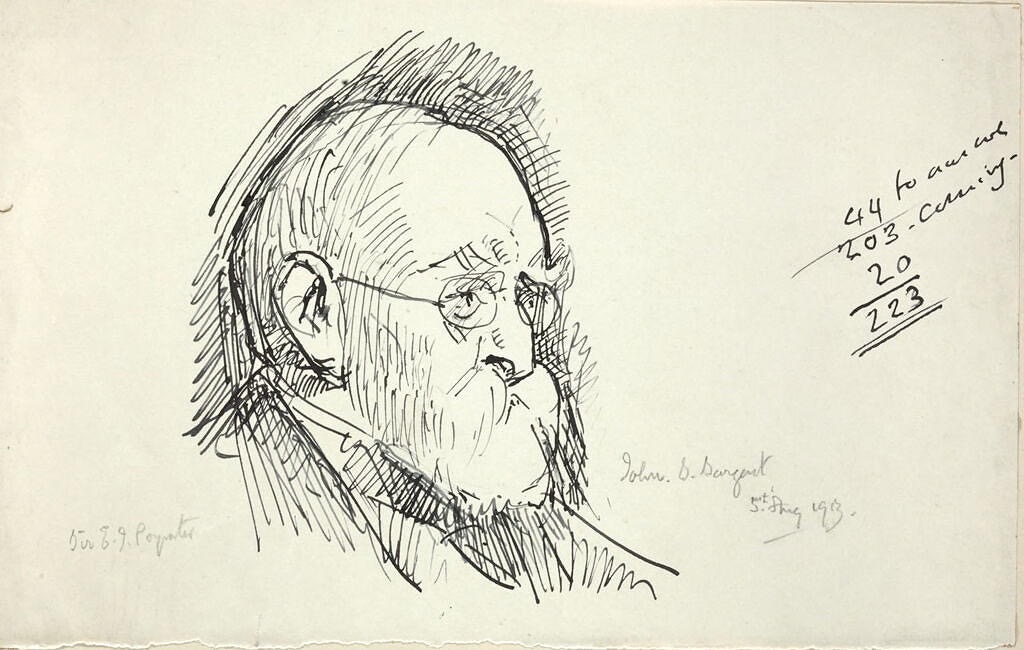
John Singer Sargent: Sketch of Sir Edward John Poynter (Aug 5 1913)
"…cursing TheAlgorythm every inch of the way to nowhere again. And again."
If a common villain emerges from everyone’s scrolling stories, it’s undoubtedly TheAlgorythm. This mysterious presence is said to make the decisions about what any odd accessor might see in their social media feed. It doesn’t matter which individual feed gets mentioned, its underlying algorythm gets blamed for choosing what’s presented for our obsessive/compulsive perusal. This seems perfectly justified if only because TheAlgorythm works in such mysterious ways. It’s said to do this or that, indifferent to any user’s underlying needs. It feeds upon what it needs first, last, and, reportedly, always. It seems to operate well beyond reason, far beyond any logical justification. Not randomly, though its operation might sometimes easily be mistaken for random generation. It appears to operate more randomly than random could, and probably does. It’s a black box with whatever anyone might imagine operating inside.
It serves up a curious mix of frustration and satisfaction.
2ndOrderDistractions
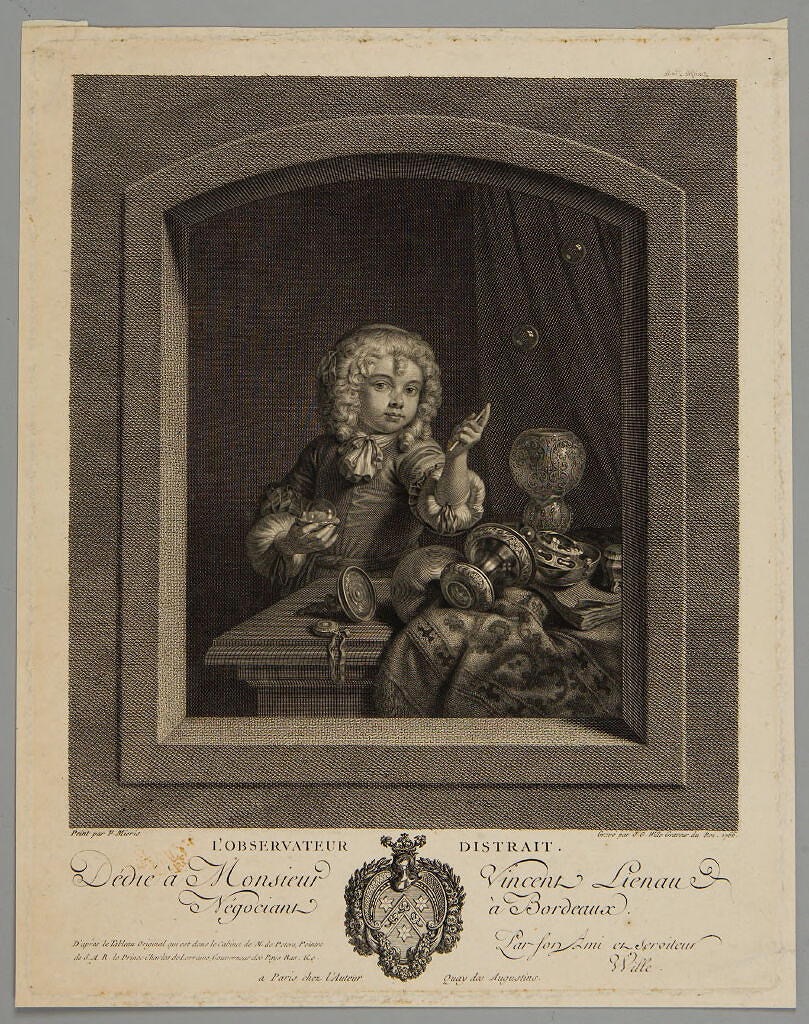
Johann Georg Wille: The Distracted Observer (1766)
"What's my 5% solution? What's yours?"
Each era sets a tone, a rhythm for living in that time. Obama brought hope for a liberal democracy wounded by two terms of pseudo-conservative idiocy, for instance, and Biden’s time reinstituted a sense of decency, which, predictably, set the corrupt class absolutely crazy. This brings us to our current era, where our leader, above all else, specializes in distracting himself. I doubt that he’s completed as many thoughts as he’s completed sentences, by which I mean there’s absolutely no evidence that he’s ever successfully completed either. Predictably, his milieu proves to be communicable. It probably isn’t an accident that we’re suddenly suffering from severe bouts of distraction disorders. Sure, we started seriously distracting ourselves during the COVID years—remember who the incumbent was then?—but it took some practice and serious repetition before it turned into a discernible problem, just in time for old, reliable Mr. Distraction to take office again.
This theme provides personal insight into the self-esteem of our oh-so-fearful leader.
Antidotes
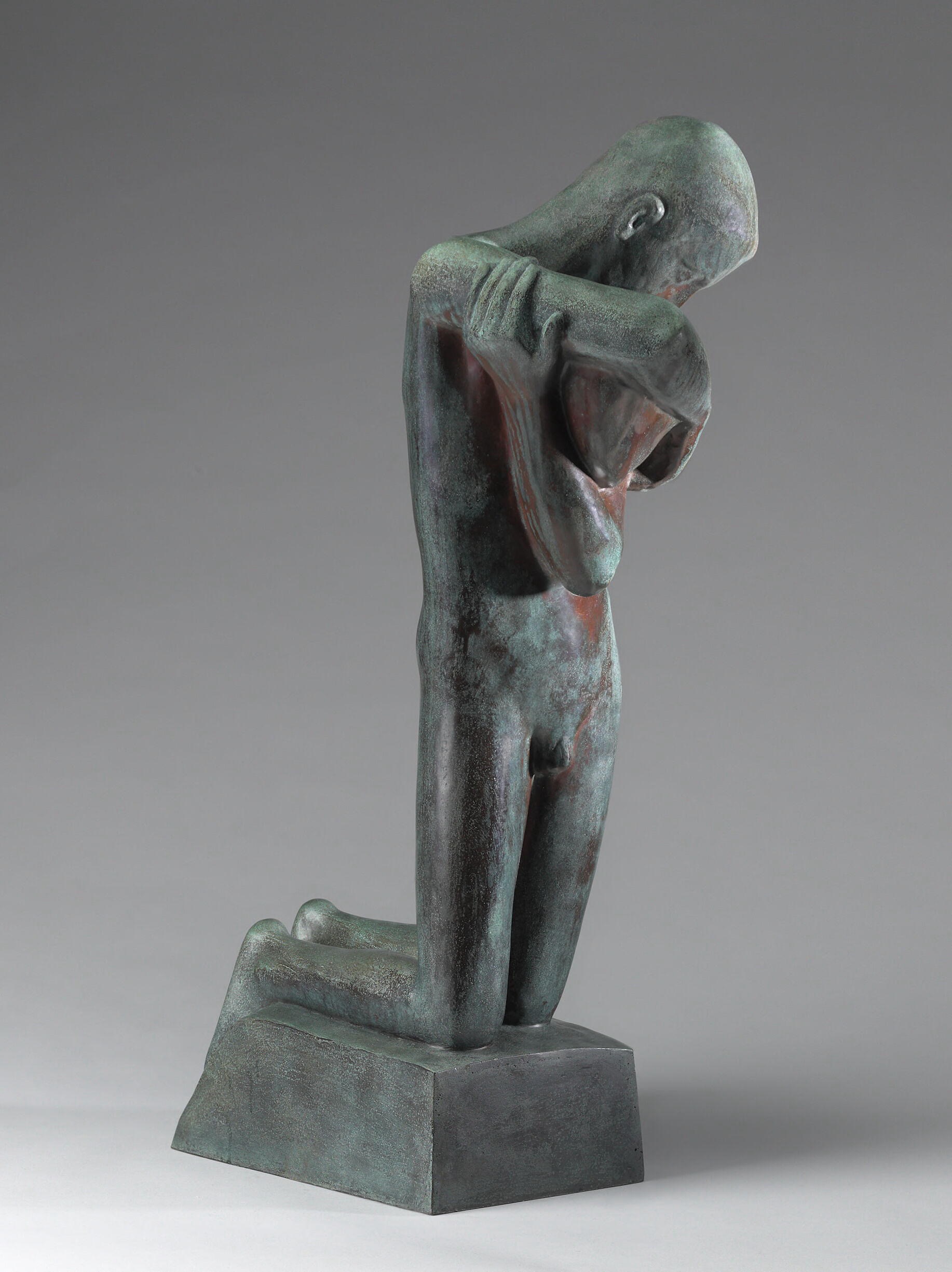
George Minne: Kneeling Youth with a Shell (1923)
Gallery Text
Minne was a leading figure in European turn-of-the-century symbolism, which posited explorations of interiority, spirituality, and the unconscious as antidotes to the materialism of an industrialized society. The figure of the kneeling youth was a recurrent motif in Minne’s oeuvre, and this one’s serpentine figure and downcast face evoke a state of contemplation and solitude, if not melancholy. The omission of naturalistic details, like musculature or individualized toes, abstracts the depiction of the youth’s body. This slim and angular figure exemplifies the artist’s sculptural style, which was celebrated for its synthesis of the elongated figure of the Gothic with the contemporary decorative style of Art Nouveau.
— — —
"Living inescapably involves getting used to noticing what's missing in our lives."
Most of us seem to more or less automatically revert to magical thinking when we encounter something we perceive to be a problem. We resolve the difficulty by a priori imagining the existence of a solution, even though full solutions appear to be rare in both the literature as well as in our lived experience. We might be able to ameliorate some of the worst effects this problem produces, but full remission only rarely, if ever, gets achieved. For instance, I have heart disease. Don’t fuss, the worst it has ever gotten for me was a few high blood pressure readings. No apparent damage. So, of course, I thought I’d dodged that bullet. My doctor advises that I have not dodged anything but some of the more troubling symptoms. He pointed out that my continuing prescriptions mean that my heart disease continues, too, albeit in some form of suspension, and will continue for the balance of my life. There is no cure.
Many of the “solutions” we experience seem to be of similar character.
Greyscale

Lucian and Mary Brown: Untitled [baby on scale] (1955)
"My life seems both harder and better when lived in Greyscale."
Our world was never given to present itself in oversimplified blacks and whites. Every dichotomy amounts to a lie, an oversimplification intended to amplify difference rather than similarity. Likewise, our world was never given to present itself in garish colors as if it were a Vincente Minnelli movie, another oversimplification intended to downplay difference and dazzle the eye—more entertainment than information.
Real life, if I even dare speak of reality in these times, lies somewhere between these two common extremes, in what I might refer to as the Greyscale, where shadow and light highlight both similarity and difference, and distracting dazzle seems more properly muted.
Kodachrome
A friend and reader sent me the article and I immediately switched my phone to B&W. Slip over here for more ...
Weekly Writing Summary For The Week Ending 12/25/2025
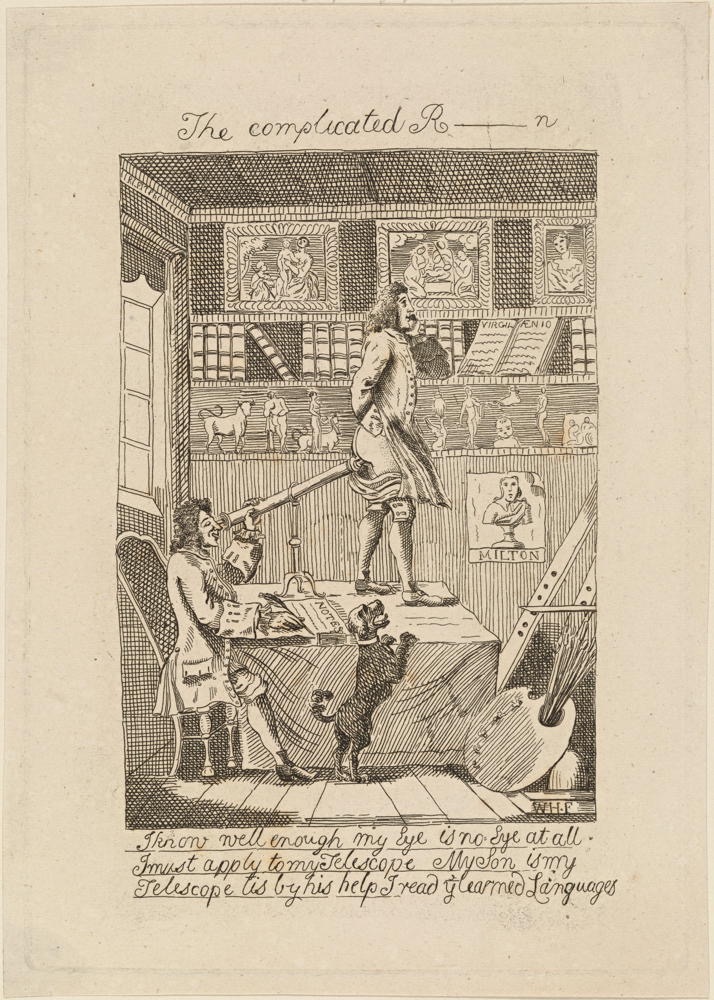
William Hogarth: The complicated R____n (1794)
This writing week tacitly included my annual Christmas poem-writing exercise, where I try to write a dozen or so (more or less) Christmas poems between Solstice and Christmas morning. This always adds a bit of stress to a season that already seems to bring stressors, but it enables me to avoid shopping. I also ended my Decency series, which I consider to have been a completely successful excursion into the source and character of a widely misunderstood choice freely open to each of us. I also began a fresh series—albeit on typically wobbly wheels—Unscrolling. I will probably find my balance before Epiphany, or at least, it usually happens that way.
I began this writing week considering the opposite of selfishness, selflessness, the very soul of decency as I’ve come to understand it. I then ended that series and opened the fresh Unscrolling series, where I will attempt to understand and curtail what might have become a dangerously self-destructive habit shared by many of us: mindless scrolling through our largely newsless newsfeeds. I stepped into what I labeled the First Infinity, the one that lies beyond what had become habitual, unseen, and in need of more experience. I then explored the remarkable absence of news in my so-called newsfeeds. Whatever happened to urgency and importance? I then peeked into the source of my current scrolling practice, the Covid shutdown, and noticed what sure seems like an addiction. I ended this writing week by characterizing scrolling as a way to employ randomness to address a hollowness. Perhaps the hollowness could be the underlying issue.
Weekly Writing Summary
Selfullness
“I’ll be studying and learning this lesson for the rest of a halfway Decent lifetime.”
This Decency Story finds me reminding myself of my duty to practice a Decent Selfullness.
Brian, a highly capable and kind leader, worked tirelessly, neglecting his own well-being. After accumulating excessive vacation time, he took a sabbatical, ultimately leaving his job. In his new role, he embraced a more balanced approach, prioritizing self-care and allowing others to lead, finding greater fulfillment in his work.
Paul Cézanne: Self-Portrait (1898)
——
DecencyUnscrolling
“…hello to a fresh strange bedfellow…”
This Decency Story contains the ending coda of my Decency series and the opening salvo in a fresh series: Unscrolling.
I conclude my Decency Series, reflecting on the importance of choosing decency freely and its potential to create good fortune. I then introduce a new series, Unscrolling, exploring the impact of social media and streaming services on information consumption and my own struggle with distractions. I aim to either embrace the streaming culture or become a social media hermit through this new series.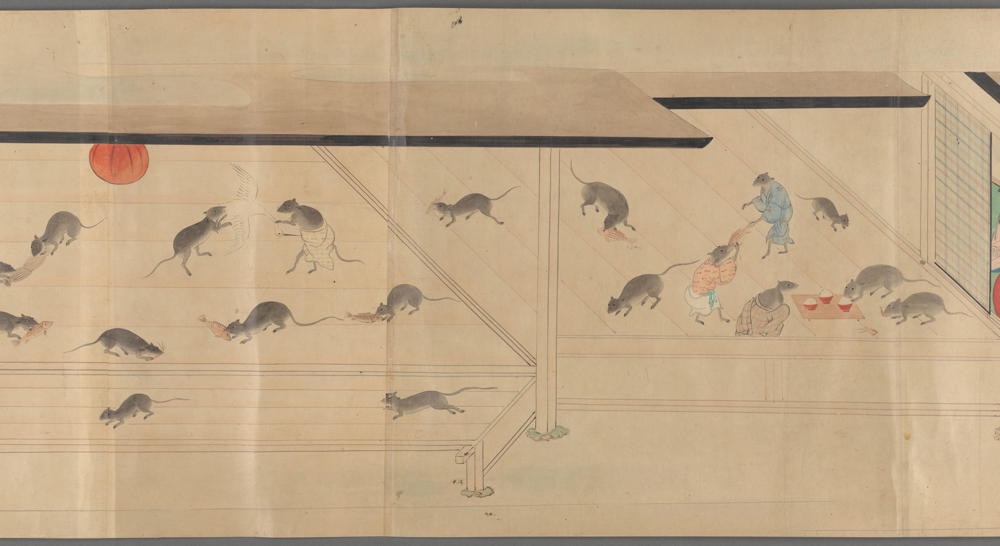
Unknown Artist: Scroll 2: Nezumi no soshi emaki (1600 - 1650) Nara [?], Japan
——
1stInfinity
“I wonder what I so passionately and, ultimately, passively sought there.”
This Unscrolling Story starts unfolding the space within which unscrolling takes place, exploring a 1stInfinity that appears after exiting the scrolling universe.
In this Unscrolling Story, I describe the overwhelming nature of infinite possibilities, comparing it to Giordano Bruno’s concept of infinite worlds. I argue that while scrolling offers a seemingly infinite stream of information, it ultimately leads to a loss of time, relationships, and genuine engagement. I'm choosing to limit my scrolling, embracing a new sense of freedom and the opportunity to engage meaningfully with the world around me.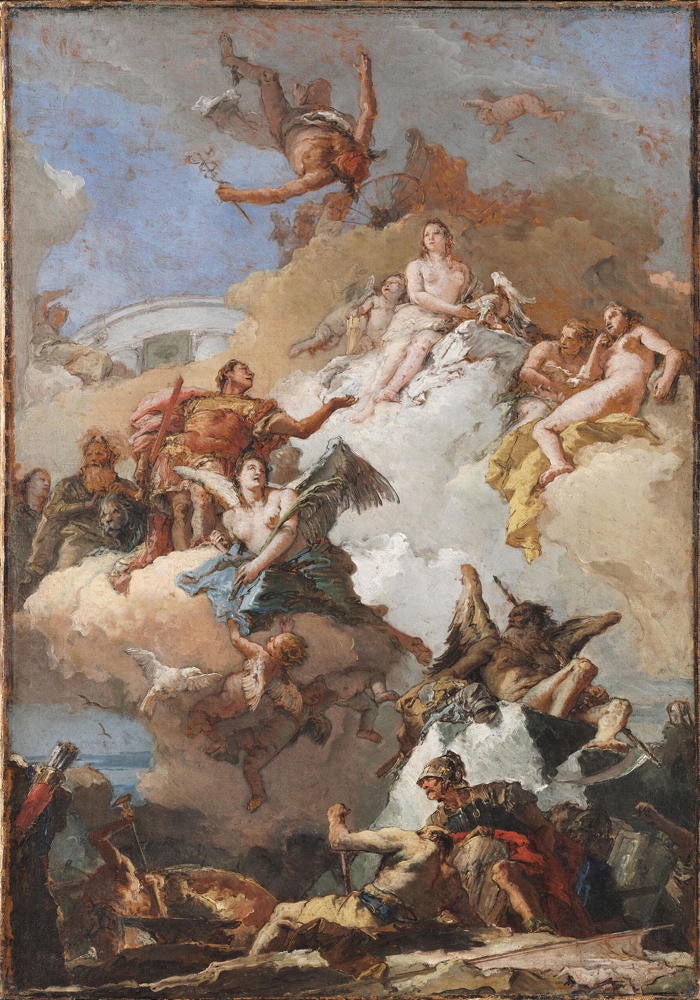
Giovanni Battista Tiepolo: The Apotheosis of Aeneas ((c. 1765)
——
News
“Few of yesterday’s urgencies ever came to pass.”
his Unscrolling Story finds me searching for the News that’s lost in my newsfeed.
In this Unscrolling Story, I express disappointment with the current state of news media, finding it sensationalized and lacking in substance. I reminisce about the days of NPR, which I once found informative and reliable, but now perceive as lacking credibility. I feel overwhelmed by the constant barrage of information and am losing interest in staying informed.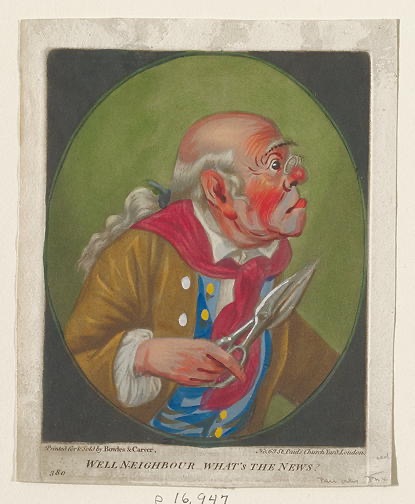
Robert Dighton: Well Neighbour-- What’s the News?,from A Set of Heads (c. 1795)
——
ClosingIn
“One might never notice what’s not present in their life as a result of their scrolling addiction.”
This Unscrolling Story finds me ClosingIn on my scrolling addiction. Revisiting the source cures nothing, but it clarifies.
During the Covid shutdown, scrolling became a consuming activity, providing a sense of connection and community. Initially a harmless habit, it gradually escalated into an addiction, replacing hobbies and higher-order engagements with endless entertainment. The subtle nature of scrolling addiction makes it difficult to recognize its negative impact on one’s life.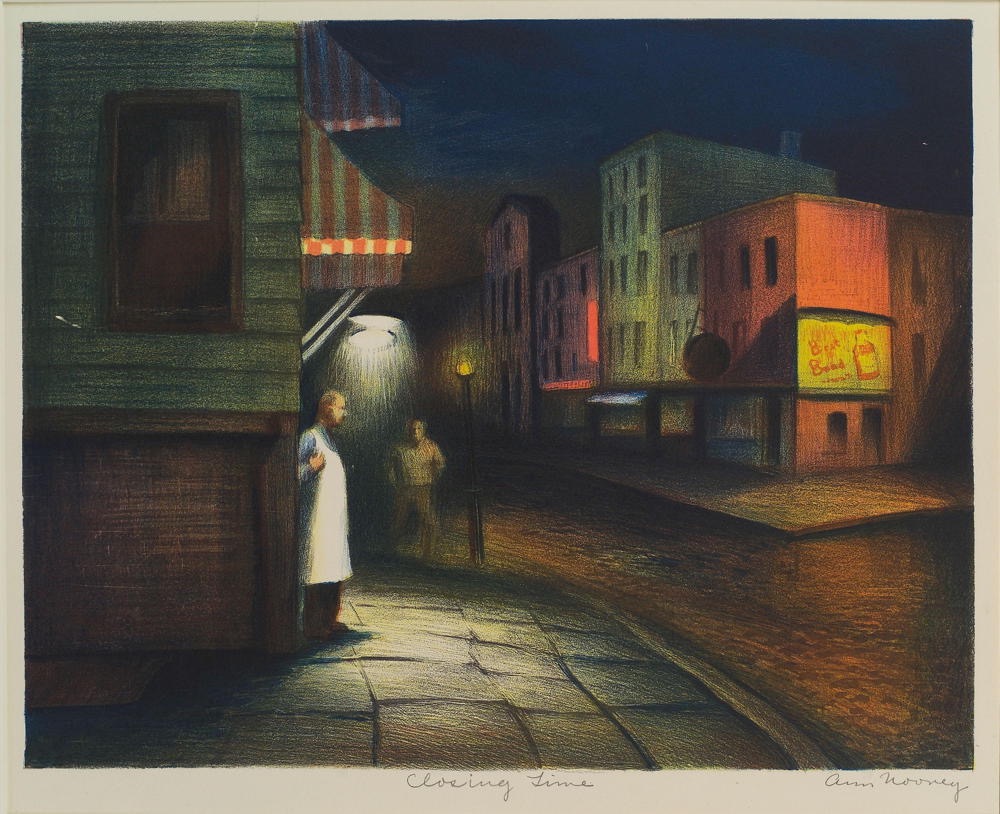
Ann Nooney: Closing Time (1937-1742) Works Progress Administration (Sponsor)
——
Serendipity
“…we can curl up in wonder…”
This Decency Story finds me in steerage, wondering how my interests got Excluded when hospitality became an industry.
In this Unscrolling Story, I compare the aimless scrolling of social media to a desperate search for Serendipity, a random payoff in a world lacking hope and upward mobility. This lack of hope, exacerbated by economic inequality and political decisions, has led to a generation seeking satisfaction in fleeting, intangible experiences. I argue that this “scrolling epidemic” is a coping mechanism for a society deprived of meaningful opportunities.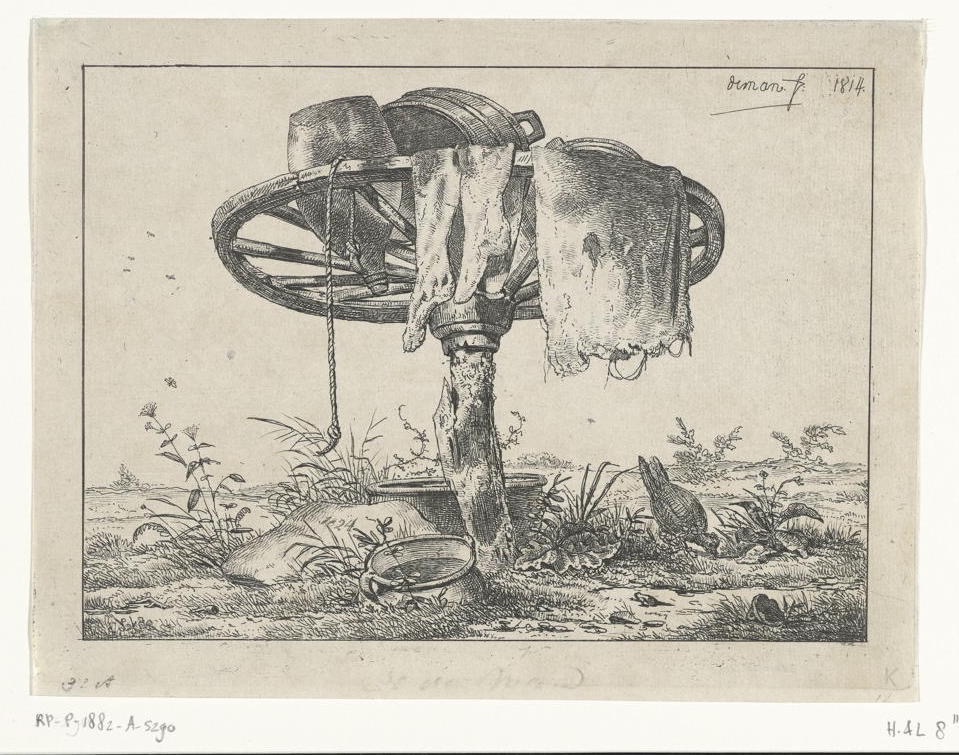
Anthonie Willem Hendrik Nolthenius de Man: Wheel on a pole (1814)
——
A Less Than Perfect Christmas Poem
Merry Christmas, Happy New Year, this season seems to be overflowing with expectations of great joy. I find those expectations more onerous than uplifting, for I do not know how to create joy. For me, joy just happens. It properly must be a surprise or it doesn't qualify as joy, so I cannot will it or otherwise engineer it into being. Merry and happy seem similar, both difficult to impossible to create and probably fruitless to insist upon. Insisting that another be happy seems like a reliable recipe for inflicting misery.
How about wishing someone a reflexive Christmas or a satisfying New Year? These adjectives could make reasonable targets without seeming so darned oppressive. Burdened with the command to be happy, I feel a little desperate, especially when I'm just not feeling it. My mom would advise turning that frown upside down, as if facial expression controlled mood. It was well-intended encouragement even if it never really worked.
I managed ten new Christmas poems this year. Here's one of them:
The Christmas Eve Trudge
I began writing these Christmas poems
more than twenty-five years ago
to avoid experiencing what I’d come to call
The Christmas Eve Trudge.
The Trudge resulted from unrequited searches
for that perfect present for that perfect person,
a common side-effect of seeking perfection
and one I almost universally experienced then.
I figured that if I stopped shopping
rather than stopping seeking perfection,
that I’d magically lessen the opportunity
to experience the resulting depression.
The incongruity of reliably experiencing
Such sadness while preparing to celebrate
the widely-advertised happiest day of the year
drove me to tears and worse.
It drove me into the irrationality
that encouraged me to write my poems instead,
in the delusional belief that I might thereby
avoid experiencing The Trudge.
My error might have been multifaceted, though.
It could have also resulted from my conviction
that Christmas should properly be, and was,
the happiest day of the year.
It wasn’t, or had never been in my experience.
It was rarely the saddest day of the year, either,
but never actually the happiest.
It was always a day of mixed emotions instead.
If, by chance, I received a delightful present,
my Christmas could, indeed, prove to be happy,
or, more properly, I might feel happy then.
But the chances of receiving such seem slim.
More likely, I’d receive what someone truly
believed would “make me happy,” but didn’t,
resulting in my reconsidering our relationship.
We clearly didn’t know each other all that well.
And this realization sobered me considerably.
It didn’t “make me” feel sad, just reflective.
I’d accept the present under the given conditions
and move on to life’s next little discouragement.
Happy New Year always promised recovery
from any Christmas disappointment,
so I survived, though I still feared The Trudge.
Writing poems instead of shopping did nothing …
To help me avoid The Trudge, though,
because it was also a feature of poem writing.
Attempting the perfect poem for the perfect person
also induces what pursuing perfection always does
… The Trudge. The problem was perfection
and always was.
Let me wish you a less than perfect Christmas
and Christmas poem, this and every future year!
12/22/2025
©2025 by David A. Schmaltz - all rights reserved
Serendipity
Anthonie Willem Hendrik Nolthenius de Man: Wheel on a pole (1814)
A wagon wheel on a tree trunk, with garments, a jug and a tub on it. On the right a chicken.
— — — —
"…an undifferentiated dopamine rush, and then another."
My scrolling most closely resembles stumbling. I move relatively directionless. If not necessarily so at first, eventually. I lose whatever thread of coherence with which I might have begun scrolling, then commence to seeking some Serendipity instead. I feel hopeful, as if I might surprise myself, though I sort through a raft of crap before, finally, eventually stumbling upon something vaguely satisfying. That seems to be the reward for the aimless wandering, a clear waste of precious time, paid off for with some Serendipity, a discovery I couldn’t have possibly held a specific intention to find. I receive a random payoff after taking an equally random walk. Once I’ve extracted the goody off that one, I’m likely to continue scrolling with the tacit intent of repeating that satisfying discovery with something different but identical, ad infinitum.
What happens when an economy, a society, quietly but inexorably leaches out the ability of its citizens to expect?
ClosingIn
Ann Nooney: Closing Time (1937-1742)
Works Progress Administration (Sponsor)
"One might never notice what's not present in their life as a result of their scrolling addiction."
Scrolling started in earnest during the Covid shutdown. It didn’t start immediately, but it seemingly inexorably grew to consume an inordinate amount of a typical day. What can I say? The library suddenly felt risky. The television doesn’t work in our house until after sundown. The Muse was working remotely—first in the basement, then, after we relocated back home, in her back-of-the-second-floor office. There was little else to do, or so it seemed, and the illusion of connection fed what would become a full-blown addiction. I’d finish my work before seven a.m., then look at the day stretching out before me before immersing myself into the only activity left that would have me.
That world delivered convincing cues that I was doing something.
News
Robert Dighton: Well Neighbour-- What's the News?,
from A Set of Heads (c. 1795)
"Few of yesterday's urgencies ever came to pass."
I no longer understand what constitutes news, if, indeed, I ever did know. It apparently had something to do with urgency and importance, neither of which criteria much of what passes as news satisfies today. The “all the news that’s fit to print” NYTimes fills its pages with little urgency and seemingly less importance daily. I still subscribe, if only to maintain access to an outlet that doesn’t just pretend to be in the news business, unlike most of the offerings piggybacking on social media’s coverage. Every little blemish seems to qualify as News to many of those. I long ago refused to engage on Twitter, now ‘X’, not only because I never figured out how to use it, but also because it seemed an unseemly outlet for sharing anything serious. News, I still firmly believe, must be serious business or it’s not a business at all.
Fox (Faux) News created an infotainment product, if not an infotaintment one.
1stInfinity
Giovanni Battista Tiepolo: The Apotheosis of Aeneas ((c. 1765)
Gallery Notes: This bozzetto, or preparatory sketch, was part of Tiepolo’s designs for the fresco ceiling of the Guard Room in the Royal Palace in Madrid, which was executed by his large workshop. The artist excelled at manipulating perspective and color to create dramatic compositions in which space seemingly recedes toward infinity. Here he combines two events derived from Virgil’s Aeneid. The first is the promised deification of the Trojan hero Aeneas, who is depicted in red rising to the Temple of Immortality, accompanied by winged personifications of Victory and Justice. The second is the appearance of his mother, Venus, who is clad in white at the upper right of the painting. Along with the Graces, she presents Aeneas with arms forged by her lover Vulcan, who supervises their making below. Tiepolo gradually lessened his use of earthly reds from the bottom to the top of the composition, which exaggerates its dramatic effects.
— — —
"I wonder what I so passionately and, ultimately, passively sought there."
In the 16th Century, Giordano Bruno argued for the existence of infinite worlds within infinite worlds. He was burned at the stake for his trouble, yet we recreate his speculation each time we try replacing one habit with another. Scrolling, for instance, seamlessly immerses us in an infinity, one in which space and time lose meaning. This easily becomes all-consuming, so high a priority that we can neglect everything else without remorse, without even noticing. The time when I first chose to limit my entry into the scrolling infinity, the first thing that occurred to me was a sense of nearly limitless time. My most prominent limit had essentially evaporated, leaving me with a fresh sense of infinity. Unlike the infinity I inhabited when scrolling, which had gone beyond my conscious awareness, this 1stInfinity overfilled my consciousness. I felt a real sense of excess. I couldn’t yet grasp what to do with it.
I suspect that this sense will diminish over time, as fresh infinities cast shadows over this latest, freshly discovered one.
DecencyUnscrolling
Unknown Artist: Scroll 2: Nezumi no soshi emaki (1600 - 1650) Nara [?], Japan
"…hello to a fresh strange bedfellow…"
As I neared the end of my Decency Series, I, as usual, began fretting about what might follow. By the eightieth installment of any series, my sense of its content has become a permanent resident. I no longer fret about what to write next because the flow has become inexorable. One installment follows another without requiring overmuch conjuring. But I end each series on the upcoming equinox or solstice, so when the winter solstice started casting shadows, I began my usual fussing again. I had finally become accustomed to where I was going just in time to reach my agreed-upon dead end. What comes next?
Whatever comes next will later seem a prescient choice, but in those moments before I decide, it looks as if I should be hiding from rather than warmly embracing my future.
Selfullness
Paul Cézanne: Self-Portrait (1898)
“I’ll be studying and learning this lesson for the rest of a halfway Decent lifetime.”
Brian was always the brightest person in any group he worked with. He naturally gravitated toward performing in a pivotal role, often as a leader. If not the formally-declared leader, then the most widely-acknowledged one. He was, by any measure, an enormously Decent person, patient, often to a fault, and extraordinarily kind. He promoted The Muse and my work, sponsoring some workshops and championing our perspectives. He mentored many. When our business went bust, The Muse found a real job, primarily on the strength of Brian’s lead and his firm, supportive recommendation. He worked unimaginable hours, routinely arriving early, leaving late, and working weekends. He developed the habit of never taking vacations, since he was really the critical presence when one of his dozen or more projects faced a significant milestone. Something was always facing another critical milestone review.
HR finally confronted him after he’d accumulated three months of unused vacation time.
Weekly Writing Summary For The Week Ending 12/18/2025

Bartolomeo Pinelli: The Author's Family (1810)
In reflection, this writing week delved more deeply into Decency's philosophical underpinnings than had any previous writing week in this series. As I near the end of this series—only two more installments remain—it might make sense that Decency gets reduced to the philosophical it might actually be, though I consider it more an ethical philosophy than a necessarily moral one. The distinction, since I'm already delving into the deeply philosophical, lies in who directs the action. In moral action, it seems somebody else directs by commanding, "Thou Shalt." In ethical action, the actor directs the action and stars in the performance. Decency seems to be necessarily self-directed action.
I began this writing week avoiding providing instruction, instead simply reflecting "On Being" Decent.
Excluding

Honoré Victorin Daumier: An Excusable Error. Chickens thinking they have found the cage where they spent their early childhood, plate 21 from La Crinolomanie (1857)
ABOUT THIS ARTWORK
This lithograph focuses on the outlandish crinoline fashion, which lasted about a decade. Among other activities, Daumier’s exuberant crinolines destroy gardens, sweep up street trash, and catch their wearers in high winds and turnstiles. While this plate comes from the Actualités series, it has also been catalogued under the topic La crinolomanie (Crinoline Mania). This sheet and others by Daumier play on the support garment’s incongruous approximation of the human form. Daumier’s images stress that these contraptions, whether cage- or basket- like, were functionally useless.
—- —
"…we can curl up in wonder…"
The hospitality industry has finally become the least hospitable industry. I intend no artificial irony as I declare this obvious truth, just the old-fashioned kind of irony. What could be more Decent than hospitality? Perhaps nothing, unless it’s turned on its head. It has been turned on its head by seemingly everyone working in that most curious of industries. Hospitality seems an odd industry, anyway, because I can’t see smoke stacks protruding from whatever hospitality might be doing, and I think that I really should see smoke stacks protruding from the top of any Decent industry, even hospitality, if it actually imagines itself to be an industry.
In my day, even a half-decent industry featured assembly lines and efficiency experts.
FauxDecency
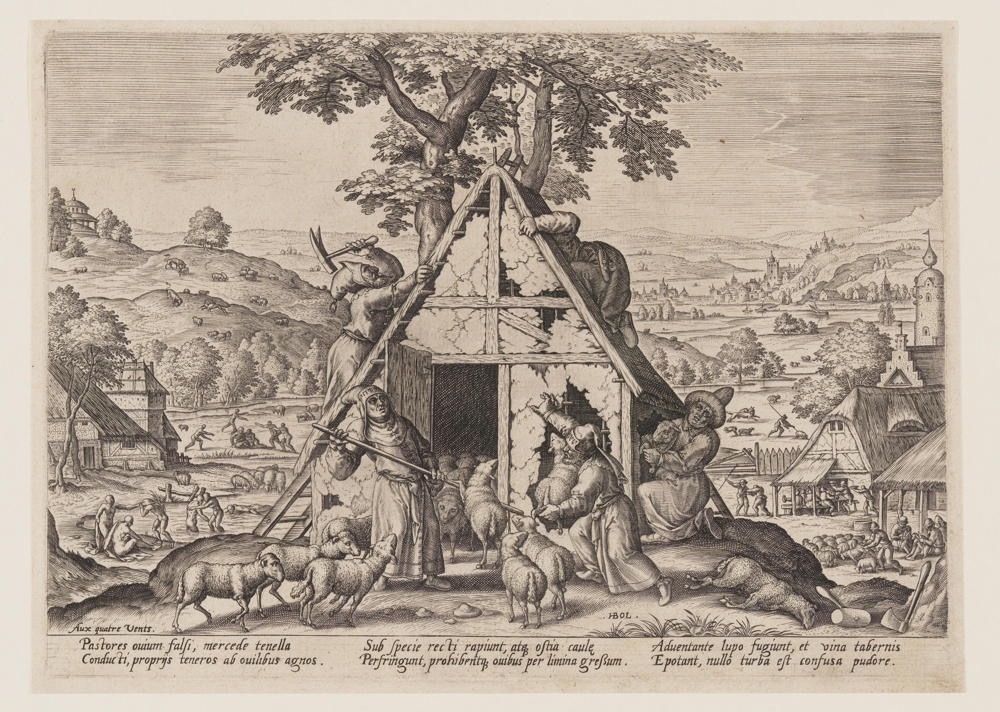
Jan Sadeler I: The False Shepherd (c. 1575)
"…I'd prefer to believe most would perceive such beliefs the utter opposite of Decency in action."
If Decency has always been a matter of choice, what constrains such decisions? I see today a proliferation of what I must characterize as poor choices made in the name of what I can’t quite comprehend as representing Decency in action. Our State Department’s embassies recently received a directive from the White House declaring that every country practicing Diversity, Equity, or Inclusion is guilty of human rights abuses. Likewise, those acknowledging their women’s right to choose. These pronouncements seem the very opposite of Decency. Decency stood on its head and turned inside-out: FauxDecency. I would live and let live in this instance except this instance seems a perverse exception, and it is the perversion that drives my aversion. This cannot represent Decency, even as practiced on Mars, or else Decency itself becomes a meaningless concept in practice.
The vast army of whacko right-wing conspiracy believists are not theorists, for they seem to firmly believe that their wickedness represents true righteousness.
AlternativeFutures
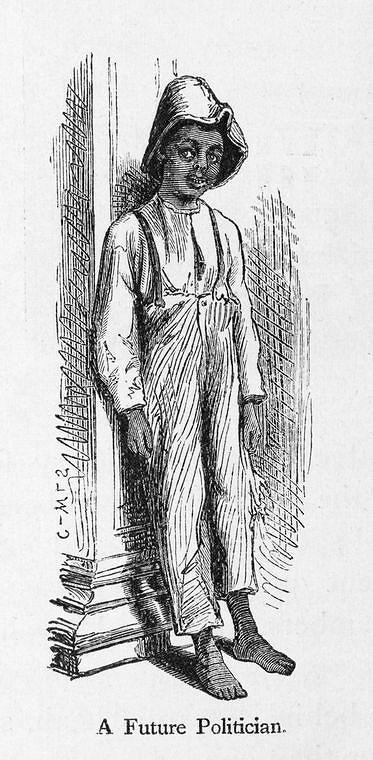
Edward King: A future politician (1874)
"Decency’s probably more resilient than even the most practiced cynicism."
My old colleague and friend, Al, who has followed my writing for about thirty years, reminds me after reading my recent story featuring pointed comments about cynicism that, as a species, we seem to be much better at predicting long recoveries than at experiencing them. He contends that most systems recover much more quickly than their intimates predicted. This pessimism about our resiliency might fuel much despondency. As we watch what we consider Decency crumbling before us, we do more than just order handbaskets. We believe we might never recover from this latest round of insults, even though our history seems resplendent with examples of more rapid recovery. Even if we held the power to regenerate a severed limb spontaneously, we wouldn’t necessarily relish the experience. We might come to believe that we were more finite than we’d ever actually been, and confidently predict that any individual lobbing off would do us in.
We are already recovering from these latest insults, even as the wolves continue devouring so much of what we hold so dear.
BecomingComplicit

Anneliese Hager: Untitled [Portrait A. H.] (1947)
"Attempting to live Decently incurs ever more complicity."
To live is to become complicit. Attempting to live Decently only deepens this dilemma, for one may not insist upon society respecting one’s personal proclivities. Vegans surround themselves with murderers. Choosing to live Decently distances one from some, though it might also bring others closer. The least common denominator seems as unconscionable as it also seems most divisive. No way exists to avoid experiencing this division. The higher the aspiration, the lower the everyday experience. I have cordoned off vast swaths of my community as unworthy of my presence. I won’t shop at Walmart because of their disgustingly indecent business policies toward those they euphemistically call “Their Partners.” I won’t visit the Tractor Supply store since they tried to gain street cred by noisily cancelling their Diversity, Equity, and Inclusion policies under the phony guise of promoting actual equality. I was not born yesterday.
The more I embraced Decency, the more complicit I became.
DeSensing

Louis-Léopold Boilly: The Five Senses (1823)
"Decency primarily exists in the cloudy eyes of its beholders."
Decency requires certain sensitivities before it can be successfully deployed. One must accurately perceive one’s surroundings before one can engage congruently. Imperfections can create divergences such that Decencies escape my ability to properly muster them. I increasingly exist out of context, disconnected from the surrounding world.
Early on, I sensed that this world was someone else’s.
OnBeingDecent...
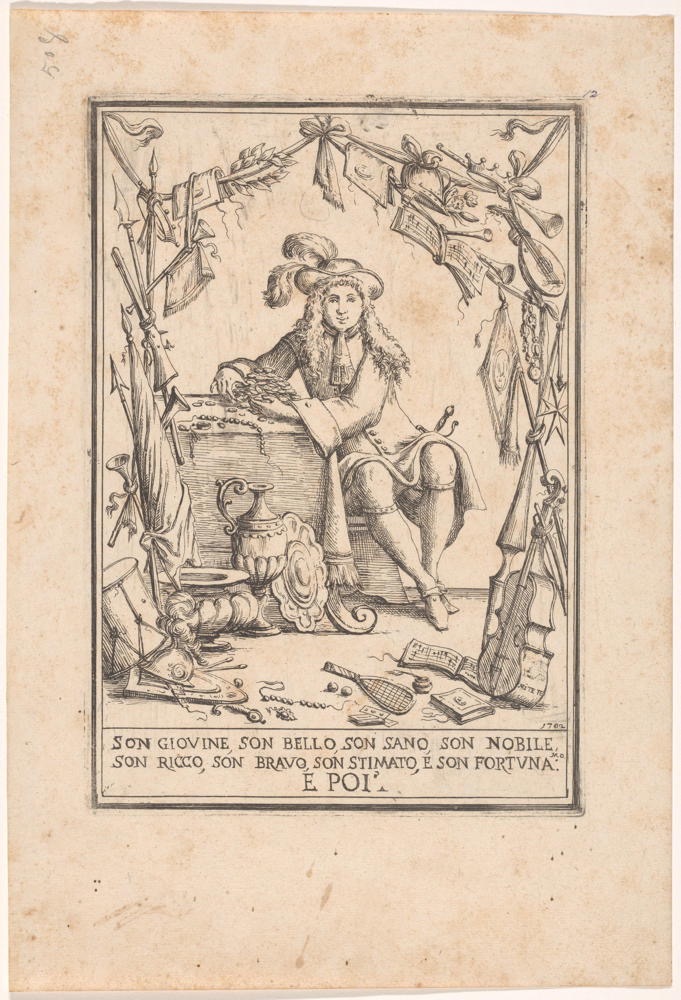
Giuseppe Maria Mitelli Allegory of the Lightness of Being (1702)
Gallery Notes: This elegantly attired nobleman – who is young (giovine), handsome (bello) and rich (ricco) – flaunts his possessions. His affluence is emphasized by the pile of gold coins on the table and the many costly attributes of art, gaming, and diversions that literally surround him. Yet apparently this is not enough. Amid all this opulence, he looks disillusioned and unsatisfied. Is this all there is?
"Decency's question is rarely what but when."
On Being Decent … In Indecent Places
I can speak with authority only about my personal experiences, and even that ability seems limited. I have nothing to teach anyone else, except by example, often by bad example. I am no paragon of anything except not being a paragon of anything. This context says nothing about the content of whatever I consider here, for I consider here to present an example of considering, not necessarily to conclude anything. That said, I have been writing Decency Stories for eighty-two consecutive days, discovering more than declaiming, sometimes seemingly shaming myself in the process. I have stumbled into contradictions and many tenacious misconceptions, realizing how little I understood the topic of my efforts. As I near the end of this series, I realize that I probably won’t be offering any crisp summarization of my subject at the end. I didn’t intend this effort to reduce understanding into a spare handful, but to expand it. It has proven more expansive than I could have imagined when I began.
One prominent subtext, though, that many of these stories have shown, involves one of the more common yet perplexing situations: On Being Decent In Indecent Places, not How To Be Decent In Indecent Places, but “merely” On Being Decent.
Weekly Writing Summary For The Week Ending 12/11/2025
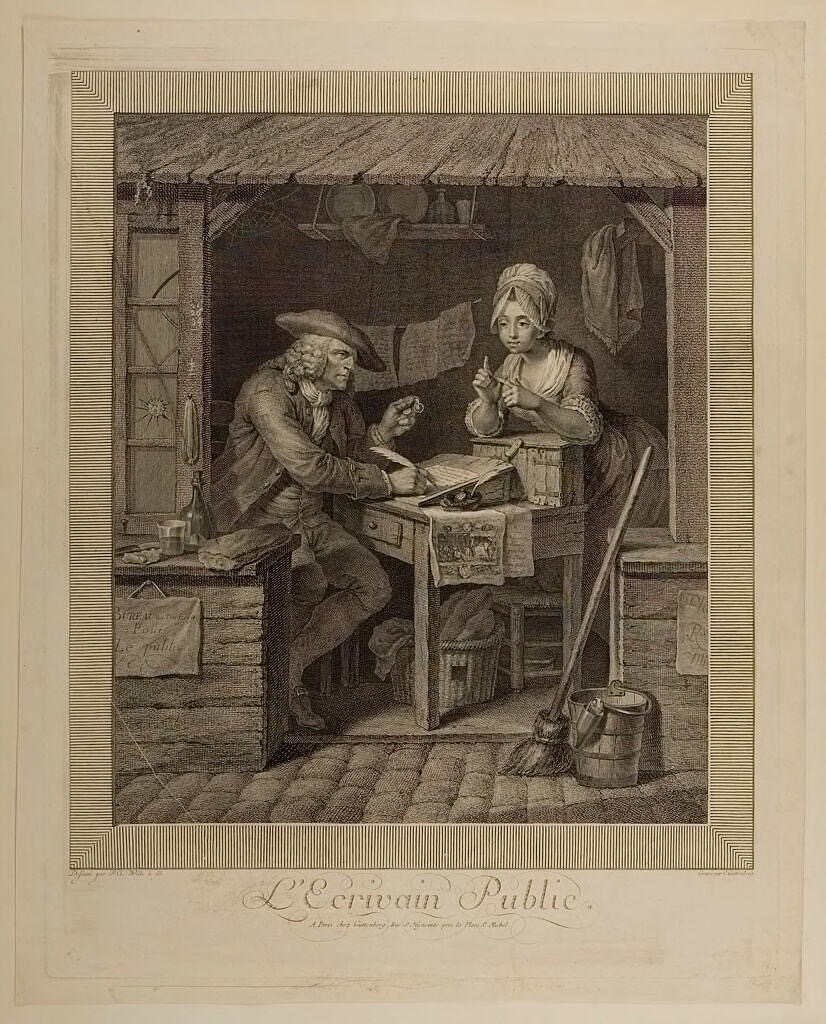
Carl Gottlieb Guttenberg: The Public Scribe [L'ecrivain public] (1783)
This writing week proved to be a relatively quiet roller coaster ride with highs and lows properly attenuated and ultimately, unsurprisingly, unanticipated. Little happened as I’d either hoped or feared, so much for prescience and good fortune. I’m coming close to concluding that we’re not the deciding factor here; we might thrive on synchronicity and luck, whether good or bad, but ultimately beyond our ability to influence. The fact that we feel an innate ability to control only makes this roller coaster ride more entertaining as our expectations repeatedly and ultimately, thankfully, disappoint our expectations. We should be both well used to and warmly accepting of these disappointments that visit us when we don’t immediately realize that our prescience so frequently fails us.
Decency was not as I'd expected it to manifest.
CynicismProofing
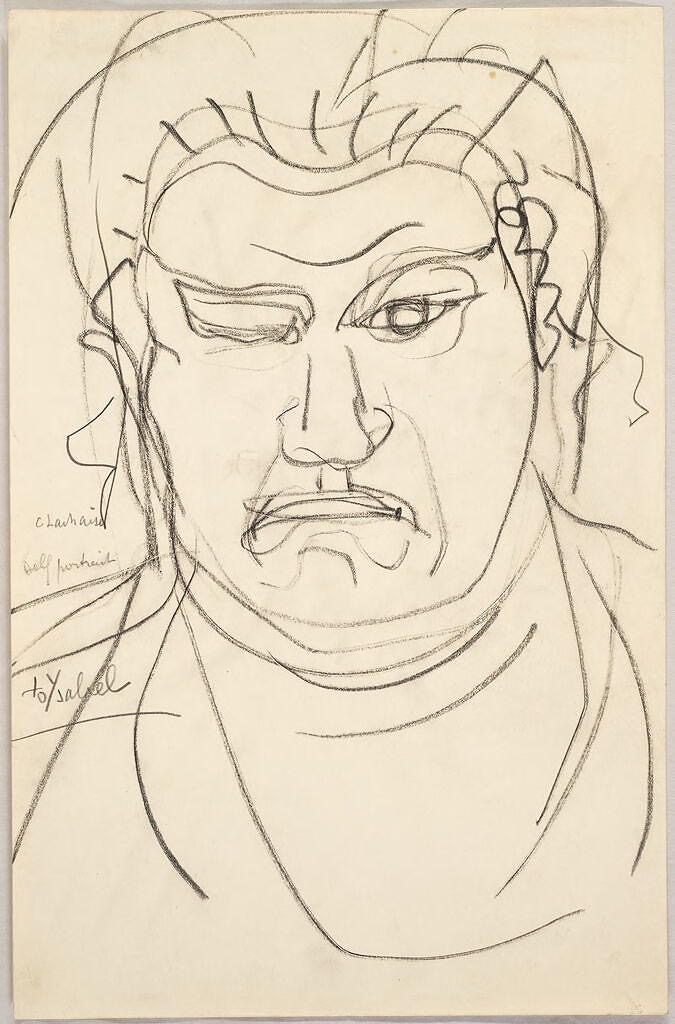
Gaston Lachaise: Self-Portrait (20th century)
"I will mount my defence against encroaching seasonal cynicism with some Decent poems."
I believe that there’s only one essential battle fully worthy of human engagement, the eternal battle against cynicism. Cynicism has always been humanity’s greatest foe. It possesses strange attractors, though. It tends to interest those who have grown weary of the utter predictability of existence, those who convince themselves that they can see through “the game.” Those who contend that they play no game play the most encumbering one of all. The utter predictability of life can sometimes seem like a curse. Three score and ten, give or take, including the genuine risk of an early demise. The galling impermanence of existence off-puts. Those who fain invulnerability embody only cynicism. They project what they claim to oppose by merely breaking rules, as if liberty were little more than a tenacious inability to get along with anybody else.
After a dog-year downwind from utter incompetence, this witness to the attempted reintroduction of cynicism into our governance finds himself exhausted from the unending exertion.
InPractice
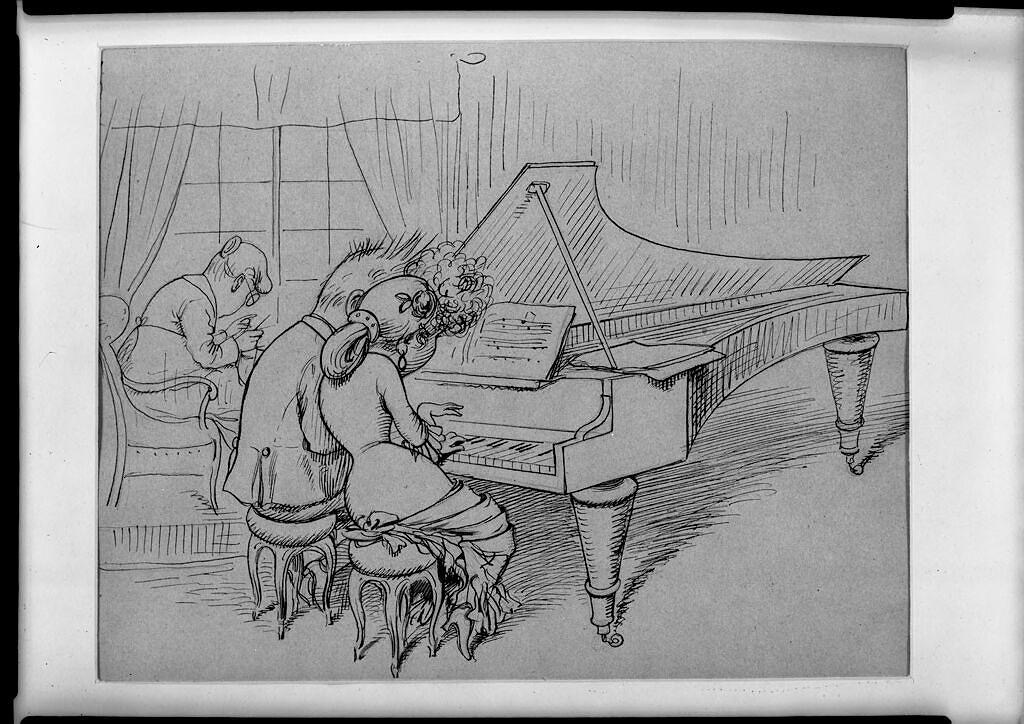
Adolf Oberlaender: The Piano's Revenge: Practice (1882)
"I might have initiated this enquiry only to continue it ad infinitum, InPractice."
I should not feel so surprised when I stumble upon the discovery that Decency, like every other concept, only manifests InPractice. In theory, it seems to contradict itself. Only InPractice does it exhibit its underlying nature, which proves to be indescribable. The description clearly ain’t the thing. InPractice, Decency seems to exhibit little if any ‘thingness.’ Not natively being either person, place, or thing, it steadfastly sidesteps all attempts at facile description, let alone definition. I suppose its dictionary definition performs as well as any dictionary definition might aspire to, though, as I believe I’ve shown in this series so far, much variation swirls around the concept’s central core. Decency can never manifest contextlessly. In fact, Decency seems unusually dependent upon well-formed context to exhibit much of any meaning at all.
You might not notice it when it exhibits.
Endimbenment

Unknown Tibeto-Chinese Artist:
Enlightened Protector Mahakala with Six Arms [Shadbhuja] (18th/19th century)
"Certainty must certainly be the surest sign of ignorance."
Acquiring knowledge and understanding never occurs as advertised. I understood that I would be acquiring something and come to know as a result of my efforts, but the outcome seems to reliably be different than either of those. Determining the endpoint, when such searches are finished, proves challenging, and applying what I learn, even more so, for it seems that I acquire much less, but also much different, than I expected. Even when I adjust my expectations beforehand, based upon my long and disappointed experience, the result underwhelms me. It always seems much simpler than it should properly seem and also much more complicated. I tend to find myself incapable of explaining what I experienced, what I definitively learned. I feel more humbled than haughty.
It’s little wonder why the uneducated look down their noses at eggheads, for the learnéd among us have suffered a shit ton more humility than have the great unwashed.
DecentPeople
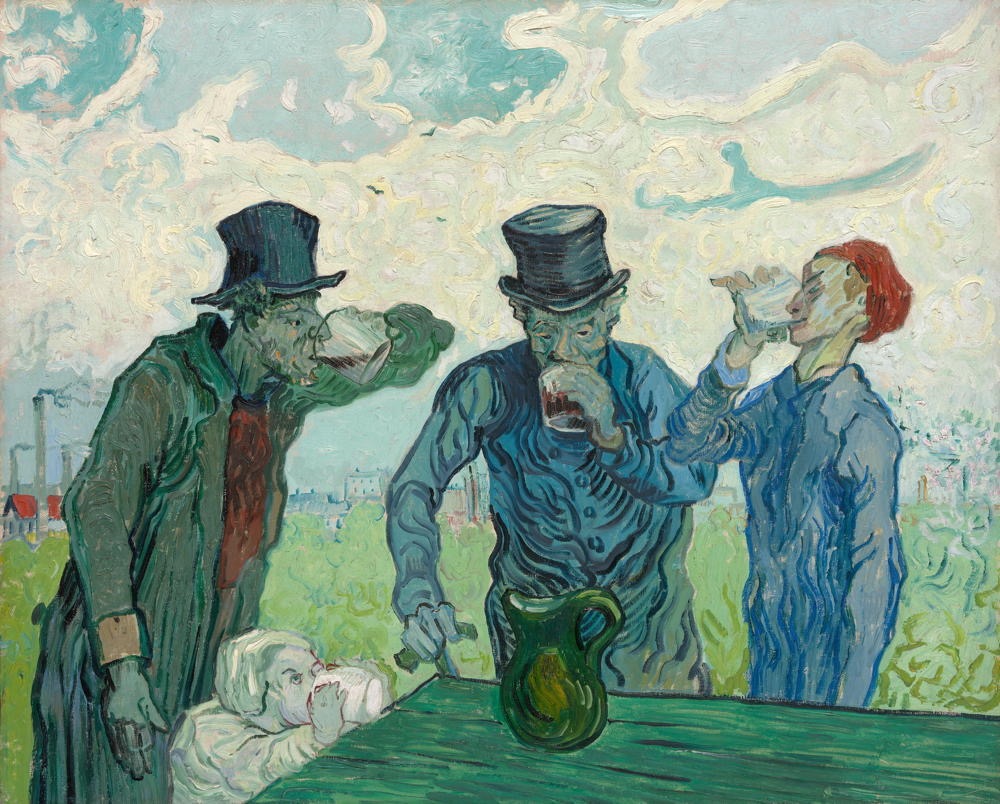
Vincent van Gogh: The Drinkers (1890)
ABOUT THIS ARTWORK
During his time in the Asylum of Saint-Paul in Saint-Rémy, a small town near Arles, Vincent van Gogh made a number of copies of the work of artists he admired, which freed him from having to produce original compositions and allowed him to concentrate instead on interpretation. For this image, Van Gogh copied a wood engraving from Honoré Daumier’s Drinkers, a parody on the four ages of man. The exaggerated figure types capture Daumier’s characteristic humor and convey his sad message about the horrors of alcoholism. The greenish palette may well be an allusion to the notorious alcoholic drink absinthe.
— — —
"My Decencies seem as fleeting as my days."
People seem to have a deep need to classify each other into categories. A deep need for self-esteem might drive this tendency, though there must be better ways for us to feel good about ourselves. This practice seems the likely source of prejudice, misogyny, and a startling list of the more prominent human frailties. I wonder why we couldn’t be generally better than this, since we hold the capacity to make finer judgments and even to choose to make no judgments at all. Would it kill us to make fewer judgments under some ‘judge not, lest ye be judged’ rule? I suspect so.
I feel embarrassed to acknowledge that, in this whole series, of which this writing finds me 85% finished, I have been spouting deep antipathy toward a class I labeled Indecent without clearly defining who belonged to that group.
SelfDeception
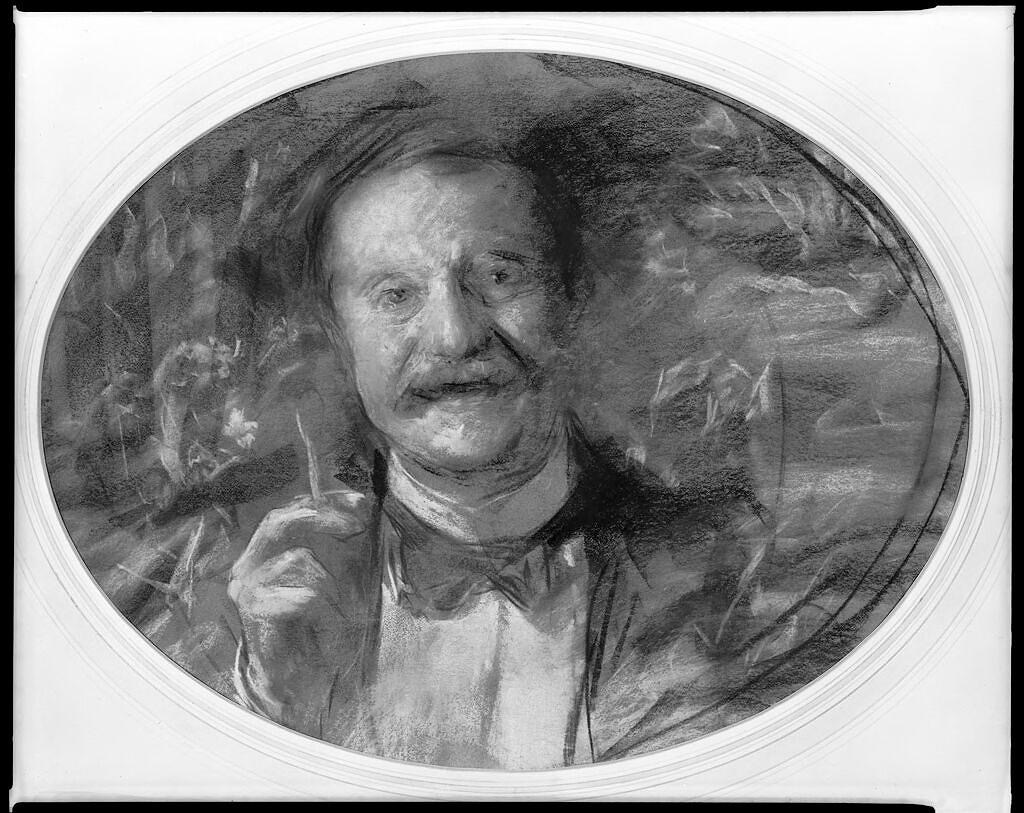
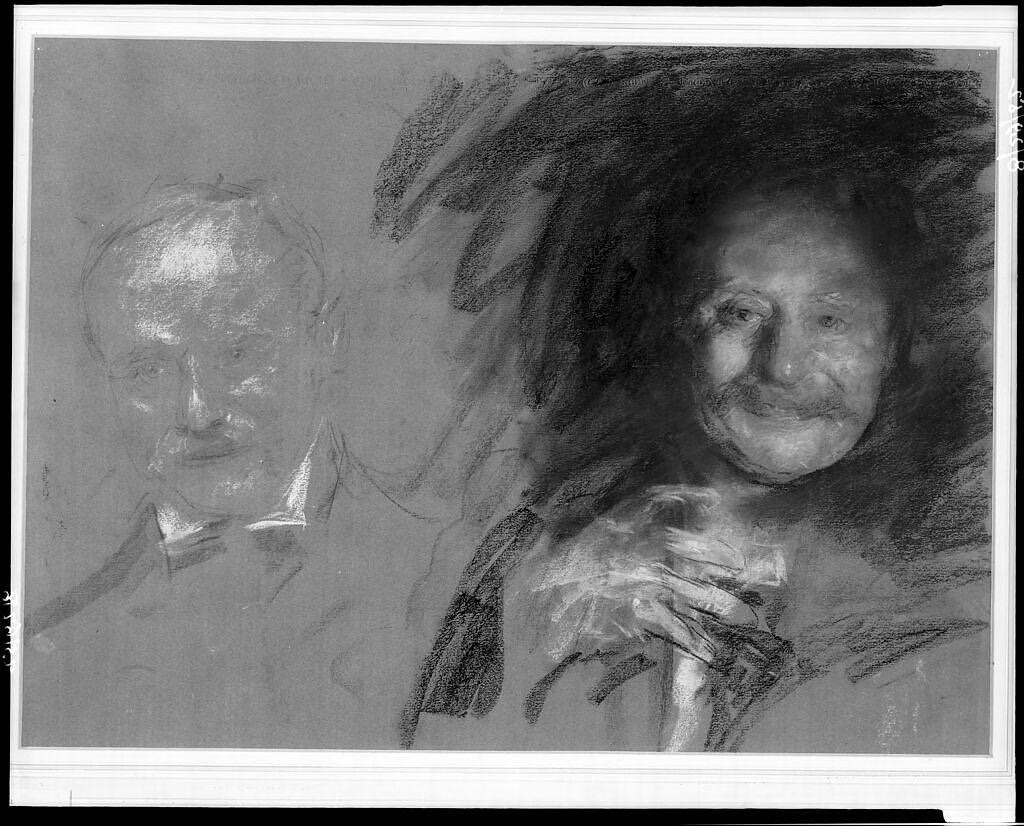
Antonio Mancini: Self Portrait; verso: Two Self Portraits (c. 1900-1902)
"The difference between Decencies might not matter as much as the intensity of each audience member's suspended disbelief, not to mention the actors'."
Discussions of Decency rarely mention the essential role that SelfDeception plays in its daily practice. Unlike a character in a novel or history, the Decent must wrestle with all the complexities and contradictions inherent in any practice. From one minute to the next, conditions might change, disrupting an intended trajectory. So, while one hears plenty of talk about choosing a path, one only rarely hears stories of having to pick and then continually choose again and again. There sometimes seems to be no end to the choosing when it comes to Decency. This can become understandably frustrating, with some loss of focus and discipline seeming common. The Decency originally intended can sometimes get twisted in delivery and manifest in rather embarrassing ways. A Decent SelfDeception might kick in then, to preserve self-esteem. The story remembered often seems divergent from the story as initially intended and executed.
Lapses in discipline are not uncommon.
HarshJudgments
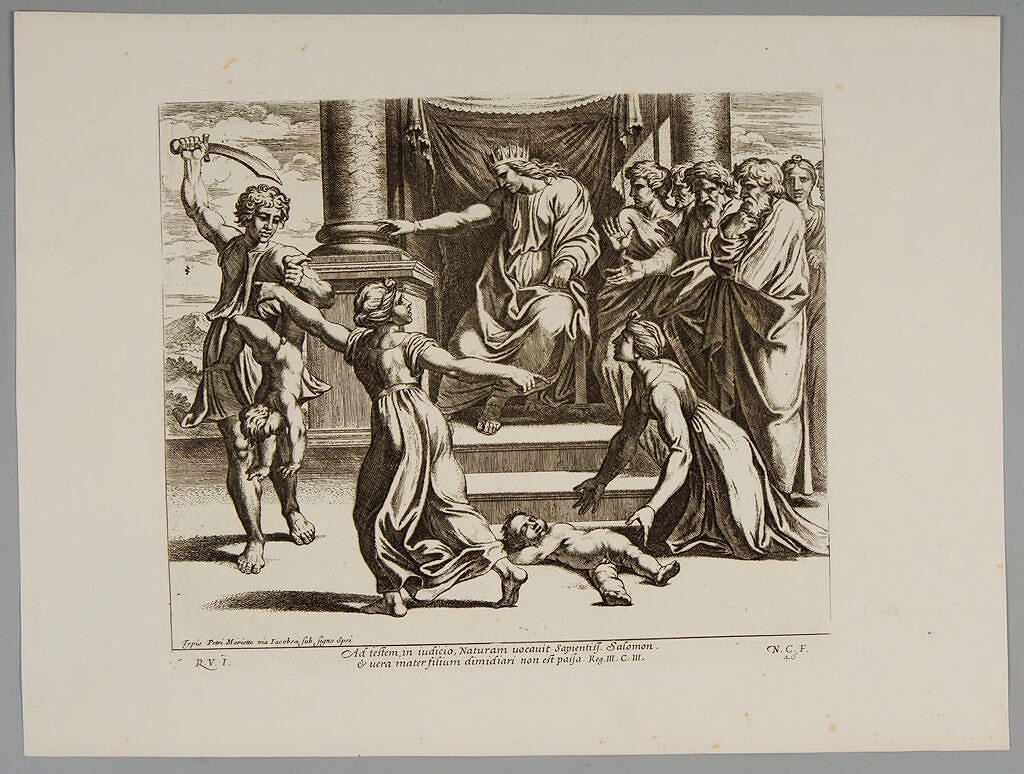
Nicolas Chapron: Judgment of Solomon (17th century)
"Let he who is without indecency cast the first criticism."
The Decent seem to have the greatest license to criticize those with fewer scruples. They appear to inhabit unimpeachable high ground that bestows better judgment, so who better to critique others? Does Decency necessarily assign such a responsibility upon its perveyors, or are they somehow enjoined from overly overtly criticizing, lest that seem unseemly? I suspect the answer to these questions must be the responsibility of each Decent person. I know the answer for myself, though my answer sometimes shifts, depending.
I do believe it’s unseemly of me to criticize harshly, or, perhaps, to criticize at all.
Weekly Writing Summary For The Week Ending 12/04/2025
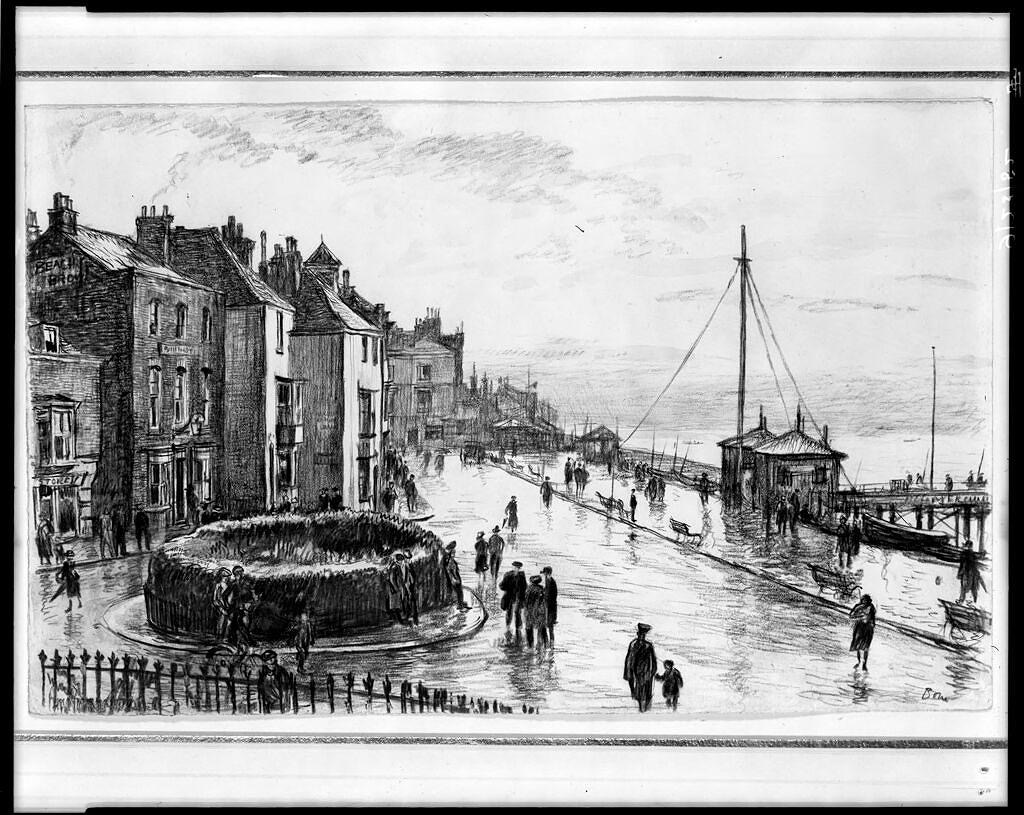
Muirhead Bone: Rainy Day, Deal ((20th century)
This writing week saw the first hard freeze in this Valley They Liked So Well. It also saw the start of its typical seasonal socking-in as this bowl filled with fog that the weakening sun could not manage to burn off. Rudolph the Red-Nosed had a prominent franchise here in my youth, and would today if video games hadn’t undermined most of our traditions. The Villa felt cozy with the fireplace blazing after my granddaughter Tilda struck the fateful match that lit the first pile of kindling and firewood, leaving the fireplace warming through the long post-Thanksgiving weekend. I continued my exploration of Decency in its surprisingly many guises. I suspect that if I focused this much attention on any topic, though, I’d only undermine whatever I thought I understood about it beforehand. Learning settles nothing, but usually opens ever more complicating and confusing cans of worms, ad infinitum.
Ferocency
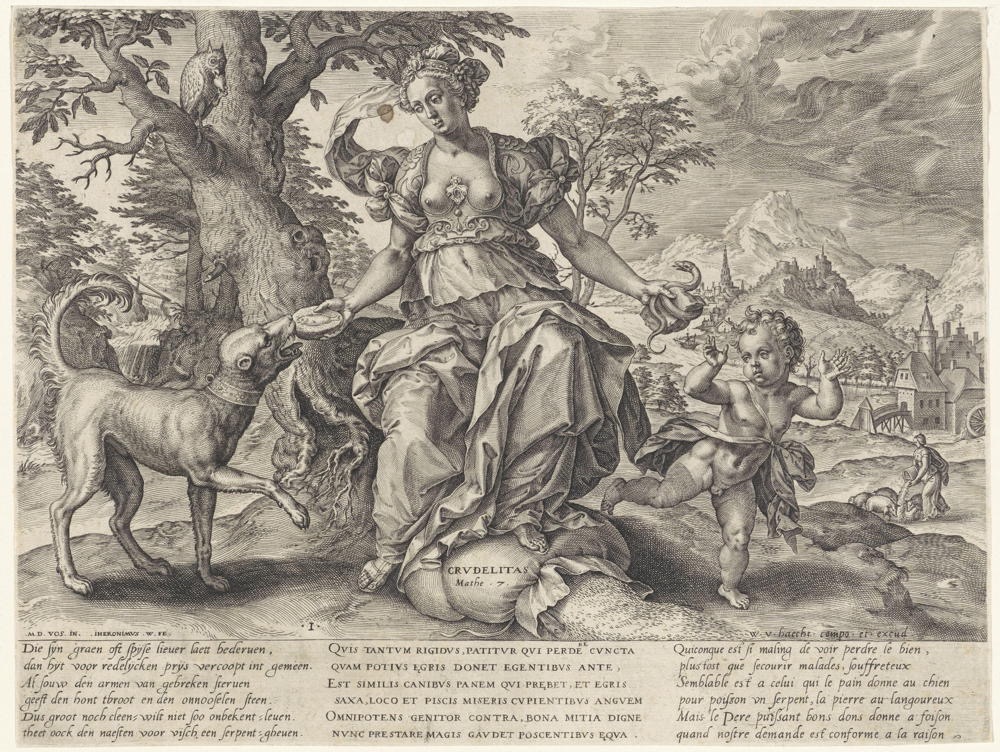
Hieronymus Wierix: Cruelty (1577)
Gallery Notes:
The female personification of Cruelty (Crudelitas) sits on a bag where the collected grain flows out. She hands a bread with a fish to a dog, and a stone with a snake to a young child. In the tree behind her sits an owl with a burning heart in its beak. On the left in the background a river with a current acceleration. On the right in the background a face on a village. On a field, a woman sprinkles food for the pigs. In the margin, a six-line exlanatory poem in Dutch, Latin and French.
— — —
"Under certain uncertain conditions, a two-by-four to the side of the head could be considered an intervention of Decency."
Varying intensities are permitted when deploying Decency. It needn’t always seem gentle or even necessarily kind. As with most things, tough love equivalents unquestionably exist, though one must usually deploy them circumspectly lest motive be interpreted differently than intended. In business, for instance, certain otherwise unseemly intensities seem permitted under the self-referential rubric that “business is business,” a multi-purpose excuse intended to cover every possible variation. It seems as though nobody can call “violation” regardless of the intensity of the application if it’s done in the pursuit of profits.
I’ve also noticed a certain erosion of what used to pass for decorum, allowing for some rather coarse words to be injected into otherwise benign conversation.
MoralHazards
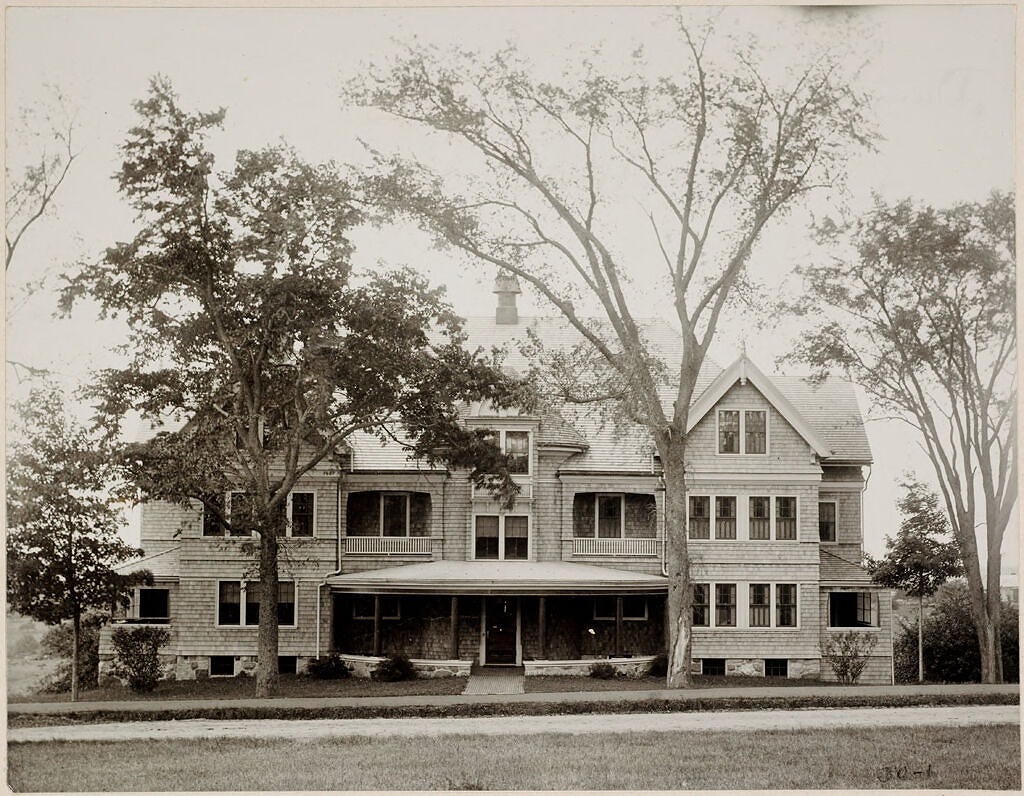
Unidentified Artist: Danvers, Massachusetts Insane Hospital (c. 1903)
"What does it mean to respond Decently then?"
Decency seems to demand continual adaptation. What constitutes Decency in one context might border on indecency in an adjacent space. Further, emotional states also enter into this calculus. One might easily justify different responses when feeling angry than when feeling secure. Decency does not provide an isolated or isolating platform for responding. Everybody’s inescapably in each fray together, whatever their behavioral or moral preference. It might not prove helpful to equate Decency with morality, especially when subtle senses of superiority creep into the internal conversation. That said, the Decent might behave more consistently, if only because they insist upon certain limits and boundaries. There are probably many more things Decency won’t consent to do than indecency even notices.
I’m fussing today about how Decency can get twisted in the presence of the insane.
InnerIndecency
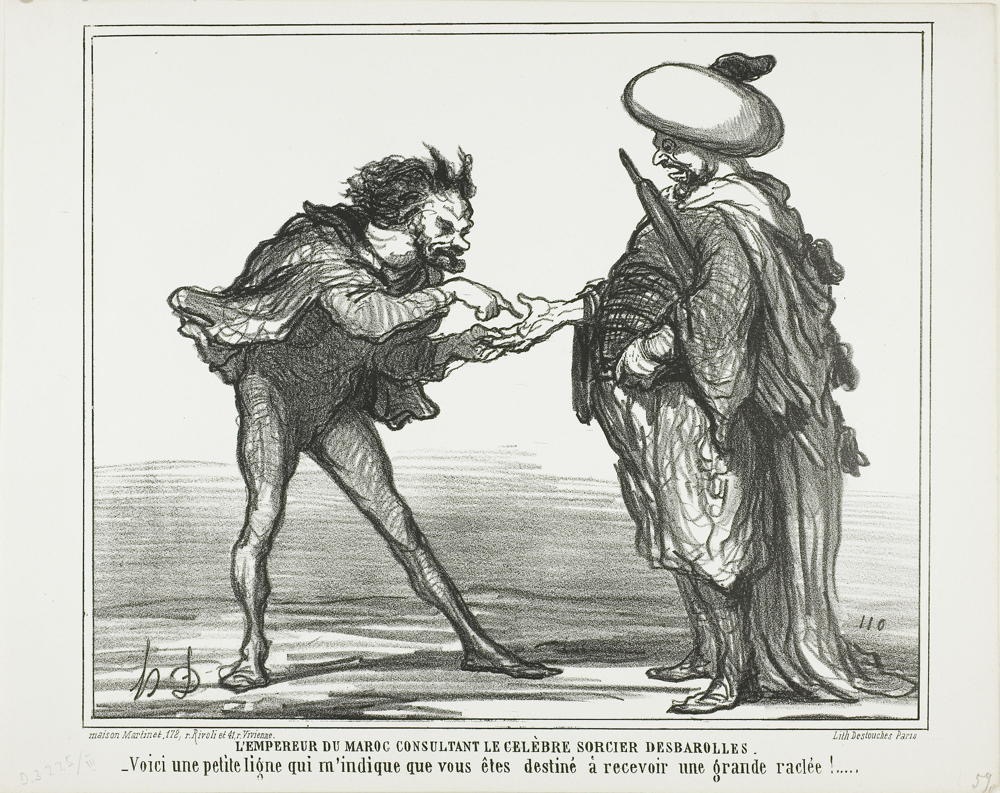
Honoré Victorin Daumier: The Emperor of Morocco in Consultation With the Famous Magician Desbarolles. “- This small line here indicates to me that you are going to get a royal thrashing!,” plate 126 from Actualités (1859)
"They ultimately only manage to fool themselves."
Some things I firmly believe that I can see might not actually exist. Belief provides more than adequate evidence to convince almost anybody that almost any nonexistent entity probably exists. Beliefs can be remarkably incorrigible beasts, so they must be held with a certain circumspection. They might support unshakeable conviction in absolute fiction. I concede that many of the worst indecencies I’ve ever witnessed fed on just such convictions.
Furthermore, few who held those convictions were ever considered to be felons, though the damage they inflicted might well have supported criminal indictment.
SelfDealing
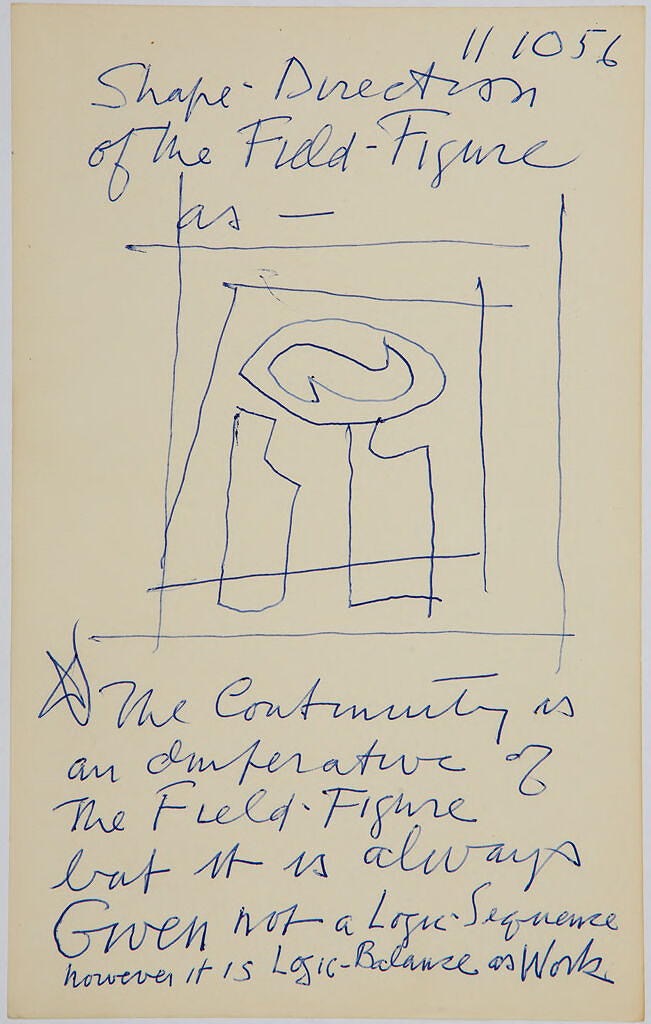
Stuart Davis: Study for “Package Deal” (1956)
"Nobody Decently corners any competition."
Decency requires some hair-splitting. One must somehow manage to sustain oneself without over-reaching. Society maintains laws against monopoly because we deem SelfDealing indecent. It’s unseemly for anybody to merely compete with their own interests. It’s considered Decent to engage as a part of a system rather than as the entirety of it. Monopolists freeze others out, essentially robbing them of opportunity, however much their monopoly might resemble greater efficiency. Efficiency in the service of nobody else amounts to wasted effort. Efficient monopolies are merely rapacious.
Oligarchies are monopolies on steroids.

Good For A Goose

Comeuppance (21)
Decency (90)
Decency Unscrolling (1)
EndDays (92)
Exiled (90)
Fambly (93)
FollowingChapters (93)
Grace (92)
Humor (2)
iAlogue (1)
Letters to the Editor (1)
NextWorld (91)
Personal (18)
Prosperity (94)
Steam Festival (4)
Unscrolling (89)
Vaporized (6)
Work (16)
September 2026
August 2026
July 2026
June 2026
May 2026
April 2026
March 2026
February 2026
January 2026
December 2025
November 2025
October 2025
September 2025
August 2025
July 2025
June 2025
May 2025
April 2025
March 2025
February 2025
January 2025
December 2024
November 2024
October 2024
September 2024
August 2024
July 2024
June 2024
May 2024
April 2024
March 2024
November 2006
October 2006
September 2006
August 2006
July 2006
June 2006
May 2006
April 2006
March 2006
February 2006
January 2006