SelfDeception
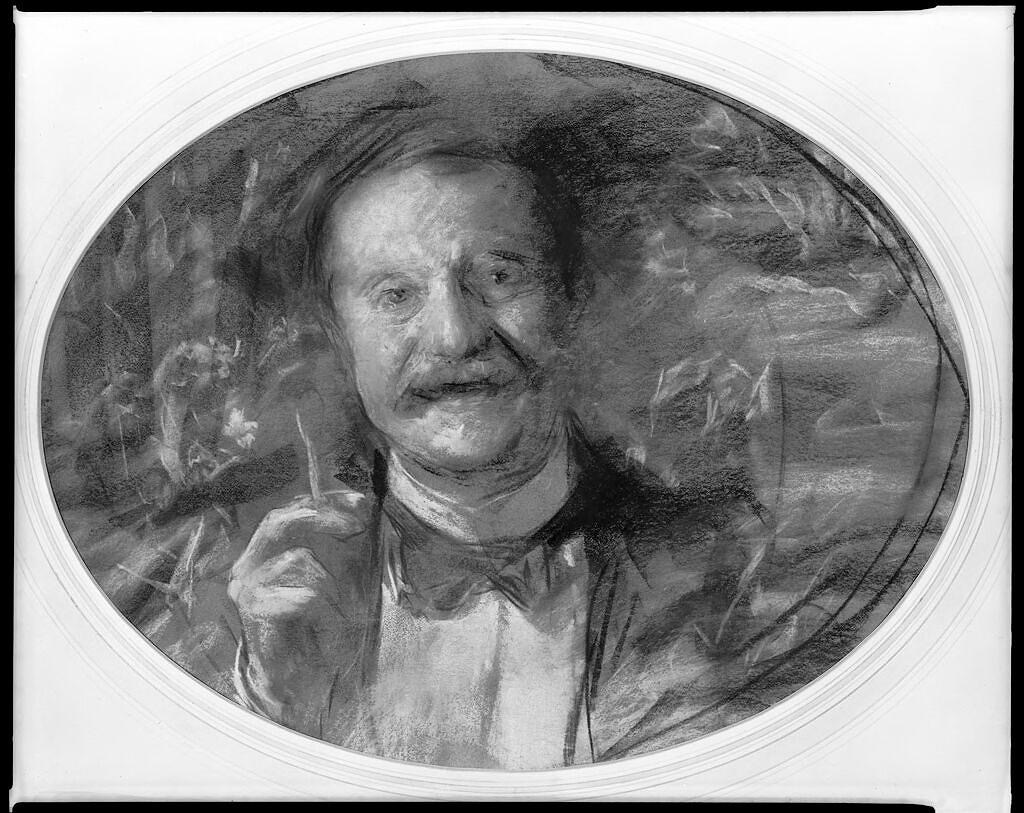
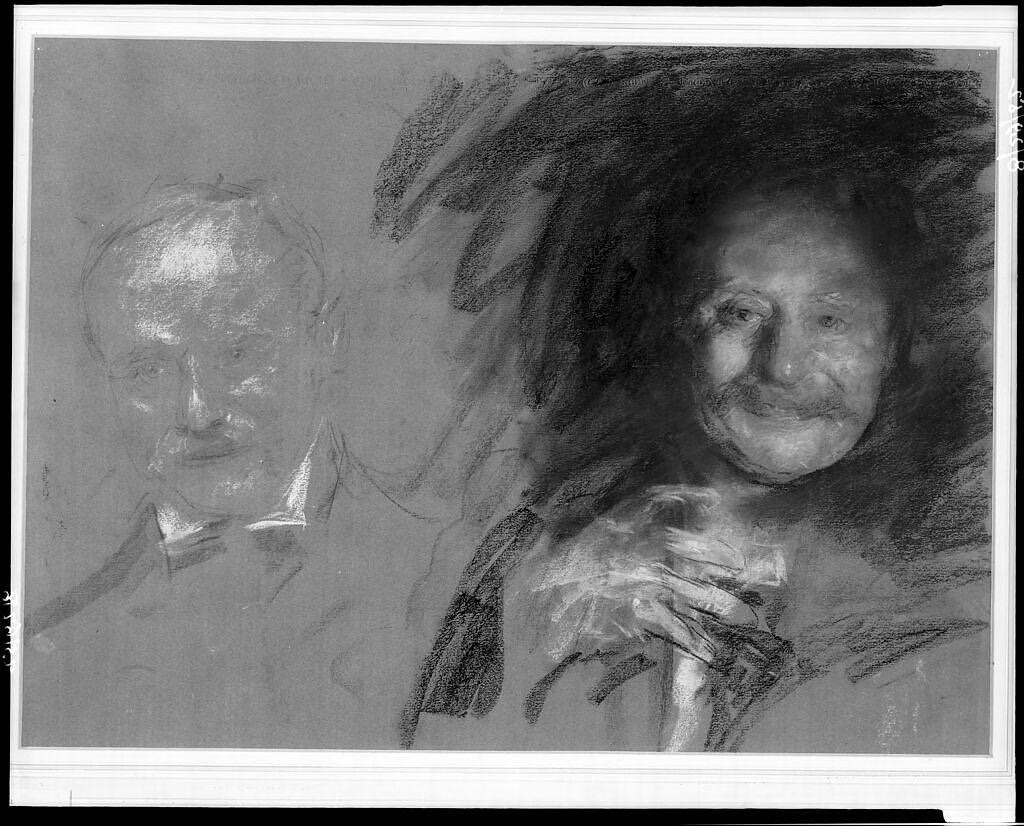
Antonio Mancini: Self Portrait; verso: Two Self Portraits (c. 1900-1902)
"The difference between Decencies might not matter as much as the intensity of each audience member's suspended disbelief, not to mention the actors'."
Discussions of Decency rarely mention the essential role that SelfDeception plays in its daily practice. Unlike a character in a novel or history, the Decent must wrestle with all the complexities and contradictions inherent in any practice. From one minute to the next, conditions might change, disrupting an intended trajectory. So, while one hears plenty of talk about choosing a path, one only rarely hears stories of having to pick and then continually choose again and again. There sometimes seems to be no end to the choosing when it comes to Decency. This can become understandably frustrating, with some loss of focus and discipline seeming common. The Decency originally intended can sometimes get twisted in delivery and manifest in rather embarrassing ways. A Decent SelfDeception might kick in then, to preserve self-esteem. The story remembered often seems divergent from the story as initially intended and executed.
Lapses in discipline are not uncommon. These do not necessarily suggest any deep-down dysfunction, though they might disappoint the more judgmental among us. Especially when it comes to judging oneself, a fuzzy focus might be best: close enough rather than bull’s eye hits. Perfection might show burnt edges or still be a little undercooked in the middle. Since many Decencies are cobbled together in the moment for a specific purpose, the delivery might understandably appear ragged. These have rarely been practiced beforehand and will not be retained for additional performances. Many might seem eminently forgettable and best forgotten quickly. A glancing appreciation without effusive fanfare serves as adequate acknowledgement for most Decencies received, for most intents and purposes.
It might also be best if the Decent avoided thinking of themselves as Decent, if only to avoid submitting to unrealistic expectations. Decency seems better delivered as an anomaly, anyway, for this convention makes it seem just that much more special. Nobody needs Goody Two-Shoes self-esteem. Such notions too easily go to one’s head and set up those around them to experience disappointment when the inevitable feet of clay appear. It might even enhance Decency’s impact if the otherwise Decent person sometimes displays a certain canny ruthlessness, not as a steady diet, but as an occasional side dish, to keep the audience off balance. Displaying this sort of variety renders one into a much more complex character, and people love a good contradictory character, the loveable rake and the whore with a heart of gold. Nobody lives by bread alone.
If Shakespeare were still alive today, he would doubtless regret ever having said that we’re all actors performing on a stage. While this observation has proven to be remarkably accurate, it was probably also always destined to become banal, one of those thoughts that seem so damned universal that they’re better left unmentioned. We might all be actors, but we’re not all Academy Award material, nor are our plays necessarily the sort that prompt memorable performances. Some of the most satisfying performances I’ve ever witnessed happened when the kids mounted the window seat as their stage and immersed themselves in extended pretending. We all knew every difference between performer and character, part and performance, but some underlying authenticity shone through both the play and the performance. I suspect life’s like this. The difference between Decencies might not matter as much as the intensity of each audience member’s suspended disbelief, not to mention the actors’.
©2025 by David A. Schmaltz - all rights reserved

Good For A Goose

Comeuppance (19)
Decency (90)
Decency Unscrolling (1)
EndDays (92)
Exiled (90)
Fambly (93)
FollowingChapters (93)
Grace (92)
Humor (2)
iAlogue (1)
Letters to the Editor (1)
NextWorld (91)
Personal (18)
Prosperity (94)
Steam Festival (4)
Unscrolling (89)
Vaporized (6)
Work (16)
September 2026
August 2026
July 2026
June 2026
May 2026
April 2026
March 2026
February 2026
January 2026
December 2025
November 2025
October 2025
September 2025
August 2025
July 2025
June 2025
May 2025
April 2025
March 2025
February 2025
January 2025
December 2024
November 2024
October 2024
September 2024
August 2024
July 2024
June 2024
May 2024
April 2024
March 2024
November 2006
October 2006
September 2006
August 2006
July 2006
June 2006
May 2006
April 2006
March 2006
February 2006
January 2006