HarshJudgments
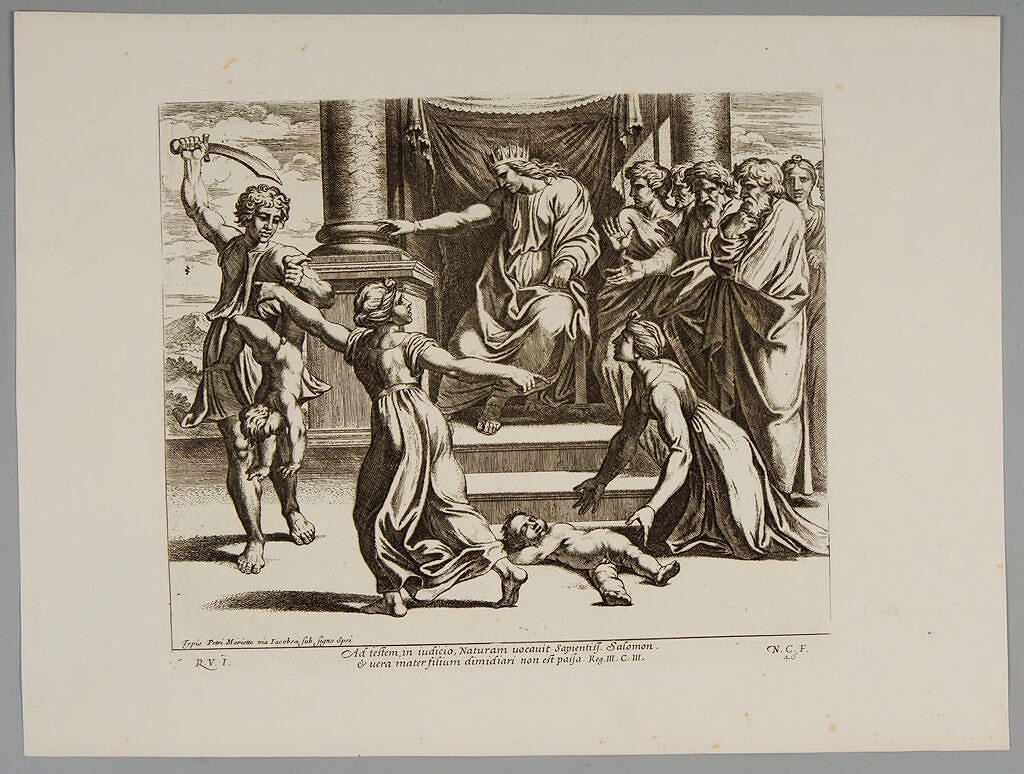
Nicolas Chapron: Judgment of Solomon (17th century)
"Let he who is without indecency cast the first criticism."
The Decent seem to have the greatest license to criticize those with fewer scruples. They appear to inhabit unimpeachable high ground that bestows better judgment, so who better to critique others? Does Decency necessarily assign such a responsibility upon its perveyors, or are they somehow enjoined from overly overtly criticizing, lest that seem unseemly? I suspect the answer to these questions must be the responsibility of each Decent person. I know the answer for myself, though my answer sometimes shifts, depending.
I do believe it’s unseemly of me to criticize harshly, or, perhaps, to criticize at all. It might be at least borderline unseemly to even criticize lightly without first receiving an invitation from the one being judged. Without their permission, any criticism falls under the unsolicited feedback rule, which calls for it to be ignored and the critiquer to receive the greater criticism for unloading uninvited. Further, since feedback always says more about the critiquer than the criticized, even if I might feel fully justified in attacking their performance, that sense probably most reflects my sense of privilege. I can see how casting myself in the role of judge and jury might well appear unseemly.
When Decency becomes evangelical, it starts to creep toward evil. I don’t believe I’ve overstated the case. If Decency remains a choice, then anyone’s free to either choose or reject Decency in any situation; otherwise, it’s not a choice at all. One need not be Decent one hundred percent of the time to meet the threshold of Decent behavior. Heck, a single act of Decency sometimes reframes a hundred counterexamples. Choice presupposes that each possesses sufficient judgment to decide; otherwise, it seems a hollow power. Even choosing indecency might lay the groundwork for later increasingly Decent actions. Who made me responsible for calling my neighbor’s fouls? Precisely nobody, that’s usually who.
Decency does not necessarily confer responsibility to reform anybody. Church ladies more often prolong aberrant behavior than cut it short, if only because it feels so satisfying to ignore their tight-assed insistences. Decency might demand tolerance instead, acceptance that everyone has already been trying to the very best of their ability to satisfy their intentions, and that those intentions represent their definition of Decency for them. Decency might firmly believe that it’s learned if you do and also learned if you don’t, that both Decency and its opposite might prove to be equally powerful instructors, and that everyone’s fully capable of learning for themselves. Evangelism might provide temporary solace, especially in situations of injustice or inequality, but blaming the victim of indecency for their ignorant or innocent actions seems unlikely to improve anyone’s lot.
Decency sometimes seems like a curse. When it opens up my eyes, I sense that I perceive better than anyone else. Of course, I never get to sample the view from their window, like they never get to see through mine. I can certainly work against any forces I choose to oppose. But standing in judgment seems different than serving as an activist for change. I consider the considerable sins of our incumbent, for instance, to be self-evident. I feel some guilty pleasure when I catch myself railing against him again. If his indecency is, indeed, self-evident, then what am I doing besides dog piling on already acknowledged dog shit? I’m most likely virtue signaling, letting others know that I’m not like him, that I oppose what he’s doing, though, in so doing, I’m kinda sorta mimicking him, too. Aren’t I? If his behavior was always self-evidently indecent, I might have been unnecessarily amplifying his very presence. Mentioning that behavior resurrects it.
Decency demands a certain humility in those who practice it. I might believe that my Decencies stand for themselves. That if I want others to behave as Decently as I perceive myself as acting, I might believe that I stand as an example without getting altogether too verbally explicit about it. Decency seems at least as self-evident as indecency. I need not provide the color commentary unnecessary for anyone to see, or even inspire them to behave like me. But I violate some tenet of Decency whenever I insist that another follow my lead. I’m no paragon of Decency myself, and I’m not above learning a few new tricks of the trade from others who, like me, at best intermittently practice Decency. Let he who is without indecency cast the first criticism.
©2025 by David A. Schmaltz - all rights reserved

Good For A Goose

Comeuppance (34)
Decency (90)
Decency Unscrolling (1)
EndDays (92)
Exiled (90)
Fambly (93)
FollowingChapters (93)
Grace (92)
Humor (2)
iAlogue (1)
Letters to the Editor (1)
NextWorld (91)
Personal (18)
Prosperity (94)
Steam Festival (4)
Unscrolling (89)
Vaporized (6)
Work (16)
September 2026
August 2026
July 2026
June 2026
May 2026
April 2026
March 2026
February 2026
January 2026
December 2025
November 2025
October 2025
September 2025
August 2025
July 2025
June 2025
May 2025
April 2025
March 2025
February 2025
January 2025
December 2024
November 2024
October 2024
September 2024
August 2024
July 2024
June 2024
May 2024
April 2024
March 2024
November 2006
October 2006
September 2006
August 2006
July 2006
June 2006
May 2006
April 2006
March 2006
February 2006
January 2006