Weekly Writing Summary For The Week Ending 12/25/2025
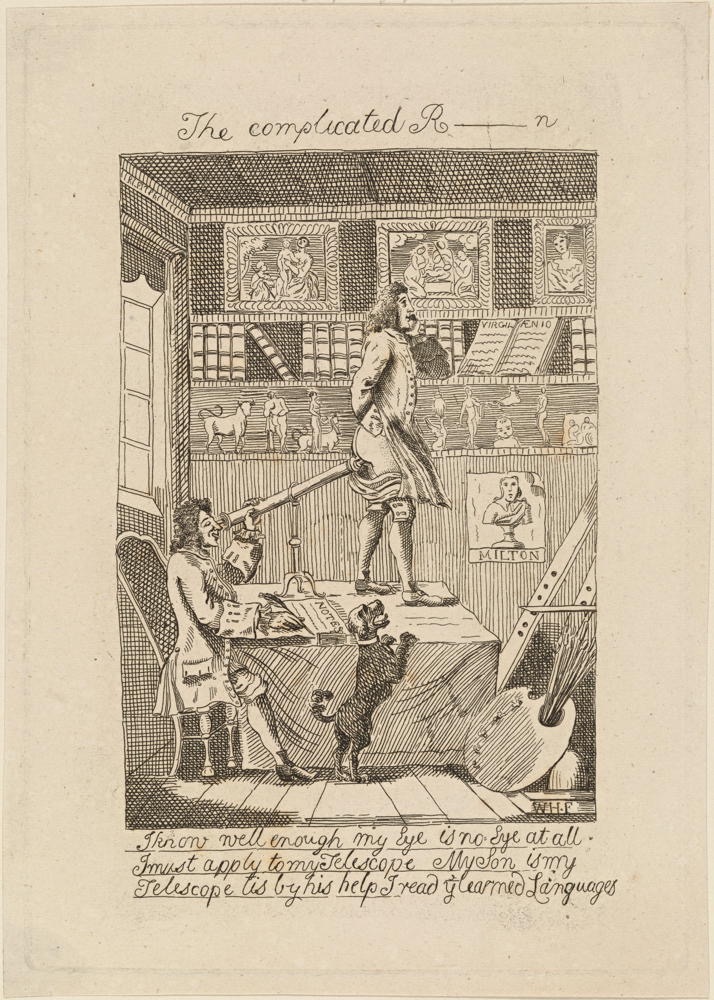
William Hogarth: The complicated R____n (1794)
This writing week tacitly included my annual Christmas poem-writing exercise, where I try to write a dozen or so (more or less) Christmas poems between Solstice and Christmas morning. This always adds a bit of stress to a season that already seems to bring stressors, but it enables me to avoid shopping. I also ended my Decency series, which I consider to have been a completely successful excursion into the source and character of a widely misunderstood choice freely open to each of us. I also began a fresh series—albeit on typically wobbly wheels—Unscrolling. I will probably find my balance before Epiphany, or at least, it usually happens that way.
I began this writing week considering the opposite of selfishness, selflessness, the very soul of decency as I’ve come to understand it. I then ended that series and opened the fresh Unscrolling series, where I will attempt to understand and curtail what might have become a dangerously self-destructive habit shared by many of us: mindless scrolling through our largely newsless newsfeeds. I stepped into what I labeled the First Infinity, the one that lies beyond what had become habitual, unseen, and in need of more experience. I then explored the remarkable absence of news in my so-called newsfeeds. Whatever happened to urgency and importance? I then peeked into the source of my current scrolling practice, the Covid shutdown, and noticed what sure seems like an addiction. I ended this writing week by characterizing scrolling as a way to employ randomness to address a hollowness. Perhaps the hollowness could be the underlying issue.
Weekly Writing Summary
Selfullness
“I’ll be studying and learning this lesson for the rest of a halfway Decent lifetime.”
This Decency Story finds me reminding myself of my duty to practice a Decent Selfullness.
Brian, a highly capable and kind leader, worked tirelessly, neglecting his own well-being. After accumulating excessive vacation time, he took a sabbatical, ultimately leaving his job. In his new role, he embraced a more balanced approach, prioritizing self-care and allowing others to lead, finding greater fulfillment in his work.
Paul Cézanne: Self-Portrait (1898)
——
DecencyUnscrolling
“…hello to a fresh strange bedfellow…”
This Decency Story contains the ending coda of my Decency series and the opening salvo in a fresh series: Unscrolling.
I conclude my Decency Series, reflecting on the importance of choosing decency freely and its potential to create good fortune. I then introduce a new series, Unscrolling, exploring the impact of social media and streaming services on information consumption and my own struggle with distractions. I aim to either embrace the streaming culture or become a social media hermit through this new series.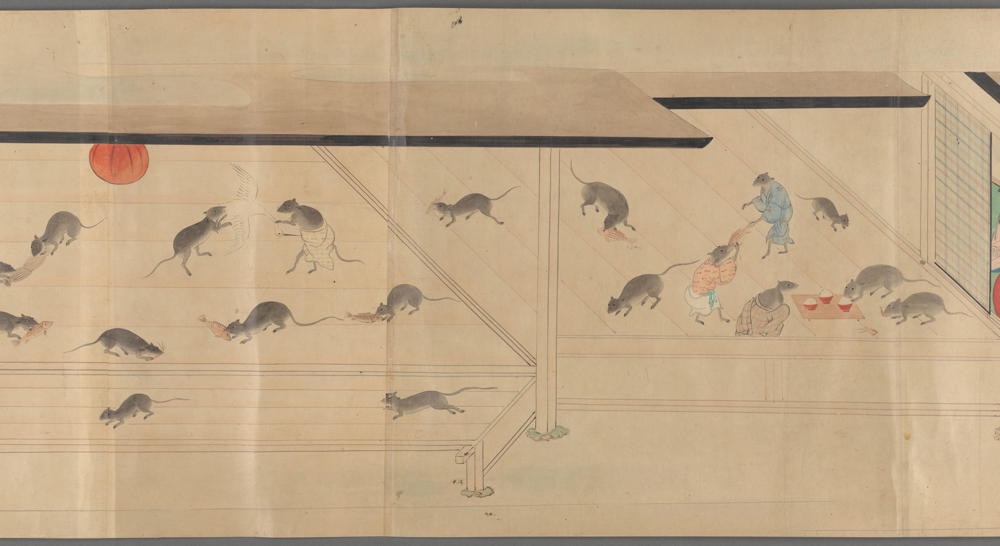
Unknown Artist: Scroll 2: Nezumi no soshi emaki (1600 - 1650) Nara [?], Japan
——
1stInfinity
“I wonder what I so passionately and, ultimately, passively sought there.”
This Unscrolling Story starts unfolding the space within which unscrolling takes place, exploring a 1stInfinity that appears after exiting the scrolling universe.
In this Unscrolling Story, I describe the overwhelming nature of infinite possibilities, comparing it to Giordano Bruno’s concept of infinite worlds. I argue that while scrolling offers a seemingly infinite stream of information, it ultimately leads to a loss of time, relationships, and genuine engagement. I'm choosing to limit my scrolling, embracing a new sense of freedom and the opportunity to engage meaningfully with the world around me.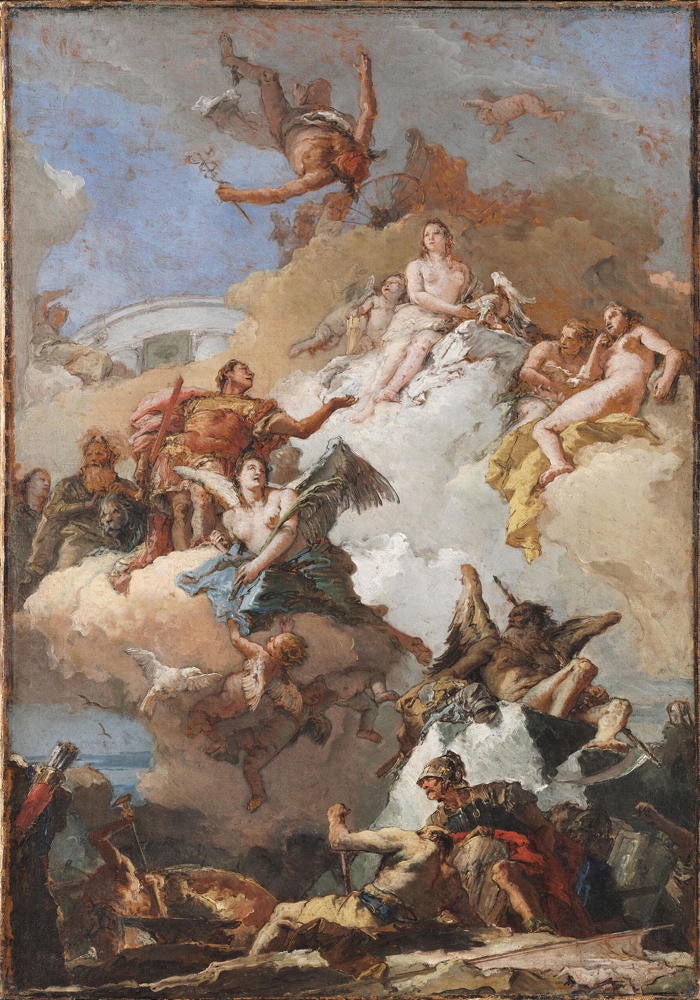
Giovanni Battista Tiepolo: The Apotheosis of Aeneas ((c. 1765)
——
News
“Few of yesterday’s urgencies ever came to pass.”
his Unscrolling Story finds me searching for the News that’s lost in my newsfeed.
In this Unscrolling Story, I express disappointment with the current state of news media, finding it sensationalized and lacking in substance. I reminisce about the days of NPR, which I once found informative and reliable, but now perceive as lacking credibility. I feel overwhelmed by the constant barrage of information and am losing interest in staying informed.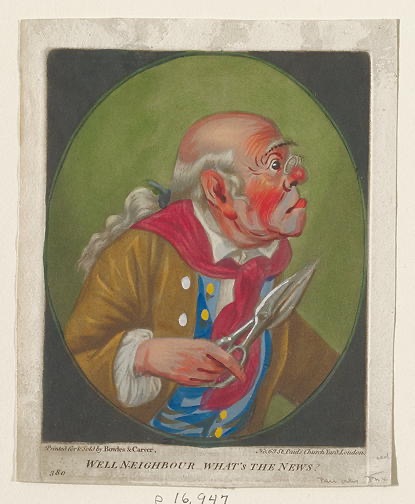
Robert Dighton: Well Neighbour-- What’s the News?,from A Set of Heads (c. 1795)
——
ClosingIn
“One might never notice what’s not present in their life as a result of their scrolling addiction.”
This Unscrolling Story finds me ClosingIn on my scrolling addiction. Revisiting the source cures nothing, but it clarifies.
During the Covid shutdown, scrolling became a consuming activity, providing a sense of connection and community. Initially a harmless habit, it gradually escalated into an addiction, replacing hobbies and higher-order engagements with endless entertainment. The subtle nature of scrolling addiction makes it difficult to recognize its negative impact on one’s life.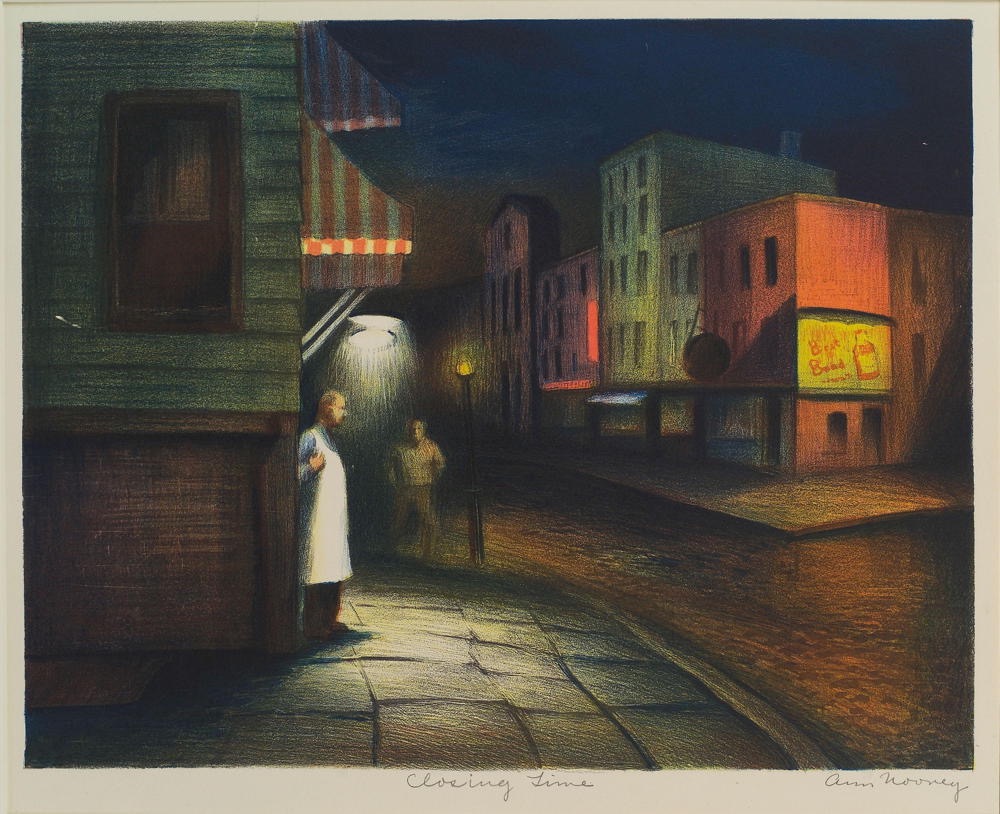
Ann Nooney: Closing Time (1937-1742) Works Progress Administration (Sponsor)
——
Serendipity
“…we can curl up in wonder…”
This Decency Story finds me in steerage, wondering how my interests got Excluded when hospitality became an industry.
In this Unscrolling Story, I compare the aimless scrolling of social media to a desperate search for Serendipity, a random payoff in a world lacking hope and upward mobility. This lack of hope, exacerbated by economic inequality and political decisions, has led to a generation seeking satisfaction in fleeting, intangible experiences. I argue that this “scrolling epidemic” is a coping mechanism for a society deprived of meaningful opportunities.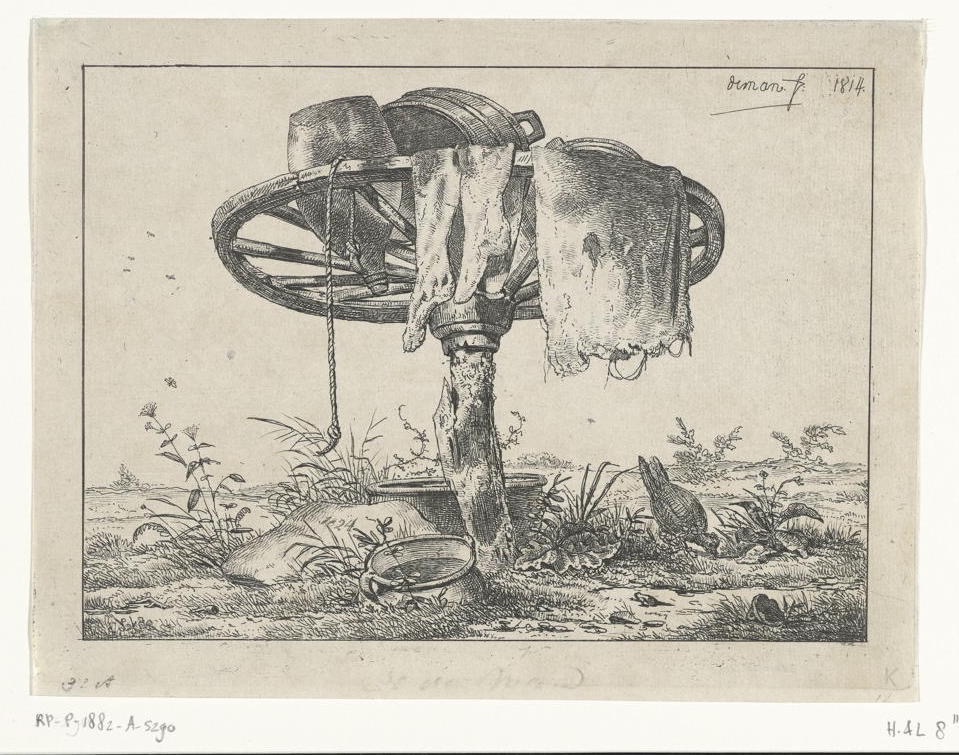
Anthonie Willem Hendrik Nolthenius de Man: Wheel on a pole (1814)
——
A Less Than Perfect Christmas Poem
Merry Christmas, Happy New Year, this season seems to be overflowing with expectations of great joy. I find those expectations more onerous than uplifting, for I do not know how to create joy. For me, joy just happens. It properly must be a surprise or it doesn't qualify as joy, so I cannot will it or otherwise engineer it into being. Merry and happy seem similar, both difficult to impossible to create and probably fruitless to insist upon. Insisting that another be happy seems like a reliable recipe for inflicting misery.
How about wishing someone a reflexive Christmas or a satisfying New Year? These adjectives could make reasonable targets without seeming so darned oppressive. Burdened with the command to be happy, I feel a little desperate, especially when I'm just not feeling it. My mom would advise turning that frown upside down, as if facial expression controlled mood. It was well-intended encouragement even if it never really worked.
I managed ten new Christmas poems this year. Here's one of them:
The Christmas Eve Trudge
I began writing these Christmas poems
more than twenty-five years ago
to avoid experiencing what I’d come to call
The Christmas Eve Trudge.
The Trudge resulted from unrequited searches
for that perfect present for that perfect person,
a common side-effect of seeking perfection
and one I almost universally experienced then.
I figured that if I stopped shopping
rather than stopping seeking perfection,
that I’d magically lessen the opportunity
to experience the resulting depression.
The incongruity of reliably experiencing
Such sadness while preparing to celebrate
the widely-advertised happiest day of the year
drove me to tears and worse.
It drove me into the irrationality
that encouraged me to write my poems instead,
in the delusional belief that I might thereby
avoid experiencing The Trudge.
My error might have been multifaceted, though.
It could have also resulted from my conviction
that Christmas should properly be, and was,
the happiest day of the year.
It wasn’t, or had never been in my experience.
It was rarely the saddest day of the year, either,
but never actually the happiest.
It was always a day of mixed emotions instead.
If, by chance, I received a delightful present,
my Christmas could, indeed, prove to be happy,
or, more properly, I might feel happy then.
But the chances of receiving such seem slim.
More likely, I’d receive what someone truly
believed would “make me happy,” but didn’t,
resulting in my reconsidering our relationship.
We clearly didn’t know each other all that well.
And this realization sobered me considerably.
It didn’t “make me” feel sad, just reflective.
I’d accept the present under the given conditions
and move on to life’s next little discouragement.
Happy New Year always promised recovery
from any Christmas disappointment,
so I survived, though I still feared The Trudge.
Writing poems instead of shopping did nothing …
To help me avoid The Trudge, though,
because it was also a feature of poem writing.
Attempting the perfect poem for the perfect person
also induces what pursuing perfection always does
… The Trudge. The problem was perfection
and always was.
Let me wish you a less than perfect Christmas
and Christmas poem, this and every future year!
12/22/2025
©2025 by David A. Schmaltz - all rights reserved

Good For A Goose

Comeuppance (19)
Decency (90)
Decency Unscrolling (1)
EndDays (92)
Exiled (90)
Fambly (93)
FollowingChapters (93)
Grace (92)
Humor (2)
iAlogue (1)
Letters to the Editor (1)
NextWorld (91)
Personal (18)
Prosperity (94)
Steam Festival (4)
Unscrolling (89)
Vaporized (6)
Work (16)
September 2026
August 2026
July 2026
June 2026
May 2026
April 2026
March 2026
February 2026
January 2026
December 2025
November 2025
October 2025
September 2025
August 2025
July 2025
June 2025
May 2025
April 2025
March 2025
February 2025
January 2025
December 2024
November 2024
October 2024
September 2024
August 2024
July 2024
June 2024
May 2024
April 2024
March 2024
November 2006
October 2006
September 2006
August 2006
July 2006
June 2006
May 2006
April 2006
March 2006
February 2006
January 2006