Weekly Writing Summary For The Week Ending 01/15/2026
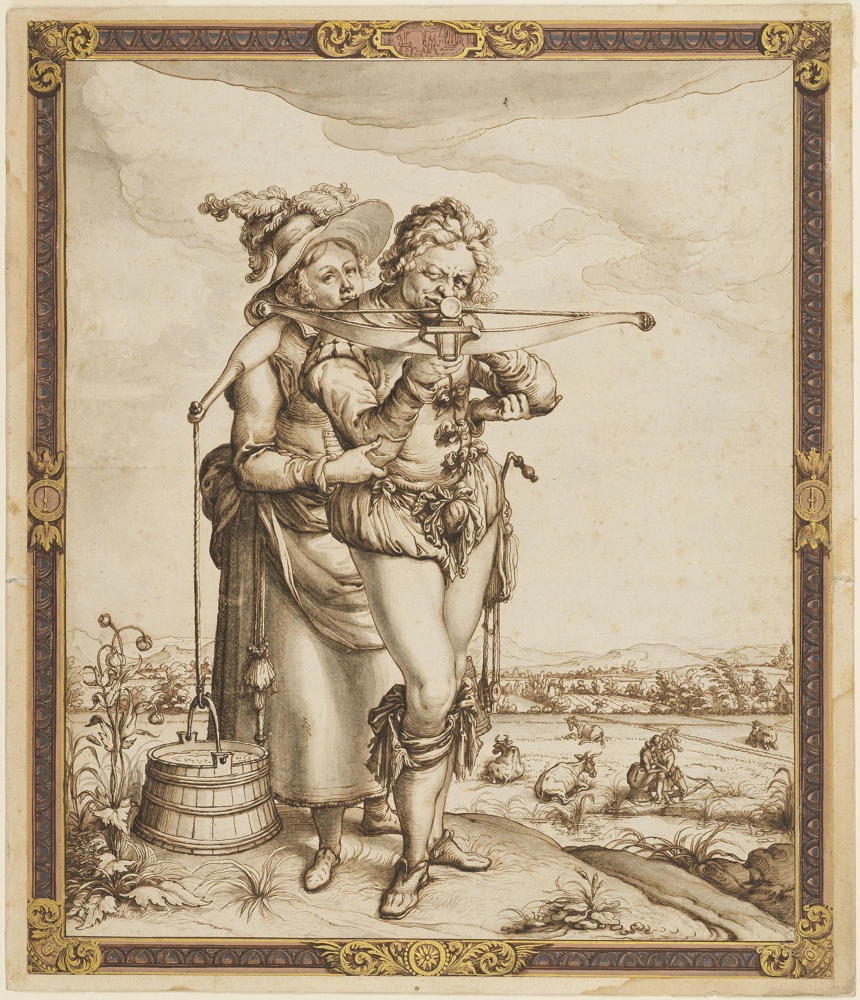
Jacques de Gheyn II: Crossbowman Assisted by a Milkmaid
(c. 1600-1610)
This writing week sure seemed as if I started making steady progress. Each story opened up a fresh realization about the nature and practice of Unscrolling. Doomscrolling was not what I had presumed it entailed. Unscrolling hasn’t been either. I began this writing week commenting on how ungrokable social media content seems to be for me in “Ungrokkability.” I then noticed that doomscrolling never qualified as my work. I reported that I had discovered a Distraction Hierarchy and that distractions don’t necessarily have to be negatives. I commented in passing on the sense of Immediacy I see in social media content and access. I noticed that some memes, perhaps most, carry a sense of Self-Evidence. They seem unquestionable and rarely encourage much in the way of questions. I ended this writing week reporting how Vulnerable I tend to feel just before I resort to doomscrolling. Thank you for following!
Weekly Writing Summary
Ungrokability
“I have no great need to resolve any of the greater or lesser mysteries in life.”
In this Unscrolling Story, I suggest that much of the social media I scroll will forever remain Ungrokable. It might be that its Ungrokkability renders it so addictive.
This Unscrolling Story describes my struggle and humiliation when failing to learn calculus in college, after having been told in high school that I wasn’t “college material.” Facing both a lack of preparation and a language barrier with my instructor, I failed calculus and was advised to pursue a different course. Over time, I came to accept that calculus—and certain other challenges in life—may simply be beyond my understanding, and that accepting such limitations can itself be a form of wisdom. I liken the incomprehensibility of calculus to the often confusing content on social media, concluding that not all mysteries need to be solved to live a meaningful life.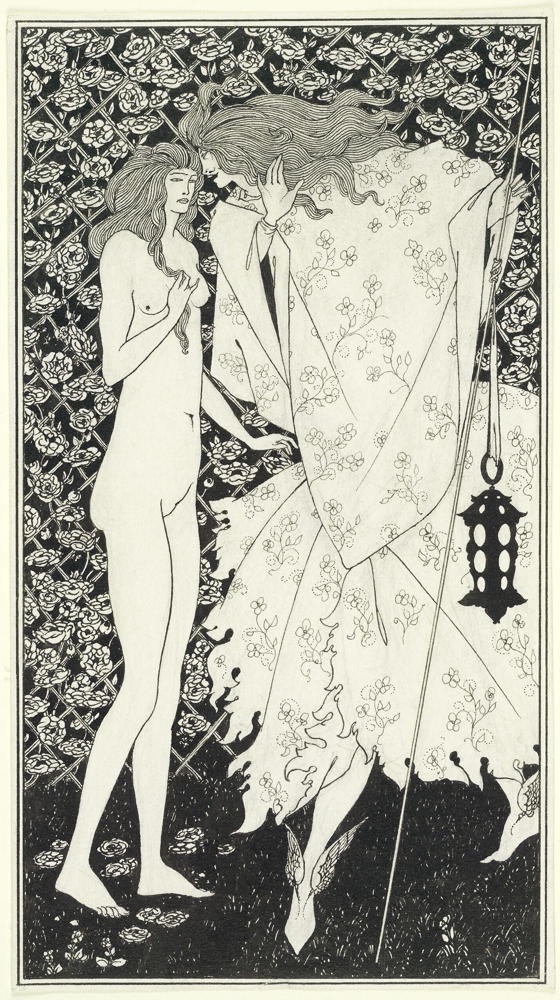
Aubrey Vincent Beardsley: The Mysterious Rose Garden (1894)
——
MyWork
“I need to stumble upon it by myself…”
This Unscrolling Story explains that social media scrolling started feeling like an encroaching threat to MyWork. This sense motivates these stories.
This Unscrolling Story explores my deep, often conflicted relationship with my creative work, which I view as both a personal duty and a burden. While acknowledging that social media scrolling offers occasional insights, I acknowledge it primarily as a distraction from my true calling. I describe my routine of working early to avoid distractions, and admit to feeling guilty when failing to complete my daily tasks. The essay highlights the importance of maintaining a personal connection to one’s work, the challenges of sustaining motivation, and the need for intentional engagement and discovery, rather than succumbing to the mindlessness of an activity like passive scrolling.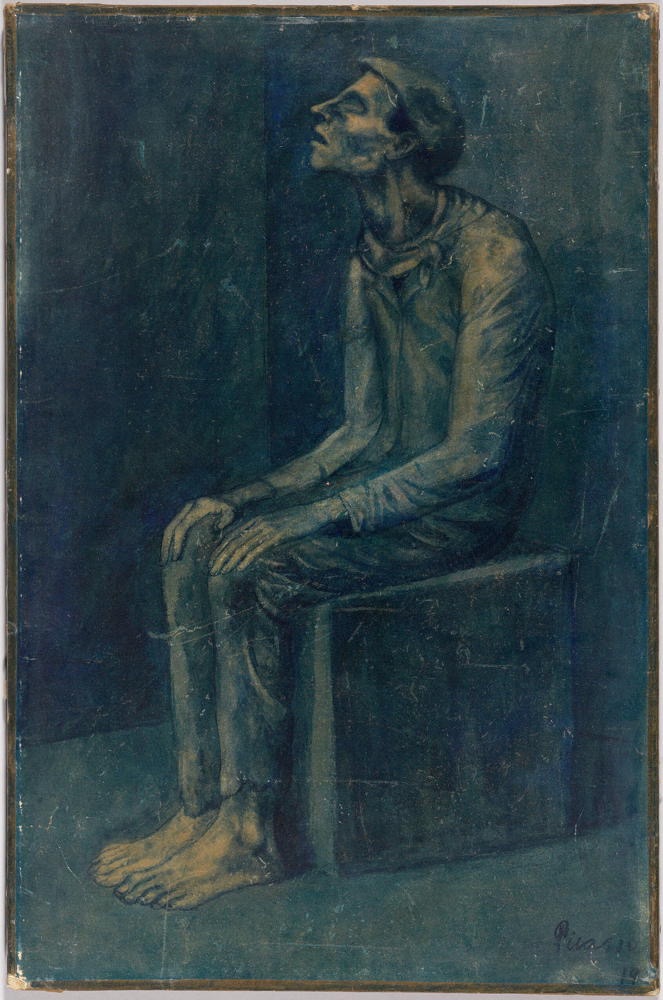
Pablo Ruiz Picasso: The Blind Man (1903) Other Titles: Original Language Title: Mendiant Former Title: The Blind Beggar Alternate Title: L’aveugle © Estate of Pablo Picasso / Artists Rights Society (ARS), New York — The Harvard Art Museums encourage the use of images found on this website for personal, noncommercial use, including educational and scholarly purposes.
——
DistractionHierarchy
“Both scrolling and unscrolling must be gold-plated…”
This Unscrolling Story finds me reconsidering my Distraction Hierarchy, acknowledging that distractions can serve useful purposes, too.
The Unscrolling Story examines the role of distractions in modern life, arguing that they are not inherently negative and, in fact, are woven into the fabric of society and our economy. I reflect on how activities like shopping, hobbies, and even work can all serve as forms of distraction, each ranked differently according to personal preference and expected satisfaction. Rather than judging distractions harshly, I suggest that time spent on them—even social media scrolling—can have value and contribute to one’s sense of well-being. Ultimately, I conclude that distractions are a matter of personal choice, reflecting our changing interests and values, and that the quality of life may well be measured by how enjoyably we spend our time, regardless of how “productive” those distractions might be.
Unknown Artist: Publisher’s proof of the publications of L. Prang & Co.: Trade card depicting a distracted waiter (1876 - 1890, Approximate)
——
Immediacy
“…the journey seems deliberately designed to lead us nowhere but to keep us endlessly coming back, a Modiüs Strip existence.”
This Unscrolling Story explores the world of unrelenting Immediacy, the world we enter whenever we scroll our social media.
The Unscrolling Story critiques social media’s fleeting and superficial nature, emphasizing that it exists only in the present moment, without memory of the past or anticipation of the future. Content gets quickly consumed and forgotten, making lasting connections or meaningful engagement essentially impossible. Attempts to revisit or organize past posts are futile, as the platforms prioritize instant impressions over retention. I liken this environment to a shallow, timeless “heaven” where users are reduced to products, continuously entertained but never truly engaged or enriched. Ultimately, I portray social media as a space designed to capture attention and commercial preferences, keeping users trapped in an endless loop of momentary distractions with little lasting purpose.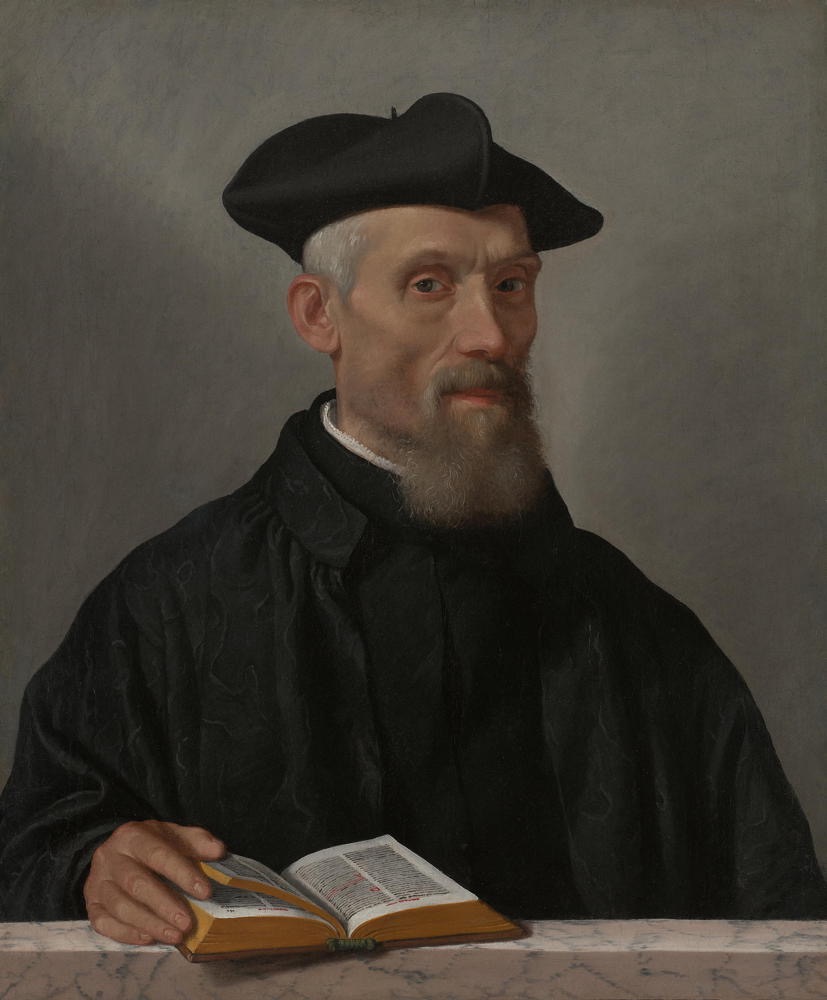
Giovanni Battista Moroni: Portrait of an Ecclesiastic (c. 1557)
——
Self-Evidence
“Disconnecting from the twenty-four/seven reinforcement machine has been helping me see what wasn’t otherwise self-evident, and what, disturbingly, was.”
This Unscrolling Story questions the Self-Evidence social media reinforces.
This story explores how the fleeting, repetitive nature of social media messaging leads to certain ideas or “memes” becoming accepted as unquestionable truths, or “Self-Evident” concepts, among users. Continuous reinforcement and algorithm-driven content create echo chambers where beliefs are rarely challenged, and independent research is discouraged. Doom scrolling keeps users trapped in these cycles, reinforcing prejudices and isolating groups from each other. I reflect on their own susceptibility to these patterns and note that stepping away from constant social media input allows for more critical thinking and awareness of previously unexamined assumptions.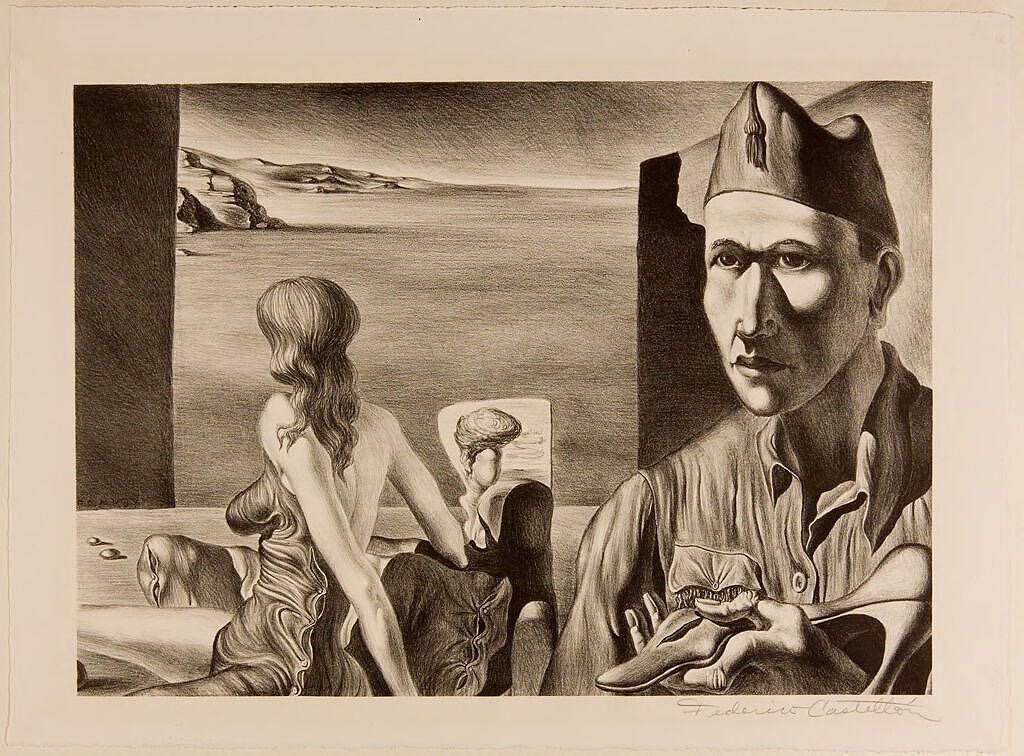
Federico Castellòn: Self-portrait (20th century)
——
Vulnerable
“Every minute I’m not scrolling my social media, I’m looking out for encroaching Federals.”
This Unscrolling Story describes how I tend to doomscroll on my social media when I’m feeling most vulnerable.
The Unscrolling Story describes my growing awareness of my feelings and behaviors since intentionally reducing social media use. Previously, mindless scrolling provided a trance-like escape, but now I notice a heightened sense of vulnerability and anxiety, especially regarding the actions of the current presidential administration, which I observe undermines the rule of law and induces public insecurity. I reflect on how easily unqualified leaders can be elected and how this, combined with troubling government actions, fuels widespread doom-scrolling and paranoia. Ultimately, this story highlights a cycle of anxiety, helplessness, and vigilance that persists even when I step away from social media.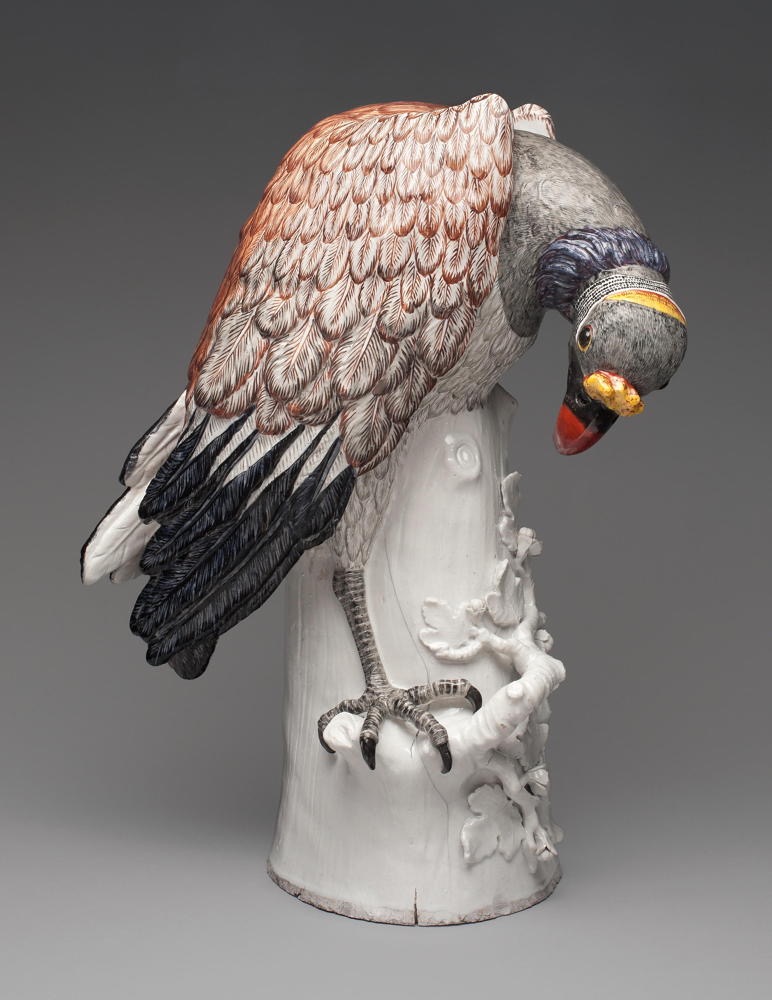
Modeled by Johann Joachim Kändler: King Vulture (1734) - Meissen Porcelain Manufactory (1710–present) - Meissen, Electorate of Saxony (now Germany)
——
I’m Betting Decency Wins
From indispensable to indefensible in a single fell swoop.
A year ago, our economy was the envy of the world. Nobody envies it now. Our president (notice how I employ lower case ‘p’ here) has gone out of his way to transgress every possible interpretation of his oath of office, steadfastly violating the Constitution he swore to uphold; though, to be fair, if not necessarily balanced, he does claim to have not actually held his hand on the Bible when he swore.
He sure does swear a lot, mostly in vain.
He freely exercises powers nobody ever possessed. Had he chosen to act in accordance with the rules, his changes might have had some chance of outliving his tenure. As it is, the courts have overturned as illegal virtually everything he’s attempted. He’ll be the easiest impeachment the Founders never anticipated.
Taking his War on Decency to Minnesota strikes me as the most curious move in presidential history. Beware making an enemy of anybody experienced with Ice Fishing and deploying Tater Tot Hot Dish. It might almost make sense, though, to take that war to perhaps the most decent place on Earth. In this paper/rock/scissors contest, I’m betting Decency wins.
©2026 by David A. Schmaltz - all rights reserved
Good For A Goose

Comeuppance (31)
Decency (90)
Decency Unscrolling (1)
EndDays (92)
Exiled (90)
Fambly (93)
FollowingChapters (93)
Grace (92)
Humor (2)
iAlogue (1)
Letters to the Editor (1)
NextWorld (91)
Personal (18)
Prosperity (94)
Steam Festival (4)
Unscrolling (89)
Vaporized (6)
Work (16)
September 2026
August 2026
July 2026
June 2026
May 2026
April 2026
March 2026
February 2026
January 2026
December 2025
November 2025
October 2025
September 2025
August 2025
July 2025
June 2025
May 2025
April 2025
March 2025
February 2025
January 2025
December 2024
November 2024
October 2024
September 2024
August 2024
July 2024
June 2024
May 2024
April 2024
March 2024
November 2006
October 2006
September 2006
August 2006
July 2006
June 2006
May 2006
April 2006
March 2006
February 2006
January 2006