MakingSides
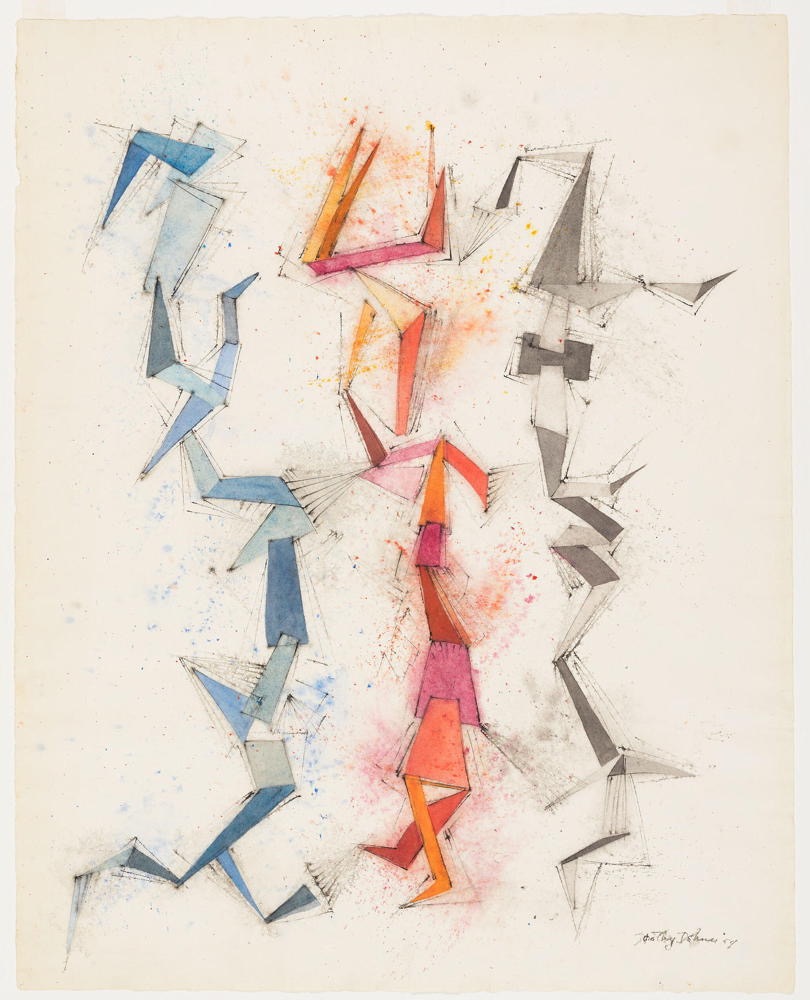
Dorothy Dehner: Family Group (1954)
© Dorothy Dehner Foundation for the Visual Arts
"…they create the losers they compete with…"
If it takes two to tango, it also takes two to tangle. Two opposing sides seem capable only of erecting impassable barriers. Of course, they’re also capable of creating cooperation, but our social media environment seems powered by opposition more than by cooperation. This situation seems tragic, since opposition often leaves little room for thriving. One struggles instead under a steady diet of squabbling and worse. Many take these conflicts seriously, as if they had more substance than any argument could ever properly contain. It might not matter who’s to blame for this continuing and even escalating situation, who’s wrong and who’s right. I’m more interested in understanding what’s left once we’ve divided ourselves by MakingSides.
We were not necessarily born with dichotomous brains. We might not have been created to divide, to perceive more difference than similarity, but somewhere along the way here, we seem to have adopted that habit. It didn’t seem so much like a choice as an imperative, perhaps a clever survival strategy, to “divide and conquer.” That old adage failed to mention that such divisions tend to result in conquering ourselves, or should I suggest instead that we vanquish ourselves? Our dichotomous brains easily outsmart themselves, leaving everyone poorer as a direct result. Our dichotomous brains believe there’s such a thing as winning, as they encourage self-destructive behaviors in the belief that we might otherwise become losers. Experience suggests something more like the opposite of that assertion, of that poisonous belief system. Both/And has always been more powerful than any Either/Or.
Yet we persist. We persist in resisting consensus, or even pursuing it. We take positions instead, behind defensive rhetorical barricades, seeking to win arguments. The art of rhetoric has degraded under this regime. It might have once been a matter of giving and taking, of seeking mutual understanding. Now it seems more weighted toward taking in anticipation of being taken from, evidence of a tenacious scarcity mindset working beneath the surface. As if we might drown if we found we were wrong. As if we might die if we discovered we’d based an opinion on a lie. As if we might lose if we ceded an inch of ground. So we construct our defenses from double binds. We ask fundamentally unanswerable questions in the belief that we might not survive should we leave an inch of headroom in any conversation. We firmly believe what could never possibly be, and choose to live or die upon that misbegotten belief.
This describes the present social media playing field. Presumptions rule there. Questions get shared not in genuine ignorance, but as a defense, to determine if the opponent answers correctly, according to the questioner’s firmly held, desperate belief. What might have sought common ground only degrades into misbegotten competition intended to determine who was right or wrong all along. No benefit of any doubt intrudes upon this dissection. Only division can result from such an ongoing inquisition.
The conflict seems entertaining at first, especially for the partisan. Anyone who enters the playing field convinced that they alone know the answers to the eternal questions, that they, perhaps alone, represent the last and best chance to properly settle some controversial question, poisons the resulting interaction. Conversation cannot emerge from such a context, only conflict. For those amused by irresolution, and this designation might include any of us sometimes, this situation amounts to entertainment. It can be addictive, especially when defending what so obviously seems only right and proper. What more valiant position than to stand in opposition to ignorant assertions? The partisan loves this left-handed competition; they always win. That they create the losers they compete with never enters the conversation.
©2026 by David A. Schmaltz - all rights reserved

Good For A Goose

Comeuppance (31)
Decency (90)
Decency Unscrolling (1)
EndDays (92)
Exiled (90)
Fambly (93)
FollowingChapters (93)
Grace (92)
Humor (2)
iAlogue (1)
Letters to the Editor (1)
NextWorld (91)
Personal (18)
Prosperity (94)
Steam Festival (4)
Unscrolling (89)
Vaporized (6)
Work (16)
September 2026
August 2026
July 2026
June 2026
May 2026
April 2026
March 2026
February 2026
January 2026
December 2025
November 2025
October 2025
September 2025
August 2025
July 2025
June 2025
May 2025
April 2025
March 2025
February 2025
January 2025
December 2024
November 2024
October 2024
September 2024
August 2024
July 2024
June 2024
May 2024
April 2024
March 2024
November 2006
October 2006
September 2006
August 2006
July 2006
June 2006
May 2006
April 2006
March 2006
February 2006
January 2006