Weekly Writing Summary For The Week Ending 01/22/2026
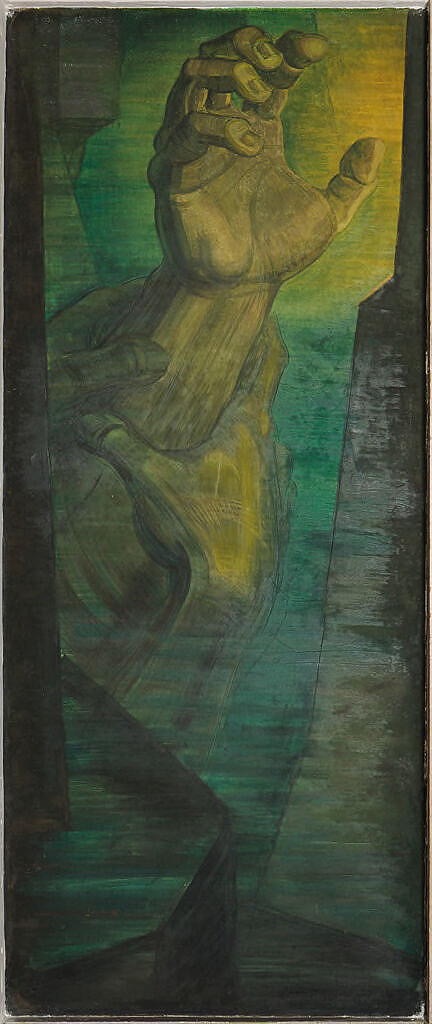
Lewis W. Rubenstein:
Scene from the Niebelungen Legend: Alberich's Hand (1935-1936)
This writing week found me even more fully engaging in the curious occupation of Unscrolling. I began the week KillingTime, an activity I characterized as sometimes necessary, perhaps essential. I next noted the Spurious Premises social media offers, though they sure don't seem all that spurious when I encounter them while scrolling. I noticed and reported on how scrolling seems perfectly suited as an activity for the Powerless, and that, perhaps, it's "just" a symptom rather than a problem. I then declared the enormous difference between simply ceasing and genuinely Desisting, insisting that desisting often proves impossible. I introduced the Witness/Participant balance, which seems currently out of balance to me. I ended this writing week insisting that scrolling social media amounts to spying on myself. Thank you for following along as I try to understand this obsession we seem to so vehemently rely upon.
Weekly Writing Summary
KillingTime
“… resurrect something crucially important in me by killing off some of my extra time.”
This Unscrolling Story identifies a context within which scrolling seems acceptable, perhaps even necessary. Scrolling seems particularly useful for KillingTime.
I arrive ninety minutes early for a chamber music concert, and realize my mistake and retreat to my car with time to kill. As I huddle in the driver’s seat scrolling on my phone, I reflect that not every moment of life seems necessarily precious, that some time feels like surplus that can be legitimately “killed” or given back. After tossing away forty-five minutes in distraction, I return to the venue feeling lighter and reset, fully ready to enjoy the music. I conclude that, just as one can drown in too much water, one can be smothered by too much time, and that deliberately wasting a little of it can sometimes revive something essential.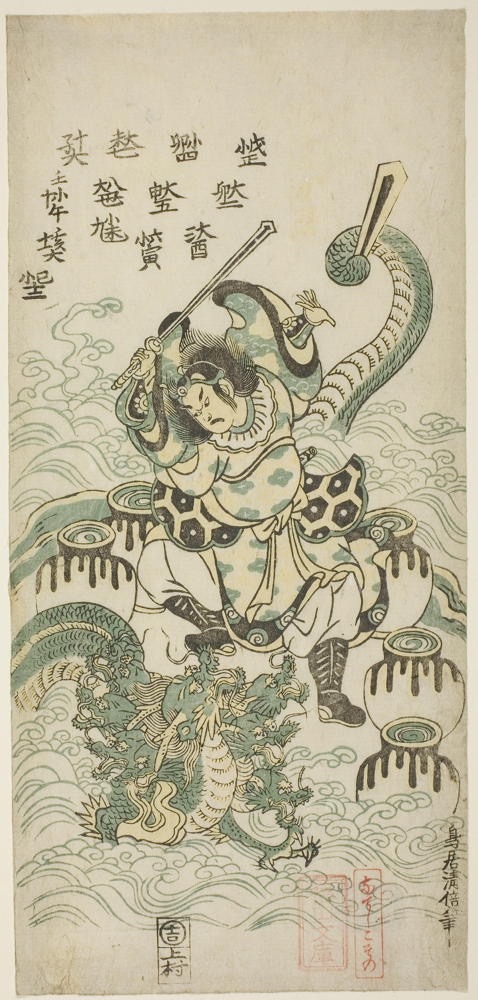
Torii Kiyomasu II: Susano-o no Mikoto Killing the Eight-headed Dragon (1748)
——
SpuriousPremises
“They wandered so far from truth that they cannot relate to it anymore, if they ever could.”
This Unscrolling Story investigates the Spurious Premises that commonly underlie (with particular emphasis on the lie) Social Media.
I argue that social media runs on SpuriousPremises: headlines lie, stories collapse into ad farms, real information gets buried, and “engagement” metrics mostly con, designed to fool advertisers. I see myself as a deliberate exception—reluctantly on SubStack, refusing to advertise or obsess over stats, and unwilling to pay for subscriptions or apps that hide and creep their charges. For me, social media feels like endless first acts with no endings, watched while wading through septic fields of other people’s waste. I insist that this same spurious ethic has bled into government—especially among “Repuglicans”—who advertise the opposite of what they deliver and then act offended when reality-based people object, while the offline world still mostly resembles what it claims to be.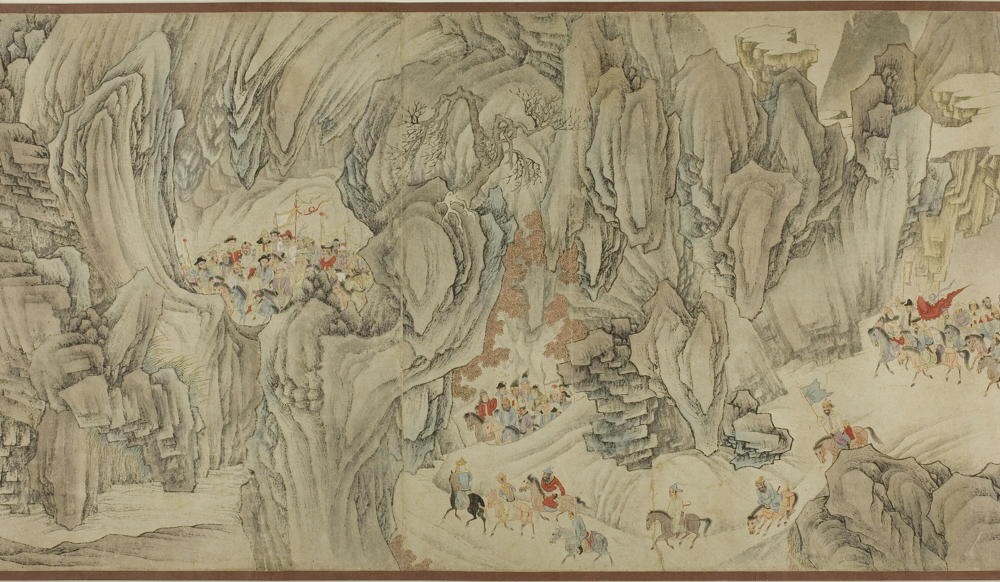
Artist unknown [spurious signature of Zhao Mengfu (1254-1322), dated 1301]: A Hunt in the Mountains of Heaven (Late Ming /early Qing dynasty, 17th century)
——
Powerlessness
“We engaged in passionate revolution and found that it rendered us Powerless…”
This Unscrolling Story considers the deep sense of Powerlessness Social Media seems to elicit.
Social media offers a powerful illusion of connection and influence, especially for those who feel powerless, because it allows criticism, outrage, and performance without real-world risk or responsibility. It rewards quick reactions, memes, and complaints over genuine resolution, and turns politics and crises into endless spectacle.
I notice that using social media—especially since the pandemic—has steadily eroded my sense of hope and agency, feeding a constant sensation of powerlessness in the face of scandal and idiocy. When I step away from this, I briefly regain a sense of personal agency and a more hopeful outlook, realizing that it’s not just my own weakness at work; the medium itself seems to have been structured to generate and amplify powerlessness.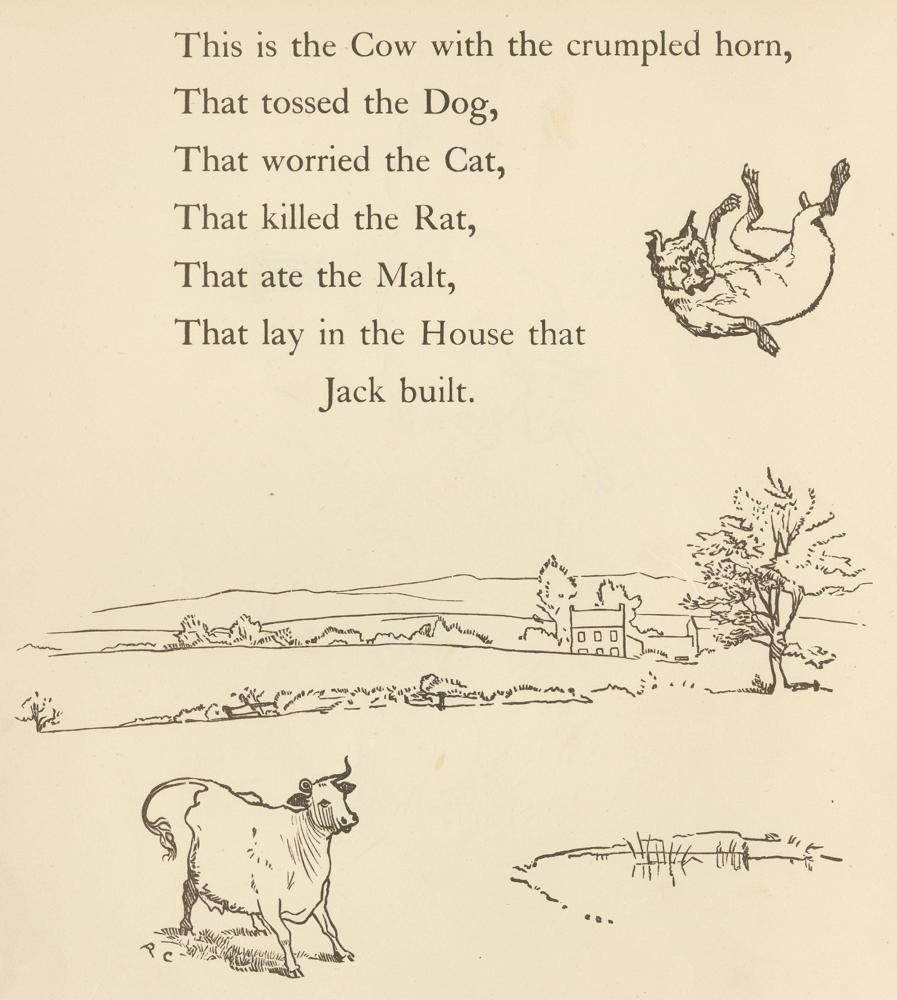
Randolph Caldecott: “This is the cow with the crumpled horn, that tossed the dog.”(≈1912)
The Miriam and Ira D. Wallach Division of Art, Prints and Photographs: Picture Collection, The New York Public Library. “This is the cow with the crumpled horn, that tossed the dog.” New York Public Library Digital Collections. Accessed January 19, 2026. (https://digitalcollections.nypl.org/items/751bf0f0-c5bc-012f-99fe-58d385a7bc34)
——
Desisting
“Ceasing’s relatively easy. Desisting’s inevitably difficult and often impossible.”
This Unscrolling Story explores the curious nature of its own objective, which I’ve defined only in negative space. Replacements must ultimately inhabit positive space capable of Desisting whatever it replaces.
This Unscrolling Story reflects on “Unscrolling” as a “negative space” objective—one defined only by what it wants to eliminate, not by what will replace it. At first glance, simply stopping a behavior seems easy, but there’s a world of difference between briefly ceasing and truly Desisting, which means sustaining that absence over time.
Using quitting smoking as an example, I insist that it’s not just the act but the surrounding habits and comforts that leave a painful void. Any routine we stop carves out a divot that demands a replacement, and creating that new, tangible pattern proves to be far harder than just stopping once. In the end, I argue that goals framed as pure absence are inherently difficult: nobody can successfully build a future on what isn’t there; One needs a real, sustaining presence to keep any old behavior from returning.
Jan Toorop: Image Design for a Poster, Wagenaar’s Cantata ‘The Shipwreck’ (1899)
——
WitnessProtection
“…what once seemed fair enough and fairly well balanced now sure seems fairly poorly balanced.”
In this Unscrolling Story, I feel fated to be forever catching up, formed by a world that no longer exists. Once, life held a clearer balance between participating in events and merely witnessing them; now, with television, smartphones, streaming, and social media, that balance has tilted hard toward passive observation and vicarious living.
I recall when major events like the moon landing were experienced communally and felt personally real, compared to today’s isolated, feed-based witnessing. Yet I refuse to simply blame technology, recognizing that my own choices—then with the “boob tube,” now with social media—have helped shift me from participant to spectator.
I wonder whether something essential gets lost when secondary and tertiary experiences drown out primary ones, though I admit this might just be my ever-advancing age talking. Perhaps the future will see this ever-more-mediated existence as normal, even preferable. From my aging vantage point, what once felt like a fair witness/participant balance now seems skewed and poorly balanced—though it might, I concede, always have been thus.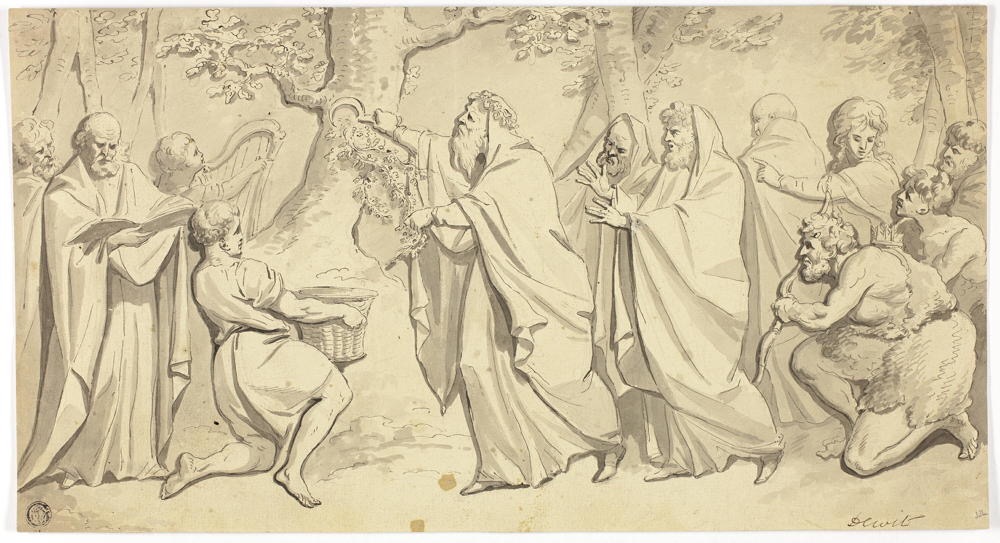
Attributed to Jacob de Wit: Druids Cutting Mistletoe (Artist’s working dates 1715–1754)
——
Surveillance
“We probably deserve anything stemming from our sorry reasoning.”
This Unscrolling Story characterises our social media scrolling obsession as a game of Spy Vs. Spy, where the object of each engagement involves us spying on ourselves.
I describe how Congress banned TikTok over ByteDance’s surveillance of Americans, only for a second Trump administration to refuse enforcement, profit from a forced sale, and leave TikTok more entrenched than ever—its spying unchecked and the law effectively gutted.
From there, I argue that scrolling itself makes us complicit in a “perfect crime”: mass, invisible data theft that leaves no obvious wounds and thus no mass outrage. Responsibility doesn’t stop with Trump or Congress; it extends to every user who keeps tapping and swiping while claiming addiction or compulsion. A few TikTok stars get rich, while the rest of us become cannon fodder in a quiet war against our own interests.
I conclude that, in practice, we seem to prefer cat videos and surveillance to actual freedom—rewriting the old slogan as “Live Surveilled or Die”—and that we probably deserve the consequences of that choice.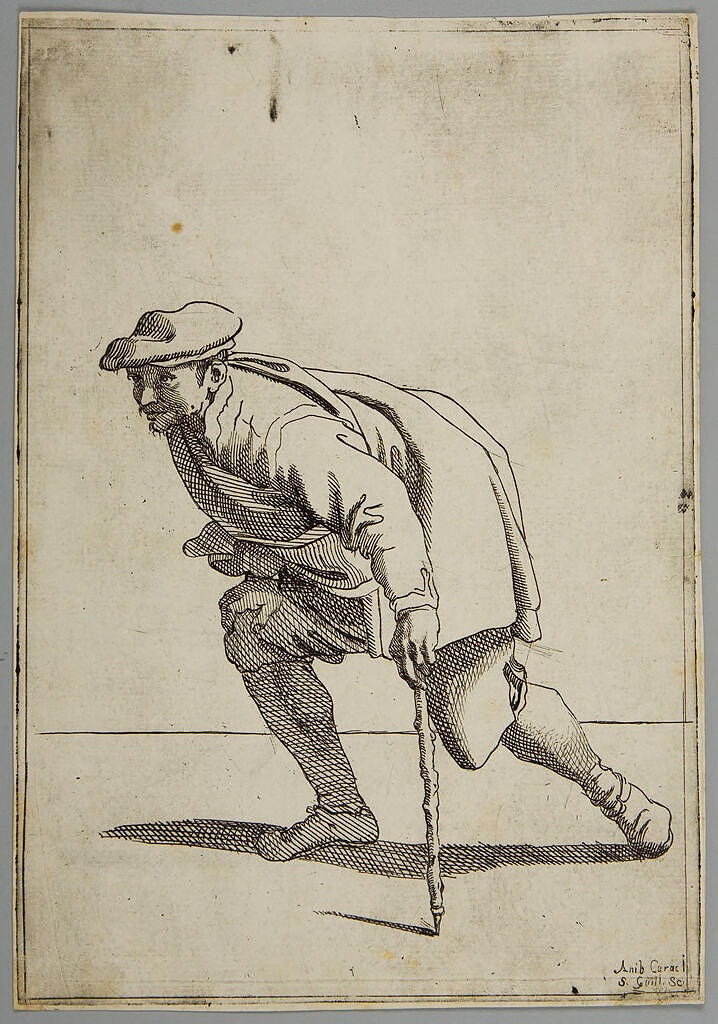
Simon Guillain: “A famous spy!” plate 77. Series/Book Title: Cries of Bologna [Una spia famosa] (17th century)
——
New World Order
This writing week unfolded in the context of an emerging New World Order. This seemed the rough equivalent of performing a concerto while giving birth. Distractions seemed to naturally overwhelm any primary perceptions, just like social media scrolling. This week seemed to echo the world we live in, one that has forgotten many of our most hard-won lessons. We live today the way we formerly lived for good and decent reasons. We ignore or forget our hard-won pasts only with stultifying ramifications. We live with preliminary consequences that do not preface any satisfying outcomes. Such are the context markers of any reordering. Those of us accounting for the vast majority who have been acculturated to an old status quo find even the vaguest hints of a replacement status quo inherently unsettling. We knew and thrived when. We never really aspired to another. So, it’s particularly unsettling when some Jahu attempts to undermine our hard-won inheritance with the rough equivalent of obvious absurdity. Nobody needs to relive any hard-won lessons. Those who played hooky when those lessons were taught cannot insist that our history was never present, but merely some perverse story, however they might insist. Such seems to be the birth of a New World Order.
©2026 by David A. Schmaltz - all rights reserved
Good For A Goose

Comeuppance (31)
Decency (90)
Decency Unscrolling (1)
EndDays (92)
Exiled (90)
Fambly (93)
FollowingChapters (93)
Grace (92)
Humor (2)
iAlogue (1)
Letters to the Editor (1)
NextWorld (91)
Personal (18)
Prosperity (94)
Steam Festival (4)
Unscrolling (89)
Vaporized (6)
Work (16)
September 2026
August 2026
July 2026
June 2026
May 2026
April 2026
March 2026
February 2026
January 2026
December 2025
November 2025
October 2025
September 2025
August 2025
July 2025
June 2025
May 2025
April 2025
March 2025
February 2025
January 2025
December 2024
November 2024
October 2024
September 2024
August 2024
July 2024
June 2024
May 2024
April 2024
March 2024
November 2006
October 2006
September 2006
August 2006
July 2006
June 2006
May 2006
April 2006
March 2006
February 2006
January 2006