Weekly Writing Summary For The Week Ending 04/30/2026
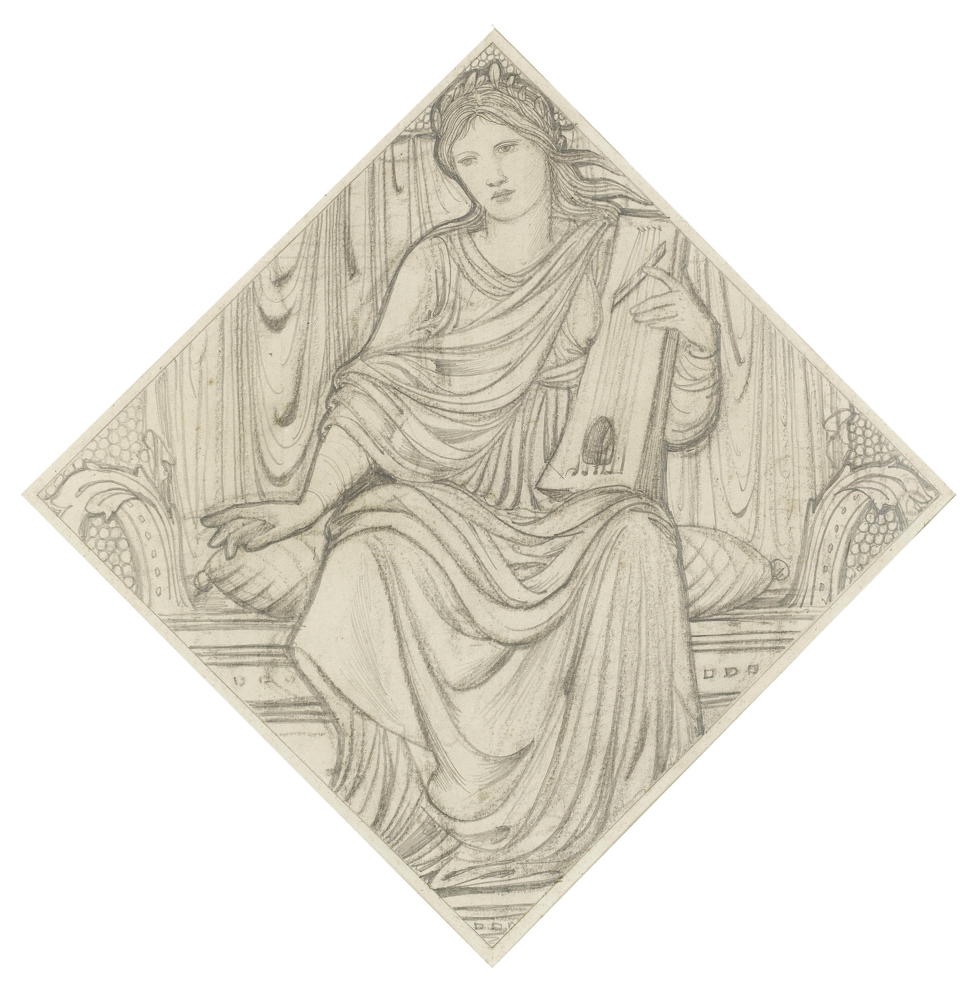
Sir Edward Coley Burne-Jones:
A woman with a lyre
(circa 1880)
This week’s EndDays dispatches moved from the surreal to the civic, from the undead persistence of a failed presidency to the tentative arrival of genuine prosperity on my valley’s western edge. The week held its familiar tensions — political exhaustion, garden disruption, the launch of a new book into an indifferent marketplace — while finding fresh angles on each. A new coinage appeared, Flacts, to name what we’d all noticed but couldn’t quite label. The series passed its fortieth installment, and sod arrived at the Villa Vatta Schmaltz just in time for the end of this Writing Week.
Thank you for following along!
Prospering
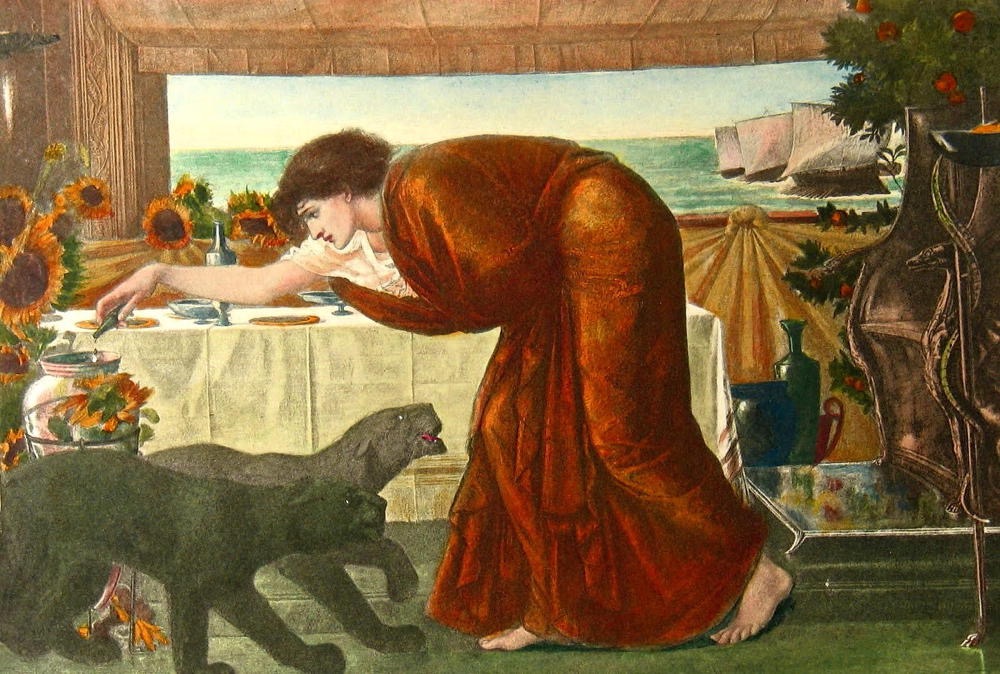
Sir Edward Coley Burne-Jones:
The Wine of Circe
(1900)
"…I'm hopeful we might finally escape the scarce resources allocation quicksand."
Our economics foretell our fate. Those who arrived late lose to those who came earlier, before we were discovered and became a destination. Then, our economics devolved into focusing on allocating seemingly ever-scarcer resources rather than sharing communal plenty. Some jealously guarded their plenty lest someone less deserving try to wrest it away from their grasp. We became most masterful here at pinching pennies, at somehow pretending to make odd ends meet, at cinching up the old belt yet another notch, at essentially starving ourselves for our own imagined good. We regretted the uneven distribution of our common largess and hoarded the best against possible future turndowns, justifying our penury as evidence of an underlying righteousness. The cynical defense insists that in the long run, we’ll all be dead anyway, so nothing really matters.
Prospering demands a different perspective.
Neediness
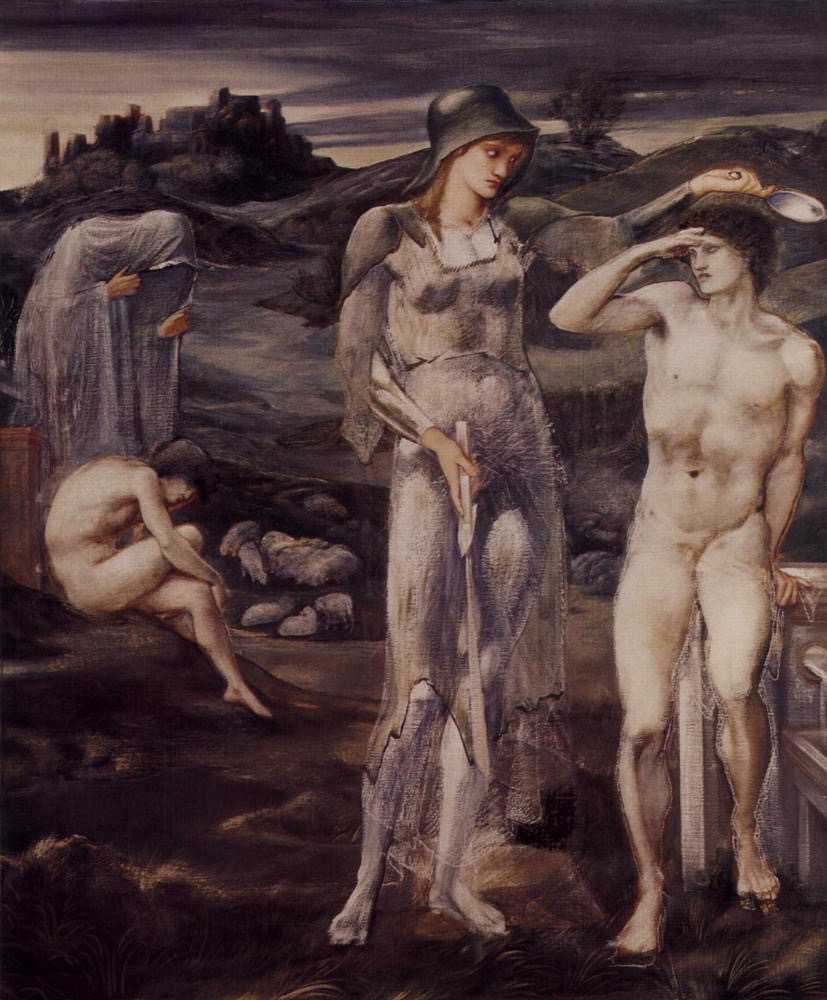
Sir Edward Coley Burne-Jones:
The Calling of Perseus
(between 1877 and 1898)
"Never be needier than the country you were elected to lead."
Perhaps the first principle of project management, which I used to teach and practice professionally, must be: “Never be needier than your project.” This principle was not supposed to be interpreted as an invitation to strive to be selfless in service, or in servitude, to your effort, but to more properly focus the professional’s attention. If one intends to provide some service, it doesn’t do for that service provider to be needier than their client. The client’s needs remain paramount in that context, and while it still matters that the service provider’s needs are attended to, the purpose of the engagement cannot degrade solely into ensuring the caregiver’s satisfaction. I do not intend to ignore the service provider’s legitimate needs, just to reinforce the notion that those needs should not be the primary focus of a service relationship. This principle requires some maturity from the professional, some ability to at least defer their needs in favor of somebody else’s, at least for the duration of the engagement, or, lacking that, how about during office hours?
This principle might, in practice, prove to be pure fiction, for in fact, the service provider’s needs must remain a significant part of every service provider’s personal equation.
Flacts
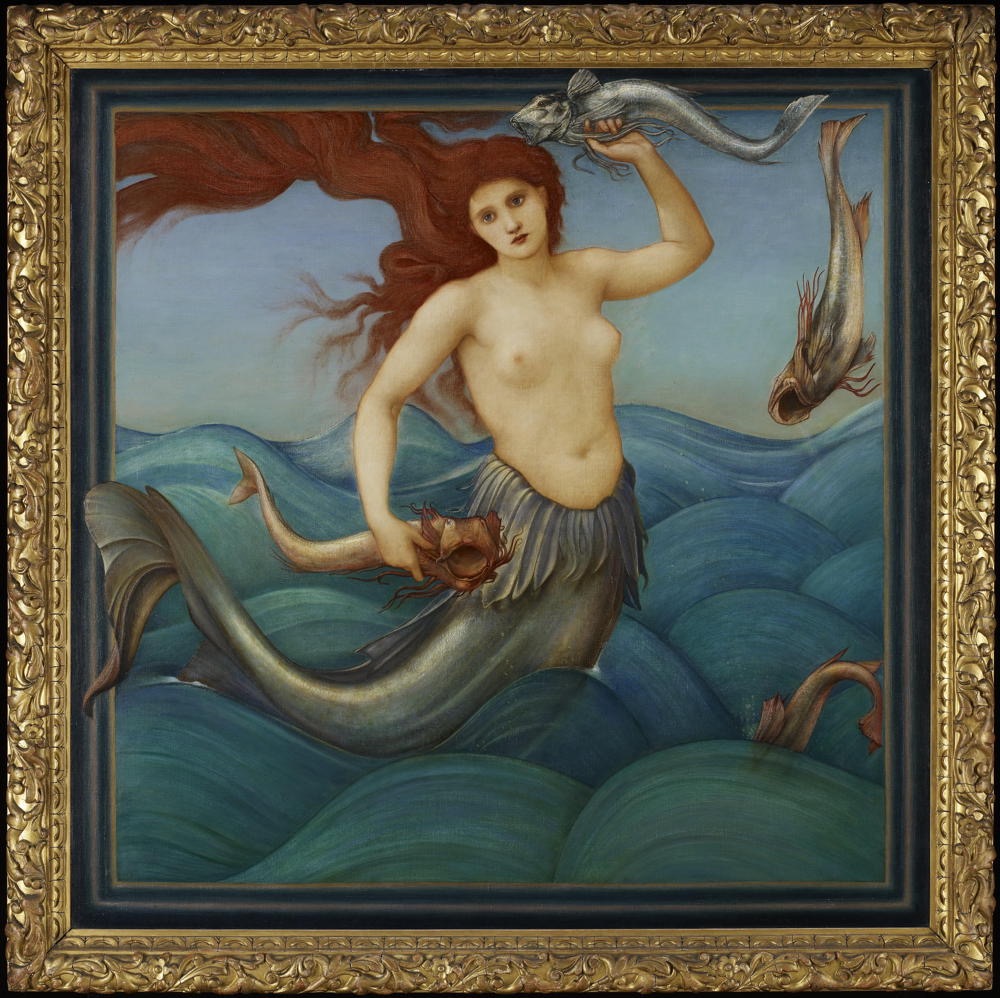
Sir Edward Coley Burne-Jones:
A Sea-Nymph
(1879 )
"…this world remains wise enough to usually deny us such privileges."
One EndDays feature involves taking information out of context. Facts can natively seem confusing enough, but taken out of context, they cruelly turn false, rendering their champions foolish, though rarely in their own eyes. I suspect we all engage in this business, largely innocently, though others, especially those we characterize as opponents, might try, without success, to clue us in. We suspicion more deeply then, and might even wonder when an old reliable turned toward some newly-imagined dark side. We rail on about emerging divisions while staunchly defending whichever side we somehow find ourselves on.
A seeming raft of issues has been subsumed with Flacts, facts innocently or more malevolently taken out of context.
StageCrappery
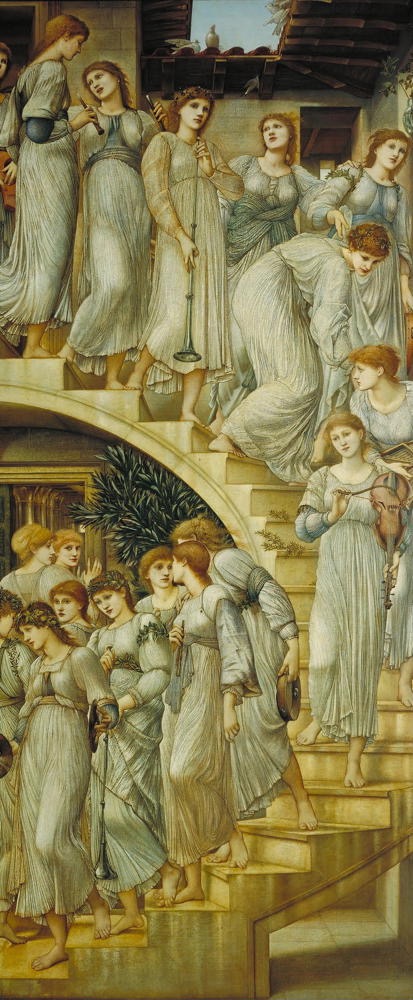
Sir Edward Coley Burne-Jones:
The Golden Stairs
(1879 )
"All the world’s a stage,
And all the men and women merely players;"
William Shakespeare, As You Like It, Act II, Scene VII
"I tire of these endless, meaningless performances…"
Contrary to popular misconception, all this world was never a stage, and human existence never once very closely resembled mere players. Shakespeare’s assertion, delivered via character Jaques, seems like a cynical approximation, perhaps an apt analogy, but falling far short of anything resembling definitive. Though in our time, one might be forgiven for believing that everyone’s more or less acting their way through life. So much of our experience gets represented on the same small screen on which we’ve seen actual performances, with actual actors: merely players. It seems important, though, to draw at least one fundamental distinction between acting and living. What might such a distinction entail?
Authenticity seems utterly different for a player and a person.
Unsettled
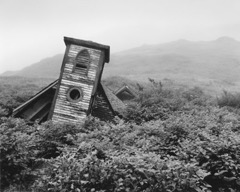
Alphonse Legros:
Sir Edward Coley Burne-Jones (1833–1898)
(1879 )
"…I'm wishing that I'd just stayed home, where my heart already was."
As the grand planned in-ground irrigation system installation spills into its fourth day, my usual composure slips away from me. I sit uneasily, unable to watch the unavoidable desecration happening out in my sacred yard. This has long been my place, almost a secret garden, reserved almost exclusively for The Muse and me. We only very rarely ever invite anybody else into this lair. We are both particularly particular about where we place plants, how we water, and how we mow. We would never even think of hiring an alien to weed or mow. We wouldn’t expect them to understand. Indeed, we would be certain that they couldn’t understand, and not just because we wouldn’t prove capable of explaining, though it’s doubtful we could adequately explain the boundaries of acceptable behavior there to any alien other.
This place isn’t merely special, it’s our special.
Undead
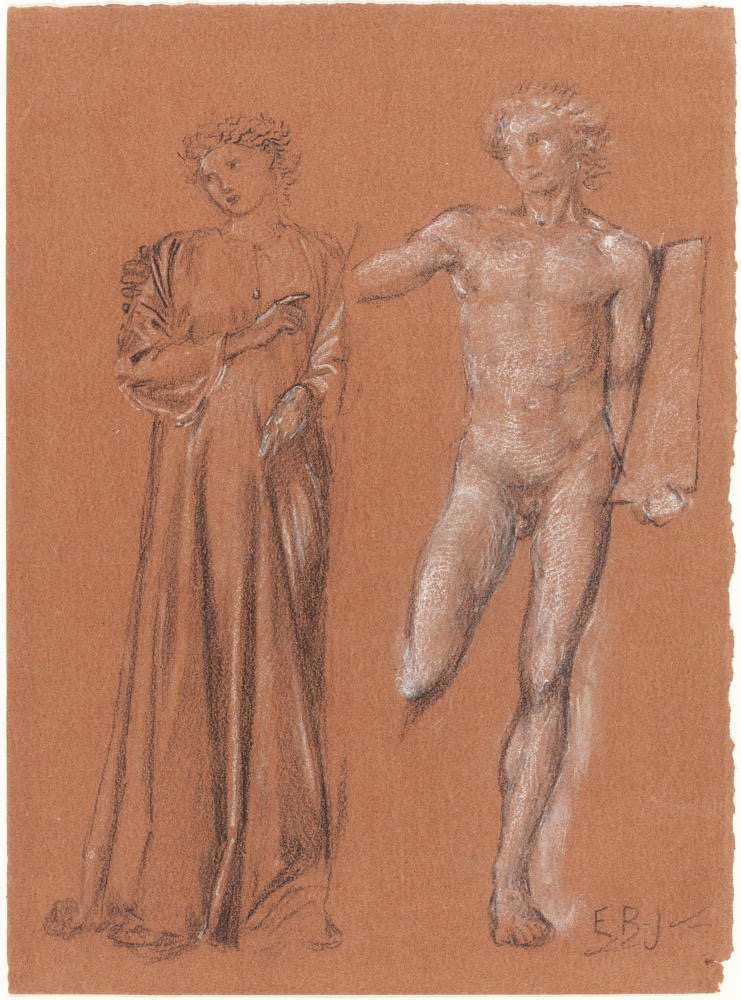
Sir Edward Coley Burne-Jones:
Orpheus and Eurydice
(Between 1898)
Hasn't he already lingered longer than absolutely necessary?
During Saturday Night Live’s first two seasons, its original News Update anchor Chevy Chase ran a continuing joke, each week proclaiming, “Francisco Franco is still dead.” The joke played off the news media’s apparent obsession with Franco’s recent demise. These days, we have what seems to me to be an analogous situation in that our incumbent has reportedly been continually on his last legs since before the start of his second term. Doubtless, he has been feckless and hugely ineffective at accomplishing anything lasting, though he has attempted and perhaps succeeded in undermining a previously stable world order. That accomplishment’s not nothing, but it seems unlikely to persist. Salvation seems ever-impending, simply awaiting his demise, which has been reported as imminent for four-hundred and sixty-one days as of this morning. That qualifies whatever ails him as a long-running illness by anyone’s measure. I’m starting to doubt that he’s actually teetering on death’s door. Perhaps it would be better if we just considered declaring him Undead instead.
Donald J. Trump is still undead.
Weekly Writing Summary For The Week Ending 04/23/2026
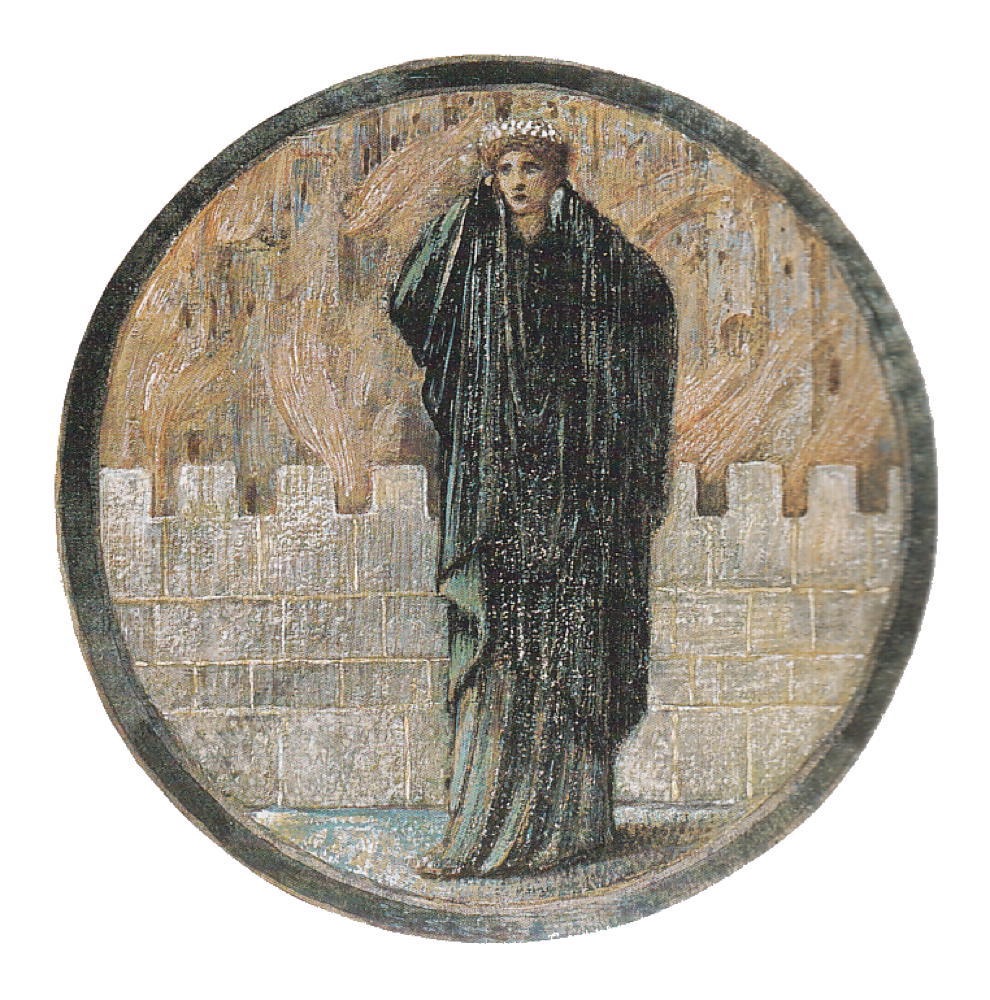
Sir Edward Coley Burne-Jones:
Helen's Tears'
(Between 1882 and 1898)
This week's EndDays dispatches moved from disorientation to defiance, from the poisoned noise of deliberate falseness to the quiet dignity of pea-shelling, from the billionaire class's ravenous absence of Enoughness to a small-town civic supper where a librarian earned a blown-glass heart on an engraved stand. The week asked what sustains a serious person when the signals arriving from the world can no longer be trusted at face value, and found its answers not in grand political resolution but in dirt, in preparation, in recognition, and in the stubborn practice of generous interpretation.
Thank you for following along!
ReceivingWisdom
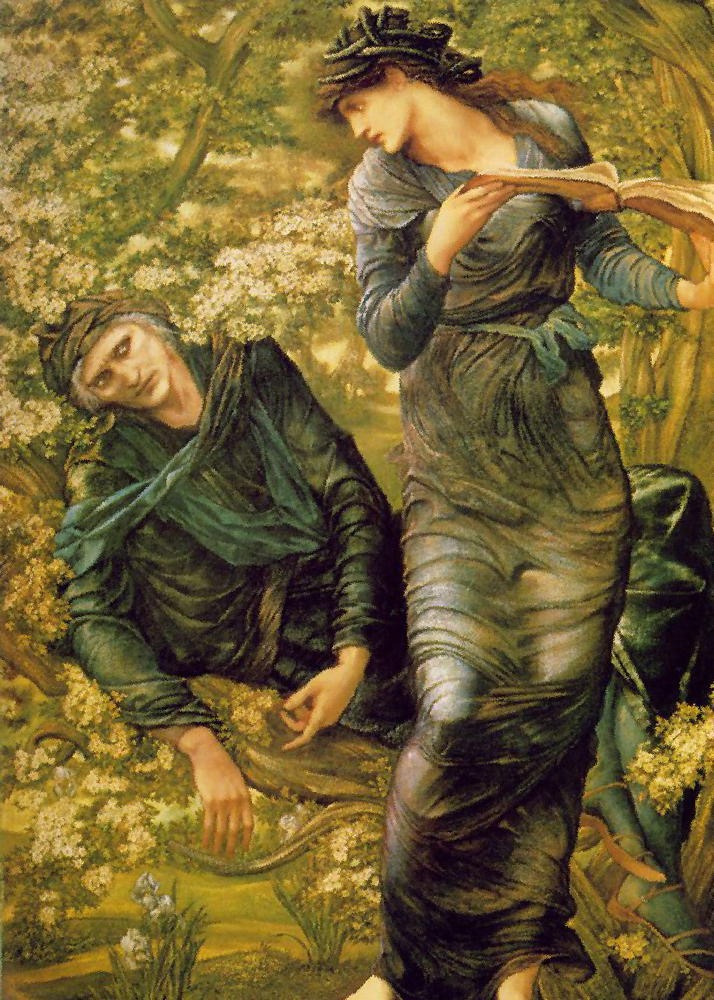
Sir Edward Coley Burne-Jones:
The Beguiling of Merlin
(1874)
"Maybe we find our underlying connections beyond disconcerting."
Who knows how wisdom visits? Who knows what even constitutes wisdom in these EndDays featuring so damned many false idols? We each seem to imprint on our own trusted sources. Who knows how we discern which ones to trust? Our neighbors seem to rely upon other sources that do not seem nearly as wise to us as they do to them. We cite our sources until long after we begin to turn blue in the face, without convincing anyone not dependent on the same experts we depend on. We each hold Received Wisdom without often considering how it was that we set about ReceivingWisdom in the first place. Does knowing with such certainty even qualify as wisdom, anyway, or does wisdom somehow sort of transcend knowing to more agilely hold controversies unresolved?
The Muse returned from a public meeting having bailed.
Recognizing
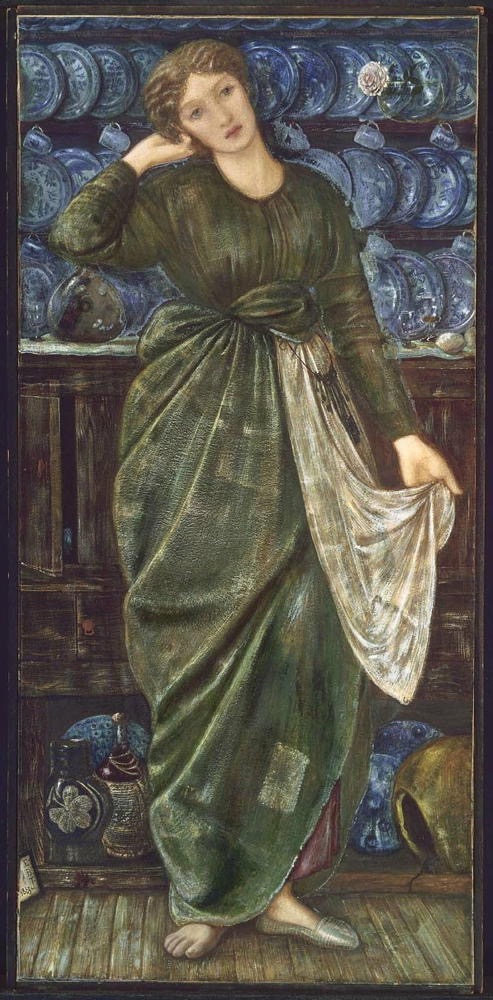
Sir Edward Coley Burne-Jones:
Cinderella
(1863)
"If only we could remember this inescapable fact and more frequently act upon it."
No week passes without The Muse, in her Port Commissioner role, being invited to some ceremonial supper or solemn civic society gathering. Her presence is expected as a part of her charter to represent the citizens of the county and, especially, of her district. She only sometimes expects me to string along in what I explain amounts to fulfilling the underappreciated role of Arm Candy. We arrive, with her remembering names from last time, and constituents somewhat pleased at her appearance. The majority don’t know her from Eve, and even fewer know the first thing about me. We’ve registered online beforehand and dutifully purchase our raffle and 50/50 Split tickets, the latter of which awards half the evening’s raffle and drinks takings to one fortunate attendee, which amounted to $61.50 that evening.
These gatherings are typically small towny.
Impreparation

Sir Edward Coley Burne-Jones:
The Garden of the Hesperides
(Circa 1880)
"Amen, again, with real damned purpose this time!"
EndDays time seems short, as if a clock was winding down or the universe itself was wearing itself out. When did improvisation replace careful, studied preparation, and most things start happening haphazardly, as if everyone had conspired to just start making up shit as they went along? Seemingly gone are the more careful crafts, replaced with the more relatively careless ones. Reflection, too, might have been overwhelmed by a plethora of knee-jerk reactions. Yes, EndDays seem simply reactive rather than reflective, as if thinking, considering beforehand, had become crimes committed by the cowardly. Goaded on by our chief executive as an extremely public and seemingly ever-present example, we often reject planning as something belonging to an alien culture, as if we were smarter because we didn’t feel compelled to peek ahead. EndDays collapses the long term within which we’re all said to be dead into a presence composed of some combination of unwarranted certainty and dread. In this short term, we live as if we were essentially undead.
I recognize this difference because this week I’ve had an actual future event that I needed to prepare for.
Dirt

Sir Edward Coley Burne-Jones:
Study for 'The Sleeping Knights'
(About 1870)
"I'm Just Visiting here."
I engage hesitantly, reverently. I never take this work lightly, for it contains consequences. I am less a homeowner than a steward of soil, the house and fences, gazebo and garage, mere backdrops for the real engagement. I know every square inch of the soil surrounding this house. I have crawled across it more than once or twice, though I never counted the number of my interventions, for that would surely have violated some deeper, if unspoken purpose. One stewards soil invisibly, dedicatedly. I cannot seem to leave alone what others might believe was already well enough alone. I seek no less than perfection, knowing full well that shortcomings will always enter into my equation. I know my base soils. I can feel the difference between that powder-fine NW corner of the front yard that’s never had an ounce of amendment and the NE corner, which has absorbed its original weight and volume in perlite, peat, and attention.
I was inspired by exposure to the original Victory Garden PBS series, the one hosted by its founder, James Underwood Crockett, a charming Down-Easter, a master gardener.
Enoughness
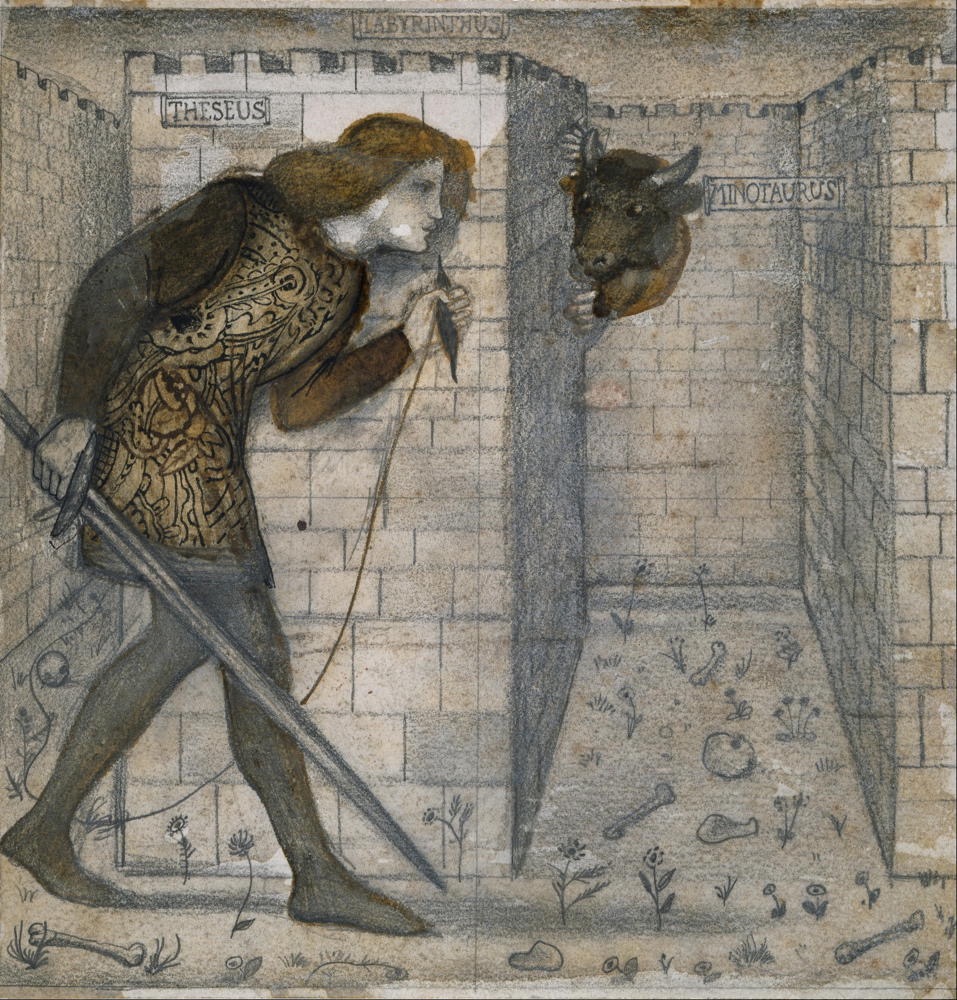
Sir Edward Coley Burne-Jones:
Tile Design - Theseus and the Minotaur in the Labyrinth
(c. 1861)
"There might not be a large enough 'enough' to ever regain that once lost balance."
The last forty years have witnessed a steady erosion of what we might acknowledge were decent values. Their replacements have travelled under a multitude of euphemisms, each of which seemed to have been chosen for their ability to elicit a felt sense of whatever they were eroding. Family Values seemed most popular for a time, though when I delved beneath its glossy exterior, it seemed to insist upon a narrow, exclusive definition of family that most couldn’t possibly relate to from personal experience. Other, often Christian-themed replacements, flooded the meme market over this time, each distilling into some fresh mammon unworthy of broad appreciation, though they gained broad appreciation, anyway. One could be excused for concluding that these terms served as Trojan Horses, intended to draw attention from the wholesale burglaries the billionaire classes were committing against the least of us. Income distribution skewed upward while the costs of living soared, utterly undermining what had previously passed for a middle class.
I remain amazed that the You, Ess of ‘A’ hasn’t yet suffered from a popular insurrection.
TangledWeb
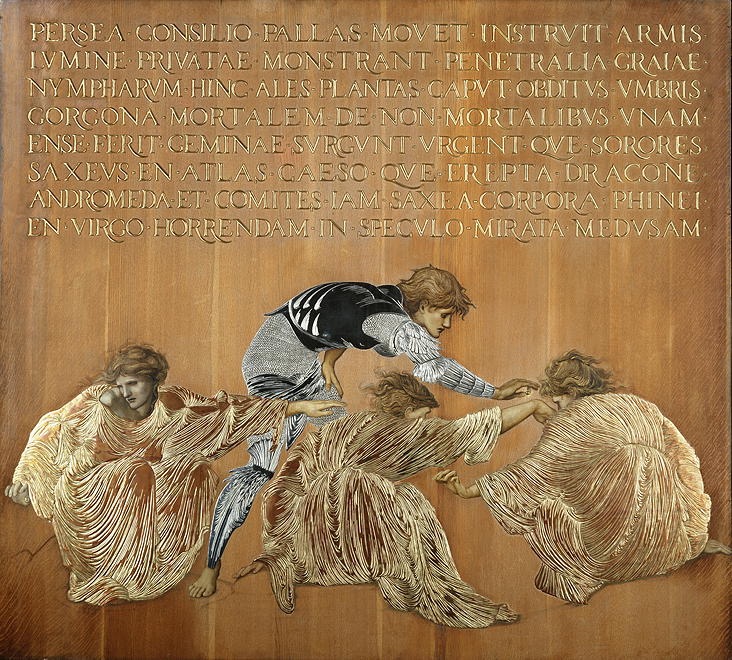
Sir Edward Coley Burne-Jones:
Perseus and the Graiae
(c. 1877)
"Oh, what a tangled web we weave, / When first we practice to deceive" Sir Walter Scott, Marmion
"They're sunk."
I navigate my way through these EndDays not quite blindly, but nearly. My depth perception seems intact. Same story for distance, yet I’m growing to distrust my senses since something I’ve long relied upon seems to be missing. Even as I began to grasp that I might reliably presume the cues coming to me are false, I struggled to reverse first impressions fast enough to maintain my balance. I feel forever cattywompus, suddenly slightly sideways to the world, seriously disoriented. Perhaps that’s the underlying intent, the purpose of what I’m growing to expect to reliably prove to always be deliberately false. I more often seem well served by presuming the opposite of whatever story they serve, though it remains cumbersome to find, let alone to translate, the signal received into one I can believe I actually comprehend.
I remain a simple man, prone to accepting most signals more or less as face value received.
Weekly Writing Summary For The Week Ending 04/16/2026
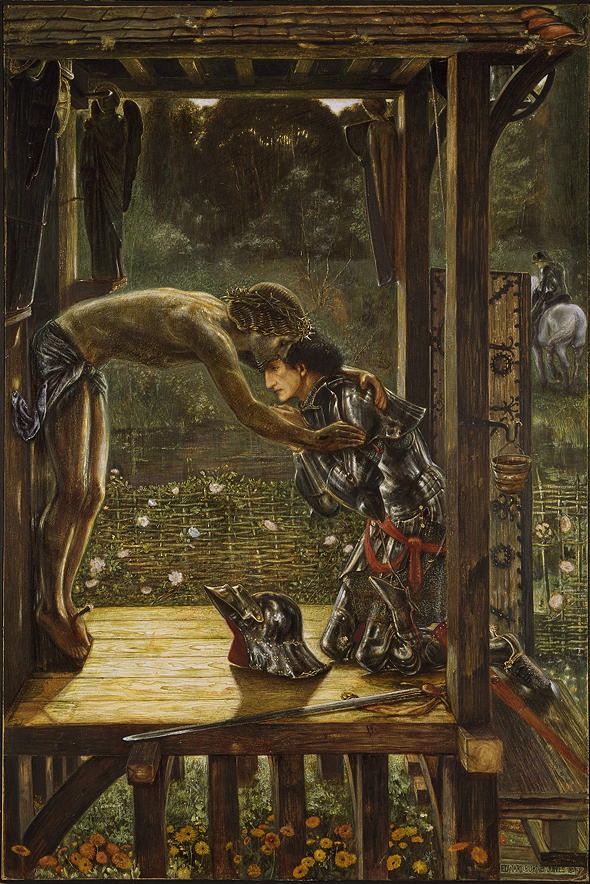
Sir Edward Coley Burne-Jones:
The Merciful Knight
(c. 1863)
This week's EndDays dispatches traced the arc of a chronicler straining under the weight of his own dedication. The series moved from outrage through exhaustion, from the streets of Budapest to a pile of fresh fava beans, from the spectacle of a collapsing administration to the quiet renewal of a Spring kitchen. The week asked how any serious person sustains witness through an ending that refuses to end on schedule, and found its answer not in resolution but in rhythm — the diastolic pause embedded in every heartbeat, the sanity found inside a pea pod, the glimpse of a future already arriving somewhere else in the world.
Thank you for following along!
DiastolicRelief
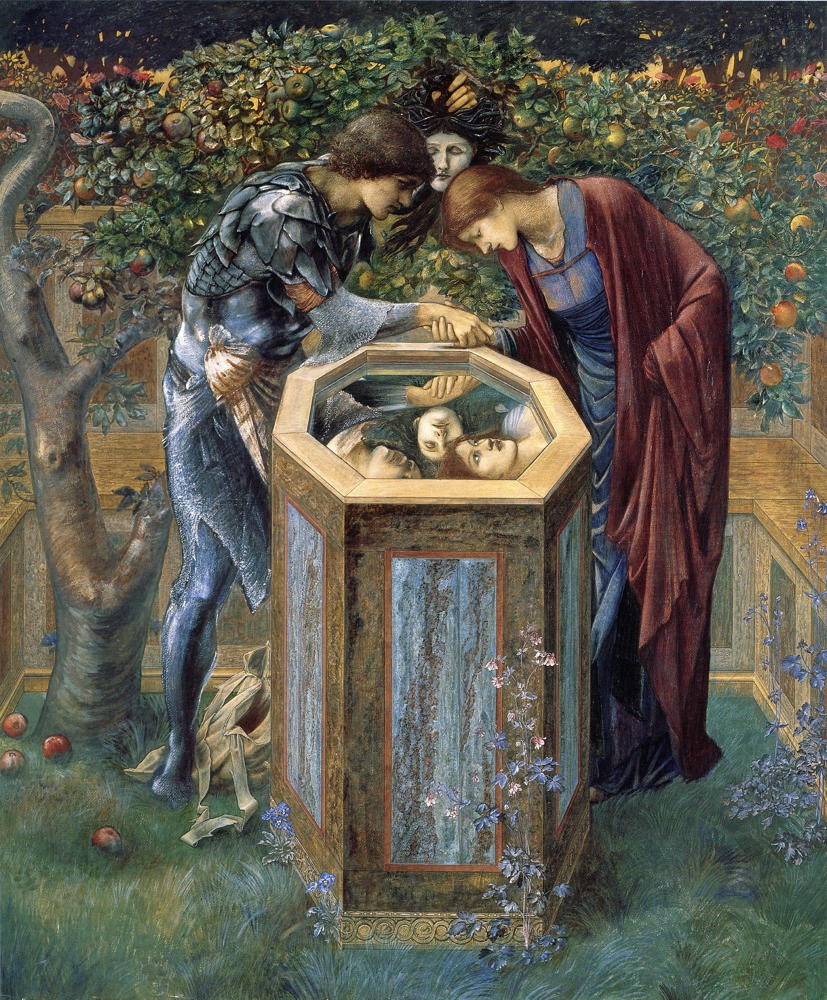
Sir Edward Coley Burne-Jones:
The Baleful Head
(c. 1885)
"…confident that these EndDays remain well on their way toward ending."
Endings sometimes seem to take forever to arrive. What might have begun seeming as certain as any fait accompli turns sluggish in process. Progress comes begrudgingly, if at all, and what seemed like a sprint or a routine walk in the park becomes a trudge. Progress might only be imaginary after all, after all initial evidence to the contrary. This campaign will also demand more patience than anticipated. Faith never flags, though energy does. It’s genuinely wearying to require a fresh reason to keep on keeping on every morning, when yesterday’s brilliant reason proved itself inadequate as leftovers. This series necessarily needs ninety good and decent reasons to continue believing that the evil intruding will ultimately have only been temporary, when each fresh intolerable second already seems to have lasted an eternity. What will end this seemingly never-ending ending?
My strategic plan called for engaging to maintain my attention.
BananaRepuglicans
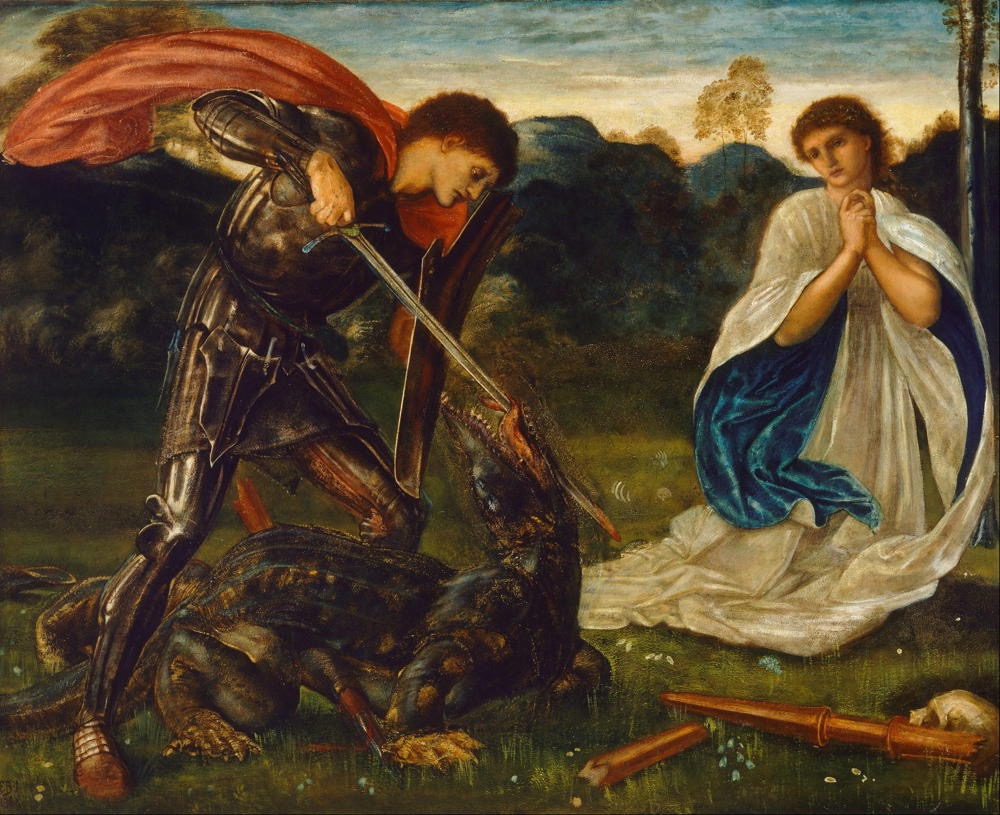
Sir Edward Coley Burne-Jones:
The fight: St George kills the dragon VI
(c. 1866)
"…defending our democracy from such villainy going forward forever."
Despots must, seemingly by their nature, continually challenge the boundaries normally placed around any leader. Enough can never adequately serve as enough for them. More must be continually commanded. This means that every Despot’s rule must become inherently unstable, fragile, and ultimately temporary. When a Despot declares themself Ruler For Life, they’re essentially predicting a radically shortened lifespan, if not for their physical life, then most certainly for their political one. It has seemed much the same for our BananaRepuglicans, our present infestation of despotism. [Thanks to Jamie Raskin (D-MD) for apparently coining this term back before the 2024 election.] They have been actively colluding to undermine many of our proudest traditions, a seemingly cursed mission from its earliest actions, but they moved quickly this time, intent only upon breaking things, and in that modest intention, they have proven wildly successful, though with glaring caveats. Virtually everything they’ve attempted has later proved either ineffective, self-destructive, or both. Their blows to our country’s spirit seemed to have angered and awakened it.
It always proves dicey to accurately pinpoint the moment when enough became more than enough, a parody of its originating intentions.
Indulgences
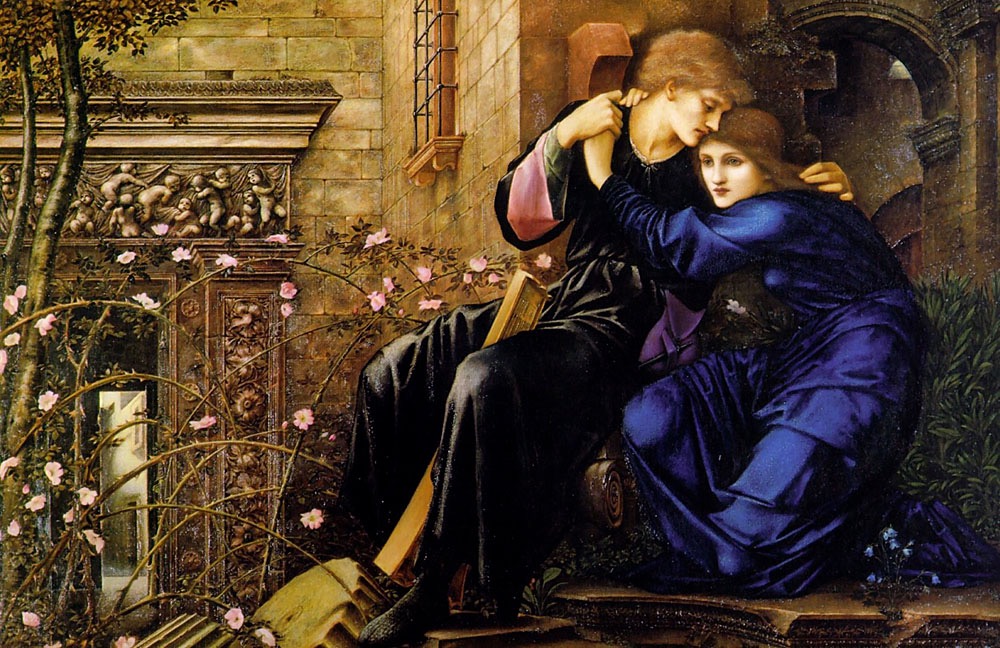
Sir Edward Coley Burne-Jones:
Love Among the Ruins
(c. 1894)
“Better to extend a few mollifying indulgences than mimic the sinner’s self-destruction.”
Trump’s re-election represented the American Brexit. When Britain decided to economically divorce itself from neighboring economies, those economies responded with considerable frustration, as if responding to a toddler’s immature act of independence. The toddler didn’t necessarily register that their neighbor was demonstrating tough love in their response, essentially giving those Tories precisely what they asked for: bureaucratic tangles, logistical nightmares, and a deepening dependence rather than their dreamed-for self-reliance. These complications have helped normalize relations, with Britain somewhat chastened and the Europeans relatively strengthened. The EEU extended Indulgences to Britain for its obvious sins. Rather than seeking vengeance, which might have been fully justified, they insisted upon justice instead and became a different, relatively unexpected ally in the process.
It might have been a testament to our stockpile of goodwill that our trading partners didn’t immediately respond to Trump’s adolescent tariffs with extreme protectionism.
Glimpsing
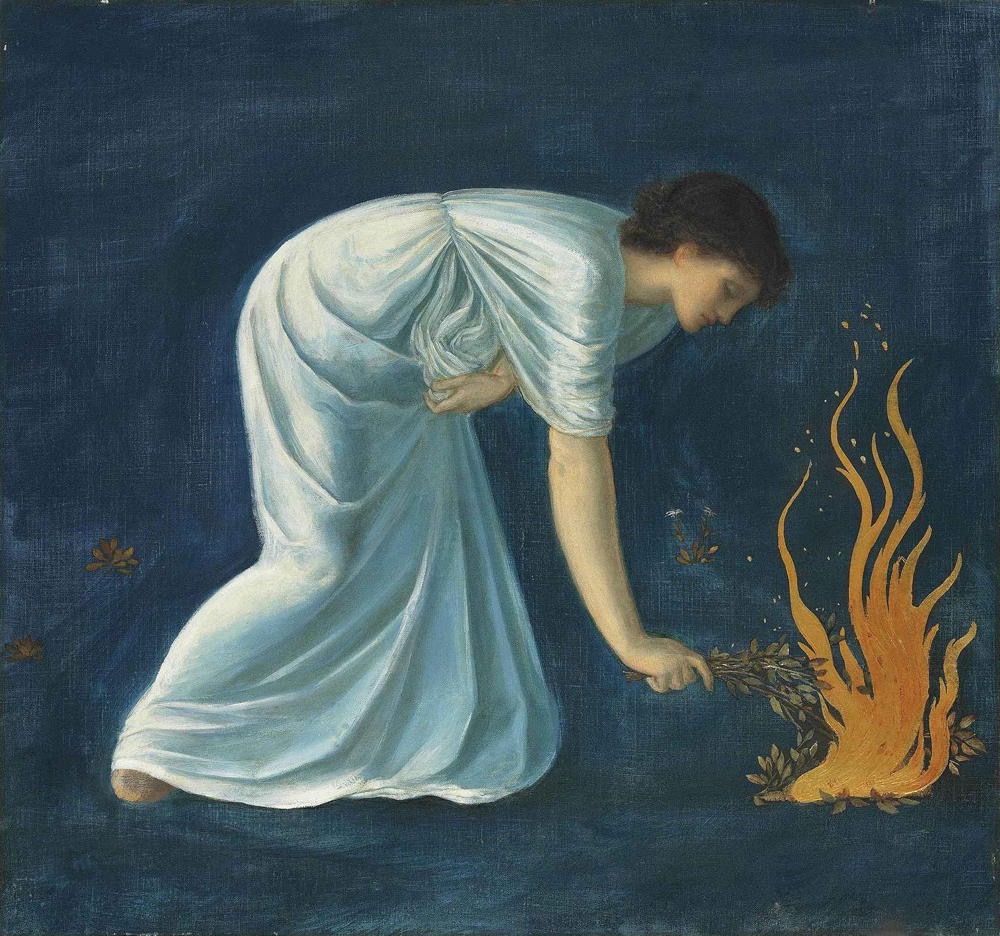
Sir Edward Coley Burne-Jones:
Hero lighting the Beacon for Leander
(c. 1892)
"…tall enough to maybe even catch a Glimpse of ourselves standing proud once again."
The news from our beloved Budapest this morning buoys my spirit. I feel as though I’m Glimpsing one of the most alluring futures we might also be facing. The electoral defeat of a corrupt, entrenched, extreme right-wing oligarchy that has served as the lead sled dog in the worldwide effort to unseat liberal democracy. Victor Orbán was the figure inspiring every wanna be dictator in the world, including ours. Our incumbent praised his presence and supported his efforts to hobble the European Economic Union while serving his Kremlin overlords. He even sent our vice president to campaign for him, though initial voting results strongly insist that it made little difference, and might have even further encouraged his opponents. The winner was once an Orbán insider, but left when he found himself unable to stomach the overwhelming levels of corruption dominating Orbán’s rule.
The streets of Budapest were overflowing with cheering young people, a presence that has been disturbingly absent from our domestic protest rallies.
TalkinInto
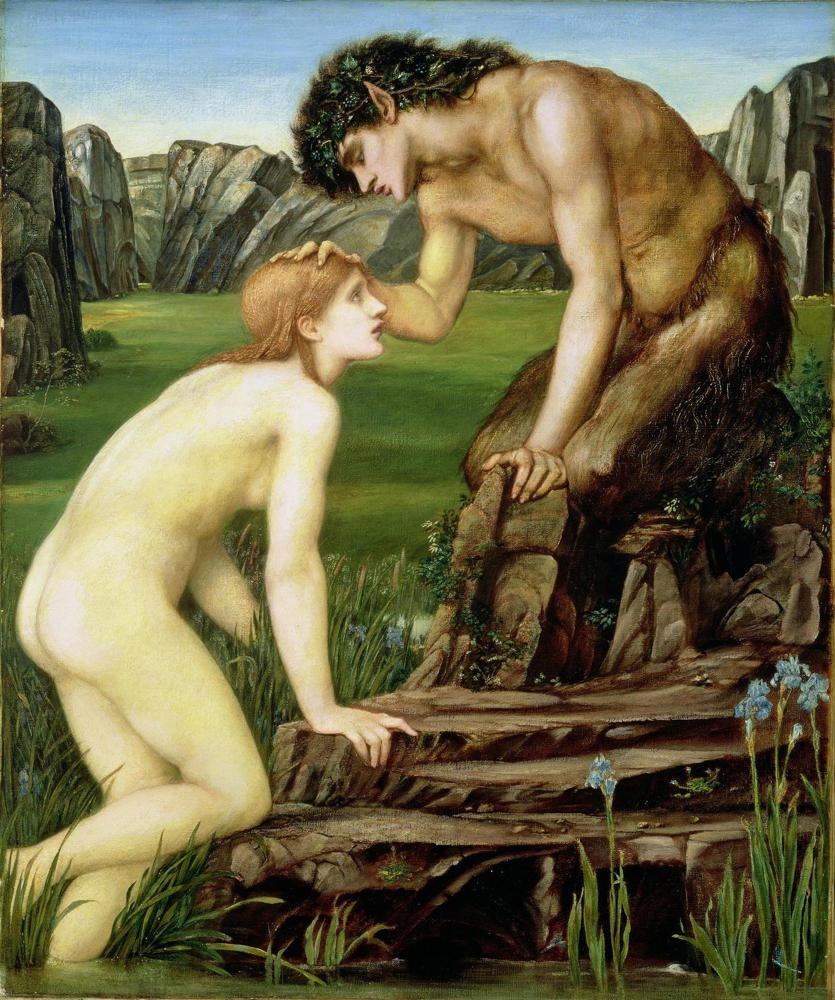
Sir Edward Coley Burne-Jones:
Pan and Psyche
(c. 1892)
“Now that it’s here, I fear it might not go away.”
I feel a sudden overwhelming need to talk myself into engaging during these EndDays. I remember a kind of naturally flowing into and back out of engagements in before times, but now I seem to need to sit myself down and talk myself into beginning or, once engaged, sit myself down to talk myself out of continuing. Whichever, I feel a missing flow, as if I sense or perhaps know I will be further endangered if I proceed. I say ‘further endangered’ because I feel surrounded by danger, threatened, imperiled. This sense lends a certain uncertainty to my proceedings, and it might successfully amplify my sense of presence, but the resulting wariness drains spontaneity from my performances. I no longer lightheartedly float through my days. I slink through them instead, more likely some days to negotiate myself out of doing very much of anything if I feel I can get away with it. I do not always feel moved to contribute.
I accept full ownership of this state.
Parody
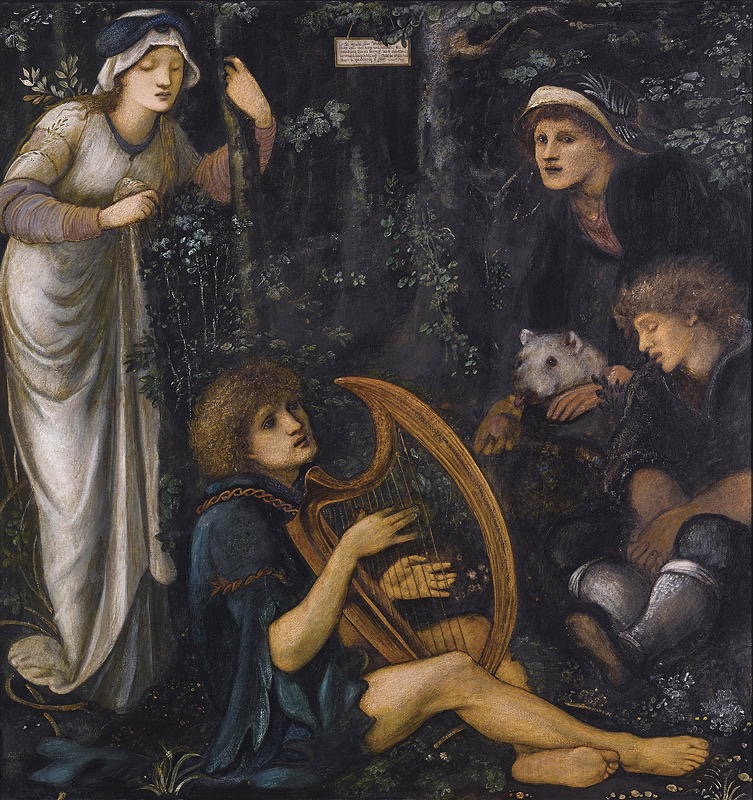
Sir Edward Coley Burne-Jones:
The Madness of Sir Tristram
(c. 1892)
“…Make America Meaningful Again, please!”
I think of myself as a serious person. Neither particularly pious nor frivolous, I try not to take myself too awfully seriously, but still seriously. I am not trying to fritter away my life. I think of myself as someone who supports worthy causes. I maintain a high moral standard without being prudish. I can be crude, but prefer decorous. I never mind a little pomp if not necessarily very much embellished with circumstance. I read, but not to the point where I consider myself especially well-read. I prefer a well-written novel to pretty much any other form of entertainment. I do not very much like movies, for I find them to be too theatrical and often simply too long for me to bear sitting through. I prefer audio over video because audio reproduces color better. I maintain a low tolerance for unserious performance, the sort our present incumbent seems to prefer and exclusively engage in. I find it offensive, anything but entertaining or informative. It seems a Parody of something real rather than being something real itself.
It irks me to be surrounded by such unserious business, as if it might infect me.
Weekly Writing Summary For The Week Ending 04/09/2026
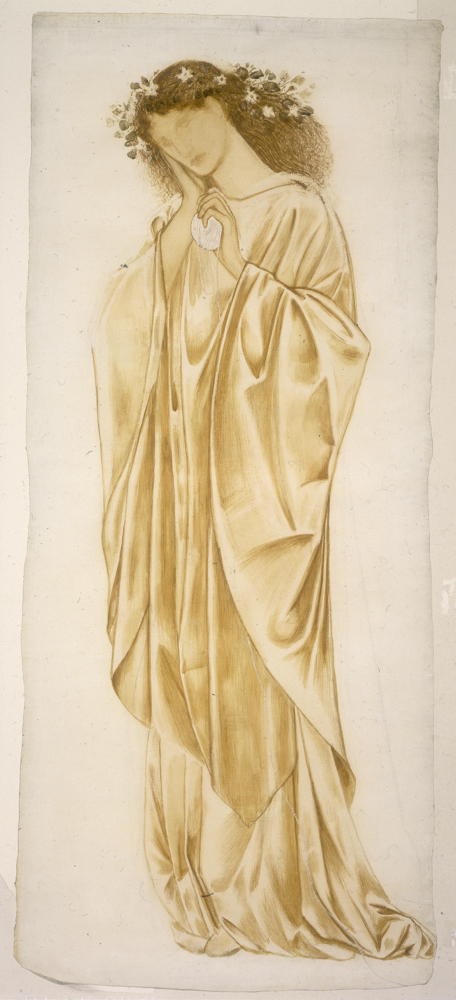
Sir Edward Coley Burne-Jones:
Ariadne
(1863/1864)
This week’s writing carried me deeper into the lived texture of EndDays — not the grand mythological architecture of the first week, nor the disorienting loss of landmarks from the second, but something more personal and more unsettling: the daily work of continuing to exist with dignity inside a world that seems determined to make dignity impossible. The week opened in HardTimes, where I found myself having to choose between accumulating reasons not to act and finding even one dog-eared reason to proceed. It moved through Restsurrection, a quietly subversive Easter spent on my knees in the garden rather than in any pew. NewlyNormalizing brought the recognition that we may never snap back, and that the disorientation itself has become our permanent condition. PlayingChicken named the incumbent’s chief governing strategy for what it is: a child’s game played by someone holding civilization’s steering wheel. EndingAWorld mapped the despot’s oldest trick — declaring victory over an apocalypse he himself manufactured — and Esteem closed the week by tracing the low self-esteem at the root of the whole sorry spectacle, from the incumbent’s throne to the society he’s poisoned. I did not expect to find this week’s theme until I reached the end of it. Thank you for following along.
Esteem

Sir Edward Coley Burne-Jones:
Philip Comyns Carr
(1882)
"…the overwhelming stench of somebody chasing greatness."
Esteem must be one of the more curious human properties. Who even knows from whence it comes? We seem to more easily bestow it upon others we admire more readily than we ever consider bestowing it upon ourselves, yet bestowing it upon ourselves seems both necessary and essential. Those without self-Esteem seem to suffer a self-inflicted fate, as if they should have somehow obviously understood the absolute necessity of fulfilling this one fundamental obligation to themselves. Nobody knows better just how much their own shit stinks than the one mounting that ignoble throne each morning. What from one’s own perspective might ever lead them to hold themself in anything even approaching high Esteem?
I wager that ways exist to responsibly discover reasons to hold myself in considerable Esteem.
EndingAWorld
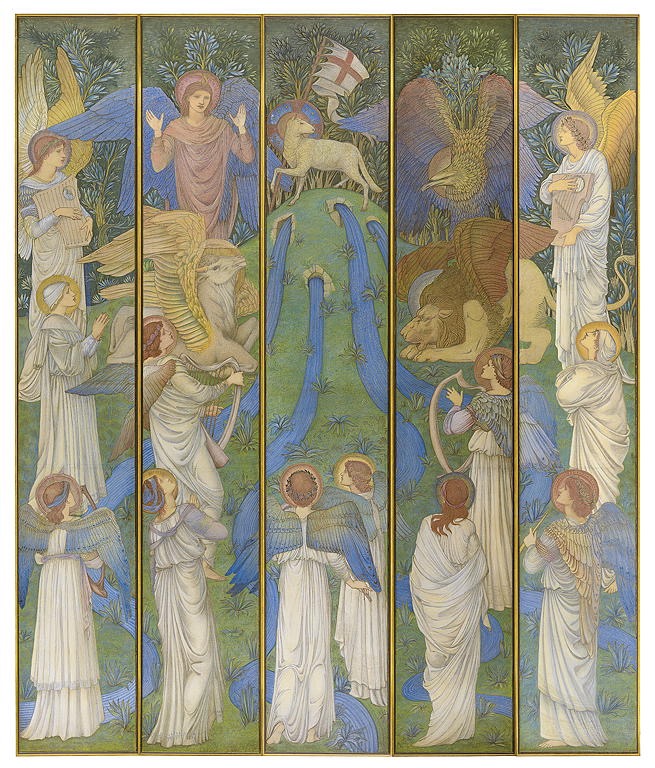
Sir Edward Coley Burne-Jones:
Paradise, with the Worship of the Holy Lamb
(c. 1875-80)
"…expect to witness him ending worlds."
Eventually, every despot in the history of this world so far has encountered the absolute necessity of EndingAWorld. Despots rely on promises of apocalyptic transformation, something exponentially worse than any actual threat warrants. Such threats encourage a sense of powerfulness like no other stance ever does. If one can end a world, it also demonstrates that essential cavilier nature everyone expects from a despot, seemingly capable of EndingAWorld with all the sangfroid usually reserved for dispatching a gnat. Nothing screams absolute power like such indifference does, a whisper vanquishing a hurricane, a shrug demolishing some ancient civilization.
Worlds end every day, as easily and as often as worlds are born.
PlayingChicken
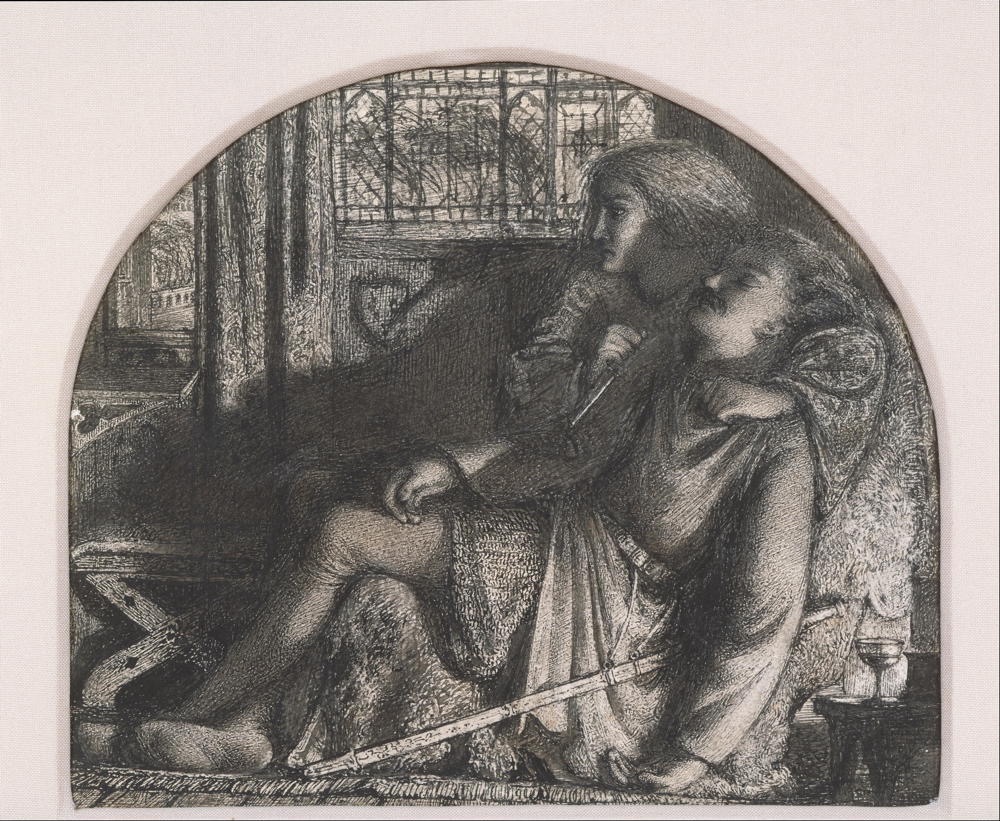
Sir Edward Coley Burne-Jones:
"I rose up in the silent night; I made my dagger sharp and bright"
(c. 1859-60)
"Their approach reliably produces little else but chicken shit."
I believe that I can successfully judge the relative maturity of someone by identifying the kinds of games they choose to play. The field of Transactional Analysis proposes that all humans engage in game-playing behavior, though not always deliberately. The inadvertent games might disclose even more about a person than any consciously chosen one, though. As outlined in the best-selling Games People Play by Eric Berne (Grove Press, 1964, ISBN 0-345-41003-3), a book criticized by many professional psychologists, identifying these games can provide both entertainment and discernment, giving a label and therefore a meaning to otherwise confusing behaviors. Who hasn’t found insight in finally interpreting an interaction as merely a Mind Game? In my hierarchy, the more childish games often seem to be favored by the less mature.
Among the least strategic possible games stands PlayingChicken.
NewlyNormalizing
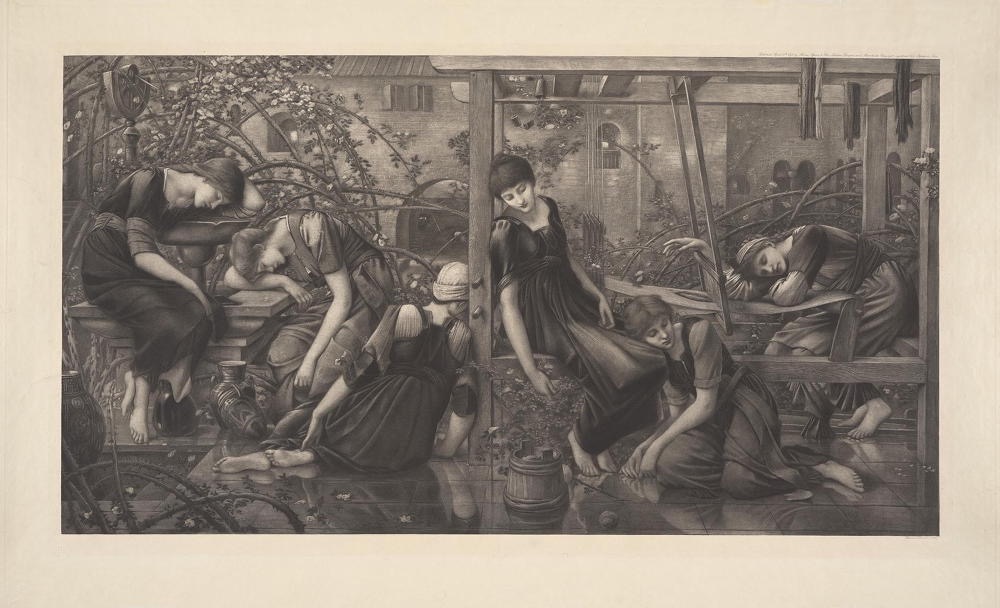
Sir Edward Coley Burne-Jones:
The Garden Court, photogravure print
(1892)
"…Heaven help us since we can't seem to help ourselves."
It might be that we’re each cursed to die in some foreign land, far away from familiar territory, especially if we stay close to home ground. Changes brought on by travel or relocation hold nothing compared to those that visit me uninvited. I might have expected to hold some of my old life static as I entered the traumatic final stages of my existence, but if so, I seem destined to experience ever more deepening disappointment. My old world was not even inherently that unstable. It seemed capable of continuing to nearly ad infinitum while entropy went right ahead and had her ways with me. But we grew impatient, I guess, or discontented with the balances that have managed to protect us for the better part of three generations. We opted to seek greatness, though we struggled to agree on what achieving that might achieve. We became the product of our discontent rather than delivering ourselves from any ultimately questionable evil.
I live and grieve like I once merely lived and breathed.
Restsurrection
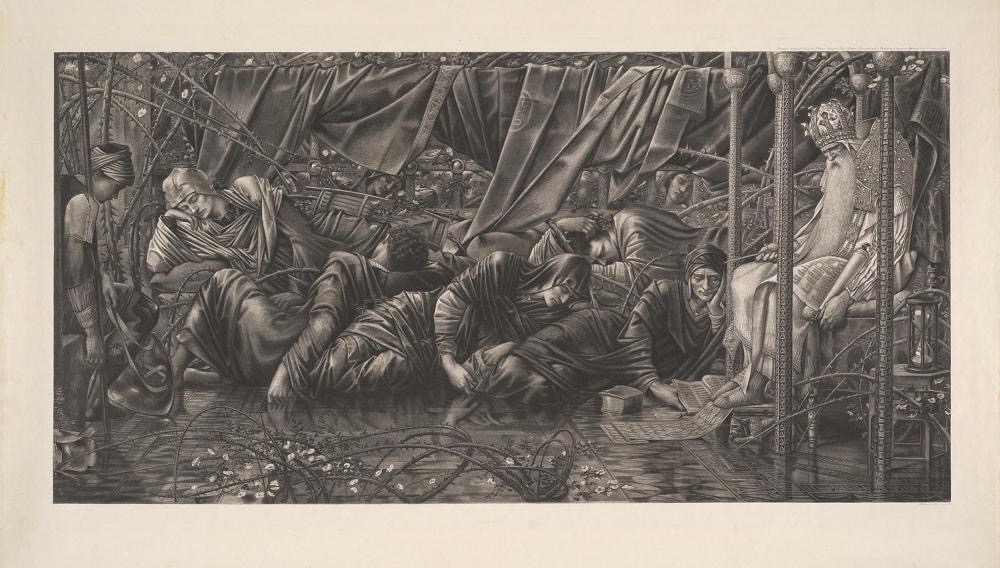
Sir Edward Coley Burne-Jones:
The Council Chamber, photogravure print
(1892)
"…resurrected again until sometime after next Christmas."
I realized again this week that I can no longer claim to be a Christian. I’m uncertain if I could ever declare myself such with conviction, even after full immersion baptism, I felt more conscript than convert. I had bowed to the peer pressure. Everyone else in my Sunday School class had enrolled in the special studying and showed up on that Sunday wearing white shirt and pants while carrying a change of clothes. We’d all stood waist-deep in the baptismal font with the pastor while the little window slid open to reveal the entire congregation watching. We’d each in turn accepted that folded handkerchief over our noses and allowed ourselves to be submerged, ruining our hairstyles for Jesus. We’d also slopped off to a changing room to towel off and change wardrobe, supposed to have been forever changed. I suspect that most of us feigned results as I had.
I still observe the Christian calendar, though.
HardTimes
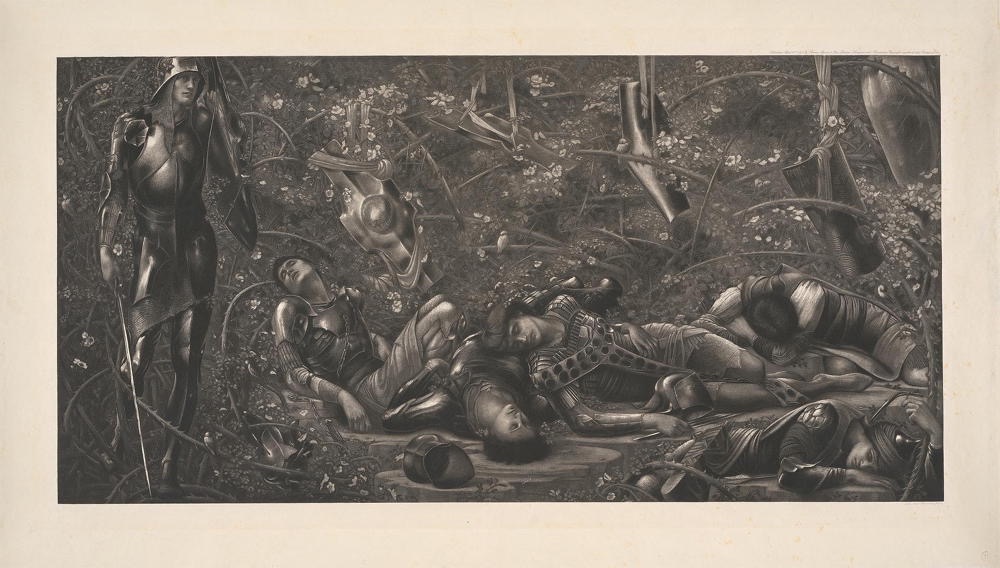
Sir Edward Coley Burne-Jones:The Briar Wood, photogravure print
(1892)
"Waiting for perfection only perfects waiting."
This story serves as a soliloquy by me for me, an encouraging little sermon to bolster my forward momentum. Yesterday, I finally completed all the hurdles for approving my Cluelessness book for publication. The gauntlet qualified as an absurdist’s rendering of bureaucratic inefficiency, but I made my way through it. It seemed like the least effective process possible, but I still managed to make progress and succeed. I felt like simply giving up several times, but I persisted. Cluelessness will launch into another war, into a distraction machine that worsens anything The Blind Men, my first book, faced. HardTimes are not necessarily EndTimes, just EndDays with trepidations. …
—
EndDays inevitably seem like HardTimes.
Weekly Writing Summary For The Week Ending 04/02/2026
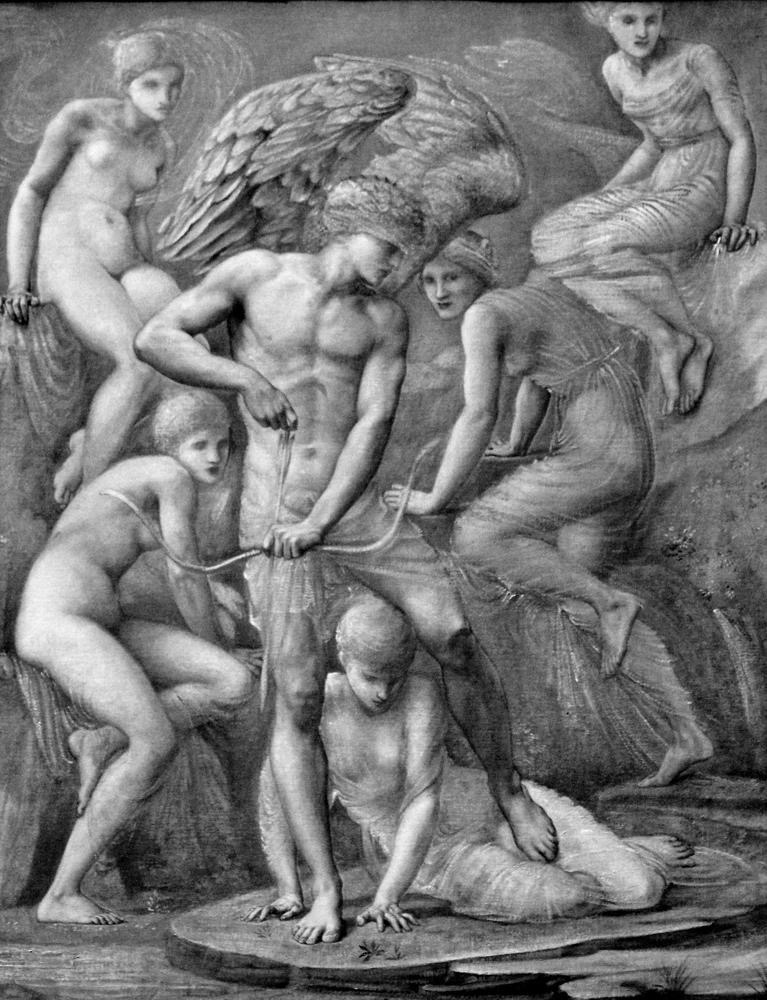
Sir Edward Coley Burne-Jones:
Cupid's Hunting Fields
(circa 1880)
This week’s writing carried me into the second week of EndDays, moving beyond the creation myth that anchored the first week and into the territory that creation inhabits. I found myself exploring what it actually feels like to live inside EndDays — the lowered sky, the dimming light, the missing landmarks, the unimaginable actions undertaken without my permission in my once-good name that have somehow become routine. The week opened with a DayOfRest that turned out to be anything but idle, then darkened into the spreading dimness of LetThereBe (Light) before finding its footing through TheLimit, Ungrounding, Negavation, and TheFourOppressions. I ended the writing week with a secular sermon I didn’t know I had in me, contrasting Roosevelt’s Four Freedoms against the MAGA movement’s four grim replacement oppressions. This week’s flow surprised me. The territory I traversed surprised me more. Thank you for following along!
TheFourOppressions
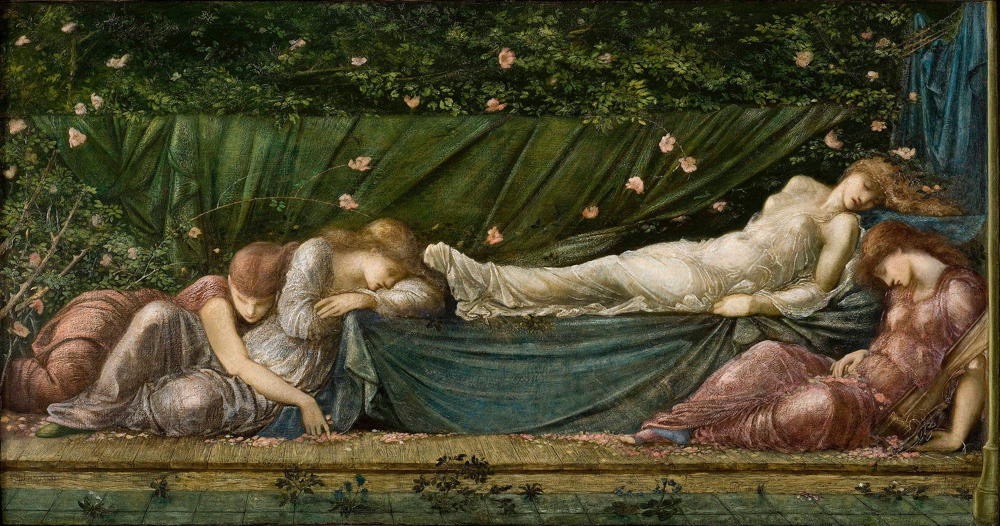
Sir Edward Coley Burne-Jones:
The Sleeping Beauty from the small Briar Rose series
(circa 1890)
"I vote for four simple freedoms again. Amen!"
In the months leading up to the United States entering the already raging World War, President Franklin Roosevelt articulated what he labeled The Four Freedoms in his January 1941 State of the Union Address. He intended these points to inspire a vision of a post-war world, where freedom would once again rule. These points were aspirational then, embodying what he hoped could be the hopes and dreams of those whose faith in freedom might well be severely challenged, even discouraged, over the upcoming period. This speech came nearly a year before Pearl Harbor, when we were still squabbling over whether to lend our support to Britain. Roosevelt decided to try to settle the questions about what we thought we might be fighting for, signaling an end to our period of isolationism.
He enumerated four “essential” human freedoms: Freedom of speech and expression, Freedom of every person to worship God in their own way, Freedom from want, meaning economic understandings that secure a healthy peacetime life for all, and Freedom from fear, specifically a worldwide reduction of armaments to prevent physical aggression.
Negavation
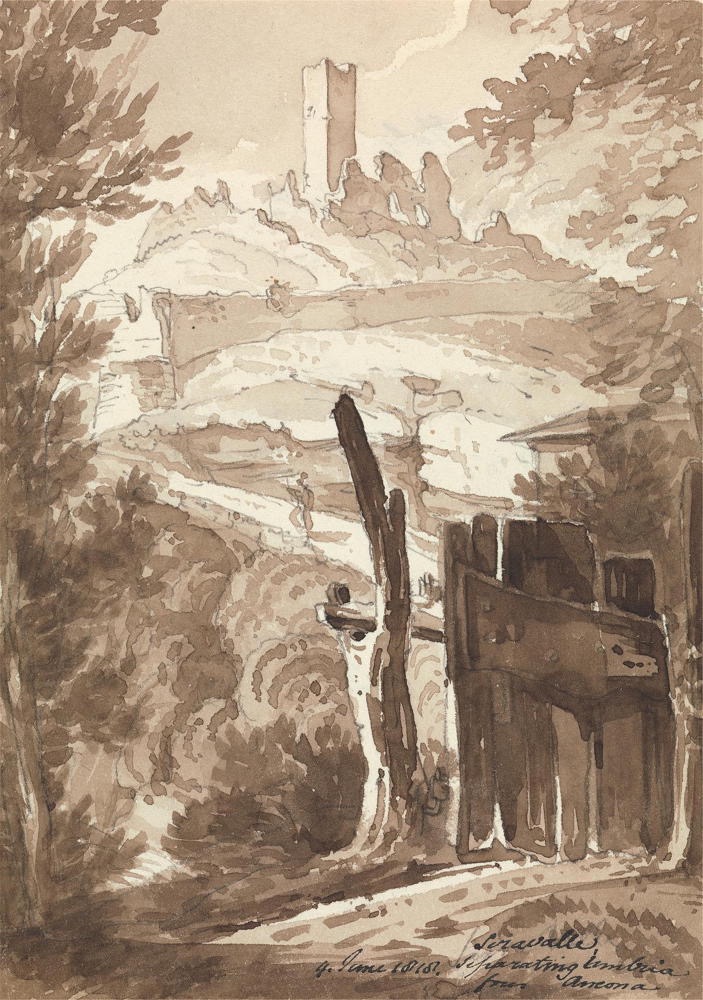
Sir Edward Coley Burne-Jones: Ruins at Chiaravalle near Ancona, Italy
(1818)
“…it might not ever snap back to the way it was…”
Familiar reconnoitering points have disappeared. Long-relied-upon way points have turned unreliable, and travel has turned into repeated bouts of disorientation, degrading into despair. Where did the old reliables disappear? I know why they fled, but I cannot know to where or if they will ever return. (I suspect they won’t.) After months of denial, a begrudging acceptance starts settling in, then an emotion almost resembling pride. I cannot successfully hide my grief over losing reliable trails, but I realize that I am no longer precisely lost. I can still anticipate, if not traditionally navigate. I accept that I will face detours and that my original estimates won’t be worth shit, as if they ever were. A different game seems to be afoot now, and I am more-or-less successfully adapting. Do I wish I had not lost the benefit of all my former experience? That’s a definite yes! Am I nonetheless pleased that I still seem capable of discovering viable alternatives? That yields a more hesitant acceptance, though it still distills into a definite yea.
I still register shock when encountering another difference.
Good For A Goose

Comeuppance (32)
Decency (90)
Decency Unscrolling (1)
EndDays (92)
Exiled (90)
Fambly (93)
FollowingChapters (93)
Grace (92)
Humor (2)
iAlogue (1)
Letters to the Editor (1)
NextWorld (91)
Personal (18)
Prosperity (94)
Steam Festival (4)
Unscrolling (89)
Vaporized (6)
Work (16)
September 2026
August 2026
July 2026
June 2026
May 2026
April 2026
March 2026
February 2026
January 2026
December 2025
November 2025
October 2025
September 2025
August 2025
July 2025
June 2025
May 2025
April 2025
March 2025
February 2025
January 2025
December 2024
November 2024
October 2024
September 2024
August 2024
July 2024
June 2024
May 2024
April 2024
March 2024
November 2006
October 2006
September 2006
August 2006
July 2006
June 2006
May 2006
April 2006
March 2006
February 2006
January 2006