Weekly Writing Summary For The Week Ending 04/02/2026
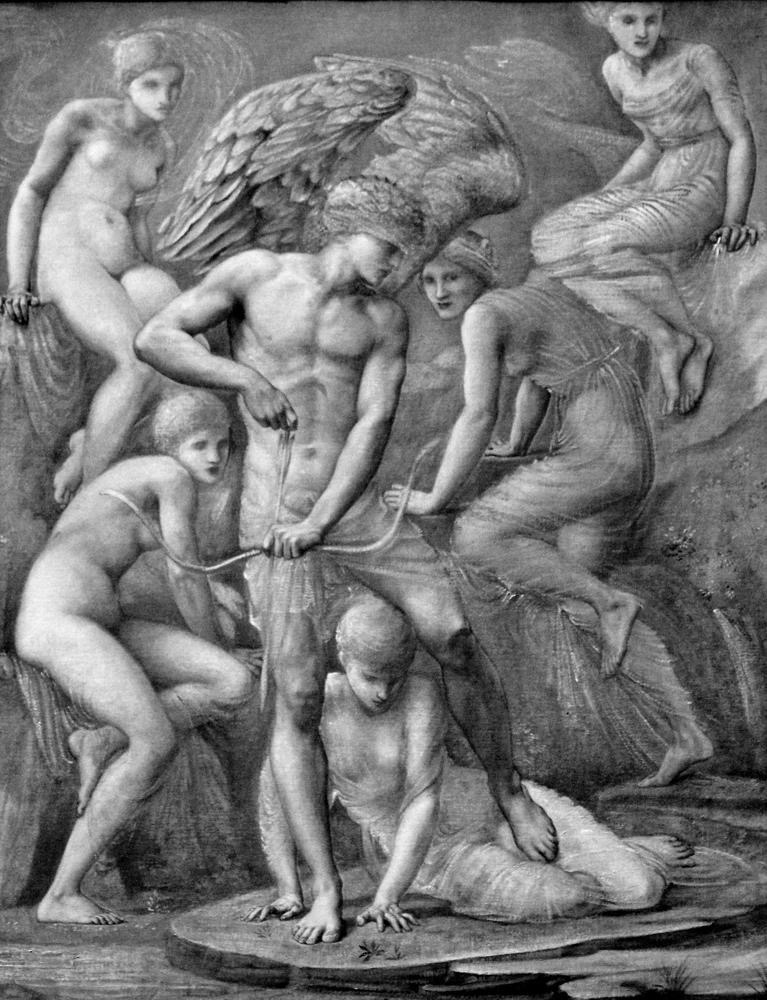
Sir Edward Coley Burne-Jones:
Cupid's Hunting Fields
(circa 1880)
This week’s writing carried me into the second week of EndDays, moving beyond the creation myth that anchored the first week and into the territory that creation inhabits. I found myself exploring what it actually feels like to live inside EndDays — the lowered sky, the dimming light, the missing landmarks, the unimaginable actions undertaken without my permission in my once-good name that have somehow become routine. The week opened with a DayOfRest that turned out to be anything but idle, then darkened into the spreading dimness of LetThereBe (Light) before finding its footing through TheLimit, Ungrounding, Negavation, and TheFourOppressions. I ended the writing week with a secular sermon I didn’t know I had in me, contrasting Roosevelt’s Four Freedoms against the MAGA movement’s four grim replacement oppressions. This week’s flow surprised me. The territory I traversed surprised me more. Thank you for following along!
— — —
Weekly Writing Summary
DayOfRest
“I’m planting those flowers this morning.”
This EndDays Story finds the creation of my EndDays universe complete, leaving me facing a DayOfRest. Rest need not entail idleness, especially during EndDays.
My EndDays universe creation complete, I faced a DayOfRest and discovered I’d been mistaking play for obligation. Flats of flowers sat unplanted beneath our sacred apricot tree while I danced around the task, as if it would be work rather than renewal. The Muse and I have planted flowers together since our first Spring, thumbing our noses at whatever EndDays were trailing us then. I reflected on how EndDays can twist perspective, making potential salvation feel like impending damnation. LightWork — the kind that gains energy rather than expending it — turned out to be the answer. Like angels who never tire because their work is play, I realized that the revolution ahead requires the same orientation: indifference as resistance, play as the only thing that can trump oppression. I went out and planted those flowers.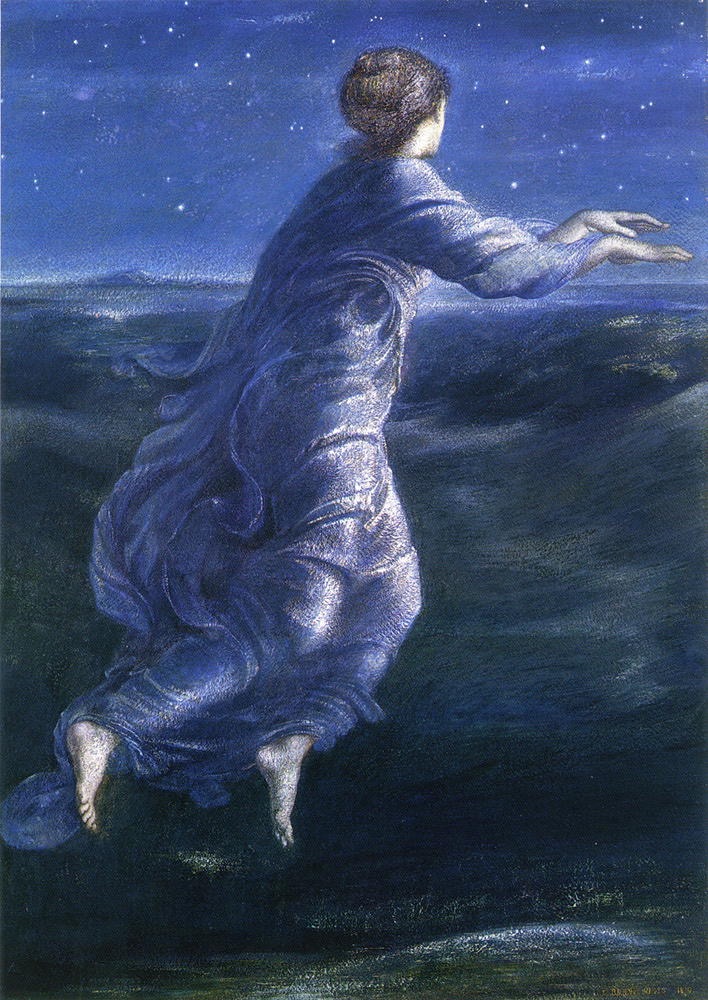
Edward Burne-Jones: Night (1870)
——
LetThereBe
“…seeing deafly…”
This EndDays Story finds me seeing deafly, seeking missing light.
I had grown to take light for granted — light in all its varieties: illumination, truth, justice, The American Way. I noticed the EndDays arriving when I saw the light beginning to fade, when information became more weapon than sustenance, when a spreading twilight replaced the immutables I’d always assumed were permanent. The pursuit of greatness introduced this darkness, and I found myself navigating by echo rather than vision, unable to clearly perceive my collective or individual future. I hold onto the hope that Spring will know the way to Summer, and that Summer will say, Let There Be, and I’ll be able to see my way forward in light again. This morning, I perceived the world deafly — the sky a low blue-grey dome, the Oregon Grape screaming yellow, crows barely audible through allergy-clogged senses — reaching upward like a frustrated seedling, seeking whatever light remains.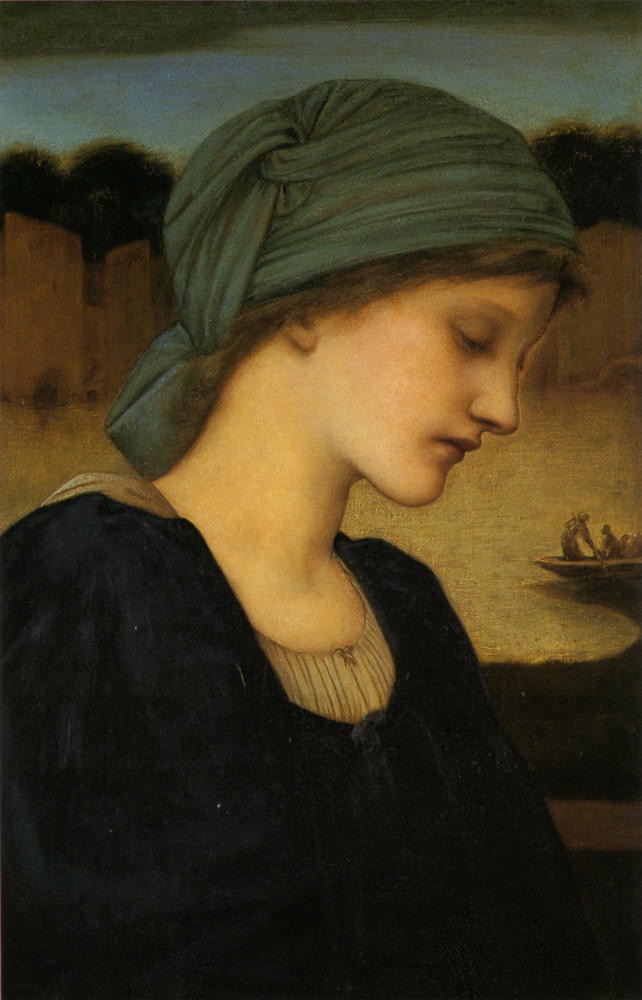
Edward Burne-Jones: Flamma Vestalis (1884 - 1890) — Gallery Notes: Burne-Jones’s daughter Margaret modeled for this painting. The Latin title refers to the Vestal Virgins of Rome, who tended the perpetual fire on the altar of the goddess Vesta. Begun before Margaret’s marriage in 1888, the painting aligns her with these chaste women, suggesting her innocence and purity.
—
TheLimit
“…when there are perfectly satisfying wishes lurking much closer and more convenient to home…”
This EndDays Story finds me wondering where TheLimit went. The Sky no longer seems as high or as worthy a limit as it seemed before EndDays appeared.
In EndDays, the sky has fallen — not metaphorically but practically, brought down shoulder-high by the great demeaning pursuit of mammon that calls itself Making America Great Again. I once consulted with a group facing a double-bind: relocate to Texas or be laid off. They had been suffocating on their unseen new freedom, unable to perceive the infinite alternatives still available to them. EndDays brings that same suffocation. Yet I find myself wondering if the microscopic might hold the wealth of kings, if loft and reach were always overrated stand-ins for something far better suited to who we actually might be. Why wish upon a star when perfectly satisfying wishes lurk much closer and more convenient to home? The sky’s the limit used to inspire. Now it radically limits. I’m learning to reach in new directions.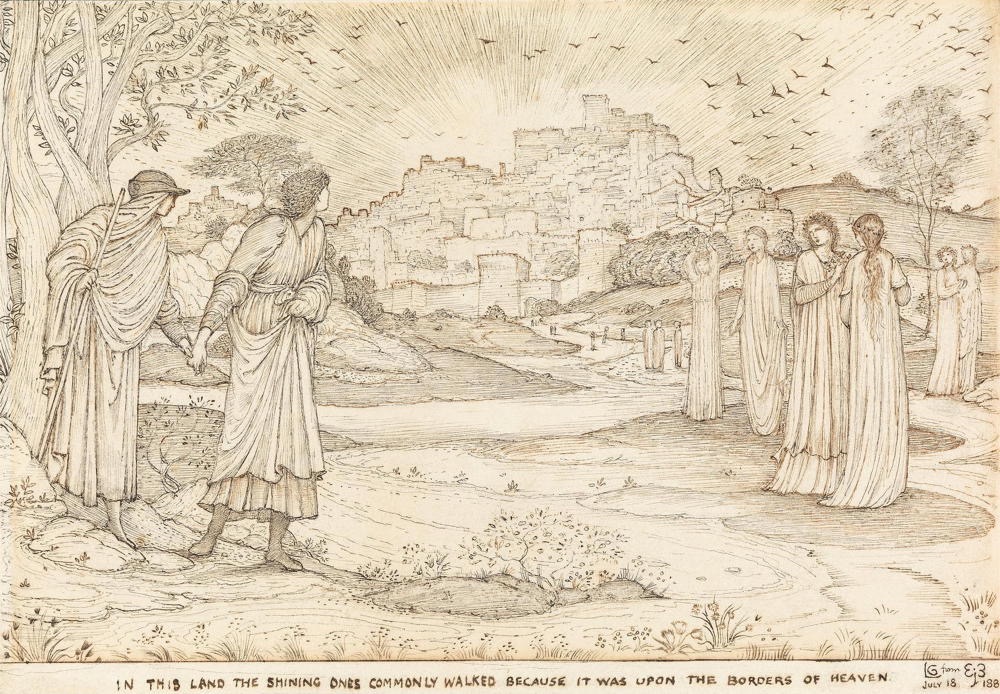
Edward Burne-Jones: The Land of Beulah (1881)
——
Ungrounding
“Sic semper tyrannis!”
This EndDays Story finds me engaging in an exercise I couldn’t have imagined myself doing two years ago.
If anyone had told me two years ago that I’d be sitting in a community coalition meeting, group-editing a declaration of resistance against domestic hostile forces, I wouldn’t have believed them. The Muse and I answered a local executive’s call to help coordinate a lawful, nonviolent response to what amounts to an invasion — the kind of thing Lithuanian or Polish partisans might have convened to discuss. The sheriff raised the most objections in the room, then turned out to be our most helpful voice, questioning presumptions that had let us ski way out over our skis. Nobody named the elephant: the Republican Party. We group-copyedited our outrage into gentle tones, as if the opposing general might blush and reconsider. I’m not fooled by the apparent peace surrounding us here. I stand ready, hoping the arms we take up will be ballots. Sic semper tyrannis.e neither believable history nor inspiring fiction. His results can’t and don’t validate anything.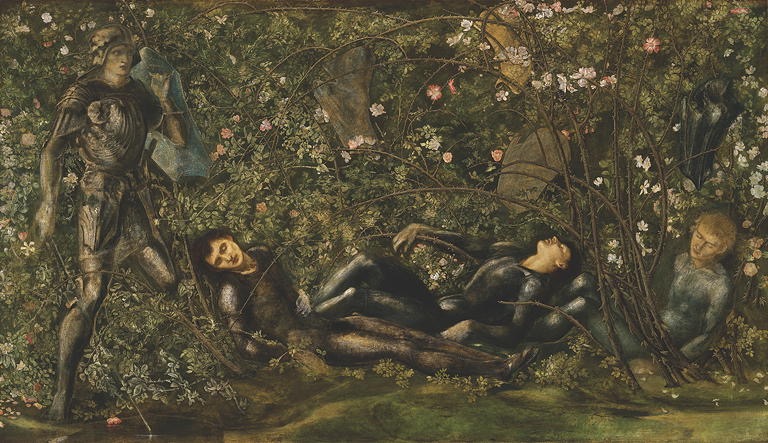
Sir Edward Coley Burne-Jones: The Prince entering the Briar Wood (1869)
——
Negavation
“…it might not ever snap back to the way it was…”
This EndDays Story focuses upon what might prove to be a permanent disruption, forcing me to change my primary means of navigation into what I’ll call Negavation.
Familiar landmarks have disappeared, and I’ve had to develop a new form of navigation: Negavation — finding my way by what’s missing rather than what’s there. Empty shelves, closed stores, and inventory that simply can’t be had anywhere anymore. My Depression-era parents were master peasants before they’d grown out of their knee pants, one step from the poorhouse their entire lives, no matter how prosperous they became. I had my own apprenticeship in privation — baking Sunday beans, learning peasant cooking during the lean divorce and dismemberment years — and adapted well enough then. But this time feels exponentially more limiting. I feel like an alien in my own hometown, declared a domestic terrorist for calling myself an anti-fascist. I’m Negavating around these inconveniences while finally accepting what I most resist accepting: it might not ever snap back to the way it was, or could have been, again.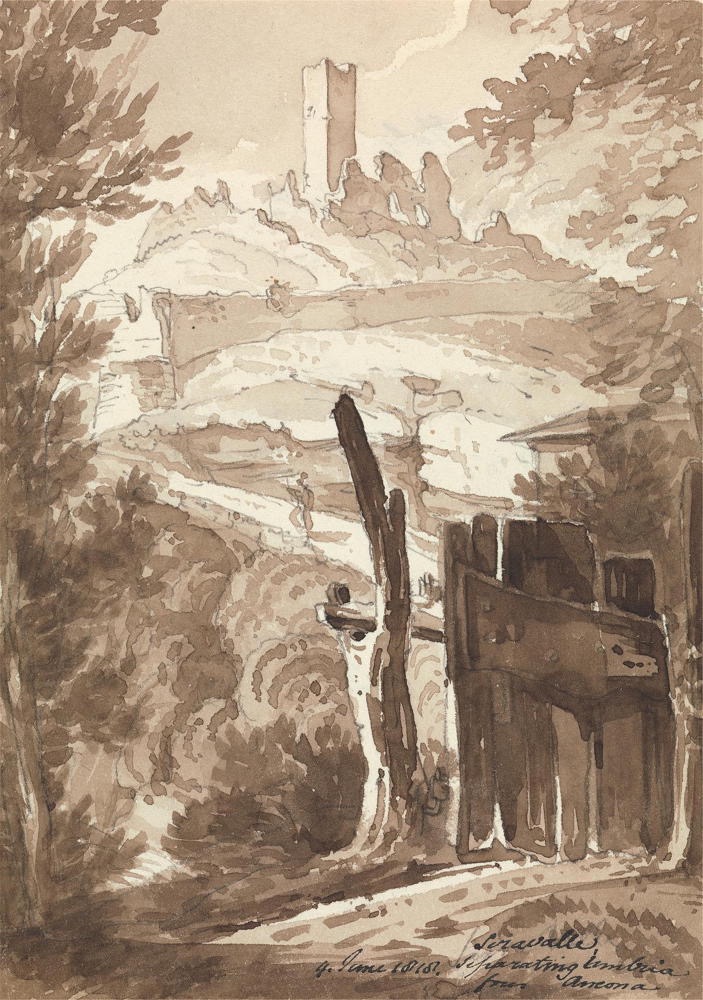
Sir Edward Coley Burne-Jones: Ruins at Chiaravalle near Ancona, Italy (1818)
——
TheFourOppressions
“I vote for four simple freedoms again. Amen!”
This EndDays Story contrasts Roosevelt’s Four Freedoms with what I label the MAGA’s Four Oppressions.
Roosevelt articulated his Four Freedoms in January 1941, nearly a year before Pearl Harbor, to help settle the question of what we thought we might be fighting for. Those freedoms became the underpinning of our engagement in that terrible war, and, later, of the United Nations’ Universal Declaration of Human Rights in 1948. They outlined what decency meant to me and to the ever-expanding free world. Then this country traded in its reliable cow for a hill of magic beans and set about writing wrongs — with our beleaguered Four Freedoms cast as the enemy. The MAGAs proposed four replacements: the freedom to squelch speech, the freedom to impose Christian Nationalism, the freedom to oppress the poor for being poor, and the freedom to inflict fear. Quite the accomplishment, to flip our identity from aspiring peacemaker to the world’s chief oppressor. If this is what greatness costs, I vote for four simple freedoms again. Amen.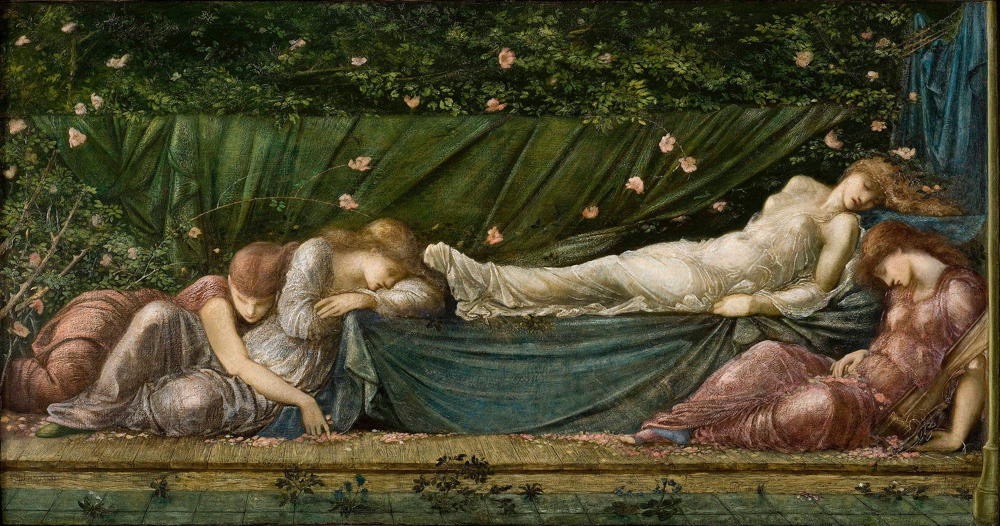
Sir Edward Coley Burne-Jones: The Sleeping Beauty from the small Briar Rose series (circa 1890)
——
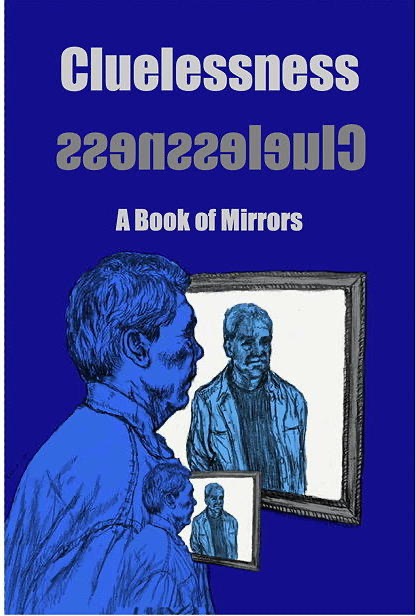
Right On Schedule
I am still waiting for final confirmation on Cluelessness, A Book of Mirrors, and the galley proofs, so I can see for myself whether my wishes might eventually make it into print. I have recently been inundated by social media advertisements for every possible kind of publishing support: vanity presses, editors of every sort, folks who've specialized in helping authors create book websites, and promotion experts! I couldn't even determine what services some of them were advertising. Much of this promotion seems designed to encourage my dissatisfaction with how it's always been. I know of no author who feels anything like 100% confident that they're doing The Lord's Work. Many, like me, feel less worthy than their readers usually insist they might be. These exchanges prove astounding because I might have mistaken myself as at least my most knowledgeable reader, better able to assess my positives and negatives than anybody else. But this presumption probably never proves to be true for any writer, certainly not myself.
We writers ruin ourselves writing. We cannot read anything without relating to what the author must have had to experience to give birth to that piece of work. I'm jealous of the author of that terrific spy novel I finished reading this writing week. I envy anyone able to create what ultimately gets labeled as fiction. All writing should properly be classified as fiction since every paragraph of it got first filtered through some prejudicial-by-nature author. I can no more write nonfiction than I can fly, yet my work gets reliably classified by some other label than fiction. It was all a product of my anemic imagination, even the stuff that others might easily recognize as accurate descriptions of something that actually happened. Accidental convergences, I insist.
My Cluelessness book might, I'm still somewhat confident, still become available sometime later this year. Publication schedules seem to mirror every other gestation process. The foal always arrives whenever it arrives, right on schedule. Thank you for following along through these especially perilous EndDays!
I employed Claude.ai, a commercial AI-powered text editor, using it to perform repetitive copy/pasting work and to create the above story summaries, prompting with: “Please briefly summarize this story in the first person while retaining the original voice.” I manually copy-edited each result.
©2026 by David A. Schmaltz - all rights reserved
Good For A Goose

Comeuppance (19)
Decency (90)
Decency Unscrolling (1)
EndDays (92)
Exiled (90)
Fambly (93)
FollowingChapters (93)
Grace (92)
Humor (2)
iAlogue (1)
Letters to the Editor (1)
NextWorld (91)
Personal (18)
Prosperity (94)
Steam Festival (4)
Unscrolling (89)
Vaporized (6)
Work (16)
September 2026
August 2026
July 2026
June 2026
May 2026
April 2026
March 2026
February 2026
January 2026
December 2025
November 2025
October 2025
September 2025
August 2025
July 2025
June 2025
May 2025
April 2025
March 2025
February 2025
January 2025
December 2024
November 2024
October 2024
September 2024
August 2024
July 2024
June 2024
May 2024
April 2024
March 2024
November 2006
October 2006
September 2006
August 2006
July 2006
June 2006
May 2006
April 2006
March 2006
February 2006
January 2006




.jpg)
