Negavation
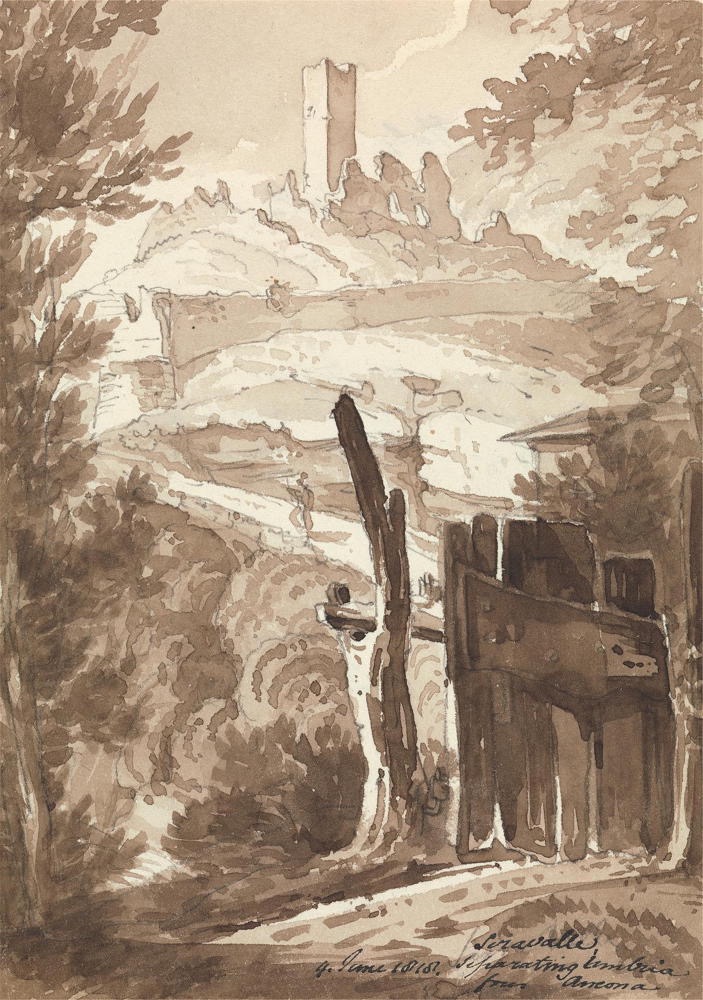
Sir Edward Coley Burne-Jones: Ruins at Chiaravalle near Ancona, Italy
(1818)
“…it might not ever snap back to the way it was…”
Familiar reconnoitering points have disappeared. Long-relied-upon way points have turned unreliable, and travel has turned into repeated bouts of disorientation, degrading into despair. Where did the old reliables disappear? I know why they fled, but I cannot know to where or if they will ever return. (I suspect they won’t.) After months of denial, a begrudging acceptance starts settling in, then an emotion almost resembling pride. I cannot successfully hide my grief over losing reliable trails, but I realize that I am no longer precisely lost. I can still anticipate, if not traditionally navigate. I accept that I will face detours and that my original estimates won’t be worth shit, as if they ever were. A different game seems to be afoot now, and I am more-or-less successfully adapting. Do I wish I had not lost the benefit of all my former experience? That’s a definite yes! Am I nonetheless pleased that I still seem capable of discovering viable alternatives? That yields a more hesitant acceptance, though it still distills into a definite yea.
I still register shock when encountering another difference. Once was that I could imagine a circuit and then circumnavigate it with little exception. I knew where to go to do whatever I proposed. Now, it’s different. EndDays have not only brought shockingly more expensive gasoline, it’s brought inventory shortages and closing stores. I cannot be as certain anymore. My actual paths seem more informed by what I find missing. I leave more often without whatever I’d simply formerly forgotten. Now I leave empty-handed because the store couldn’t get their hands on what I sought. I’m learning how to do without again, moderating my expectations to routinely include my fair share of disappointment. I swerve to some alternative, informed first by what I couldn’t acquire. This negative navigation I’ve grown to think of as Negavation, and I’m realizing that this has become my new normal, like it or not.
Of course, I didn’t think much of it at first, though I’d had considerable prior experience with it in my youth. My parents, Great Depression survivors, were filled with stories of routine borderline privations. They had become master peasants long before they’d grown out of their knee pants. My dad spoke of poaching deer to supply the supper table, and my mom spoke fondly of what seemed like near starvation to us kids, who’d been raised in plentier times. Still, we shopped the dented can store, where odd lots of damaged case lot cannery vegetables were sold without labels to the public, at pennies on the dollar. This was how we learned to pinch our pennies, too. It seemed to me then that we could have afforded more luxury than my folks allowed themselves to afford, so deep had been their early indoctrination into maintaining a continuing dread of impending privation. They were one step from the poorhouse until they died; however, otherwise prosperous they became.
I admit to having been spoiled by plenty in my time, though I’ve had my chances to adapt to loss, as well. The divorce and dismemberments radically lessened my disposable income, nudging me back into an undergraduate lifestyle while in my forties. I took the setback as probably temporary and, I thought, maintained what was left of my dignity fairly well. I’d bake a pot of beans on Sunday night, then feast on them through the following week, breakfast and dinner. I took to learning how peasants cooked, transforming stale bread into fabulous soup and religiously avoiding all the expensive cuts of meat, without remorse or obvious lasting damage. I forged new norms out of apparently limiting resources until I hardly remembered an any more prosperous where or when. My pathways shifted, and I adapted.
This time, these EndDays seem exponentially more limiting. I once, for instance, found pride in associating with my birthplace. My country sure used to seem ‘of me,’ if not precisely my identity. Now I feel like an alien in my own hometown, and have been declared a domestic terrorist for considering myself an anti-fascist. This situation’s somewhat worse than my grocery store being “temporarily” out of my preferred brand of beer due to “supply chain problems,” a term I’ve learned means ‘self-inflicted political problems.’ It means we put an immature eight-year-old in charge, and he, understandably, lacks executive discipline. If I were less mature myself, I could get grudgy about my repeated inability to navigate my world as I’d grown accustomed. Every day brings another otherwise unnecessary disruption, apparently the result of our titular leader’s disabilities. I’m Negavating around even these inconveniences while finally accepting that it might not ever snap back to the way it was or could have been again.
©2026 by David A. Schmaltz - all rights reserved
Good For A Goose

Comeuppance (31)
Decency (90)
Decency Unscrolling (1)
EndDays (92)
Exiled (90)
Fambly (93)
FollowingChapters (93)
Grace (92)
Humor (2)
iAlogue (1)
Letters to the Editor (1)
NextWorld (91)
Personal (18)
Prosperity (94)
Steam Festival (4)
Unscrolling (89)
Vaporized (6)
Work (16)
September 2026
August 2026
July 2026
June 2026
May 2026
April 2026
March 2026
February 2026
January 2026
December 2025
November 2025
October 2025
September 2025
August 2025
July 2025
June 2025
May 2025
April 2025
March 2025
February 2025
January 2025
December 2024
November 2024
October 2024
September 2024
August 2024
July 2024
June 2024
May 2024
April 2024
March 2024
November 2006
October 2006
September 2006
August 2006
July 2006
June 2006
May 2006
April 2006
March 2006
February 2006
January 2006