Dirt
Sir Edward Coley Burne-Jones:
Study for 'The Sleeping Knights'
(About 1870)
"I'm Just Visiting here."
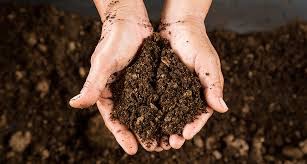
I engage hesitantly, reverently. I never take this work lightly, for it contains consequences. I am less a homeowner than a steward of soil, the house and fences, gazebo and garage, mere backdrops for the real engagement. I know every square inch of the soil surrounding this house. I have crawled across it more than once or twice, though I never counted the number of my interventions, for that would surely have violated some deeper, if unspoken purpose. One stewards soil invisibly, dedicatedly. I cannot seem to leave alone what others might believe was already well enough alone. I seek no less than perfection, knowing full well that shortcomings will always enter into my equation. I know my base soils. I can feel the difference between that powder-fine NW corner of the front yard that’s never had an ounce of amendment and the NE corner, which has absorbed its original weight and volume in perlite, peat, and attention.
I was inspired by exposure to the original Victory Garden PBS series, the one hosted by its founder, James Underwood Crockett, a charming Down-Easter, a master gardener. He transformed a gravel parking lot adjacent to Boston’s PBS Station into a little Garden of Eden, with friable soils and an enviable greenhouse. He grew everything imaginable, and each vegetable looked picture-book perfect on camera. He even built his own composter and published those plans in the series’ companion book, which I pored through like some sort of religious fanatic scanning my copy of The Dead Sea Scrolls. I built my own composter, too, to his specifications, and it’s still spitting out its black gold, resplendent with past seasons’ cherry and apricot pits, some sprouted, and turning turningforkfuls of tiny composting worms voraciously consuming every ounce of kitchen vegetable waste. I grace each transplant with a few precious ounces of this marvel to prove that I, too, became a gardener, if never necessarily a master.
Yesterday, I pulled my handplow out of my garden tool bucket, slapped on a havelock to protect my neck from sunburn, and commenced to crawl down the raised bed adjacent to The Muse’s Marion berry patch. I’d amended that soil over decades. I’d taken off the sparse winter weed intrusion a couple of weeks before, so I set about clawing deeply into that soil. The Dirt responded with practiced consent. I’d pull and push each bladeful, then move on to the next in line, circling back to confirm that I’d loosened every clod. This Dirt, my Dirt, responded with practiced consent. This effort amounted to me scratching its back. I crawled backwards down the rectangular bed, discarding the few pebbles I encountered and undermining any remaining cheat grass rhizomes, discarding them onto the bricked-in path adjacent. Those bricks hold the spring warmth and help transplants and seeds establish themselves, though they also turn the midsummer garden into a genuine bake oven on Summer’s inevitable hundred-degree days. The tomatoes love that supplemental heat.
I planted some Walla Walla Sweet Onion sets, baby plants with oversized roots. I excavated a deep-enough V, sprinkled in some powdered bone meal, then set in each plant before squeezing the moist soil around it in a genuinely loving embrace. The planting went quickly, with me listening to the Gnats/Giants game. An April Sunday afternoon in heaven, me on my knees, though not precisely praying. I was celebrating, harvesting, while planting this year’s crop. I was harvesting decades of dedicated practice. That soil holds a better portrait of me than does my accumulated catalogue of writing from that period, though the soil might be too deeply encoded for anyone but me to glean its underlying story. The morning glory will not submit to anything I’ve thrown at it. The best I’ve achieved has been a rough parity. I can keep it in check by frequent cultivation, and though I swear I’ve removed every bit of it, it always returns, if not necessarily with a vengeance. It returns with insistence, a counterbalance lest I conclude that I’m in any way a master of my garden, the way that James Underwood Crockett surely was, long ago now, a master of his.
I own nothing in this world. My time seems spoken for before I can catch up to it most days. My home remains mortgaged to a not completely indifferent bank, though I can swear that it has no notion of what it actually owns. I feel blessed enough to have gained permission to spread perlite and peat on some loose Loess soils, to have grubbed out that inherited poisonous oleander hedge and the innumerable soil-acidifying evergreen shrubs. I’ve dug to China and back in the security of my own backyard. It’s little wonder I feel hesitant to leave, even for a well-deserved weekend away or a European holiday, because I know where I belong. I belong where past years’ cherry pits aerate the soil, where volunteer tomatoes and plums poke their heads up come Spring. Home might not necessarily be where the heart sings, but where one’s Dirt resides as respite from otherwise poisonous EndDays doings. I’m Just Visiting here.
©2026 by David A. Schmaltz - all rights reserved

Good For A Goose

Comeuppance (19)
Decency (90)
Decency Unscrolling (1)
EndDays (92)
Exiled (90)
Fambly (93)
FollowingChapters (93)
Grace (92)
Humor (2)
iAlogue (1)
Letters to the Editor (1)
NextWorld (91)
Personal (18)
Prosperity (94)
Steam Festival (4)
Unscrolling (89)
Vaporized (6)
Work (16)
September 2026
August 2026
July 2026
June 2026
May 2026
April 2026
March 2026
February 2026
January 2026
December 2025
November 2025
October 2025
September 2025
August 2025
July 2025
June 2025
May 2025
April 2025
March 2025
February 2025
January 2025
December 2024
November 2024
October 2024
September 2024
August 2024
July 2024
June 2024
May 2024
April 2024
March 2024
November 2006
October 2006
September 2006
August 2006
July 2006
June 2006
May 2006
April 2006
March 2006
February 2006
January 2006