Erring
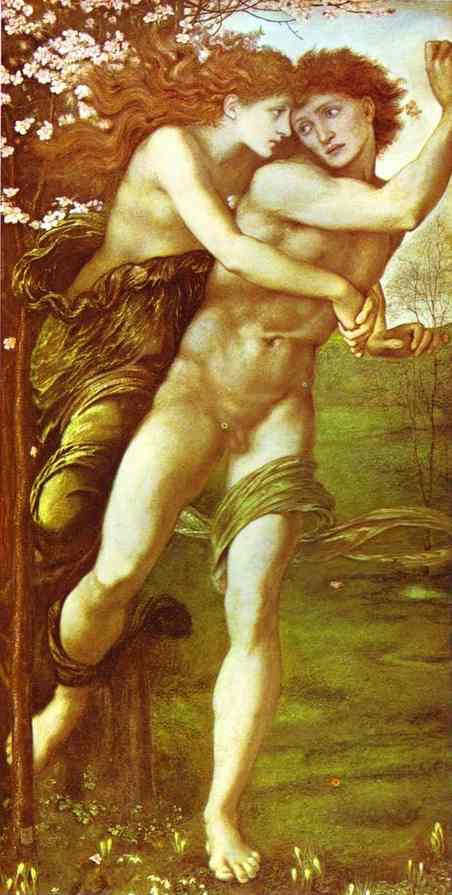
Sir Edward Coley Burne-Jones:
Phyllis and Demophoon
(1870)
"Was any of his ever any different?"
The first copies of my newly published book, Cluelessness, arrived yesterday. I opened the box to find five fresh copies, covers still sticky with whatever they use to cover new paperbacks at the factory. This qualified as an out-of-body experience, akin to witnessing the birth of a child, though significantly less messy. It was emotionally complicated, for such moments reintroduce the age-old tussle between me and my imposter syndrome, for in most ways, I remain a pretend author. I write in the very early mornings when no witnesses can catch me. I publish to a fairly select list, not tens of thousands of social media fans. Heck, I don’t even earn anything other than experience for my efforts. If I were a real writer, my bestseller would have rendered me rich and famous. If I were the real McCoy, publishers would be storming my door seeking additional material. As it is, I write for my own edification, mostly, and for a small and extraordinarily generous community around The Muse and me.
My life immediately went on hold. I was holding the first evidence that my long-ago imagined experience had finally come to pass. I left supper simmering on the stove and sat on the back deck with the book in my lap, and began reading this strangely familiar work. I rather quickly found a typo, and not a little inadvertence, but one of the impossible-to-overlook sort. This could not have possibly been in the galley proofs I’d pored over prior to approving publication. It damned sure wasn’t in the manuscript I had shipped to the publishing coordinator from which the galley proof had arisen. I sighed deeply and continued. Then I found a second. Then, I felt inconsolable. After almost eighteen months of effort, the final work has flaws in its first few pages? Statistically, this means the work is very likely riddled with them.
Something must have intervened between final proofreading and publication. I assumed that the galley proof represented a photographic image identical to the eventual book, and that there would be no opportunity for anybody to mistype because no additional typing would be required to reach publication. When The Blind Men, my first published work, was published, I received a printed galley proof, one dummied up on crappy paper but in the otherwise exact shape and size of the final work. There could be no ambiguity between that sample and the eventual book, and there wasn’t. This publisher, though, explained that they’d eliminated that unnecessary step, replacing it with foolproof technology, an obvious oxymoron if I ever heard one. I had gone with that flow.
I slept poorly after. I had expected that I would probably sleep one of those Sleeps of the Gods after finally receiving hard evidence of having actually accomplished something that momentous. No dice. I fussed myself to sleep, angry that I might have been taken advantage of. Again. Like you, I have a history of occasionally being taken advantage of by some shyster or, through sheer inadvertence. I had belly-flopped before. I would just go back and compare the galley proof, which I had retained a copy of, with the hard evidence in that delivered package. Since the publisher prints on demand, I’ll just insist that they fix the problem that somehow magically appeared between galley proof and publication. I’ll also insist that they replace any copy already shipped with a corrected copy, at the publisher’s expense. That should fix it.
But the following morning, still sick to my stomach over this discouraging discovery, I could not, for the life of me, find the errors that had so troubled me the night before. I crouched in dim predawn light, quietly searching for the damning evidence, but I could not find it. I reread the first few pages again and again, feeling a tad more agitated with each unsuccessful pass. I set the book aside and set about writing this story, for it seemed to me in that moment, a moment that has now stretched into this moment, that EndDays are filled with such impressions. Experiences that sure seem discouraging, but that cannot quite be confirmed. I’ve been on an incredibly short emotional leash, ready to lash out at the barest hint of insult, as if I were already wounded and seeking revenge. My attempts to confirm these suspected insults often prove fruitless.
I move on from there. If these are, indeed, EndDays, time might not allow for restitution. It might be better to simply accept the cards as dealt. I’ll look again, after my blood pressure settles down, and confirm or refute the presence of errors. Then I’ll go on from there. Even if these were early days, resolution would probably insist that the best solution would prove to be acceptance. What’s a few errors in what I’d imagined to be a perfect representation of my incipient Cluelessness? Perhaps a reader would just consider those errors deliberate. I’ll get ‘em fixed if I can. If I can’t, I suppose I’ll live, though not in quite the grandeur I’d presumed I’d have to become accustomed to after publication. Was any of this ever any different?
©2026 by David A. Schmaltz - all rights reserved

Good For A Goose

Comeuppance (31)
Decency (90)
Decency Unscrolling (1)
EndDays (92)
Exiled (90)
Fambly (93)
FollowingChapters (93)
Grace (92)
Humor (2)
iAlogue (1)
Letters to the Editor (1)
NextWorld (91)
Personal (18)
Prosperity (94)
Steam Festival (4)
Unscrolling (89)
Vaporized (6)
Work (16)
September 2026
August 2026
July 2026
June 2026
May 2026
April 2026
March 2026
February 2026
January 2026
December 2025
November 2025
October 2025
September 2025
August 2025
July 2025
June 2025
May 2025
April 2025
March 2025
February 2025
January 2025
December 2024
November 2024
October 2024
September 2024
August 2024
July 2024
June 2024
May 2024
April 2024
March 2024
November 2006
October 2006
September 2006
August 2006
July 2006
June 2006
May 2006
April 2006
March 2006
February 2006
January 2006