Weekly Writing Summary For The Week Ending 05/28/2026

Sir Edward Coley Burne-Jones:
Hero lighting the Beacon for Leander
(1885)
This week’s EndDays dispatches arrived in the aftermath of standing up in a room full of local leaders and saying the thing that needed saying. The writing ranged from the patient fury of Tolerance to the slow slide of Erosion, from the epistemological trap of ReceivedKnowledge to the paradox of ExperTease, from the systematic cruelty of Capriciousity to the civic illiteracy of Gumment. The week also brought a sophisticated publishing fraud using a real editor’s name and a nearly correct domain — and BookBub, which appears to be the genuine article. The series found its full voice this week. Then it was already Thursday again.
Thank you for following along!
— — —
Weekly Writing Summary
Tolerance
“There comes a point in the history of a nation when continued Tolerance no longer cuts it.”
This EndDays Story wonders how much longer we patient Americans can sustain our stoic forbearance in the face of unprecedented and arbitrary insults.
In this EndDays Story, I marveled that my fellow Americans and I must be the most tolerant people in history, having been tolerating the ignominy of a capricious incumbent and his equally insulting Cabinet. On any odd Tuesday, the current incumbent outdoes the insults King George III inflicted upon our forebears — yet our forebears flinched and fought back, while we seem to be tolerating indefinitely. Any contest between couthness and uncouthness seems foregone from its outset, for the uncouth are never equally restrained. The great power of any Old Status Quo can blind even the most perceptive to what’s looming before them. Not even the toddler presently in charge, smearing his Spaghetti-Os all over his highchair tray, seems to be enjoying himself anymore. He’s way past due for a fresh diaper, but nobody wants to face the inevitability. There comes a point in the history of a nation when continued Tolerance no longer cuts it.
Sir Edward Coley Burne-Jones: Study of a Head (1879)
——
Erosion
“We cannot maintain anything like a society of, by, or even for the people, if those people, We The People, are not absolutely committed to pursuing truth together.”
This EndDays Story finds society Eroding under the cynical leadership of the unserious who don’t believe that truth matters most.
In this EndDays Story, I traced the relationship between EndDays and Erosion — each contributing to the other: a snake eating its own tail. Truth might have been the first stalwart to go; once it starts slipping, a long, inexorable slide begins. Cynicism might be the concerted lack of belief in truth’s beneficence, and those who proclaim that truth doesn’t matter will ultimately prove unable to control the Erosion they encourage. Each dawn brings a feeling that less will be greeting me that morning — security absent, well-being missing from the roll call roster, my precious sense of potential seemingly abandoned. The absence of truth hurts more and more reliably than even the rawest, most unprocessed truth could manage. We cannot maintain anything like a society of, by, or even for the people if those people are not absolutely committed to pursuing truth together.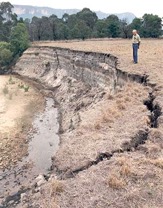
Sir Edward Coley Burne-Jones: The Falls from the Narrow Neck near the Eastern Headland of the Outlet(1865)
——
ReceivedKnowledge
“…as if I had become the genius I should have remembered I never was.”
This EndDays Story finds me wrestling with the growing challenge that ReceivedKnowledge poses. It has reduced thinking to an historical minimum while preserving prejudices ad nauseam.
In this EndDays Story, I executed a full stop upon reading a New Yorker article that casually characterized all AI data centers as “toxic and water-draining,” as if these were undeniably uniform attributes. This characterization has entered public consciousness as ReceivedKnowledge — unexamined and unquestioned because “everyone knows” it’s accurate, except it isn’t. The bad data centers do not nearly define the whole genre. The good far outweigh the bad, but a few bad ones are plenty to spoil the barrel. ReceivedKnowledge doesn’t just make me stupid — it makes me proud of my stupidity. Once acquired, a prejudice seems confirmed everywhere I look, leaving me feeling clever for rooting out such clear evidence of the latest evil doing. ReceivedKnowledge doesn’t just make me stupid. It also makes me proud of my stupidity, as if I had become the genius I should have remembered I never was.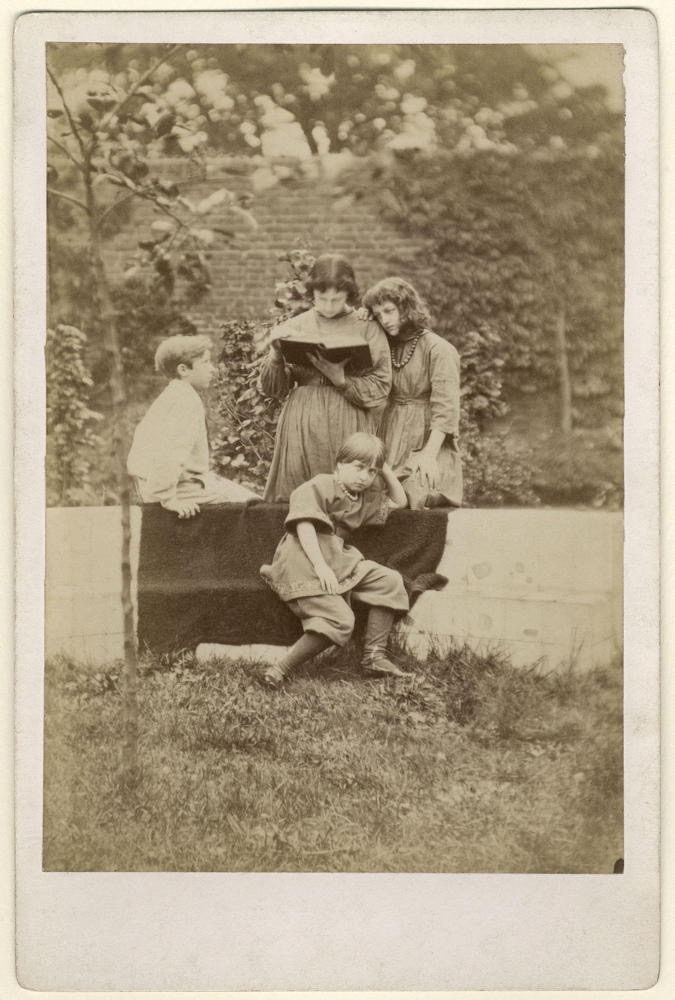
Frederick Hollyer: The children of Sir Edward Coley Burne-Jones, 1st Bt and William Morris (1865)
——
ExperTease
“…adequately stunning to render any controversy about their quality moot.”
This EndDays Story speaks to the limits of expertise and the potential wisdom only found in not sharing all you know.
In this EndDays Story, The Muse’s careful research into the financial impact of a proposed data center became an exercise in ExperTease — the delicate art of possessing more information than any conversation can comfortably contain. She employed the Socratic Method, partnering with Claude to shorten search times and build an animated model in an evening, iterating until she could fill in a bigger picture. With each iteration, she left further behind any constituent with whom she might share the result. She now possesses a paradox well known to experts throughout history: the best-informed won’t necessarily be better armed for any engagement. Those holding the best information inescapably need to interact with those holding much less, and those differences tend to clash. I kept the transcript of her Socratic dialogue with Claude. I left impressed and overwhelmed, clear that I lacked the expertise to even judge the quality of the result — but the questions seemed adequately stunning to render any controversy about their quality moot.
Sir Edward Coley Burne-Jones: Green Summer (1864)
——
Capriciousity
“Then, perhaps, equal justice under the law might start making sense to even them, though I doubt it.”
This EndDays Story examines Capriciousity — the malignant, systematic weaponization of capriciousness as a governing principle, in direct violation of the 14th Amendment’s equal protection guarantee.
In this EndDays Story, I examined how this administration, still struggling to comprehend the concept of administration, has been consistently inconsistent in how it enforces laws — most profoundly in its vicious prosecution of so-called illegal aliens. Declaring an alien illegal merely due to their due process being delayed by an overwhelmed judiciary does not render them illegal in any actual legal sense. “Pending” better describes their formal status. Under the principle that no one can be fairly characterized as guilty until found so by a jury of their peers, these “illegals” are clearly still innocent, until. Those who arrive here illegally are also guaranteed due process, for that right is not reserved only for citizens but for any person present in this country. I plead for nothing other than what even the least devout Christian might consider anyone’s due. The punishment for Capriciousity should properly exceed the sentence for virtually any other felony, for it violates such a fundamental principle under our law. Then, perhaps, equal justice under the law might start making sense to even them, though I doubt it.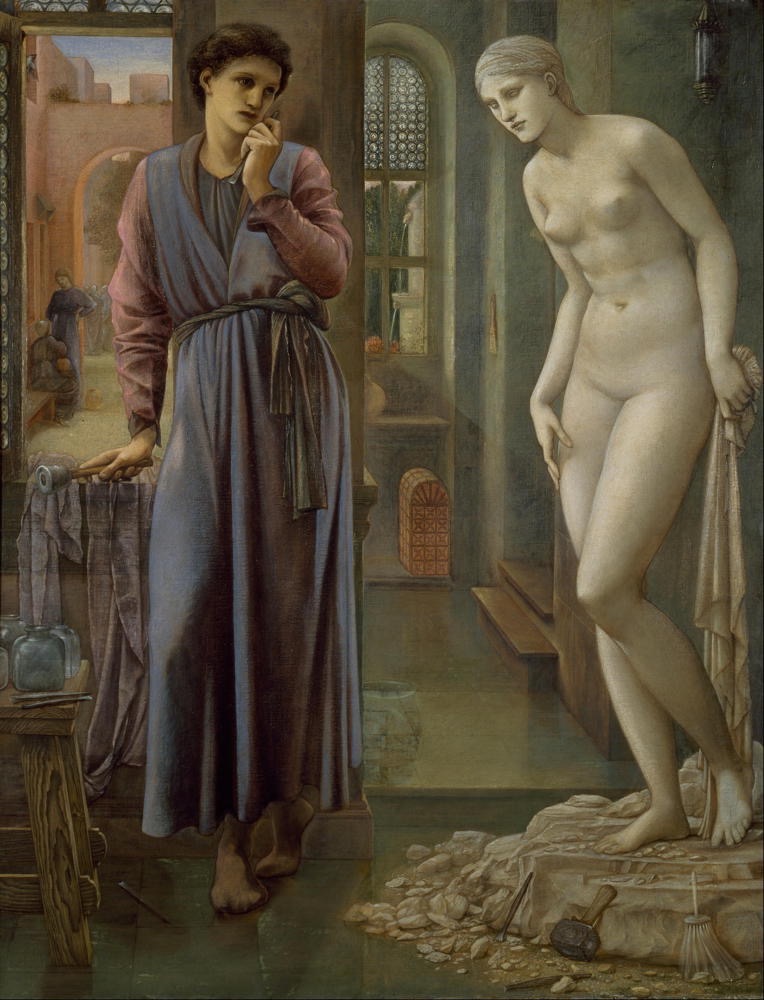
Sir Edward Coley Burne-Jones: Pygmalion and the Image - The Hand Refrains (1878)
——
Gumment
“Nobody will ever properly govern for us; we’re required to be more than merely emotionally involved: of, BY, and for.”
This EndDays Story examines our colloquial understanding of what we’re governing and how, which has eroded to the point where I seriously wonder how we might ever recover from what our ignorance has wrought.
In this EndDays Story, I confessed that I suspect I know much less about how our government works than I suspect, and I doubt that I’m in anything like a unique position on this issue. We haven’t responded with anything like the vehemence these violations have warranted, partly because we aren’t clear about our actual rights and obligations under the law. Our government was born hybrid, carrying a mythos from conception that promoted certain necessary misconceptions. We tend to approach our obligations tabula rasa, as if we’d forgotten the necessary and specific operations behind that kind of long division. We seem an ignorant polity, more interested in idling than in understanding how to properly fulfill our sacred obligations. Self-governance is not a DoorDash order, commanded for our convenience, but more like a gourmet meal we prepare with respect for tradition and to showcase our ever-increasing, if not yet perfect, skills. Nobody will ever properly govern for us; we’re required to be more than merely emotionally involved: of, BY, and for.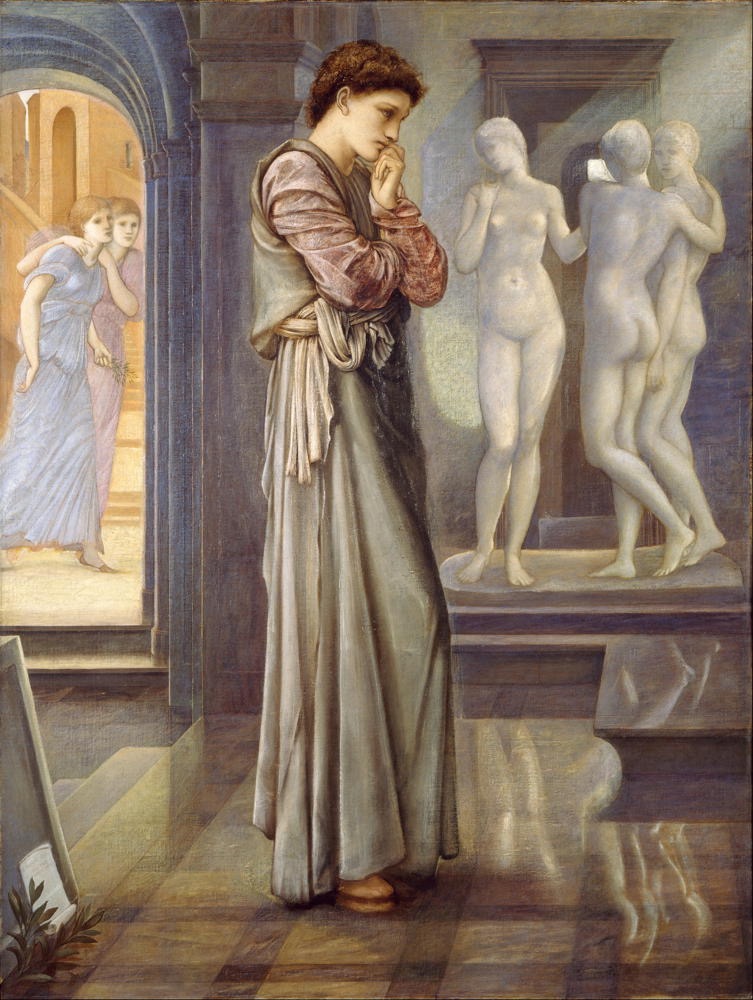
Sir Edward Coley Burne-Jones: Pygmalion and the Image - The Heart Desires (1878)
——
An Imaginary World For A Spell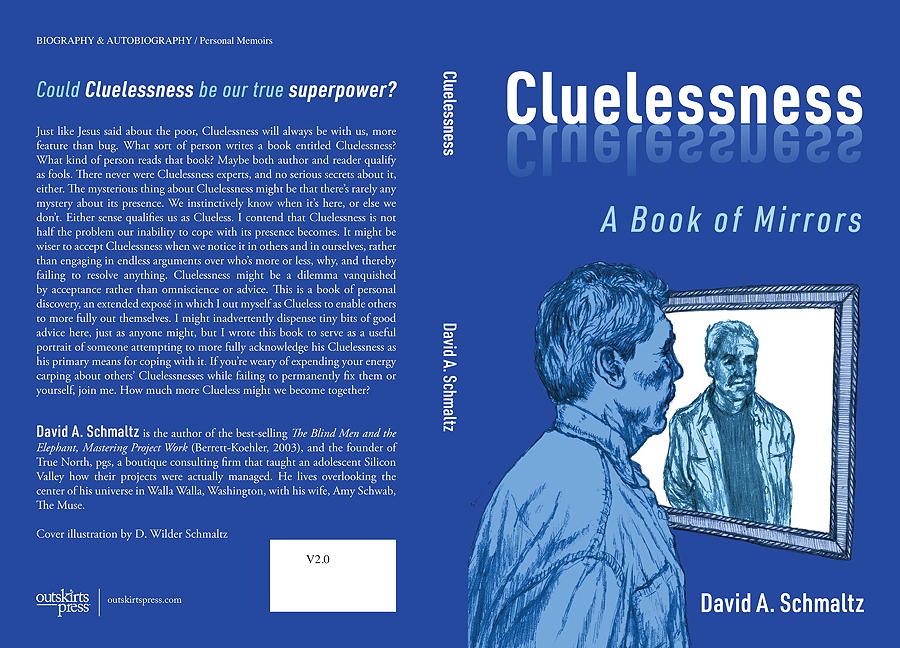
Once an author becomes an author, by which I mean, of course, once the book's published, a psychological syndrome settles in. I call this Published Author Delusion. It comes completely unsupported by scientific evidence, yet it exhibits with fairly great reliability. It works like this:
An email comes in querying about the author of this fabulous new book that has just been published. It asks if I might be the author. It layers praise upon praise until the author, unaccustomed to such acclaim, shyly admits to being that one. The conversation continues, just innocent questions. Have you ever considered? If you'd rather your agent deal with me, feel free. In that exchange, the newly fledged author might experience their first flush of what it must mean to be an author. Ah, shucks! This feels ridiculous! It always feels wonderful.
After remarkably few exchanges, our newly identified author feels ready, even anxious, to follow their interlocutor's directions. "Whip me, beat me, make me write bad checks!" Our author seems ready for the plucking, and a plucking he will experience if he's not … experienced.
I'm old enough to be jaded enough to almost be invulnerable to such seductions. Almost. My ego enjoys the occasional stroke, and this ego knows it has been a very long time since the last one. It might agree to anything. Money up front for services that are usually offered on a percentage later. Services that have never once resulted in anything even distantly resembling book sales. Paying for recommendations to a website that fancies itself as the place where serious readers come to discover their next read, though such a place could not possibly exist. The PAD-suffering author will swallow even the most incredible offers, not in that moment noticing that they're only increasing their overhead rather than their return. They will eventually learn.
I spent some of this week practicing my skeptical responses. As much as I might want the seduction to be true, I'm experienced enough to recognize that while I might be good-looking, I've rarely been recognized for my brilliance. The touts tend to focus upon just how brilliant I seem. That alone should trigger some defense. I've found a new use for Claude®. If I sent it a credential, it can quickly determine whether it's credible. It has so far found only one credible offer from the many that have found me, and that one featured a user interface that defeated my attempts to link up.
I learned, when The Blind Men was published, that most of the attention I would receive would have nothing whatsoever to do with the content of my work. I would wonder, "What book did you read?" Every commentator seemed to have read something different. Many wanted me to dumb down the message for easier assimilation, usually without any prospect of remuneration beyond sales increases that were not trackable and unlikely to ever happen. Authoring is largely a delusional occupation, one featuring many unbelievable compliments and few, if any, sales. These serve no good reason not to write or not to publish; they just serve as a caution. If it's seduction, it's probably not real, but one can reliably feel as though they're on top of an imaginary world for a spell.
You can order Cluelessness from Bookshop.org., Powell’s Books, or from Amazon. It's now more widely available, just as the publisher predicted. I'll let you know when I doscover the e-Book location.
Thank you for following along!——
I employed Claude.ai, a commercial AI-powered text editor, using it to perform repetitive copy/pasting work and to create the above story summaries, prompting with: “Please briefly summarize this story in the first person while retaining the original voice.” I manually copy-edited each result.
©2026 by David A. Schmaltz - all rights reserved
©2026 by David A. Schmaltz - all rights reserved
Good For A Goose

Comeuppance (32)
Decency (90)
Decency Unscrolling (1)
EndDays (92)
Exiled (90)
Fambly (93)
FollowingChapters (93)
Grace (92)
Humor (2)
iAlogue (1)
Letters to the Editor (1)
NextWorld (91)
Personal (18)
Prosperity (94)
Steam Festival (4)
Unscrolling (89)
Vaporized (6)
Work (16)
September 2026
August 2026
July 2026
June 2026
May 2026
April 2026
March 2026
February 2026
January 2026
December 2025
November 2025
October 2025
September 2025
August 2025
July 2025
June 2025
May 2025
April 2025
March 2025
February 2025
January 2025
December 2024
November 2024
October 2024
September 2024
August 2024
July 2024
June 2024
May 2024
April 2024
March 2024
November 2006
October 2006
September 2006
August 2006
July 2006
June 2006
May 2006
April 2006
March 2006
February 2006
January 2006




.jpg)

