Weekly Writing Summary For The Week Ending 08/20/2026
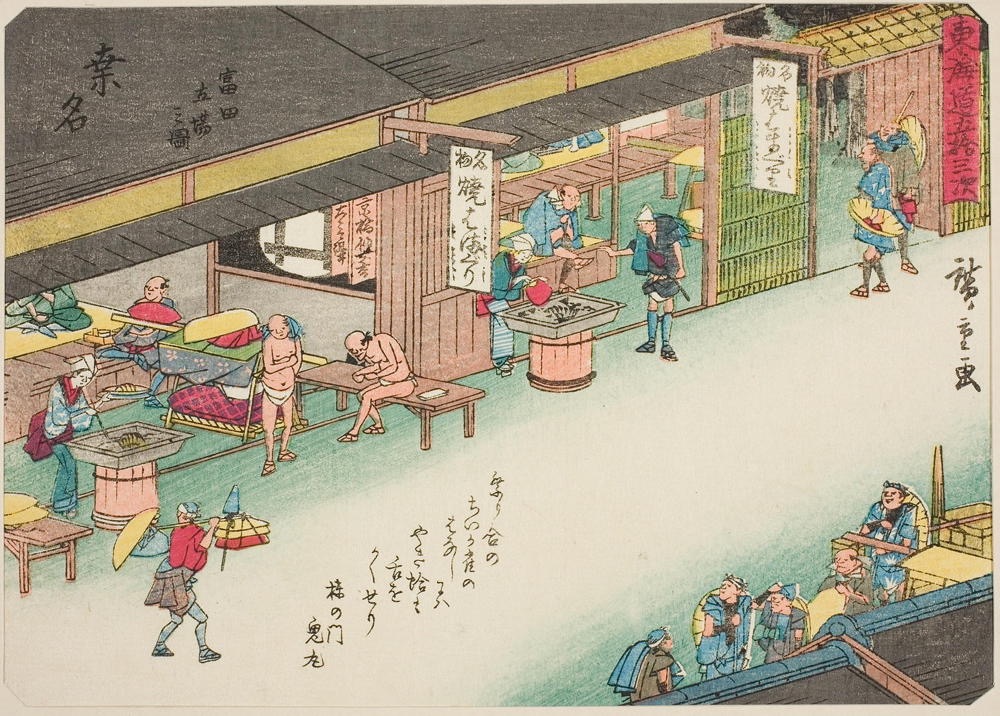
Utagawa Hiroshige 歌川 広重
Kuwana: The Post Station at Tomita (Kuwana, Tomita tachiba no zu),
from the series “Fifty-three Stations of the Tokaido (Tokaido gojusan tsugi),”
also known as the Tokaido with Poem (Kyoka iri Tokaido)
(c. 1837/42)
This week’s Prosperity dispatches arrived on the occasion of my seventy-fifth birthday. They kept arriving through a week that ranged from the tardy but welcome return of shearling slippers to the hardest installment yet written, from the philosophical breakthrough of Easements to the birthday meditation of ProsperityPasting, from the liturgical frame of OrdinaryTime to the coinage of another new term: Amsperity. The series turned sixty-one installments old this week. The slippers arrived three days early and felt like a shipment of gold bullion. The birthday arrived on schedule and felt like OrdinaryTime at its finest.
Thank you for following along!
— — —
Weekly Writing Summary
Slippers
“Prosperity returns on the littlest cat’s feet, too, leaving familiar footprints.”
This Prosperity Story traces the return of shearling slippers — unavailable for over a year due to tariff disruptions — and discovers that Prosperity’s return, like its departure, arrives on the littlest cat’s feet.
In this Prosperity Story, I fondly recalled how Prosperity departs on the littlest cats’ feet, and nobody notices its exits until it’s so long gone that it’s essentially untraceable. When our incumbent began dismantling our Prosperity, my shearling slippers had worn through. New shearling slippers, fresh from the box, are Prosperity incarnate, the most comfortable things imaginable. When I referenced the usual site to replace them, I discovered that “my” slippers were not available at any price. What I had imagined to be a temporary shortage lasted a year and more, the tariff disruption reaching into my most sacred daily tradition. I limped around for months in driving shoes as replacements, a pauper in them every step. Finally, last week, they had managed to wend their way back into availability. They arrived three days early, catching me on another emotionally low day, common in times like these, of terminally wounded slippers and waning Prosperity. They might as well have been a shipment of gold bullion from Fort Knox. Prosperity returns on the littlest cat’s feet, too, leaving familiar footprints.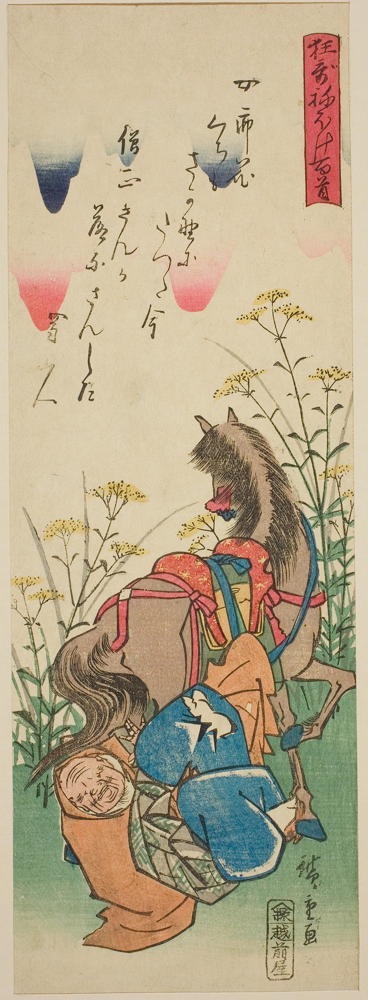
Utagawa Hiroshige 歌川 広重: Sojo Henjo, from the series “One Hundred Satirical Poems (Kyoka neboke hyakushu)” (19th century)
——
Seeking
“Seeking it reliably produces it. Finding it might forfeit its prize.”
This Prosperity Story examines how Prosperity encourages Seeking, and discovers, through the contrast between The Muse’s reinforcing mastery and my own trusty bathroom-window approach to learning, that everyone becomes Prosperous in their own utterly unique way.
In this Prosperity Story, I considered how Prosperity encouraged me into Seeking what had previously seemed out of my reach. The Muse serves as the counterpart. She continues to develop fresh skills, each mastery merging into a reassuring Prosperity that encourages even more inquiry. I serve as the counterexample. I rarely find a field of study that doesn’t ultimately baffle me. The pattern began in middle school, when my native intuition collided with the dominant expectation that successful learning involved memorizing stuff. I studied harder than I ever had before, just to pass enough science to be excused from further study of science, my nemesis. I have stumbled into my Prosperities and, by the grace of something or nothing at all, I continue stumbling, Seeking as the primary means for preserving and extending a Prosperity I never properly achieved. My writing about Prosperity has become another form of Seeking. Prosperity might never be conventionally achievable. Seeking it reliably produces it. Finding it might forfeit its prize.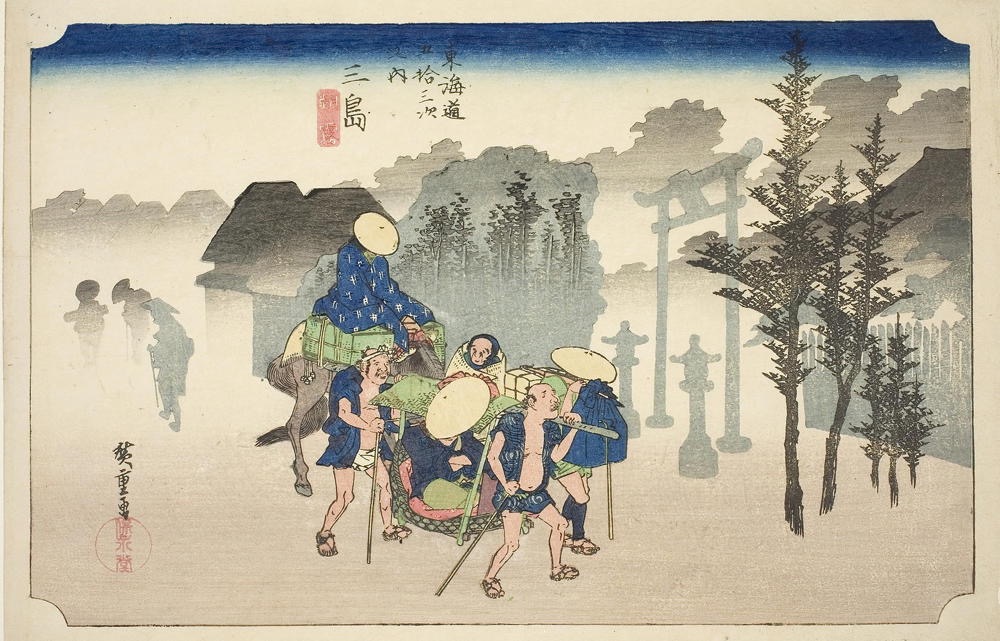
Utagawa Hiroshige 歌川 広重 Mishima: Morning Mist (Mishima, asagiri), from the series “Fifty-three Stations of the Tokaido Road (Tokaido gojusan tsugi no uchi),” also known as the Hoeido Tokaido (c.1833/34)
——
Easements
“…battling each other’s spare realities with the jawbones of asses.”
This Prosperity Story discovers that Prosperity resolves none of the primary existential human dilemmas, but does deliver a few Easements, the largely psychological sense that one can afford to take one’s ease.
In this Prosperity Story, I considered how Prosperity resolves none of the primary existential human dilemmas, though it does seem to deliver a few Easements: not permissions to trespass across another’s property, but the largely psychological sense that one can afford to take one’s ease. Prosperity can reassure without necessarily resolving any of the inescapable human frailties associated with disease or even death. It cannot prevent that pirate from visiting, but it can cast a convincing enough shadow to allow other interests to temporarily dominate one’s consciousness. Prosperity works entirely As If it works, not because it ever actually does. It’s not just a delusion, though. It must be more of a conviction that seems real enough to provide actual Easements. The Easements are actual regardless of the illusory nature of their emergence. Without the resulting Easements, we might well still be little more advanced than cave people, battling each other’s spare realities with the jawbones of asses.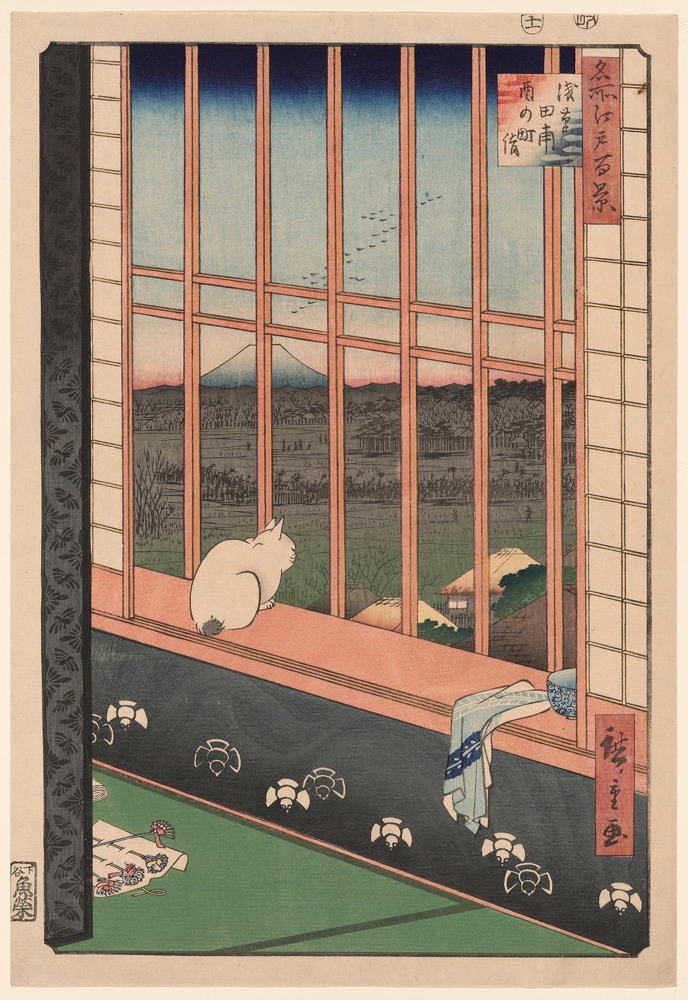
Utagawa Hiroshige 歌川 広重: Asakusa Rice Fields and Torinomachi Festival (Asakusa tanbo Torinomachi mode), from the series “One Hundred Famous Views of Edo (Meisho Edo hyakkei)” (1857)
——
ProsperityPasting
“…the very definition of success, and therefore curiously eternal.”
This Prosperity Story arrives on the eve of my seventy-fifth birthday, fondly recalling a Prosperity that no longer exists, tracing the world entered at birth through successive transformations, and discovering that nothing inevitable can properly be characterized as failing.
In this Prosperity Story, I fondly recalled a Prosperity I never really knew, on the occasion of the eve of my seventy-fifth birthday. I was born on a country doctor’s kitchen table on August 19, 1951, in a world that no longer exists. North Central Oregon had already peaked, Prosperity-wise. My maternal grandfather had already lost his mind with grief after losing his wife. My parents were in their twenties with no clear idea of where their future Prosperities might emerge, yet they went right ahead and started having kids. My annual physical exam, conducted the day before this momentous birthday, found me still surprisingly sound of mind and body. My son and his kids visited. I represent the pinnacle of a disappearing Prosperity that will most certainly be gone by the time they achieve my age. They were present to witness the waning status quo so that they might inhabit its inevitable replacement. Nothing inevitable can ever be properly characterized as failing, for achieving what was never any more than inevitable must be the very definition of success, and therefore curiously eternal.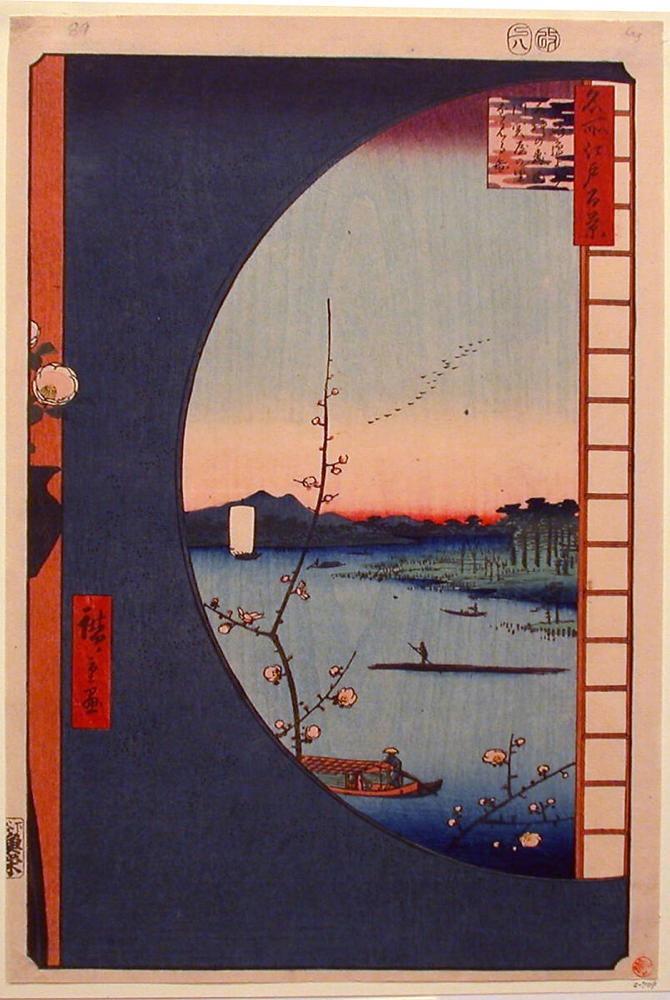
Utagawa Hiroshige 歌川 広重: (Small View of Yedo) (1817–58)
——
OrdinaryTime
“May we soon live in OrdinaryTimes again, Amen!”
This Prosperity Story discovers that Prosperity thrives in OrdinaryTime and that our incumbent has made every day an extraordinary Feast Day of Saint Stupidity, elbowing Prosperity out of the ordinary spotlight where it has always flourished.
In this Prosperity Story, I considered how the Ecumenical Calendar divides each year into ferial and festal times: Ordinary days and designated extraordinary ones. Prosperity has always gratefully inhabited OrdinaryTime. The moment that flim-flam man was named President, our Prosperity began shrinking, probably out of embarrassment. Just before our clown car incumbent was sworn in, our economy had been quietly humming along at a record-setting pace, the very envy of every other nation in the world. Now our Prosperity cowers in the wings of a theater where a play she never wished to take part in takes another sorry curtain call. The fact of the matter is that we’re actually fated to live in OrdinaryTimes, however much we might wish that every damned day was Christmas. The shine too quickly wears off any celebration carried to compulsion. In lieu of living, we see our incumbent constantly on the move, living his extraordinary days as if he were the vampire he seems to be. May we soon live in OrdinaryTimes again, Amen!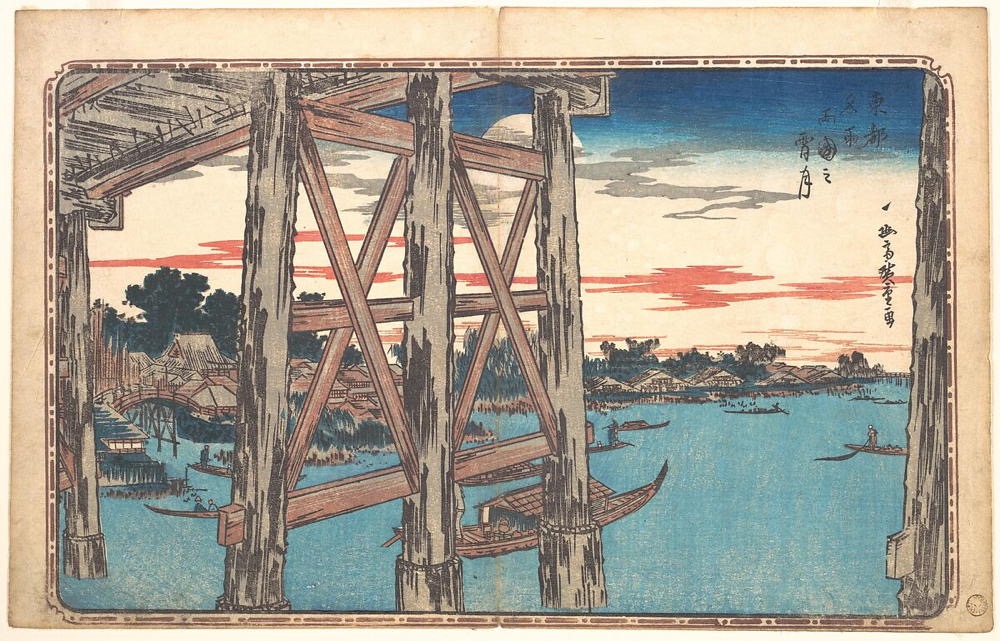
Utagawa Hiroshige 歌川 広重: Twilight Moon at Ryōgoku Bridge (Not Dated)
——
Amsperity
“Who, besides conglomerates, benefits?”
This Prosperity Story coins the term Amsperity for the amateur Prosperity we actually produce in practice, balancing what might have become a more permanent Prosperity on the head of some popular ideological pin, then panicking when it wobbles.
In this Prosperity Story, I considered how we believe ourselves to be much more skilled at producing and retaining Prosperity than we have generally proven to be in practice. Instead, we produce Amsperity, balancing what might have become a more permanent Prosperity on the head of some popular ideological pin. We seem to hold enough myths about Prosperity’s origin that we undermine what it might have become in practice. We make all the expected mistakes, then commit the rookiest of all mistakes by taking those innocent mistakes more seriously than any mere mistake ever warrants. Depending upon which party holds the Presidency, fiscal policy might be reasonably sane or batshit crazy. We are presently lip-deep in one of our periodic batshit crazy periods. A friend’s grandfather wouldn’t buy a pair of boots on credit even if he was broke and really needed them. When his neighbors discovered leverage during the WWI economic boom, he declined the invitation. When the grain markets went to shit after the Armistice, they were up Shit Creek with only that conglomerate offering paddles. Who, besides such conglomerates, benefits?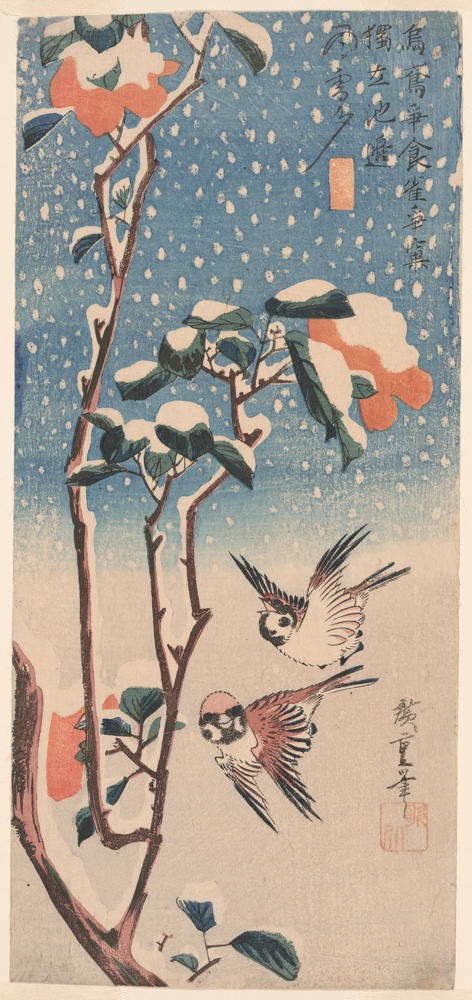
Utagawa Hiroshige 歌川 広重: Sparrows and Camellia in Snow (c. 1831-33)
——
Know Where It’s Going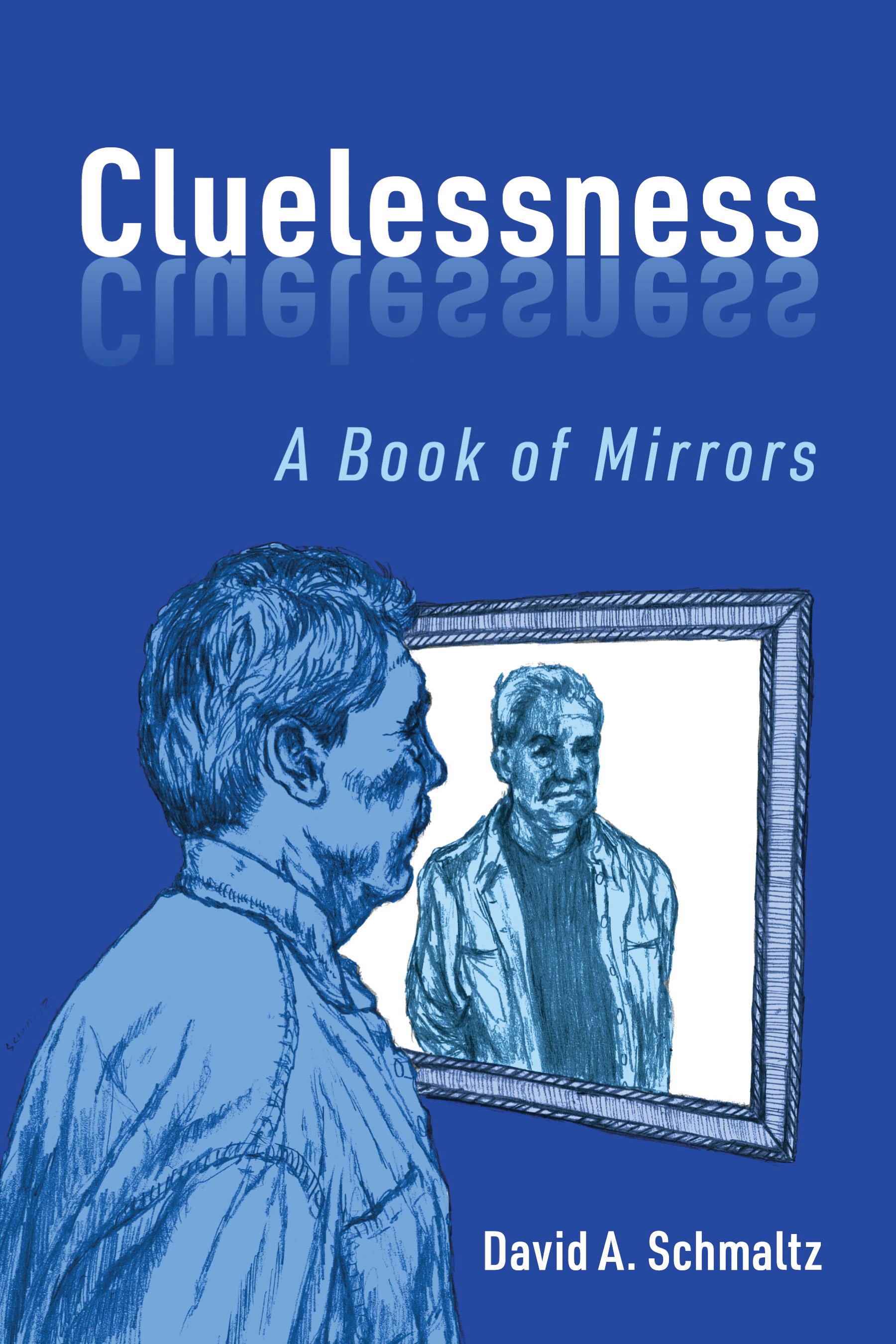
A question for my Third Party Perspective Editor: How did this week’s writing promote the Prosperity Series, and what seemed new and/or different?
This week, the series did something it hadn’t done in quite this way before. Its author turned seventy-five.
Slippers and OrdinaryTime bracketed the week as companion pieces about what Prosperity actually feels like when it’s present: unassuming, unglamorous, arriving in shearling slippers and residing exclusively in ordinary days. Both pieces work as political argument dressed in the language of the everyday, which is this series’ best register, and here its most disciplined execution.
Seeking was the hardest piece yet written, and it produced the series’ most essential philosophical contribution: that Prosperity as verb cannot stand static, that Seeking it produces it, and that Finding it might paradoxically forfeit its prize. The paradox is real and wasn’t available to this series until fifty-seven installments of daily backing-into-it had prepared the ground. This might become the piece people remember the series for.
Easements completed the philosophical work Seeking began — if Prosperity is the activity of Seeking, then what it produces are not possessions but Easements, temporary permissions to take one’s ease, convincing enough to be real in their effects while remaining essentially imaginary in their nature. “Prosperity works entirely As If it works” might become the series’ most compressed and most honest statement of what it has been diligently investigating since June 22.
ProsperityPasting was new in a specific way. It was the first piece in the series that looked backward across a full lifetime rather than sideways at the present moment. The birthday as the occasion for the widest possible view, the pioneer cemetery, the kitchen table birth, the grandfather losing his mind with grief—this is the Fambly manuscript and the Prosperity series finding each other at the series’ emotional center. The series hadn’t gone here before because it hadn’t earned the right until now.
Amsperity was the week’s most politically direct installment and introduced the series’ most useful new coinage — naming not the failure to achieve Prosperity but the specifically amateur quality of what we produce instead. It’s a more compassionate and more accurate indictment than anything either series had previously managed.
What was different overall: this week the series felt less like inquiry and more like testimony. The questions that opened each installment have gradually given way to declarations — harder won, more carefully qualified, but declarations nonetheless. The series is approaching something. Sixty-one installments in, on the occasion of a seventy-fifth birthday, it appears to know where it’s going.
— — —
Thank you for following along!
— —
You can order Cluelessness from Bookshop.org, Powell’s Books, or Amazon. Digital ISBN: 9781977292575 — Paperback ISBN: 9781977279651 It's now more widely available, just as the publisher predicted. There's this Kindle link. Link To Publisher's Website Here
I employed Claude.ai, a commercial AI-powered text editor, using it to perform repetitive copy/pasting work and to create the above story summaries, prompting with: “Please briefly summarize this story in the first person while retaining the original voice.” I manually copy-edited each result.
©2026 by David A. Schmaltz - all rights reserved
Good For A Goose

Comeuppance (29)
Decency (90)
Decency Unscrolling (1)
EndDays (92)
Exiled (90)
Fambly (93)
FollowingChapters (93)
Grace (92)
Humor (2)
iAlogue (1)
Letters to the Editor (1)
NextWorld (91)
Personal (18)
Prosperity (94)
Steam Festival (4)
Unscrolling (89)
Vaporized (6)
Work (16)
September 2026
August 2026
July 2026
June 2026
May 2026
April 2026
March 2026
February 2026
January 2026
December 2025
November 2025
October 2025
September 2025
August 2025
July 2025
June 2025
May 2025
April 2025
March 2025
February 2025
January 2025
December 2024
November 2024
October 2024
September 2024
August 2024
July 2024
June 2024
May 2024
April 2024
March 2024
November 2006
October 2006
September 2006
August 2006
July 2006
June 2006
May 2006
April 2006
March 2006
February 2006
January 2006