Weekly Writing Summary For The Week Ending 06/25/2026
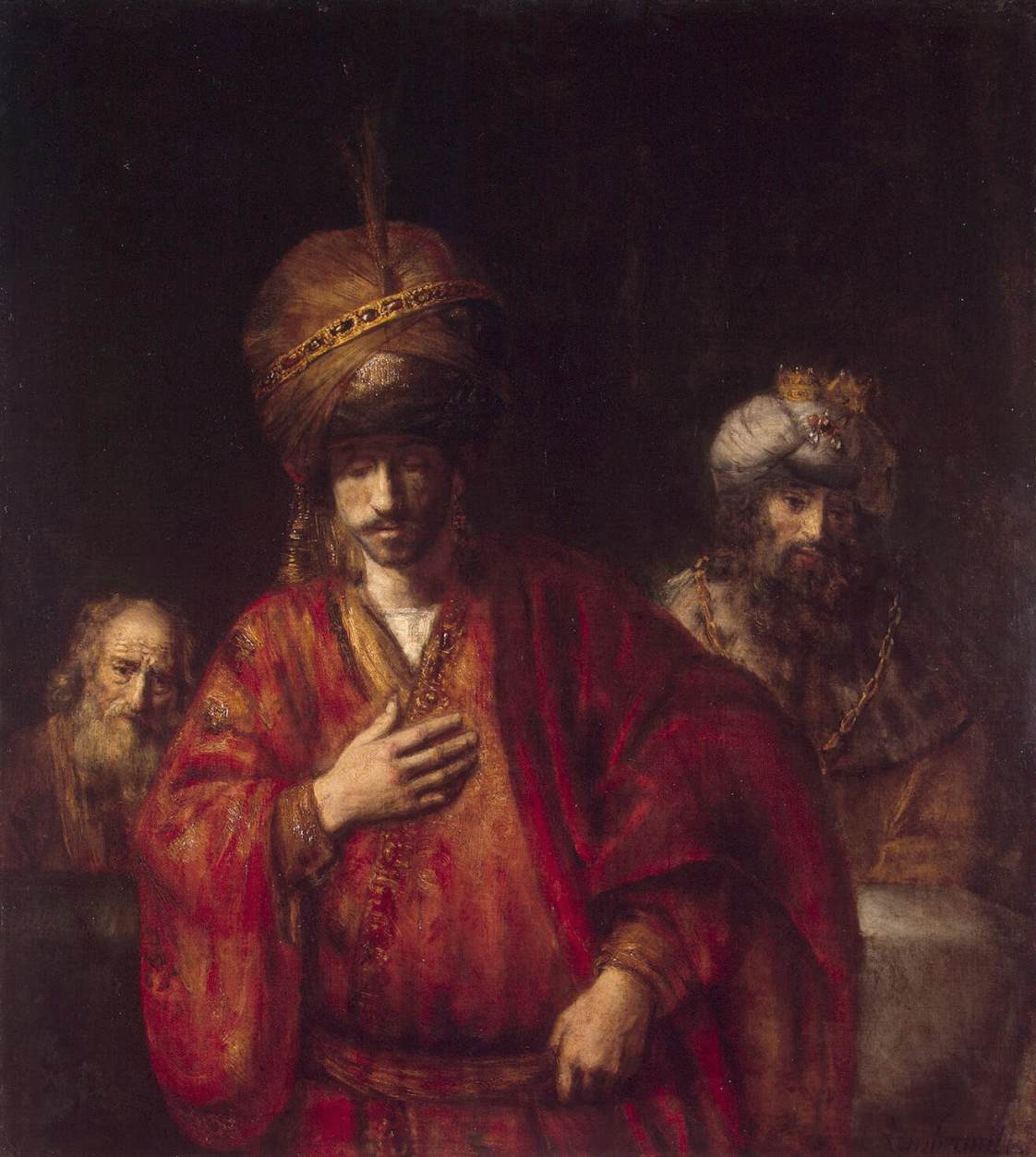
Workshop of Rembrandt Harmenszoon van Rijn:
Haman Recognizes his Fate
(1648-1665
This week’s writing marked a transition. The EndDays series concluded with its Preface, appropriately written last, after I had confirmed that the butler did it again. Then, on Sunday morning, the Prosperity series began. Five installments in, Prosperity already has its question, its necessary preconditions, its defining choice, and its primary obstacle. The writing ranged from the statistical indictment of MostProsperous to the personal philosophy of Plenty, from the Veblen-inflected Conspicuous Consumption argument of Waste to the unavoidable Responsibilities Prosperity imposes, and finally to the future-phobia of Anxiety that keeps Prosperity perpetually just out of reach. EndDays ended. Prosperity began. The practice continues.
Thank you for following along!
— — —
Weekly Writing Summary
EndDaysPreface
“May your EndDays experience be enhanced by the foolhardiness I laid down in each of the following pages.”
This EndDays Story is the Preface to the EndDays series, appropriately written after the series concluded — once the author could confirm what the butler actually did.
In this EndDays Story, I wrote the Preface I couldn’t write before this series began, since I had no outline and no predetermined destination. A Preface should properly prepare a reader for whatever comes next, but this one instead attempts something else — to avoid erasing any need not to read the thing itself. The presenting premise never changed: I intended to trace the EndDays of our incompetent incumbent’s hapless term. I reasoned that three months might be enough for the downfall to run its course. Of course, I reasoned wrong. Two parallel threads weave through the collection: the publication of my Cluelessness book, which happened around episode 42, and the data center controversy in our valley, where opposition to The Muse’s vote in her role as Port Commissioner, approving the property sale, perfectly demonstrated how MAGA tactics had poisoned public discourse — even among progressives. The following work might prove to be nothing more than one man’s honest accounting of his personal experience of a haunting sense of impending doom. May your EndDays experience be enhanced by the foolhardiness I laid down on the surviving pages. 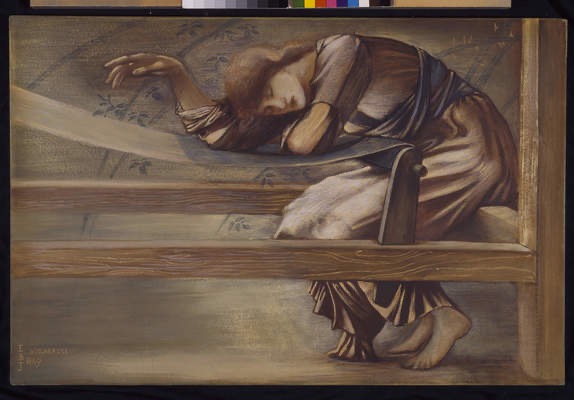
Sir Edward Coley Burne-Jones: The Briar Rose Series (1889)
——
MostProsperous
“Are we smart enough to share?”
This Prosperity Story opens the new series by establishing that the United States is not the most prosperous nation in the world — not by a long shot — and asks what Prosperity actually means.
In this Prosperity Story, I established that, depending on the index used, the US ranks between 15th and 40th in prosperity despite its enormous economic scale, falling far short on equity. I characterized Prosperity as a society’s capacity to transform income into social benefit, and by that measure, our United States clearly wastes much of its income on the social equivalent of candy and gum. We say we want to avoid socialism while forking over fortunes to sectors like our poverty-stricken petroleum industry that should have long ago become self-sufficient. Texas would be another Mississippi were it not for Federal transfer payments such as the corrupting Oil Depletion Allowance. Those most capable of contributing, by longstanding tradition, contribute a much lower percentage of their income and wealth than do the rest of us. Prosperity might have little to do with wealth. Even without resorting to any ultimately devastating form of leverage, we are more than wealthy enough to ensure Prosperity for everybody who desires it. Are we smart enough to share?
Rembrandt Harmenszoon van Rijn: Retrato de mujer joven (Portrait of young woman) (1634)
——
Plenty
“…if Prosperity isn’t destined to continually evade one’s grasp.”
This Prosperity Story introduces Plenty as the necessary precondition for Prosperity — and finds it to be an achingly personal, relative state that has nothing to do with accumulation.
In this Prosperity Story, I traced Plenty from the backseat of a Volkswagen Beetle at twenty, where my worldly possessions fit and sometimes felt burdensome, to the large moving van required later, which still felt insufficient. Plenty seems to embody an underlying sense of enough, the sense that can grant even a pauper equivalent status to a billionaire. Few curses could more bedevil one than a tenacious inability to experience Plenty, for the resulting pursuit must eventually seem endless, because it would be. My greatest Plenty rarely costs more than time: the satisfaction of a fresh lawn mow, a story finished before dawn, Max my cat choosing my lap. This week, The Muse and I left an Italian restaurant because the Musac volume was too loud — their Plenty seemed more than enough for me. Excess doesn’t seem like Plenty but rather an obscenity. Plenty must become an achingly familiar experience if Prosperity isn’t destined to continually evade one’s grasp.
Rembrandt Harmenszoon van Rijn: Portrait of a Young Bachelor (1634)
——
Waste
“…what might have been Waste was, in fact, future Prosperity.”
This Prosperity Story introduces the defining choice that determines whether Prosperity is genuine or perverse: what a person or society does with their excess.
In this Prosperity Story, I considered Thorstein Veblen’s concept of Conspicuous Consumption, the Gilded Age practice of lavishly spending to demonstrate one’s deep-down indifference to Prosperity’s many benefits. Golf was invented after societies passed their hand-to-mouth stage. Climate deniers deliberately waste valuable resources because they believe in the clear delusion that infinite resources exist and that humans hold absolute dominion over deciding their fates. Prosperity cannot become a guarantee without some underlying philosophy considering the proper use of excess. Whatever excess emerges from attempts to create wealth must be considered an illusion if one aspires to enjoy Prosperity. To the extent that the wealthiest nation in history cannot imagine how to pay for health or child care, that nation might be wealthy, but it cannot be considered Prosperous. My garden prospers because I compost every bit of kitchen waste. What might have been Waste was, in fact, future Prosperity.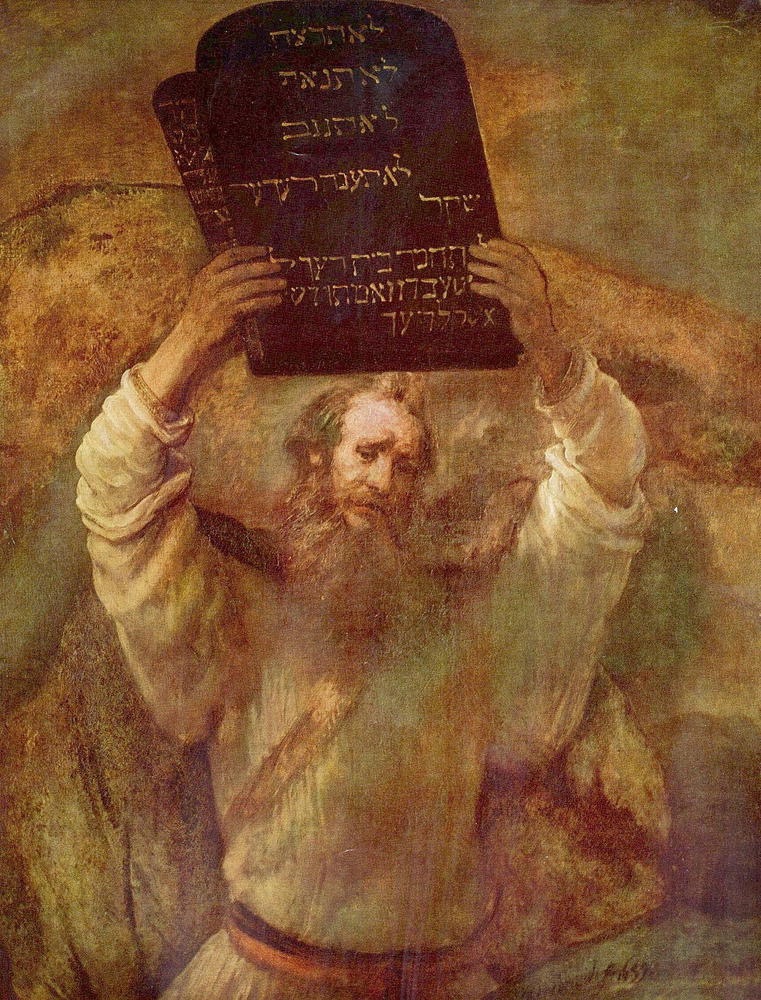
Rembrandt Harmenszoon van Rijn: Moses Breaking the Tablets of the Law (1659)
——
Responsibilities
“…if Prosperity isn’t destined to continually evade one’s grasp.”
This Prosperity Story examines the unavoidable Responsibilities that accompany Prosperity — and discovers that my mother was right all along.
In this Prosperity Story, my mother’s warning be careful what you wish for arrived as the organizing frame. Tesla tires cost half again as much as conventional tires, wear out faster, and must be serviced by certified shops. The price of Prosperity shouldn’t surprise anybody, because Prosperity always demands certain Responsibilities from those it visits. To the extent that I have succeeded in achieving Prosperity, I’m still waiting for the once-imagined salvation to find me. My world might be even more complicated than it seemed before I became prosperous. Prosperity essentially resolved nothing, none of the complications and plot twists that have always bedeviled my existence. While Prosperity might represent a reward, it also shares some characteristics with punishment. I can no longer imagine escaping a single Responsibility. The best I ever managed was to delay a few or trade a familiar one for a more exacting unfamiliar one. I’m still not all that careful.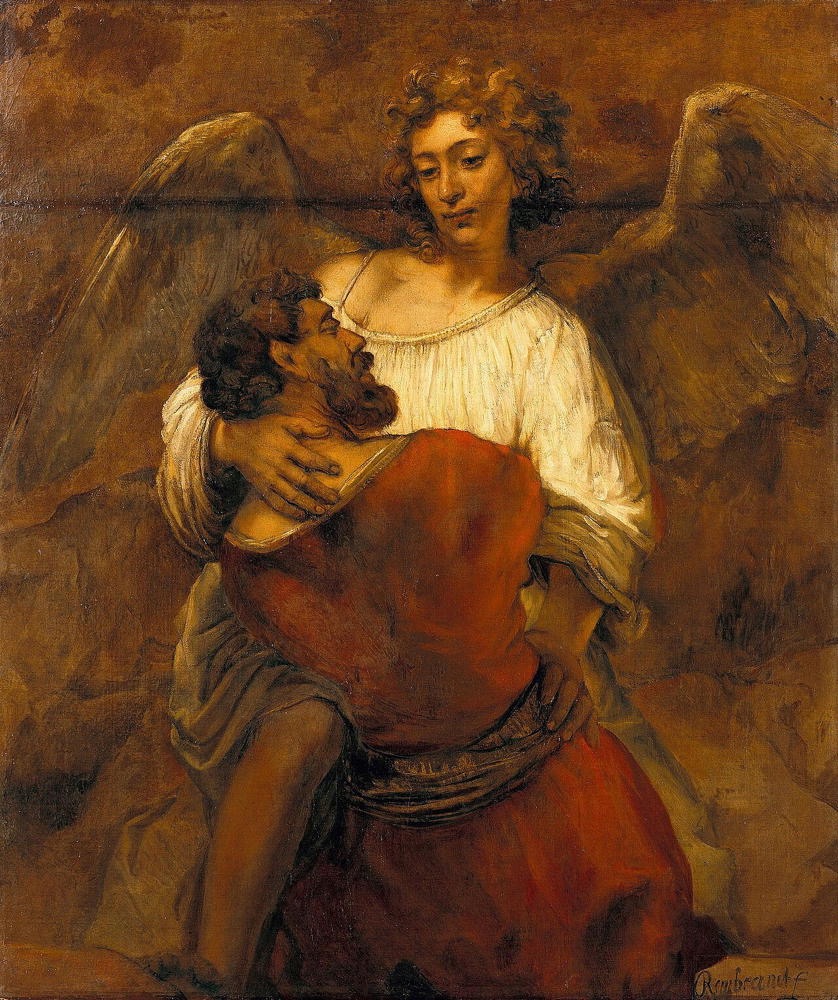
Rembrandt Harmenszoon van Rijn: Jacob Wrestling with the Angel (1659)
——
Anxiety
“They gladly flee backward into cowboy times when only a few pesky Comanche stood between them and promised Prosperity.”
This Prosperity Story names the primary obstacle to Prosperity: Anxiety — the future-phobia and nostalgia addiction that keeps an entire population from receiving what they claim to desire.
In this Prosperity Story, I examined how we fear more than we revere Prosperity. We have been subjected to so many bait-and-switch policies that we expect to be cheated, and even manage to cheat ourselves whenever given less than half a chance. Our Anxiety has come to define us and our age. The Reagan devolution horribly debased democracy in the direction of autocracy, and we earned our distrust honestly, through the serial betrayal of those responsible for upholding trust at all costs. Anxiety twists senses, turning even intuition into questions instead of tentative, hopeful answers. Texas has the same oil reserves as Saudi Arabia, but functions as a third-world country for its own citizens, exemplifying Prosperity for the few while amply justifying the Anxiety its citizens feel when facing even their personal Prosperity. They gladly flee backward into imaginary cowboy times when only a few pesky Comanche stood between them and promised Prosperity.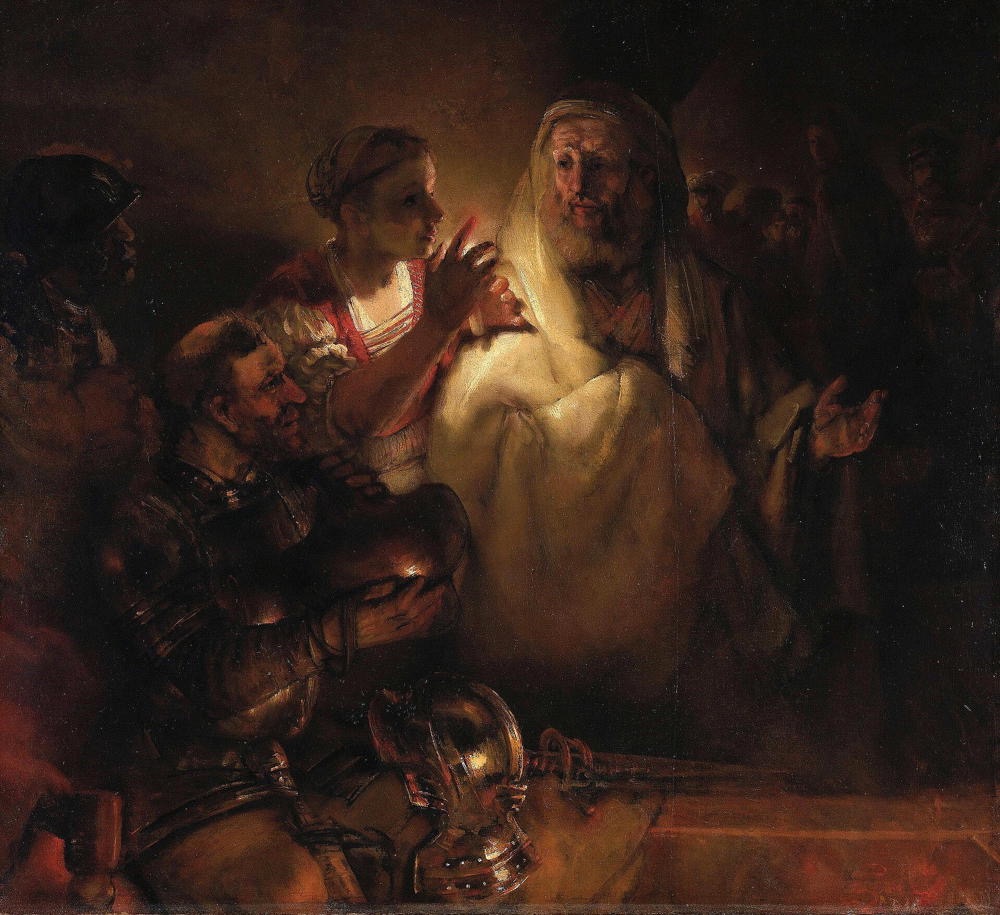
Rembrandt Harmenszoon van Rijn: The Denial of Peter (1660)
——
Absolute Idiots Produced For Us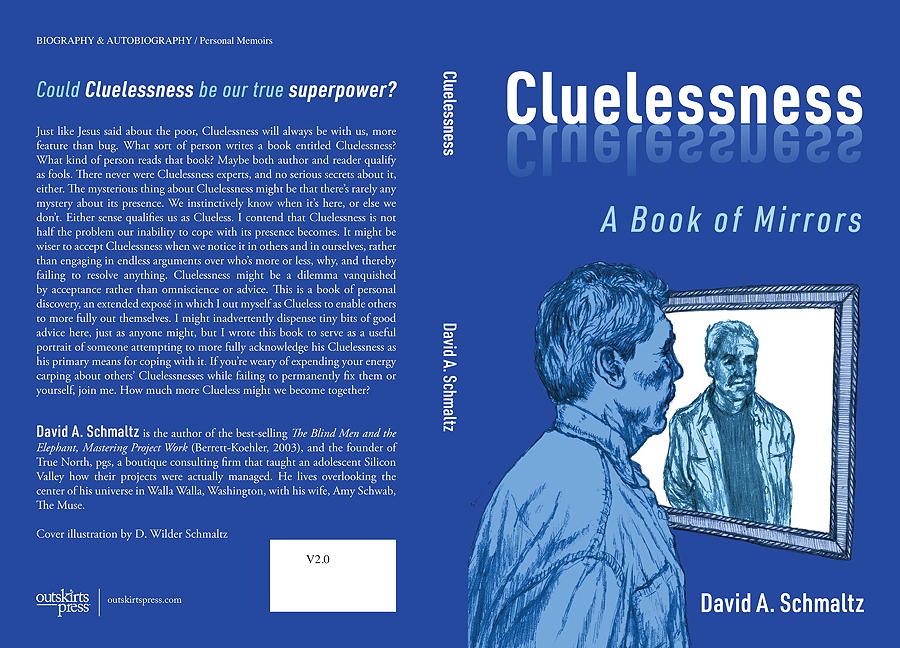
Transitioning from being gone to being back home again often proves challenging for me. I wrestle with angels over whether to even leave home in the first place, then begrudging angels await my return after I've been gone. Life seems simpler on the road. I can more tangibly gauge progress there. Days come pre-punctuated with meal times. Some discovery's almost guaranteed. Back into the most familiar territory, my life quickly reassumes its usual rhythms. The cats appreciate resuming their regular schedule more than either of their patrons ever seem to.
We returned to controversy, of course. Few good deeds ever go completely unpunished, and that seems to go double for great deeds. We fled to our traditional U-Pick cherry orchard where The Muse engaged in her favorite activity: standing atop a tall orchard ladder, picking (and eating) fresh cherries! She's never happier or more renewed. We spent a long evening processing (pitting, bagging, and preparing for freezing) nearly sixty pounds of cherries, small packets of high summer to accompany The Muse's breakfast every morning over the next year. This constitutes the one indulgence she absolutely insists upon for herself.
We attended the state Democratic Party Convention together, The Muse as an actual delegate and me in my usual arm candy role. I lack the patience to put up with rambling discourses over ultimately inconsequential issues. I can report, just to not disappoint anyone, that our grand party seems to be actively undermining its electoral acceptability again, right on schedule. Don't worry, it's just the party's traditional separation manifesting. Will Rogers insisted that his Democratic Party was unorganized for a good reason. Every election season, and twice in Presidential election years, the party reliably fragments. Rather than get behind a reliable left-of-center candidate, some significant minority finds their sensibilities won't allow them to compromise and accept margarine, so they insist upon some less broadly palatable European butter alternative—Bernie Brothers, Democrat Socialists, Ralph Nader—thereby giving the GOP a huge gift. This year, people seem to have been pissed at Chuck Schumer, arguing to undermine perhaps the most skilled Democratic politician in my lifetime. We'll likely still manage to eke out some slim majority, but we could have seemed more popular had we considered embracing some form of compromise. We're too high principled, I guess, to seriously consider ourselves worthy of high office.
This has been a practice the Repuglicans have appreciated since way back in the Robert Taft days. They'd endorse anyone with sufficient slick-em in their hair. The Dems considered themselves higher-minded. This has wounded them and our country in recent years. Bernie lost the 2017 election for Hillary, though he undermined one of the most brilliant administrative minds in our country's history. For this, he remains revered within the wing of the party that feels more comfortable as the eternal underdog. I sat by Spokane Falls, reading a decent novel, preferring fiction to the passion play on the stage a few feet away.
I also visited an actual bookstore this week, one of the very few remaining, and got a potential lead on doing a book signing there. Book signings are interesting gatherings, for they aren't really gatherings at all. They are engineered accidental encounters. Someone stumbles into a bookstore and finds an author signing books. Few will even bother to slow their pace as they pass by, for few enter any store expecting anything new. They just want to get whatever they came in to get and disappear. A few might linger. A couple might ask a question. Fewer than five will buy a book. Two or three hours add another debit to the promotional ledger. Had the store or author bought a newspaper ad, the turnout might have doubled, but perhaps not. Book marketing is an imaginary activity authors engage in, in the likely fictional belief that it might make any difference. (Hint: It mostly doesn't.) I remain steadfastly in the lottery ticket camp. If I wanted to make money writing, I would have invested in lottery tickets. That said, Cluelessness remains available, awaiting only your decision to purchase a copy and, maybe, write a review. (See below.)
Thank you for following along!
You can order Cluelessness from Bookshop.org, Powell’s Books, or Amazon. It's now more widely available, just as the publisher predicted. I still haven't discovered the e-Book location for ordering the book, other than this Kindle link. (I didn't know that KIndle was still a thing, if it ever was.) I saw a .pdf link somewhere, but lost the location and couldn't find it again. My publisher is enamoured with their flashy portal that I keep getting lost in. See if you can do any better: Link To Publisher's Website Here
I employed Claude.ai, a commercial AI-powered text editor, using it to perform repetitive copy/pasting work and to create the above story summaries, prompting with: “Please briefly summarize this story in the first person while retaining the original voice.” I manually copy-edited each result.
©2026 by David A. Schmaltz - all rights reserved
Good For A Goose

Comeuppance (19)
Decency (90)
Decency Unscrolling (1)
EndDays (92)
Exiled (90)
Fambly (93)
FollowingChapters (93)
Grace (92)
Humor (2)
iAlogue (1)
Letters to the Editor (1)
NextWorld (91)
Personal (18)
Prosperity (94)
Steam Festival (4)
Unscrolling (89)
Vaporized (6)
Work (16)
September 2026
August 2026
July 2026
June 2026
May 2026
April 2026
March 2026
February 2026
January 2026
December 2025
November 2025
October 2025
September 2025
August 2025
July 2025
June 2025
May 2025
April 2025
March 2025
February 2025
January 2025
December 2024
November 2024
October 2024
September 2024
August 2024
July 2024
June 2024
May 2024
April 2024
March 2024
November 2006
October 2006
September 2006
August 2006
July 2006
June 2006
May 2006
April 2006
March 2006
February 2006
January 2006