Rumor
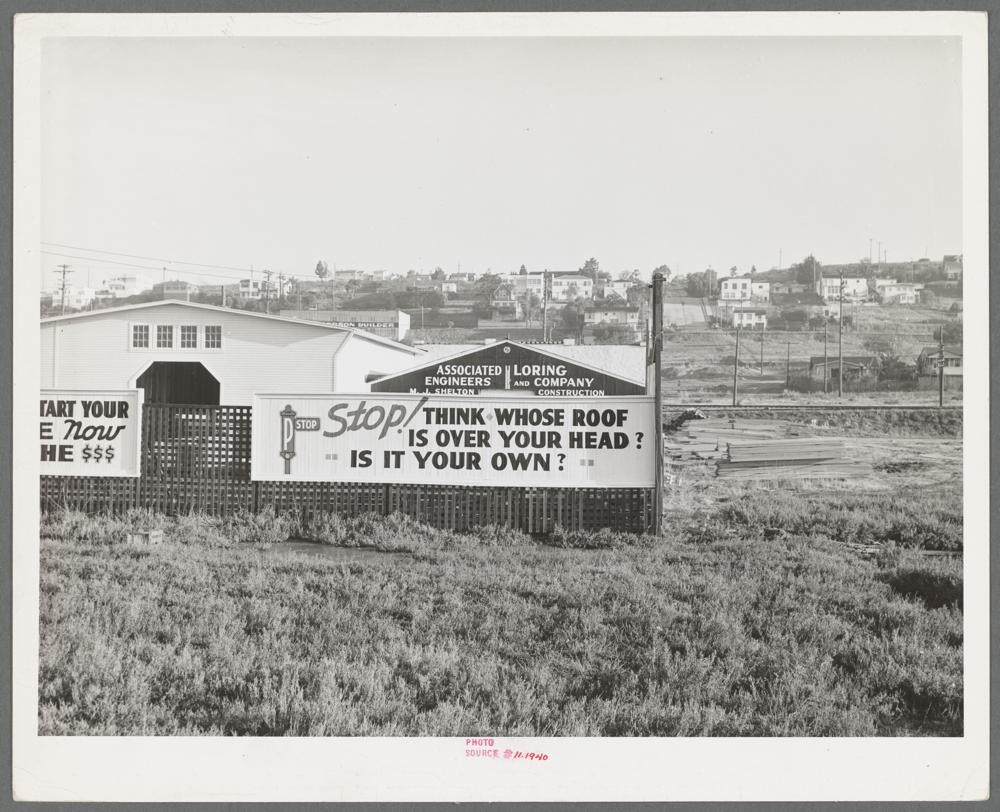
Russell Lee: "Sign at lumber company. San Diego, California. Building supply companies in San Diego are doing a tremendous rush business and there are rumors (unverified) of shortage in building materials." [Farm Security Administration Photographs] (12/1940)
The Miriam and Ira D. Wallach Division of Art, Prints and Photographs: Photography Collection, The New York Public Library. "Sign at lumber company. San Diego, California. Building supply companies in San Diego are doing a tremendous rush business and there are rumors (unverified) of shortage in building materials" New York Public Library Digital Collections. Accessed March 4, 2026. (https://digitalcollections.nypl.org/items/140a3880-7017-0137-9e01-05b46baa16fe)
"Rumors of information's demise on social media have been greatly exaggerated."
Rumor seems to be the very stuff of Social Media. While doubtlessly, many postings contain provable facts, fact-checking has never been a requirement or a significant element governing social media posting. I think of it as a slightly focused form of crowd-sourcing, as if a coherent gist could be derived by blindly repeating approximations. Some postings fully qualify as wild, not even attempting reliability—many intended only to rile—while others have received relatively rigorous proofing. One cannot reliably determine which postings are which, so it behooves the peruser to presume that every posting qualifies as little more than the rumor it most probably is. The only onus occurs when someone mistakes a probable rumor for an immutable fact, and that’s the straw that repeatedly bends social media’s camel’s back.
This situation’s no different than perhaps the most tragic of the many literary misinterpretations, the one where people interpret their Bible as literal history. The Bible, being an allegorical work, was never intended to serve as an immutable store of accurate historical information. Quite the opposite, our forebears understood the greater value allegory and metaphor provided for those interested in what came before. They focused upon patterns of behavior rather than what we might consider historically accurate ones. The arcs of history better informed future generations than could photographic perspective. It seems, though, that some religious leaders found more leverage insisting their Bible was literal rather than merely literary, images cast in stone as opposed to sand, to reliably devastating effect.
Today, we see Social Media as the source and primary amplifier of our most damaging pseudo-information, all of which began as Rumor before heading steeply downhill from there. Prior generations nurtured their The Protocols of the Elders of Zion and The stab-in-the-back myth (Dolchstoßlegende), both of which served to fuel what bloomed into the Nazi Ideology, all of it Rumor but widely interpreted as immutable fact. In our time, our Damned Pandemic seemed to spawn some fresh Rumor every second; many focused upon discrediting proven, reliable treatments in favor of seriously dangerous alternatives. Anti-vaxers came into their own, fueled entirely by mis- or disinterpreted Rumors. The burgeoning Supplement Industry seems to be right at home on Social Media, selling their versions of “wellness.” Wellness itself might better qualify as a Rumor than anything even distantly resembling established protocol.
Skepticism seems an inadequate response to this suddenly Rumor-rich environment. Skepticism perhaps presumes an underlying foundation of truth, of morally or ethically supportable fact, but Social Media does not seem to even be comprised of that. Each “engager” over time collects the contacts they consider to be reliable. Of course, they’re inundated with unverified and unverifiable intrusions, too, but each user holds a trusted few “influencers” to trade in self-evident fact. The rest might not precisely qualify as rumor mongers, but they’re at best unverified providers and therefore questionable sources; maybe even more than merely questionable, questioned. Not received with skepticism but disbelief, as if they probably were deepfakes, if only to preserve the tenuous integrity of what we’ve absolutely verified as trustworthy.
This might explain why our online lives seem more like they occur in Pottersville than Bedford Falls. Our futuristic mass communication system might not be precisely rotten to the core, but it remains deeply questionable, baseline unreliable. Curious things occur when a society’s primary information sources become widely recognized to be deep down unreliable. Some become cynical, behaving as if nothing could possibly be valuable because their information is poor. Some become more bold than they might otherwise behave, taking fantastical positions without exhibiting great fear that their bluster might get found out or themselves discredited. Most of us learn to keep our heads down. We sometimes manage to forward what a colleague will properly identify as a deepfake lie, and we’ll apologize. It’s not like everyone hasn’t already had to rely upon some colleague’s better-attuned eye to survive some cleverly tricked-out lie. Life on Social Media has been rumored to thrive, even without the guarantees we once seemed to rely upon. Rumors of information’s demise on Social Media have been greatly exaggerated. It mostly relies on canny interpretation today.
©2026 by David A. Schmaltz - all rights reserved

Good For A Goose

Comeuppance (31)
Decency (90)
Decency Unscrolling (1)
EndDays (92)
Exiled (90)
Fambly (93)
FollowingChapters (93)
Grace (92)
Humor (2)
iAlogue (1)
Letters to the Editor (1)
NextWorld (91)
Personal (18)
Prosperity (94)
Steam Festival (4)
Unscrolling (89)
Vaporized (6)
Work (16)
September 2026
August 2026
July 2026
June 2026
May 2026
April 2026
March 2026
February 2026
January 2026
December 2025
November 2025
October 2025
September 2025
August 2025
July 2025
June 2025
May 2025
April 2025
March 2025
February 2025
January 2025
December 2024
November 2024
October 2024
September 2024
August 2024
July 2024
June 2024
May 2024
April 2024
March 2024
November 2006
October 2006
September 2006
August 2006
July 2006
June 2006
May 2006
April 2006
March 2006
February 2006
January 2006