Initiation
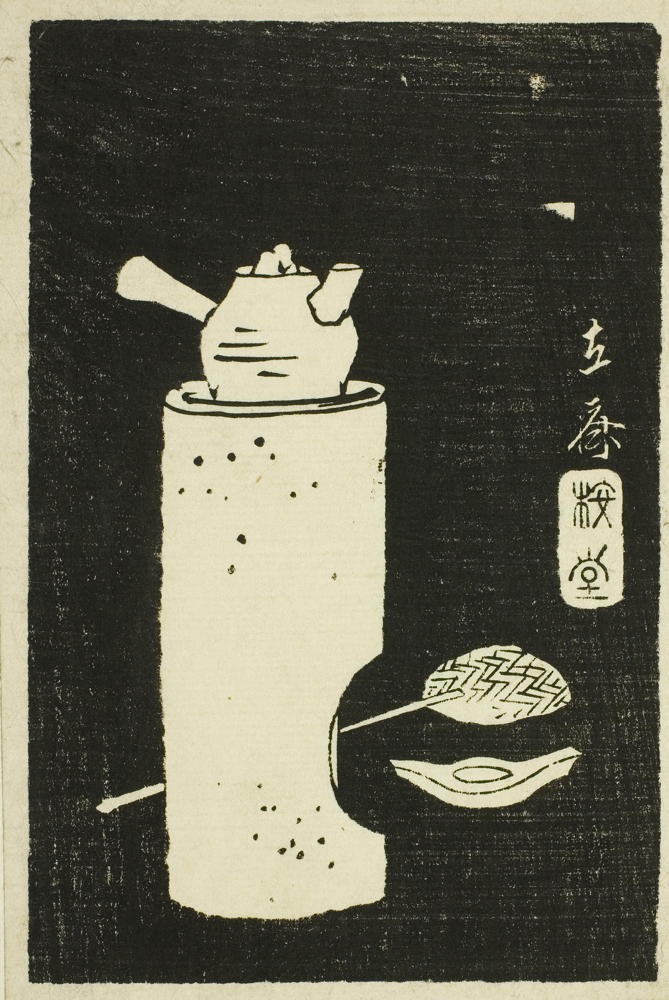
Utagawa Hiroshige 歌川 広重
Tea Kettle,
section of a sheet from the series “Mirror of Stone Rubbings of Views of the Provinces”
(Kohon meihitsu ishizuri kagami)
(Not Dated)
"I became Prosperous the day I realized that I could choose, and did."
The question eventually enters the conversation: How does one become Prosperous? The more common answers seem to omit something significant, focusing as they usually do on the obvious. But I’ve come to believe that Prosperity might be more like a guild than an individual achievement, and that there must probably be a multitude of ways to achieve this status, none by birthright. Being raised in a Prosperous family rarely prepares anybody to actually achieve Prosperity, for it seems to take more than mere familiarity to meaningfully succeed at it. Ten thousand subtleties influence this particular achievement. It apparently cannot be bestowed or inherited, for one might well inherit wealth or social position, but maintaining such a place with requisite grace qualifies as more of an art form, and not a necessarily easy one for some to come by. Prosperity seems an exacting designation, one requiring some maturity and dedication, hence the nagging question that eventually slips into the conversation: How does one become Prosperous?
My first marriage was not a promising one Prosperity-wise. My first wife Betsy was from a Prosperous family, though both her parents had survived the Great Depression. Her father’s ancient family tree included royalty, and his father was a prominent lumberyard owner, though he had started his adulthood as a humble lumberjack. His mother hailed from a prominent banking family and lunched with the ladies at the local department store, an elevated undertaking for women of her generation. Betsy’s mom had lost her dad to disease in the depth of the Depression and had grown up with a single mother who taught in a one-room schoolhouse. Humble beginnings, though her grandmother had been a servant in one of Astoria’s grand houses back in the days when Astoria was still grand. Betsy’s parents went to college, taking the fraternity/sorority route, and matriculated into the postwar economy with advanced degrees and solid prospects. They designed and built their first home just after leaving college. They were seemingly Prosperous from the get-go, their Initiations administered by parents who had historical associations with Prosperity, as had Betsy when I met her.
Her family’s lifestyle seemed incredible to me. They had a housekeeper who did the laundry and prepared supper every weekday evening, so her mother could hold a full-time professional job as an educator. Her father was a member of the senior technical staff in a prominent wood products laboratory. My upbringing had been more humble. My father was a proud letter carrier. We lived in a grand if slightly ramshackle home with a large yard, but we never felt especially Prosperous. It seemed ruin was always hounding us, though we never missed a meal. My family was solidly lower middle class with a little more property than most. I was taught that I needed to have a job. I had my first one by the time I was in fifth grade. I was never unemployed through high school; my work was, in most ways, more important to me than my studies ever were. I was raised to be a laborer, to be paid by the hour. I was definitely not college material or destined to become Prosperous. I was raised clueless about where Prosperity came from.
A series of almost accidents ultimately connected me to my Initiation. I finally entered university, seven years after my cohort class, and went seeking employment before I graduated so that I might somehow afford to finish my degree. I was lucky. I happened upon a company that would have me. They found a part-time position for me, and even offered to pay my books and tuition expenses, and they always treated me decently, as if I belonged, long before I’d earned a place at that table. They promoted me into management once I graduated, and began grooming me to become a member in their Prosperous society. Ten thousand little lessons were embedded in a multitude of assignments. Subtle directions. Associations. I remained an imposter longer than I might have hoped for. I knew I’d somehow made the transition when Betsy started asking who I’d become. I didn’t know, myself, for the longest time, if I even know now.
I know the transition was subtle. My tastes changed. So did my relationship with my work and my world. I began as barely a renter of my life before finally becoming the owner of my existence. I was hardly wealthy, but I became a chooser anyway. I demanded better than I had thought I had deserved before. Never precisely snobbish, I nonetheless dissected my world by preference. Not a spoiled insistence, but more generously accepting, as if this world had somehow been made for my edification. Was this just a budding self-importance? Before I became Prosperous, I felt as though I lived on borrowed time, using resources that rightfully belonged to somebody else. I was creating an unrepayable debt then, and I knew it. I knew no other way to survive. It had never really occurred to me that this world was also mine, not merely the possession of those who had somehow previously become Prosperous. I spent my apprenticeship straddling two irreconcilable worlds. I finished my Initiation and started being Prosperous the day I realized that I could choose, and did.
©2026 by David A. Schmaltz - all rights reserved

Good For A Goose

Comeuppance (19)
Decency (90)
Decency Unscrolling (1)
EndDays (92)
Exiled (90)
Fambly (93)
FollowingChapters (93)
Grace (92)
Humor (2)
iAlogue (1)
Letters to the Editor (1)
NextWorld (91)
Personal (18)
Prosperity (94)
Steam Festival (4)
Unscrolling (89)
Vaporized (6)
Work (16)
September 2026
August 2026
July 2026
June 2026
May 2026
April 2026
March 2026
February 2026
January 2026
December 2025
November 2025
October 2025
September 2025
August 2025
July 2025
June 2025
May 2025
April 2025
March 2025
February 2025
January 2025
December 2024
November 2024
October 2024
September 2024
August 2024
July 2024
June 2024
May 2024
April 2024
March 2024
November 2006
October 2006
September 2006
August 2006
July 2006
June 2006
May 2006
April 2006
March 2006
February 2006
January 2006