Predation
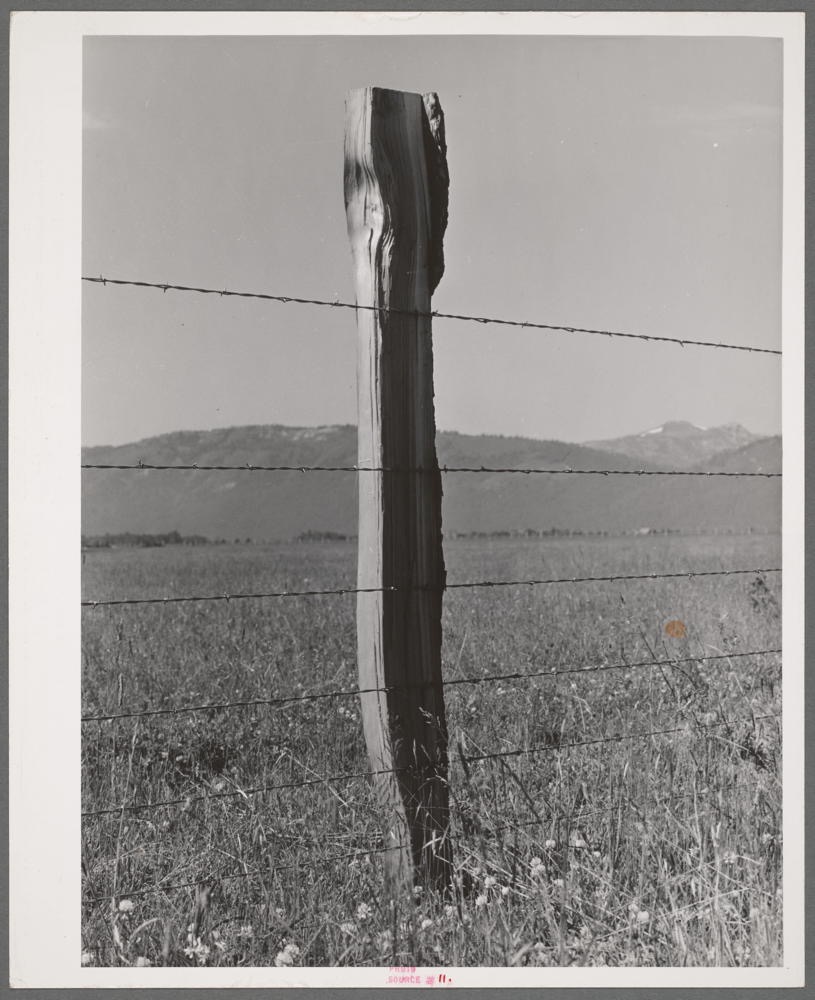
Russell Lee: Fence on Cruzen Ranch. Valley County, Idaho. AAA (Agricultural Adjustment Administration) has painted out this fence as being an outstanding type for ranch use. It keeps out predators (wolves, etc.), the wire is stapled loosely to allow for expansion (06/1941) United States. Farm Security Administration (Sponsor)
The Miriam and Ira D. Wallach Division of Art, Prints and Photographs: Photography Collection, The New York Public Library. "Fence on Cruzen Ranch. Valley County, Idaho. AAA (Agricultural Adjustment Administration) has painted out this fence as being an outstanding type for ranch use. It keeps out predators (wolves, etc.), the wire is stapled loosely to allow for expansion and" New York Public Library Digital Collections. Accessed February 12, 2026. (https://digitalcollections.nypl.org/items/f54aa060-84a2-0137-2a98-29e7943b6d77)
"Our lust for Utopian futures reliably produces their opposite."
In the beginning, there was a civilization aching to spawn a better one. It produced an infant with tremendous potential but carrying the same curse its parents held, for they were predatory, just as their offspring would most certainly be. Though they had long dreamed of transcending their nature to amplify their better angels, devils continued to haunt them. They had proven themselves capable of great compassion as well as appalling Predation, as would their offspring. The child seemed anything but wild at first, fragile and vulnerable, but it grew bolder as it came to cover more ground. It began in academia before breaking into commerce, then on into what it deceptively called Social Media. It remained capable of producing great goodness but often proved disappointing. It attracted trolls almost immediately, and frauds. Let the browser be wary, and they were.
The children came with their innocence intact, easy prey for even the laziest predators. Always defenseless to culture, young girls seemed most vulnerable, and so the predators flocked around them. They’d stroke delicate egos and reassure, hoping to lure those girls into situations none of them were capable of imagining. The new world became a nightmare for many, a definite devil’s playground. Accounts got hacked, sensitive data swiped, and the most vulnerable paid this new piper. Whatever might have become of that new world had it been more scrupulously engineered didn’t happen. Sure, it created connections unimaginable under the old regime, but it also produced crimes equally unimaginable there, especially concerning vulnerable young girls.
The platforms, as they were called, failed to create adequate safeguards. The territory they produced made the Wild West blush, or should have. They were all based on advertising. That’s what financed these undertakings. What might have seemed a communication machine was 110% advertising. Nobody could do anything without being interrupted by some message from an unwanted sponsor. The ads were annoyingly brief, often not even allowing time to identify the product. Shady commerce dominated: questionable nutraceuticals, Midway barker-quality life hacks, get-rich-quick schemes, along with a very few familiar products. It was never clear whether there was any connection between that advertising and actual sales. It seemed impossible that there could have been, but stranger things have probably happened.
New Mexico law enforcement posted a fake Facebook page for a thirteen-year-old girl, featuring a photograph of her last baby tooth and describing her first day of seventh grade. In response, she immediately received a sexually explicit message accompanied by a pornographic video. The attorney general was so shocked by the speed and depravity of the responses to this and other postings that he’s suing Facebook’s parent company, Meta, for making misleading statements about the safety of its platforms for teens and preteens. It almost seems as if it was designed for Predation. This trial just started this week. The outcome remains undecided, yet we each have personal experience with being mistaken for prey in our online world. Whether some troll posted disgusting pictures on your wiki page, as happened to me, or merely hacked into your email account, there’s no doubt that controls as exist in our real-world civilization simply do not exist yet in our virtual worlds.
Had we been more deliberate when designing those newer worlds, we probably would have still overlooked essential controls, for they serve as the water to our fish. We have little experience designing non-predatory environments, since not one of us came from such places, which do not exist. We might have been more cautious, but innovation despises caution. That’s something we throw to the winds when we’re busy obsessing with inventing our future. Only later might we slow enough to recognize that we’ve gone and done it again, however high-minded we might have intended our invention. Then we get better at retrofitting than we ever were at original design. Yes, we will feel perpetually behind and more than a little humiliated. How could we have been so thoughtless as to leave the most vulnerable among us so unprotected? Our lust for Utopian futures reliably produces their opposite.
©2026 by David A. Schmaltz - all rights reserved
Good For A Goose

Comeuppance (31)
Decency (90)
Decency Unscrolling (1)
EndDays (92)
Exiled (90)
Fambly (93)
FollowingChapters (93)
Grace (92)
Humor (2)
iAlogue (1)
Letters to the Editor (1)
NextWorld (91)
Personal (18)
Prosperity (94)
Steam Festival (4)
Unscrolling (89)
Vaporized (6)
Work (16)
September 2026
August 2026
July 2026
June 2026
May 2026
April 2026
March 2026
February 2026
January 2026
December 2025
November 2025
October 2025
September 2025
August 2025
July 2025
June 2025
May 2025
April 2025
March 2025
February 2025
January 2025
December 2024
November 2024
October 2024
September 2024
August 2024
July 2024
June 2024
May 2024
April 2024
March 2024
November 2006
October 2006
September 2006
August 2006
July 2006
June 2006
May 2006
April 2006
March 2006
February 2006
January 2006